Artwork
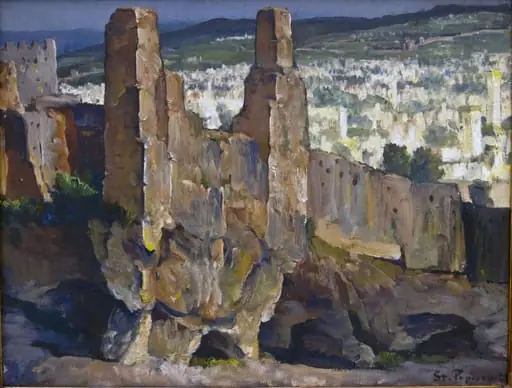
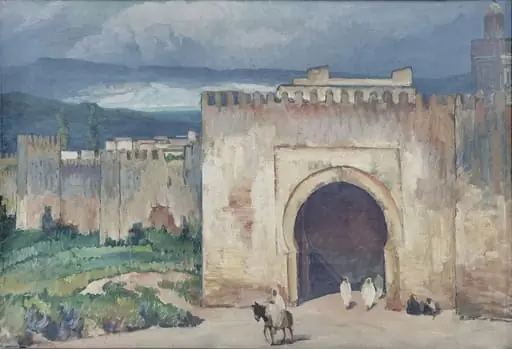
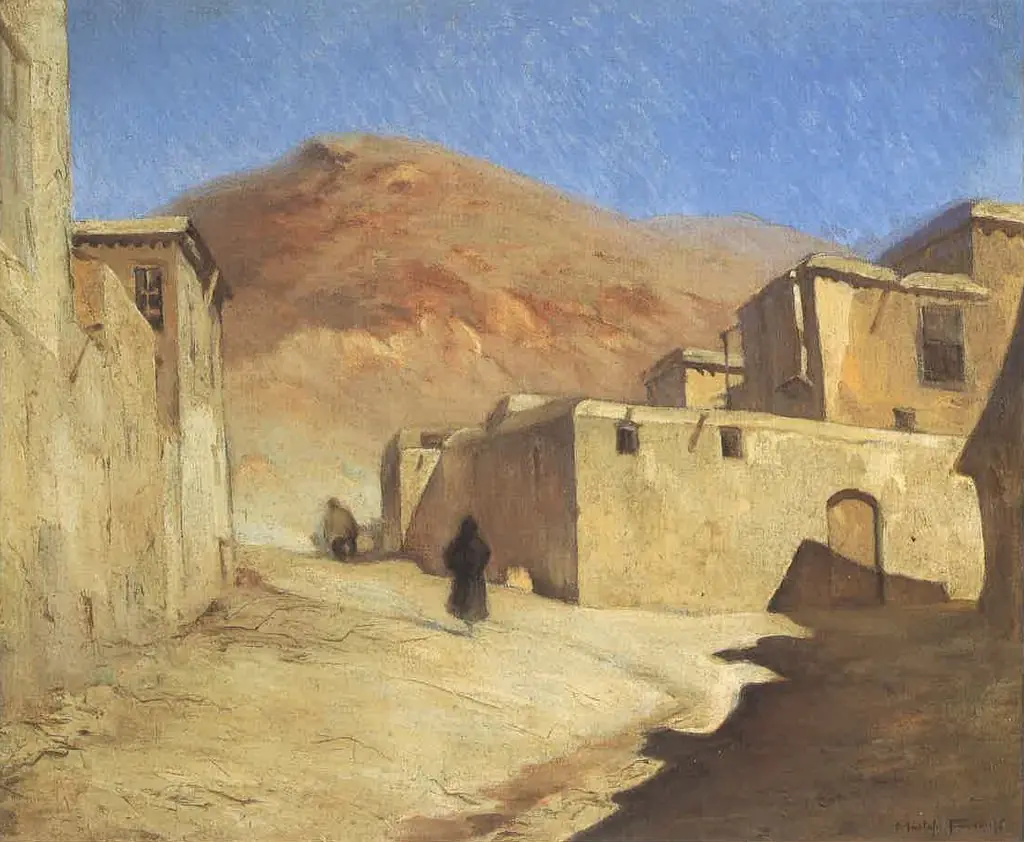
Scene din Marrakech
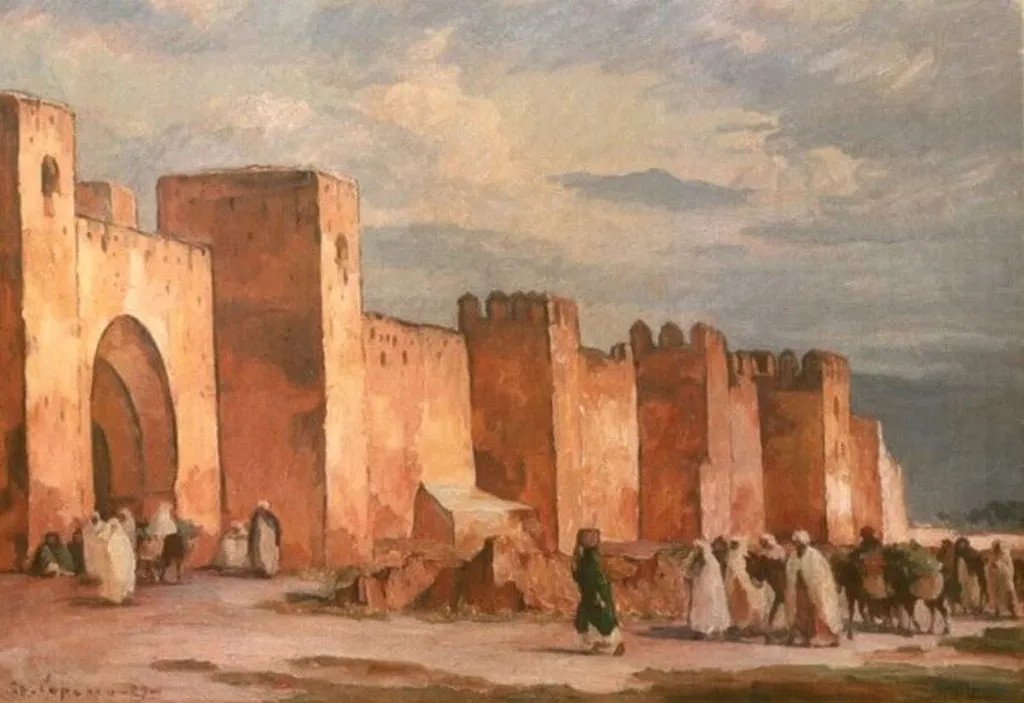
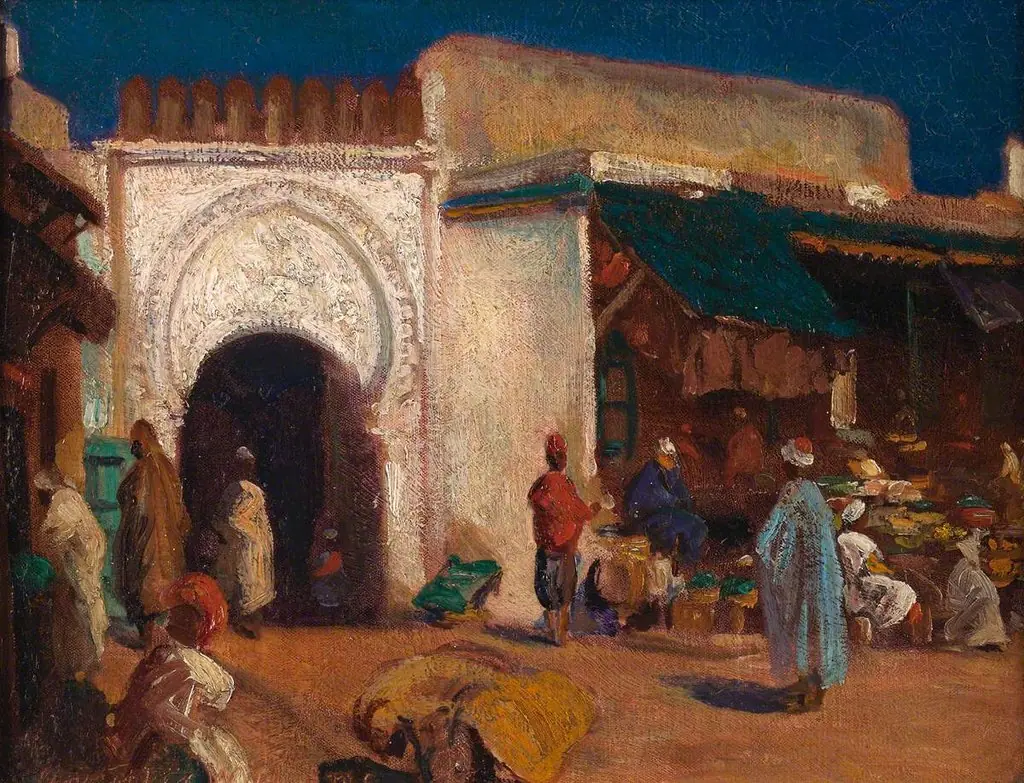
Scene din Marrakech is an unspecified painting by Ștefan Popescu. It dates from 1929 and is held in the collection of the Colecție particulară - București.
About this work
Overview
Painted in 1929 by Ștefan Popescu, Scene din Marrakech is a depiction of urban life in Morocco, rendered in oil on canvas.
Painted in 1929 by Ștefan Popescu, Scene din Marrakech is a depiction of urban life in Morocco, rendered in oil on canvas. The work resides in the collection of the Museum of Ethnography, where it serves as a visual record of early 20th-century North African architecture and daily activity. Popescu’s approach blends observation with expressive brushwork, capturing the atmosphere of a foreign landscape through texture and light rather than precise detail.
Subject & Meaning
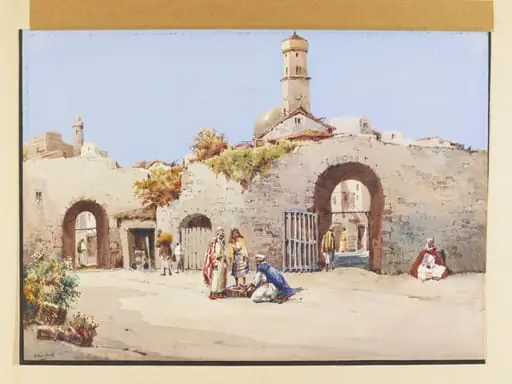
The painting portrays a bustling courtyard enclosed by a massive, weathered wall with arched gateways. Figures in loose garments move along the ground, some accompanied by animals or carrying goods, suggesting routine commerce or travel. The absence of overt narrative or individualized faces emphasizes the collective rhythm of life within the space, reflecting a quiet anthropological interest in communal routines rather than dramatic events.
Technique & Style
Popescu employs thick, tactile brushstrokes to render the stone wall, giving it a palpable, rugged surface. The sky is muted and diffuse, allowing the warm tones of the architecture to dominate. Deep shadows beneath the arches contrast with sunlit surfaces, using chiaroscuro to model form and depth. Clothing and figures are simplified, with minimal detail, directing focus to the interplay of light, structure, and texture over individual identity.
History & Provenance
Created during Popescu’s travels in North Africa, the painting entered the Museum of Ethnography’s collection shortly after its completion. It was acquired as part of a broader effort to document cultural landscapes through artistic representation. No significant changes in ownership or restoration are documented, and the work has remained in the museum’s care since its acquisition in the early 1930s.
Context
In the interwar period, European artists increasingly turned to non-Western locales as subjects, often influenced by colonial encounters and ethnographic curiosity. Popescu’s work aligns with this trend, yet avoids exoticism by focusing on architectural solidity and quiet movement. His treatment reflects a modernist tendency toward abstraction and material presence, distinguishing it from more romanticized Orientalist depictions of the era.
Legacy
Scene din Marrakech remains a notable example of Romanian modernist engagement with global themes. While not widely exhibited outside its home institution, it contributes to the understanding of how Eastern European artists interpreted foreign environments with psychological and formal restraint. Its emphasis on texture and atmosphere continues to inform discussions on cross-cultural representation in interwar art.
Artist & collection
Artist
Ștefan Popescu painted quiet scenes from the 1920s, blending everyday places with soft light.