Artwork
The Bab el Nasr. Cairo
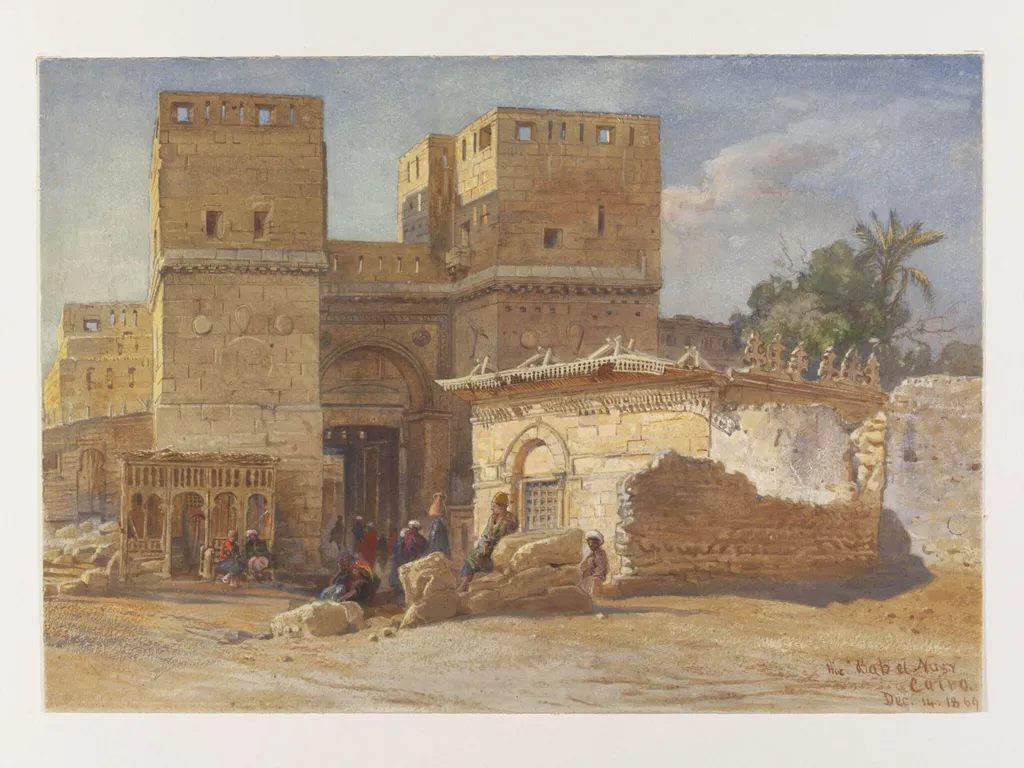
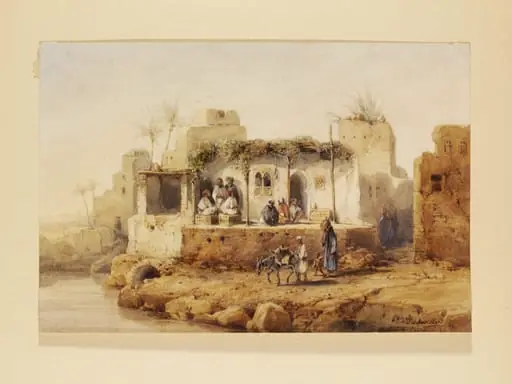
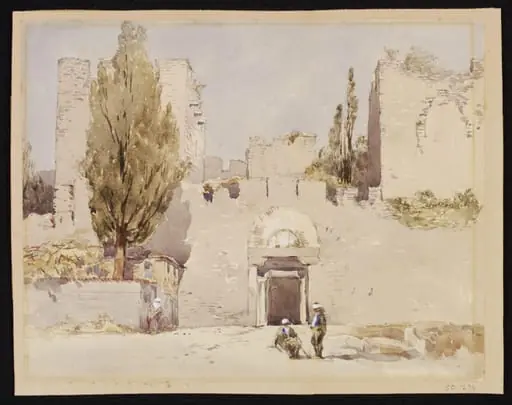
The Bab el Nasr. Cairo is a watercolor work on paper by the Impressionist artist Frank Dillon. It dates from 13 and is held in the collection of the Victoria and Albert Museum.
About this work
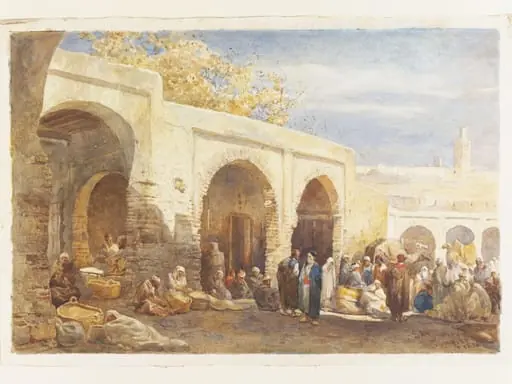
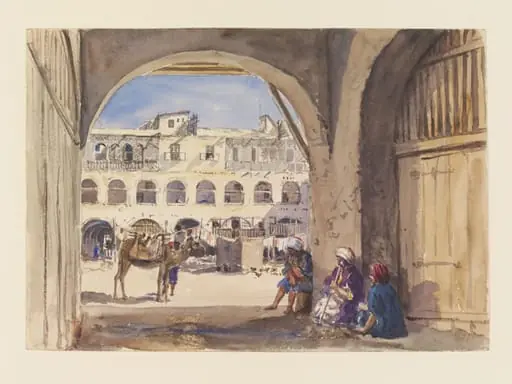
The painting is part of a larger effort to document exotic architecture, which was a growing interest in the 19th century.
The Bab el Nasr, Cairo is a watercolour painting.
It was created by Frank Dillon in 1869.
The painting is part of a larger effort to document exotic architecture, which was a growing interest in the 19th century.
Dillon's work was influenced by his connections to design reformers, and he sought to preserve traditional forms.
He included people in his paintings to give scale and make them more appealing.
Check out the Victoria and Albert Museum to learn more about similar works.
Overview
The Bab el Nasr, Cairo is a watercolour painting created by Frank Dillon in 1869, part of a 19th-century trend to document exotic architecture.
Subject & Meaning
The painting captures the Bab el Nasr in Cairo, with inhabitants in traditional costume, serving both as a record of threatened cultural heritage and an advocacy tool for preservation, while also showcasing the structure's scale and everyday life.
Technique & Style
Executed in watercolour, the work reflects Dillon's attention to detail in recording architectural interiors and exteriors, blending accuracy with appeal through the inclusion of figured scale.
History & Provenance
Created in 1869 by Frank Dillon, a member of the design reform circle influenced by Owen Jones, the painting is linked to Dillon's broader efforts in preserving Islamic monuments and studying global traditional architectures.
Context
Part of a broader 19th-century interest in non-European architectural forms, the painting also intersects with concerns over the loss of traditional structures to modernization.
Legacy
Now housed in a collection (exact location not specified in provided sources, but comparable works can be found at institutions like the Victoria and Albert Museum), it contributes to the historical record of Cairo's architecture and the era's design reform movements.
Artist & collection

Artist
Frank Edward Dillon, known in later years as Pop Dillon, was an American baseball player and manager.

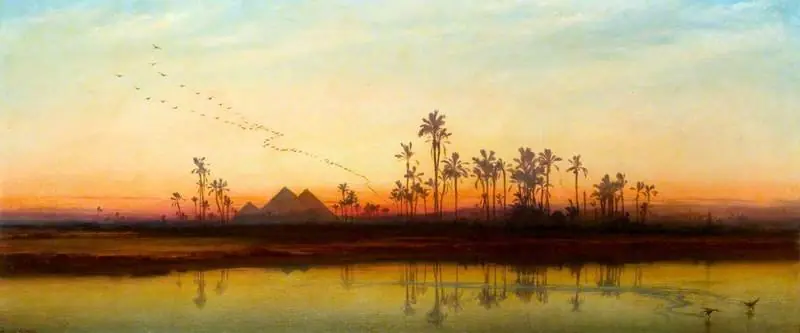 Sunset on the Nile
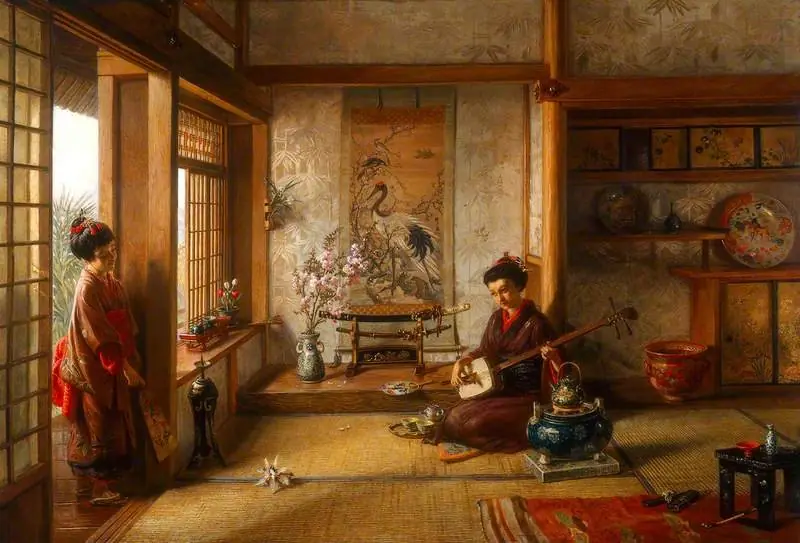 The Stray Shuttlecock
 The Stray Shuttlecock
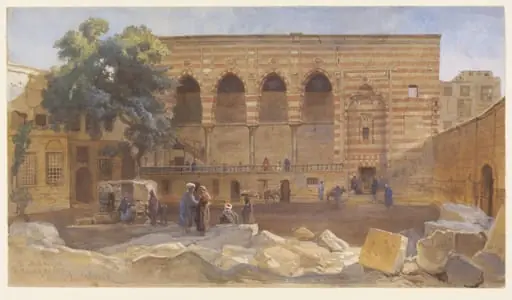 El Mahkemeh or Court of the Cadi Cairo
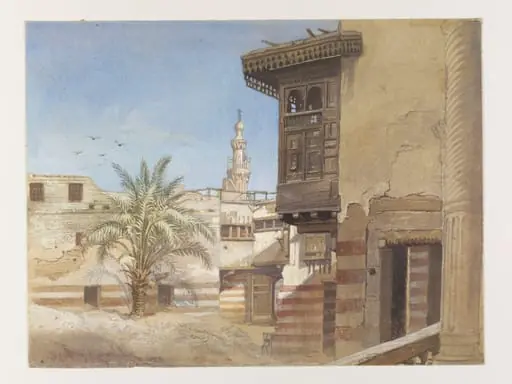 View from the Loggia of the Summer Reception Room (Makad) in the House of the Memluk Raduan Bey, Cairo
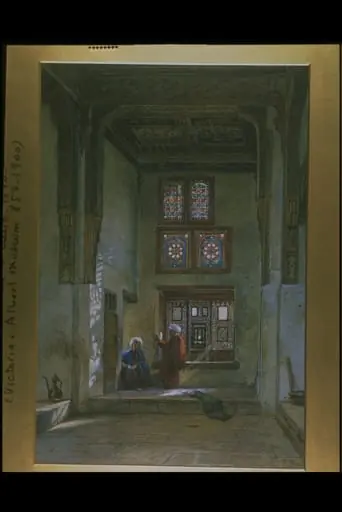 The House of Radwan Bey
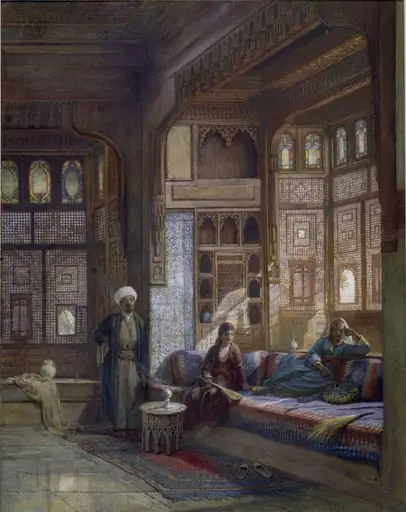 A room in the house of Shayk Sadat, Cairo
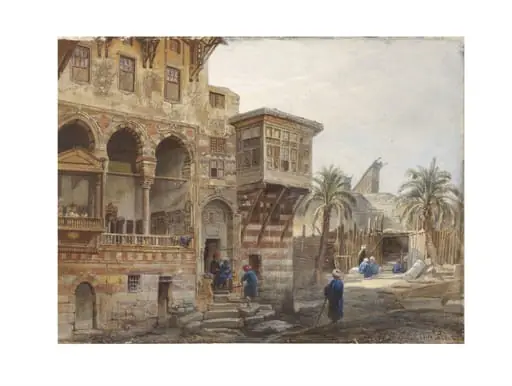 Exterior of the House of the Memluk Raduan Bey, Cairo
![Arabs and camels beside a Tomb, Algeria[?], by Victor-Pierre Huguet](https://artifactworldgallery.com/img/victor-pierre-huguet--arabs-and-camels-beside-a-tomb-algeria--d8831a130920c80b-w320.webp)