Artwork
Fetiță în interior
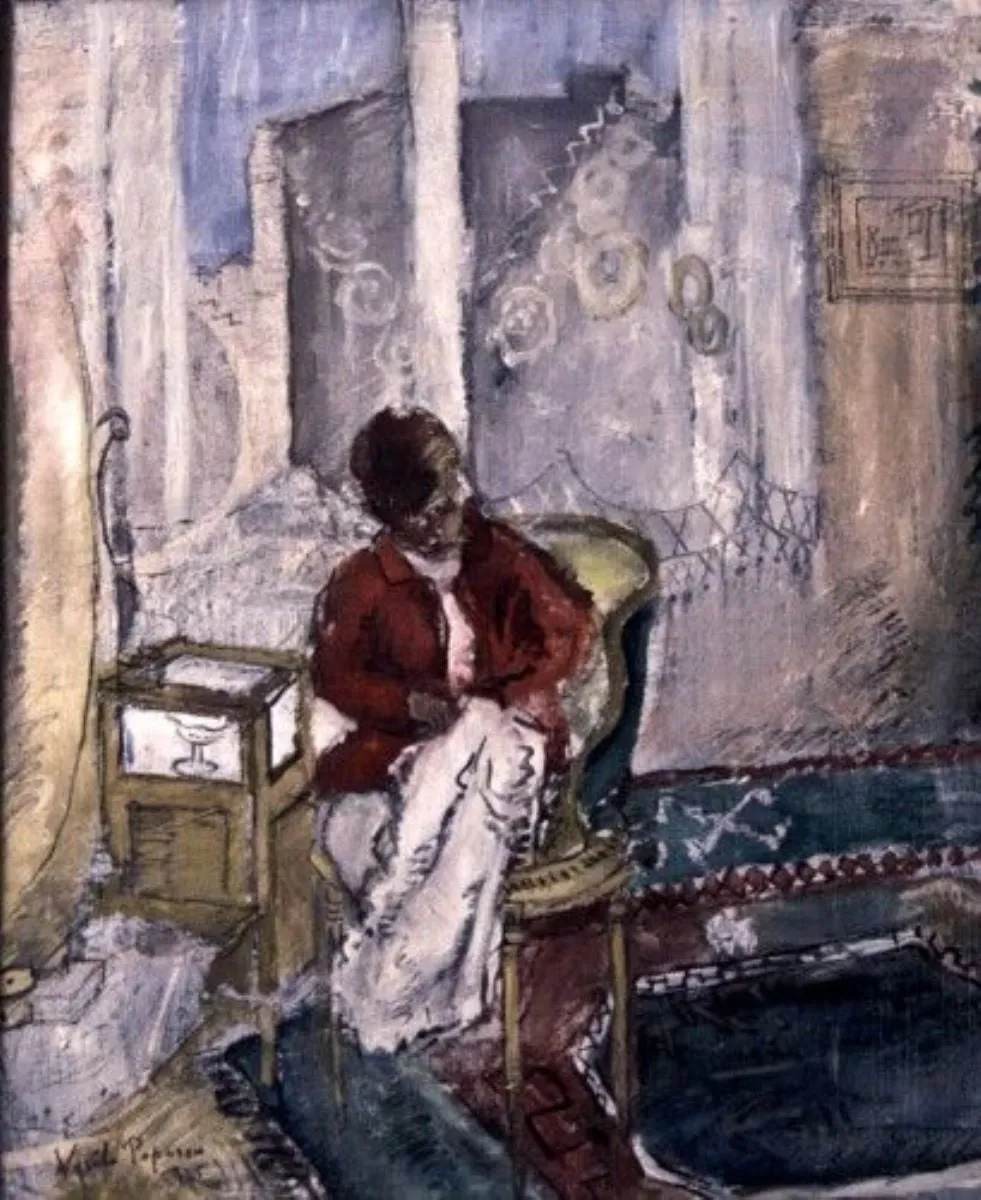
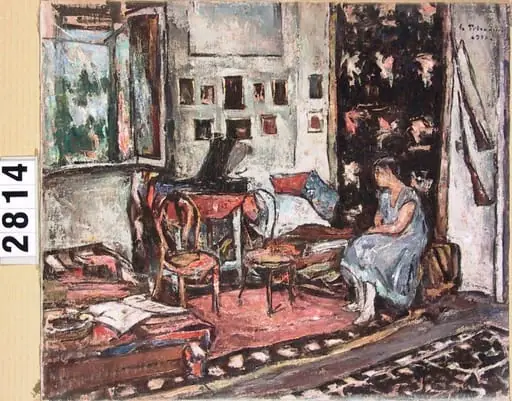
Fetiță în interior is an unspecified painting by Vasile Popescu. It dates from 1935 and is held in the collection of the National Museum of Art of Romania.
About this work
Overview
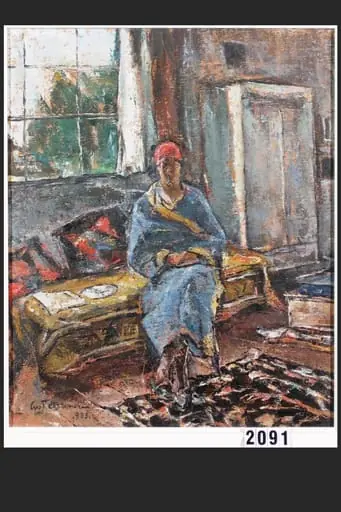
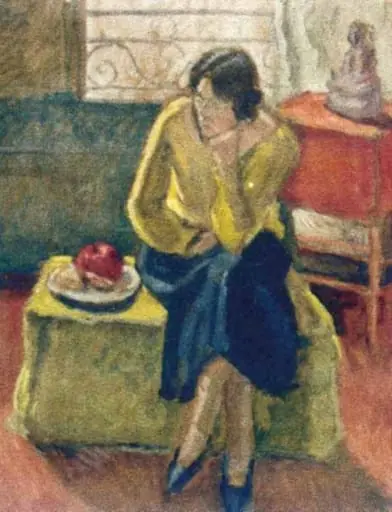
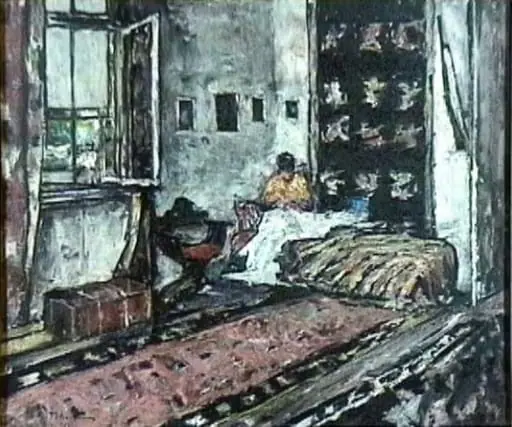
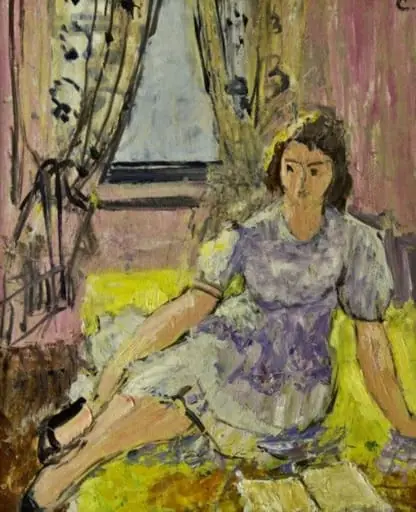
The composition centers on a child seated in a chair, enveloped in a blanket, surrounded by sparse furnishings and dim lighting.
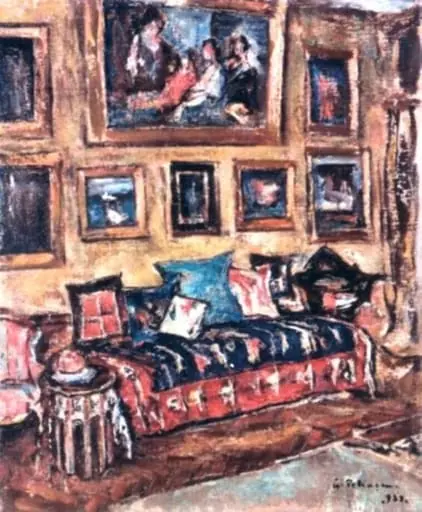
Painted in 1935 by Romanian artist Vasile Popescu, Fetiță în interior captures a solitary figure in a modest interior. The composition centers on a child seated in a chair, enveloped in a blanket, surrounded by sparse furnishings and dim lighting. The atmosphere is subdued, emphasizing stillness and isolation through restrained color and uneven illumination. The work belongs to a quiet tradition of domestic introspection in interwar Romanian painting.
Subject & Meaning
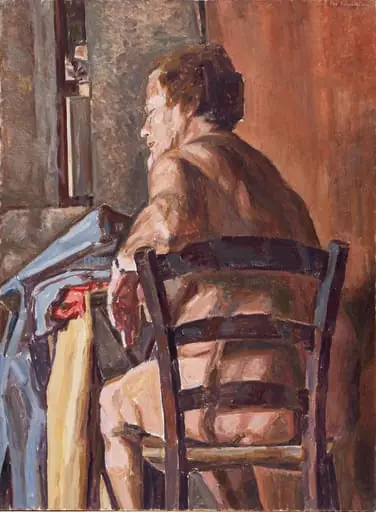
The figure, a young girl, faces away from the viewer, her posture relaxed yet slightly slumped, suggesting fatigue or contemplation. Her anonymity and the lack of identifying details invite interpretation rather than narrative. The enclosed space, with its worn floor and heavy curtains, amplifies a sense of inwardness. The scene conveys solitude not through drama, but through the quiet weight of everyday stillness.
Technique & Style
Popescu employs loose, textured brushwork that borders on sketch-like, avoiding polished finish in favor of tactile immediacy. Light falls unevenly across the room, casting deep shadows in corners and highlighting only fragments of the interior. This contrast, reminiscent of chiaroscuro, shapes form through tone rather than line, enhancing the mood of quiet unease and spatial ambiguity.
History & Provenance
Created during a period of growing interest in social realism in Romanian art, the painting remained in private hands for much of the 20th century. It was not widely exhibited until later scholarly attention to Popescu’s oeuvre in the 1980s. Its survival through political upheavals reflects its unassuming nature, avoiding both state-sanctioned idealism and overt political messaging.
Context
In 1930s Romania, urban poverty and rural displacement were visible realities, yet many artists turned to intimate scenes over grand narratives. Popescu’s focus on a single child in a modest room aligns with this trend, reflecting a broader cultural turn toward psychological depth and quiet observation. The work stands apart from official art of the time by its emotional restraint and lack of didacticism.
Legacy
Fetiță în interior is now recognized as a key example of Popescu’s sensitivity to interiority and light. While not widely reproduced, it has influenced later Romanian painters interested in domestic quietude and psychological nuance. Its enduring value lies in its refusal to dramatize, instead offering a restrained meditation on solitude within ordinary space.
Artist & collection
Artist
Vasile Popescu was a Romanian basketball player who competed in the 1952 Summer Olympics.