Artwork
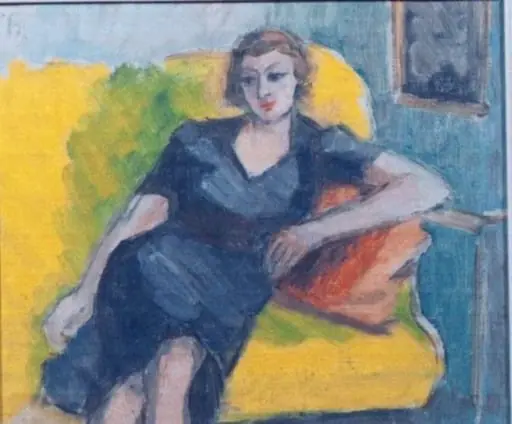
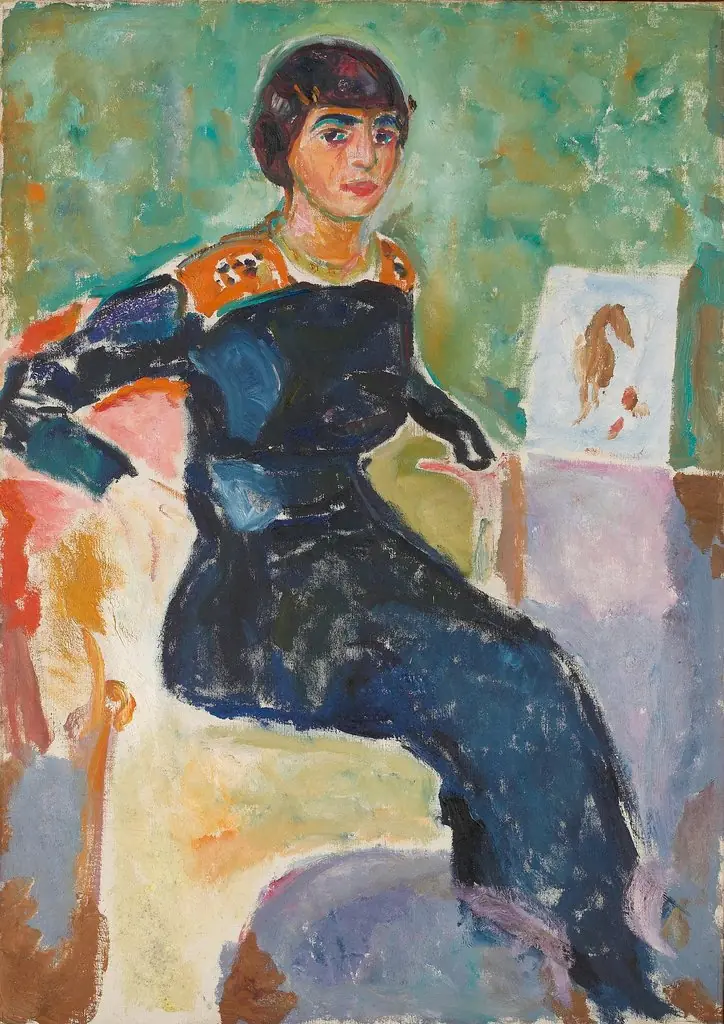
Femeie în rochie neagră
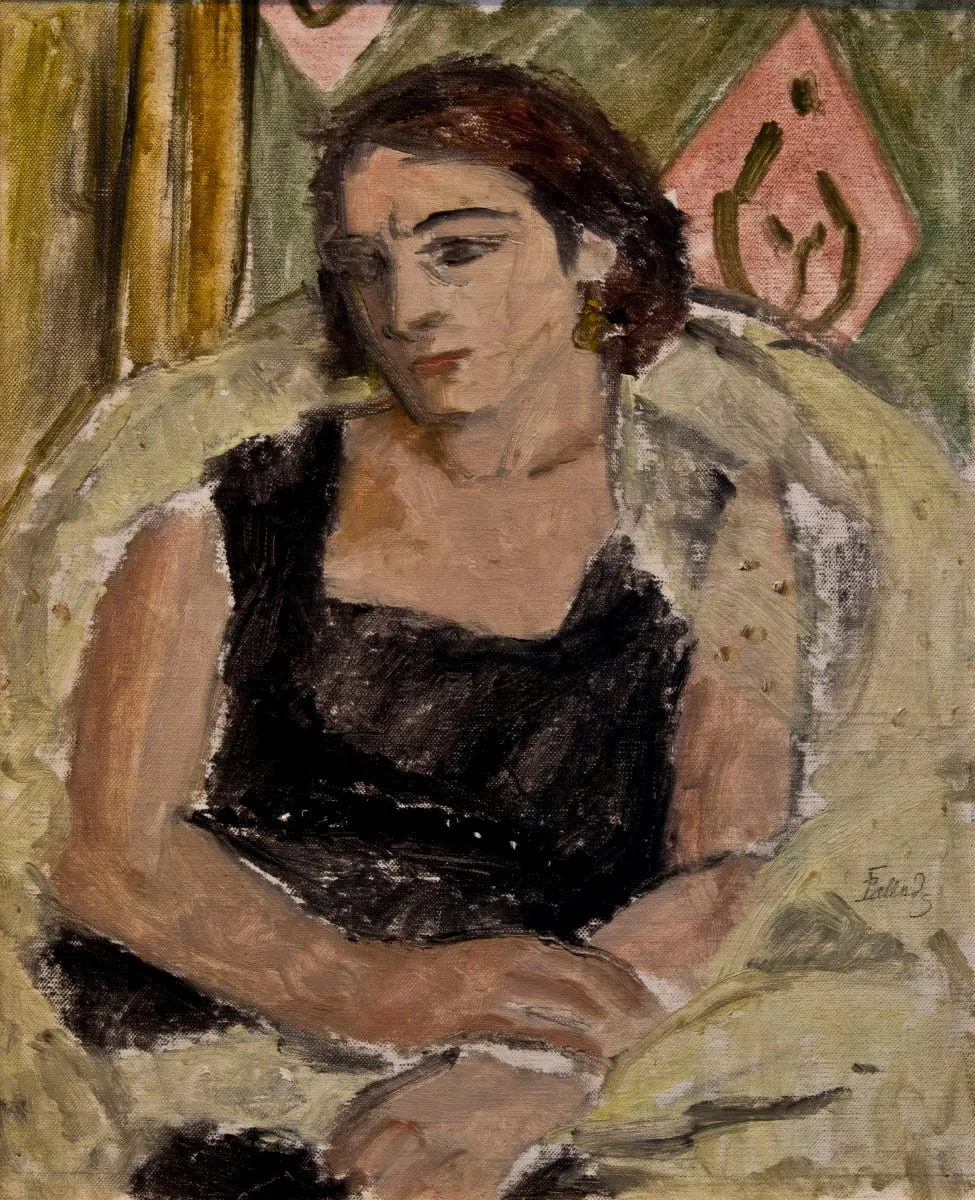
Femeie în rochie neagră is an unspecified painting by Theodor Pallady. It is held in the collection of the National Museum of Art of Romania.
About this work
Overview
The composition emphasizes stillness and introspection, with muted tones dominating the palette.
This portrait presents a woman seated in a simple chair, dressed in a black gown, against a softly rendered green background marked by a faint pink diamond shape. The composition emphasizes stillness and introspection, with muted tones dominating the palette. Her direct gaze establishes a quiet connection with the viewer, while the restrained color scheme and minimal detail suggest an intentional focus on psychological presence rather than narrative context.
Subject & Meaning
The woman’s posture and attire convey a sense of solemnity, though no specific identity or story is provided. Her dark hair, neatly gathered, and the single gold earring introduce subtle contrasts that draw attention to her individuality. The unadorned setting and unsmiling expression invite contemplation rather than interpretation, suggesting an interest in inner life over external circumstance, a common concern in early modern portraiture.
Technique & Style
Brushwork is deliberate and expressive, with visible strokes that define form without excessive detail. The colors are subdued, avoiding bright contrasts in favor of tonal harmony. The background’s abstract pink shape introduces a geometric counterpoint to the organic silhouette of the figure, reflecting an interest in simplifying space and emphasizing structure—hallmarks of early 20th-century modernist tendencies in Eastern European painting.
History & Provenance
The painting is attributed to Theodor Pallady, a Romanian artist active in the early 1900s who studied in Paris and absorbed influences from Post-Impressionism and Symbolism. While specific details of this work’s creation or early ownership are not documented, its stylistic alignment with Pallady’s known portraits from this period supports its placement within his oeuvre of intimate, psychologically attuned figures.
Context
Created during a period when Romanian artists were engaging with European modernist movements, this portrait reflects a broader shift away from academic realism toward expressive, simplified forms. Pallady’s work, like that of his contemporaries, sought to capture emotional depth through reduced detail and atmospheric color, aligning with trends seen in French and German art of the time while retaining a distinct regional sensibility.
Legacy
Though not widely exhibited outside Romania, this painting exemplifies Pallady’s contribution to modern Romanian art through his synthesis of European modernism with personal, introspective portraiture. His focus on quiet dignity and psychological nuance influenced later generations of Romanian painters who sought to move beyond traditional representation toward more subjective visual language.
Artist & collection
Artist
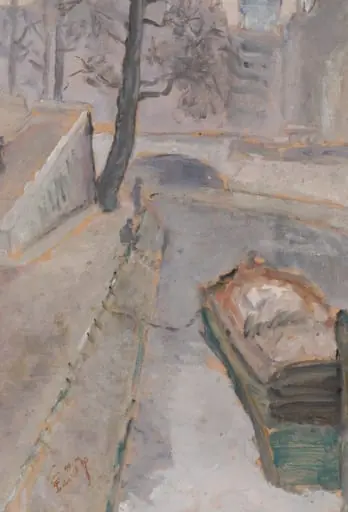
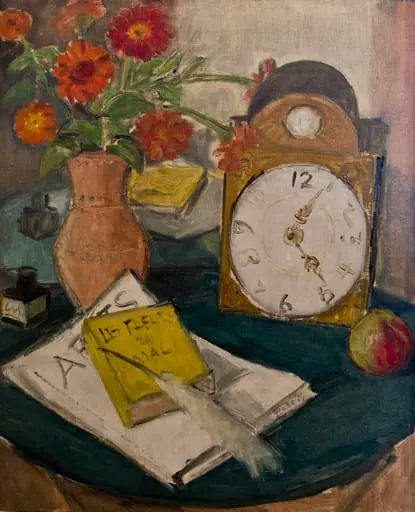
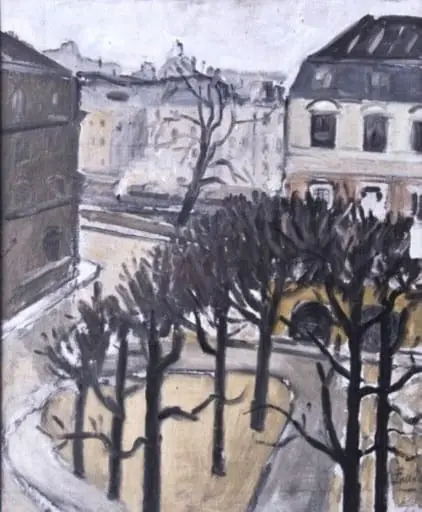
Theodor Pallady made still lifes and interiors in early 20th-century Bucharest. His Place Dauphine shows a quiet Parisian square, while Natură moartă (Ulcică cu flori și chibrituri) piles everyday objects on a table.…