Artwork
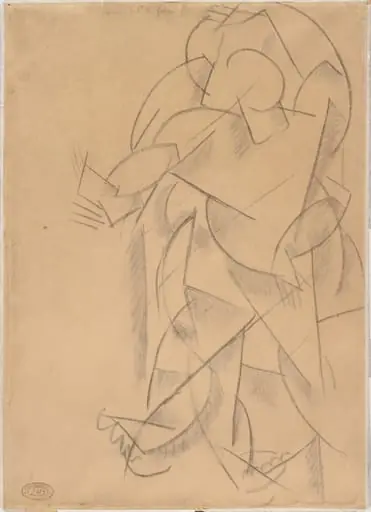
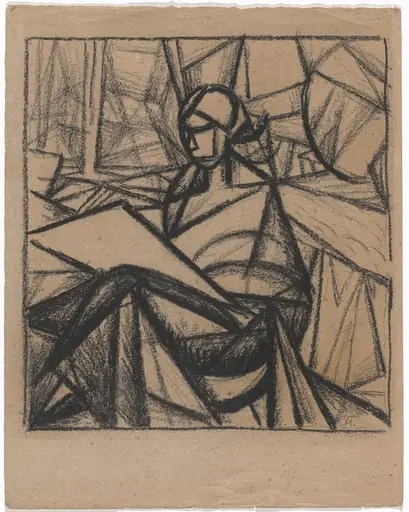
Μελέτη για την "Καθιστή μορφή"
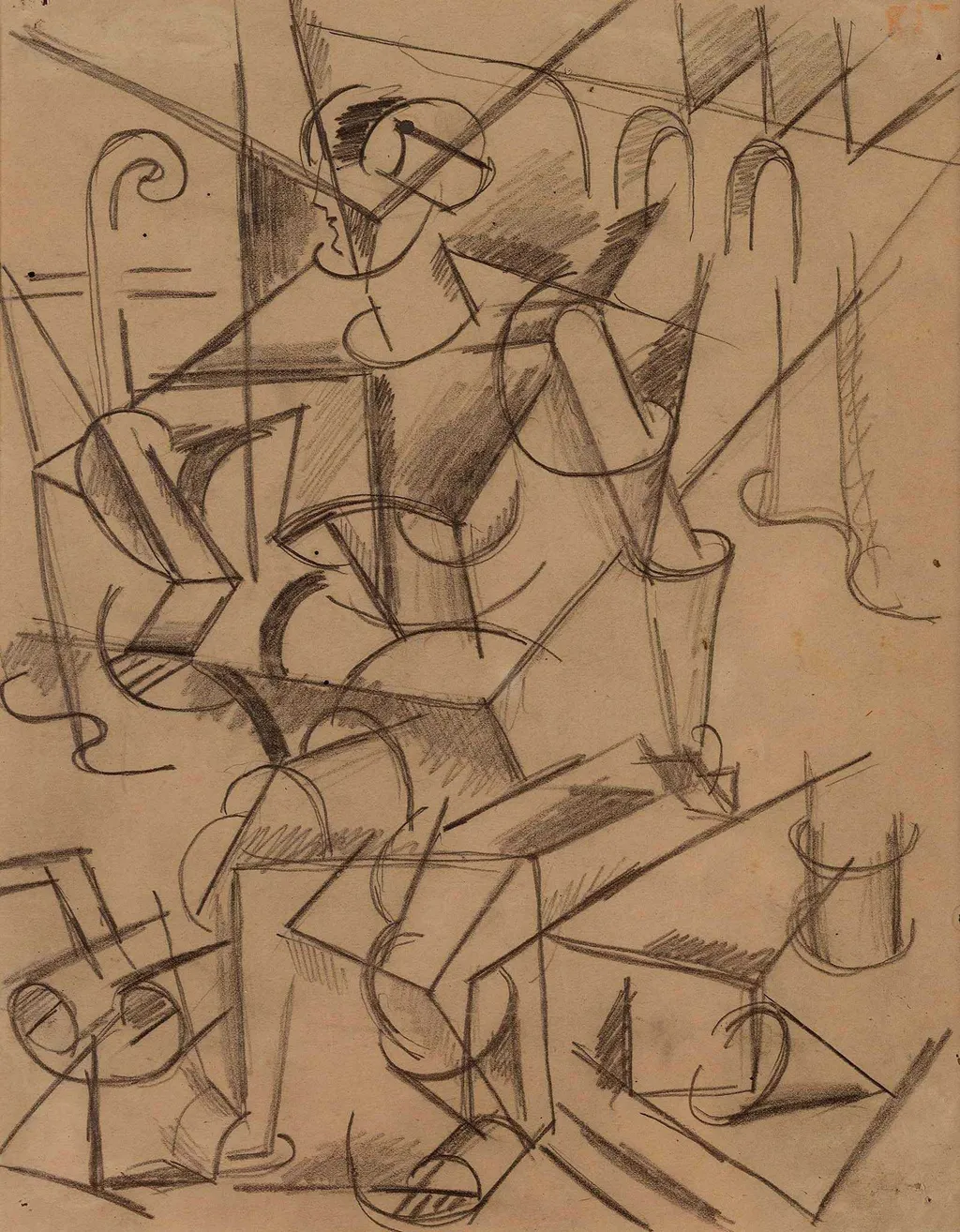
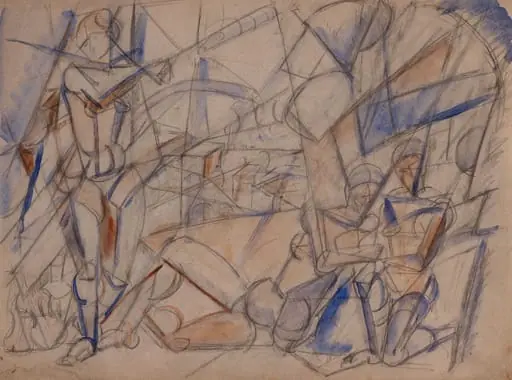
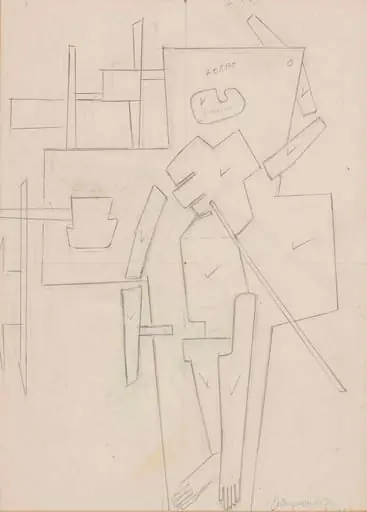
Μελέτη για την "Καθιστή μορφή" is a drawing by Liubov Popova. It dates from 1916 and is held in the collection of the Metropolitan Organisation of Museums of Visual Arts of Thessaloniki – MOMus. This drawing is an preparatory study by Lyubov Popova, created during her Cubo-Futurist phase.
About this work
Overview
This drawing is an preparatory study by Lyubov Popova, created during her Cubo-Futurist phase. It does not depict a finished composition but rather explores the translation of a seated human form into abstract geometric structures. The work reflects her investigation into how three-dimensional volume can be suggested on a flat surface through fragmented planes and controlled tonal shifts.
Subject & Meaning
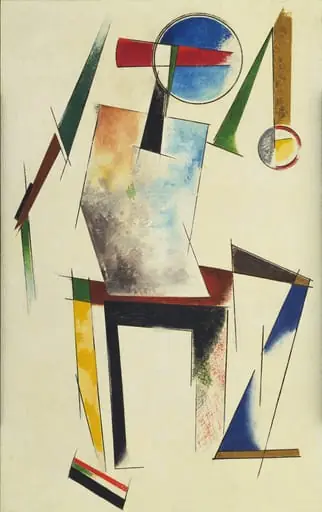
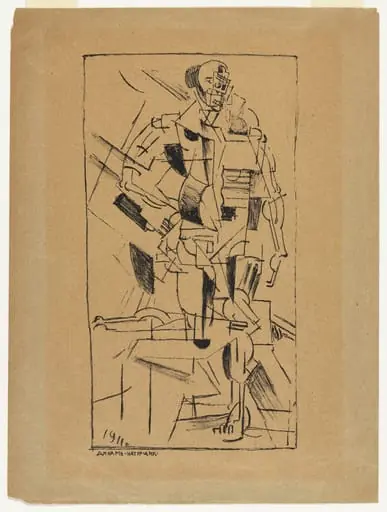
The subject is a seated figure, rendered not as a naturalistic portrait but as an assembly of interlocking shapes. Popova reduces the body to a dynamic arrangement of curves and angular planes, emphasizing structural relationships over anatomical accuracy. The focus is on spatial organization and the interplay of form, not individual identity or emotional expression.
Technique & Style
Popova employs sharp lines and abrupt tonal contrasts to define form. Cross-hatching and patchy shading replace gradual modeling, creating a sense of volume through discrete light and dark zones. The composition merges rectilinear and curvilinear elements, suggesting movement and tension. The technique is deliberate and experimental, prioritizing structural clarity over refinement.
History & Provenance
The work remains part of private or institutional collections documenting Russian avant-garde development, though its exact provenance is not widely documented.
Created in the early 1910s, this study belongs to Popova’s transition from figurative representation toward abstraction. It emerged during a period of intense artistic experimentation in Moscow, influenced by Italian Futurism and French Cubism. The work remains part of private or institutional collections documenting Russian avant-garde development, though its exact provenance is not widely documented.
Context
This drawing reflects the broader Russian avant-garde movement’s interest in dismantling traditional perspective and reimagining form through geometry. Popova’s work aligned with contemporaries like Malevich and Tatlin, who sought to redefine art’s relationship to space and perception. Her studies were part of a larger effort to construct a new visual language for the modern age.
Legacy
Popova’s preparatory studies, including this one, demonstrate a rigorous approach to abstraction that influenced later constructivist practices. Her method of breaking form into planes and using tone structurally rather than decoratively became foundational for artists exploring spatial abstraction. These works remain key to understanding the evolution of non-objective art in early 20th-century Russia.
Own this work as a print
Artist & collection
Museum
Metropolitan Organisation of Museums of Visual Arts of Thessaloniki – MOMus
Continue through works from the same source collection.