Artwork
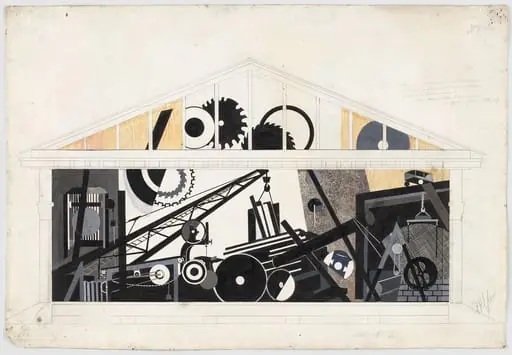
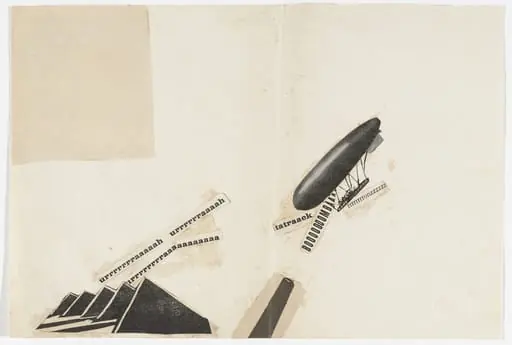
Μελέτη για το σκηνικό του θεατρικού έργου “Γη σε αναβρασμό”
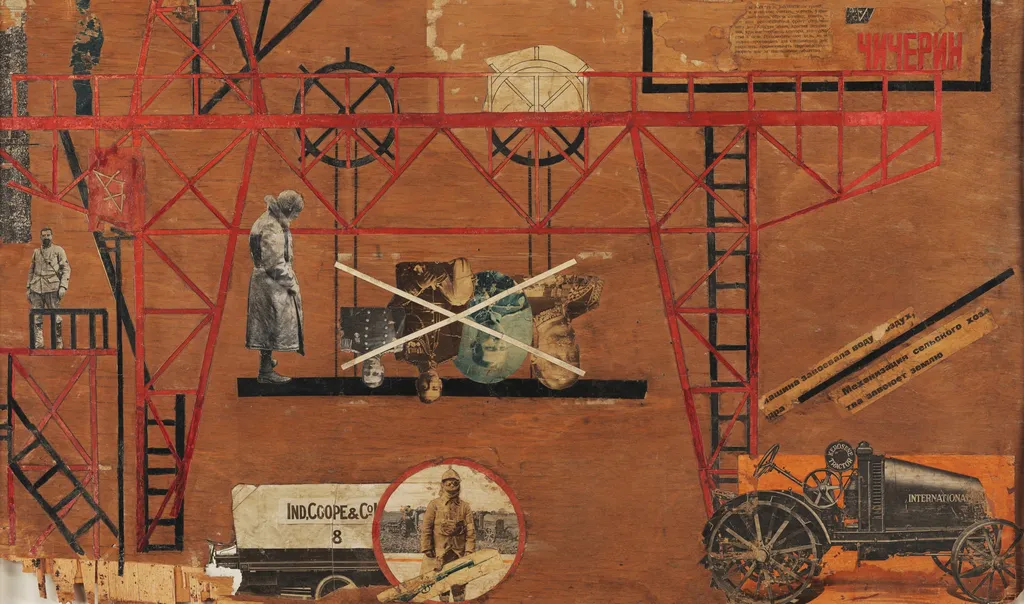
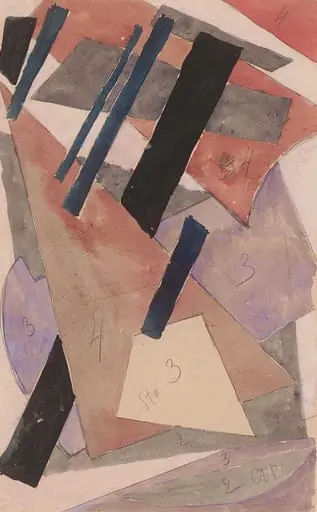
Μελέτη για το σκηνικό του θεατρικού έργου “Γη σε αναβρασμό” is an unspecified painting by the Constructivist artist Liubov Popova. It dates from 1923 and is held in the collection of the Metropolitan Organisation of Museums of Visual Arts of Thessaloniki – MOMus.
About this work
The design is simple and focused on function, not decoration, which was a key goal for the artist.
You see a theater set design in this painting.
It's for the play "Earth in Turmoil".
The design is simple and focused on function, not decoration, which was a key goal for the artist.
The artist worked with a director to create this set. They wanted to make a new kind of theater that was more about ideas than looks. This play was part of that effort.
The set design reflects this focus on ideas and message.
Check out the work of artist: Popova, Liubov (1889-1924)
Overview
Liubov Popova’s drawing depicts the stage scenery created for the 1923 production of S. Tretyakov’s play Earth in Turmoil. The image records a minimalist set that prioritises functional apparatus over ornamental backdrop, reflecting the constructivist aim to integrate design directly into theatrical action.
Subject & Meaning
The design serves the ideological goal of agitprop theatre, where the visual environment is intended to reinforce the play’s political message rather than provide a decorative illusion. By stripping away narrative framing, the set becomes a tool for communicating the revolutionary content of the performance.
Technique & Style
Popova employed a constructivist vocabulary of geometric forms, industrial materials and ready‑made objects, arranging them as utilitarian structures. The composition emphasizes clear lines and spatial clarity, aligning with Vsevolod Meyerhold’s bio‑mechanical approach that treats actors’ bodies as coordinated machines within a functional space.
History & Provenance
The set was developed after Popova and Meyerhold’s earlier collaborations on Soviet mass festivals and experimental productions such as The Magnanimous Cuckold (1922). Their partnership sought to model a new “left theatre” that merged avant‑garde design with proletarian performance practices during the early 1920s.
Context
Created in the cultural climate of post‑revolutionary Russia, the work reflects the constructivist rejection of decorative art in favor of utilitarian design that could be reproduced in everyday life. The set’s use of ordinary objects and its integration with costume design illustrate the period’s drive to dissolve boundaries between stage and daily work.
Legacy
Popova’s stage designs, exemplified by this sketch, influenced later Soviet theatre and design by demonstrating how functional aesthetics could serve political theatre. The collaboration with Meyerhold contributed to the development of biomechanics and the broader constructivist impact on performance environments.
Artist & collection
Museum
Metropolitan Organisation of Museums of Visual Arts of Thessaloniki – MOMus
Continue through works from the same source collection.