Artwork
Study for "The Seconda Macchina for the Chinea of 1753: The Quarters of the Royal Militia"
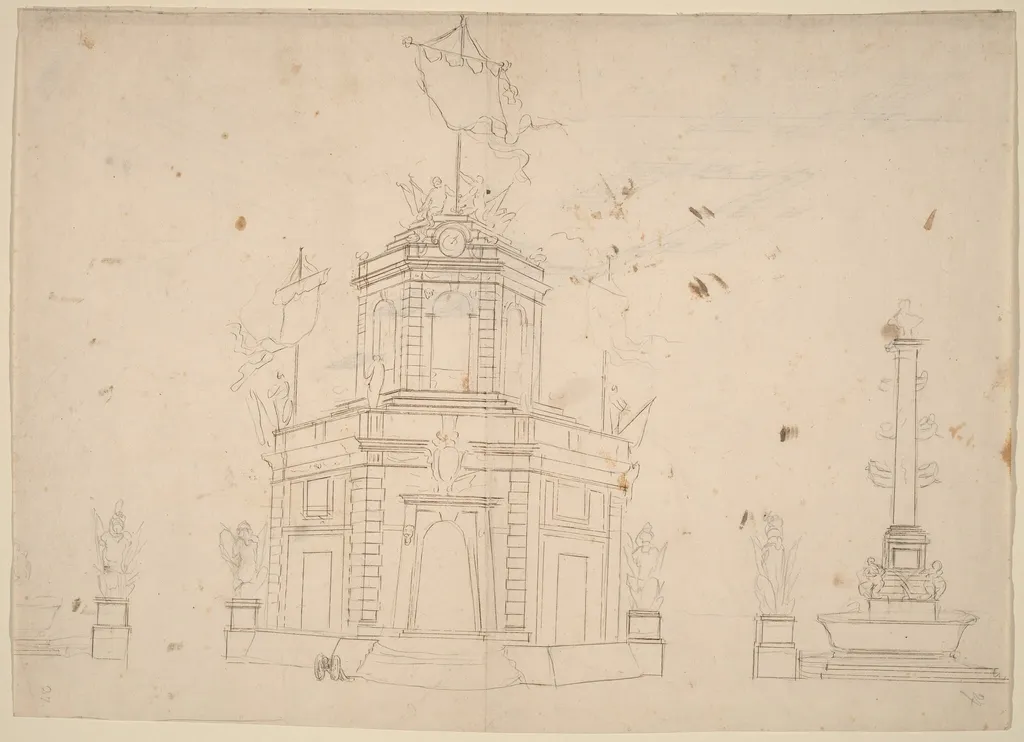
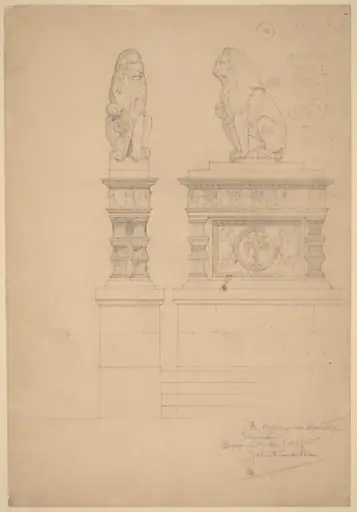
Study for "The Seconda Macchina for the Chinea of 1753: The Quarters of the Royal Militia" is an ink drawing by the Romanticist artist Paolo Posi. It dates from 1753 and is held in the collection of the National Gallery of Art.
About this work
This painting is called "Study for The Seconda Macchina for the Chinea of 1753: The Quarters of the Royal Militia".
It's from 1753 and was made with graphite and brown ink.
The artist, Paolo Posi, likely created this as a planning step for a larger work, which is an interesting aspect of the creative process.
You can learn more about this style at the movement: Romanticism.
Overview
Paolo Posi’s 1753 drawing serves as a preparatory study for the larger composition known as “The Seconda Macchina for the Chinea.” Executed in graphite with brown ink, the work records the layout of the Royal Militia’s quarters, a key element of the ceremonial machine that would be displayed in the Chinea festivities of that year.
Subject & Meaning
The sketch delineates the spatial organization of the militia’s encampment, indicating the placement of tents, armaments, and marching routes. By mapping these components, Posi visualized the logistical and symbolic aspects of the royal militia’s role within the public procession, emphasizing order and military presence in the celebration.
Technique & Style
Rendered with fine graphite lines and reinforced by brown ink washes, the drawing combines precise architectural drafting with a more fluid, illustrative hand. The contrast between the monochrome graphite and the richer ink highlights structural outlines while suggesting depth and movement, reflecting mid‑eighteenth‑century draftsmanship practices.
History & Provenance
Created in 1753 as part of Posi’s design process for the Chinea ceremony, the study remained in the artist’s studio before entering a private collection in the late nineteenth century. It later transferred to a public institution, where it is catalogued as an example of preparatory work for large‑scale public spectacles.
Artist & collection


 Drawings of the A-Ma temple, Macau
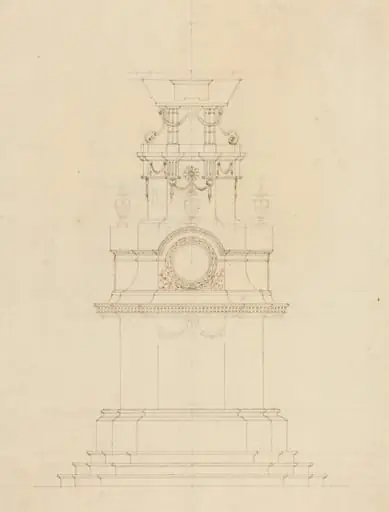 Design for a Catafalque
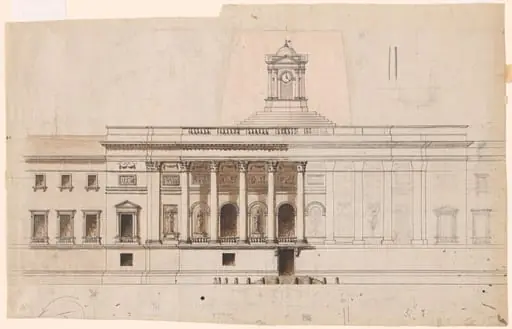 Architectural Study
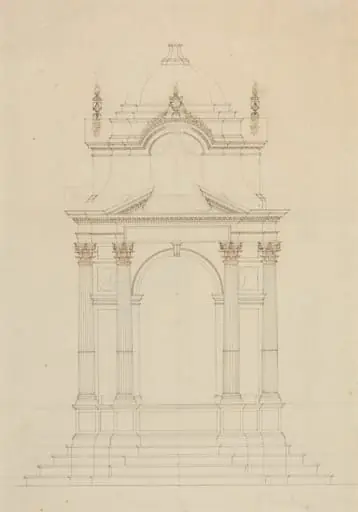 Design for a Baldaquin
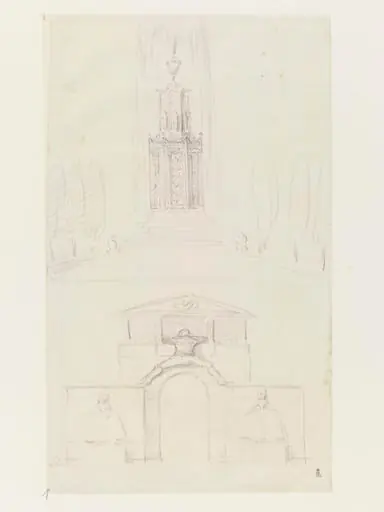 Pencil drawing of a fountain and entryway
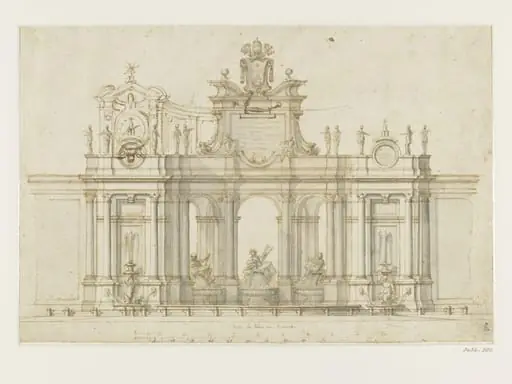 Drawing of a Roman fountain
 The gateway to the convent of Santa Clara, Macau
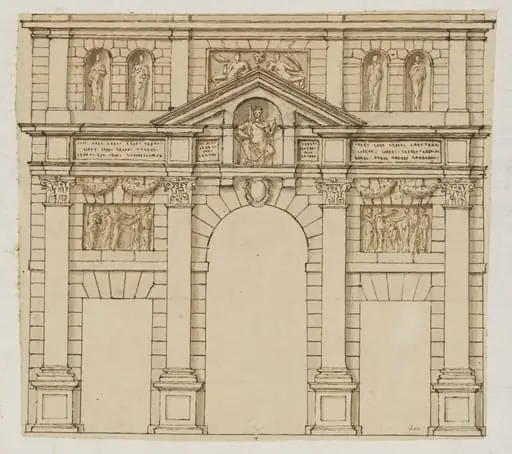 Study for a gateway
 Architectural Fantasy on a Round Temple Enclosed with an Ambulatory (verso)
 Il Marzocco, Donatello