Artwork
Design for a Catafalque
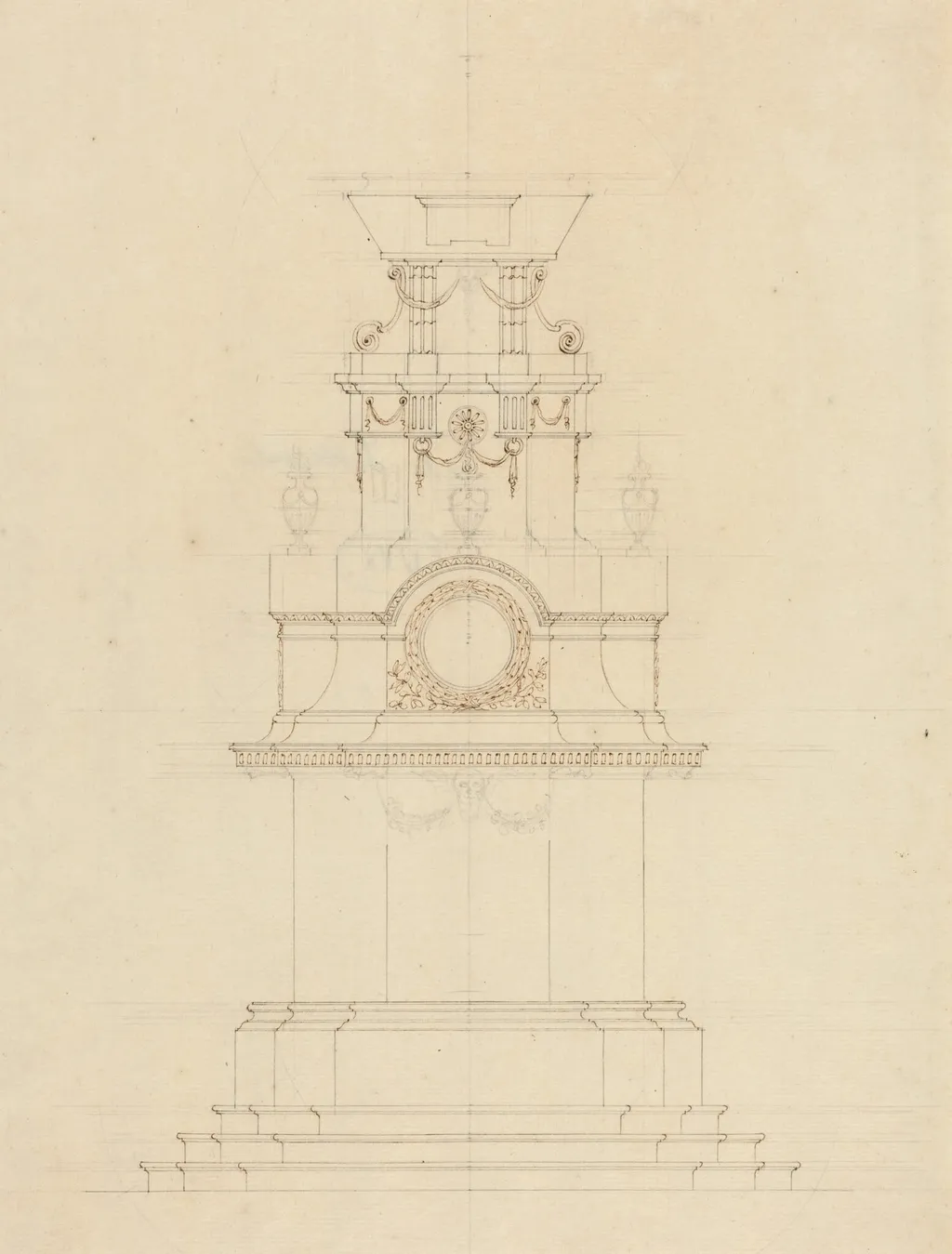
Design for a Catafalque is an ink drawing by the Baroque artist French 18th Century. It dates from 1750 and is held in the collection of the National Gallery of Art. This drawing depicts a grand, three-tiered catafalque, an ornamental structure typically used in ceremonial contexts.
About this work
Overview
This drawing depicts a grand, three-tiered catafalque, an ornamental structure typically used in ceremonial contexts. The design features a broad base with steps, a middle level with a circular opening adorned with carvings, and a top platform supported by curved elements, complemented by small vases on either side.
Subject & Meaning
The subject is a catafalque, implying a design for a ceremonial or funerary context, given the traditional use of such structures in grand, often mournful, displays.
Technique & Style
Executed with meticulous precision, the drawing combines pen and black and brown ink over graphite on laid paper. The style aligns with 17th- to 18th-century European practices for designing elaborate ceremonial setups.
Context
The drawing's style and subject matter associate it with the Baroque movement, characterized by dramatic and detailed designs, often used in funerals, state ceremonies, and other grand events.
Legacy
While the drawing's direct influence is not specified, it represents a typical example of Baroque-era design for ceremonial architecture, reflecting the period's penchant for grandiosity and intricate detail.
Artist & collection

Artist
This artist worked in late 18th-century France, making portrait paintings and etched prints.

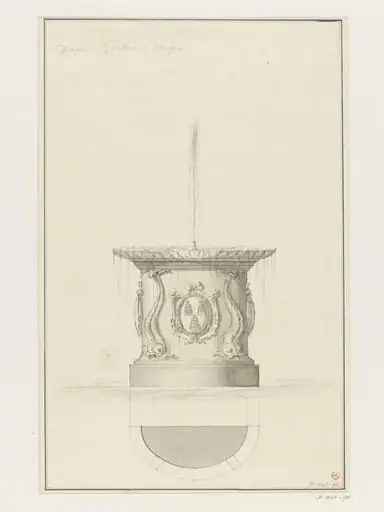 Drawing of fountain in Draper's Gardens
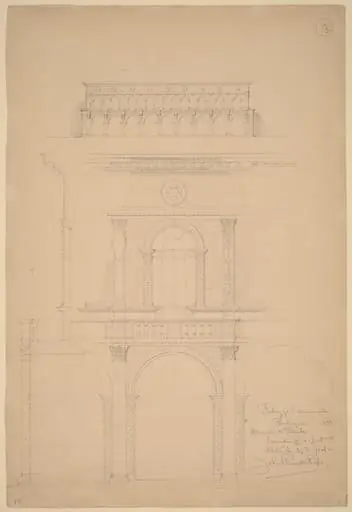 Palazzo Communale, Bologna
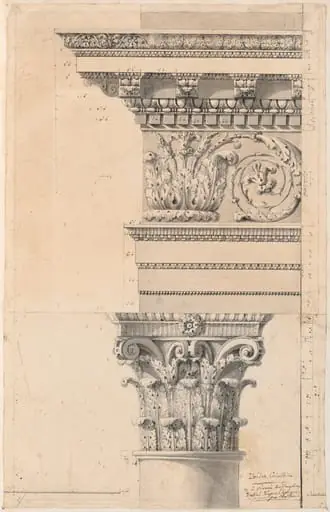 L'Ordre Corinthian
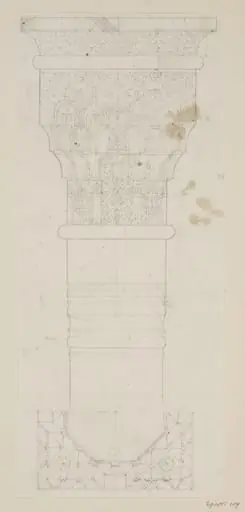 Drawing of capital
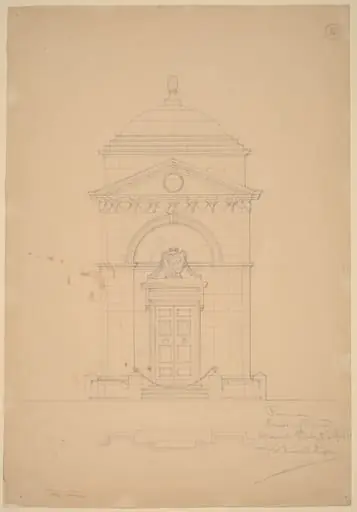 Tomb of Dante, Ravenna
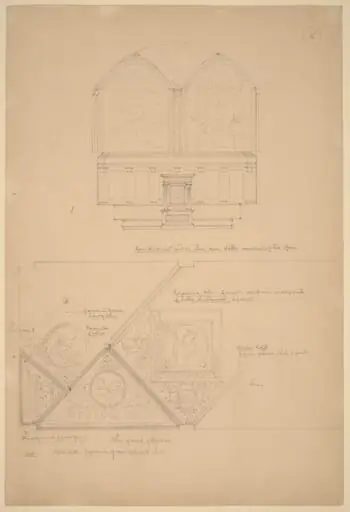 Study of an Altarpiece and Ceiling Panels
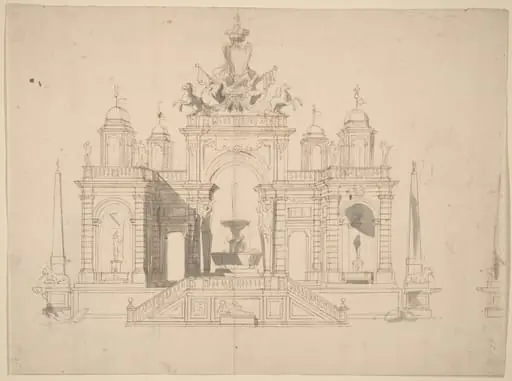 Study for "The Seconda Macchina for the Chinea of 1754: An Allegory of Waterworks"
 Drawing of a pavilion
 Elevations of the interior walls of the Hall, Combe Bank.
 Study for "The Seconda Macchina for the Chinea of 1753: The Quarters of the Royal Militia"