Artwork
Design for a Baldaquin
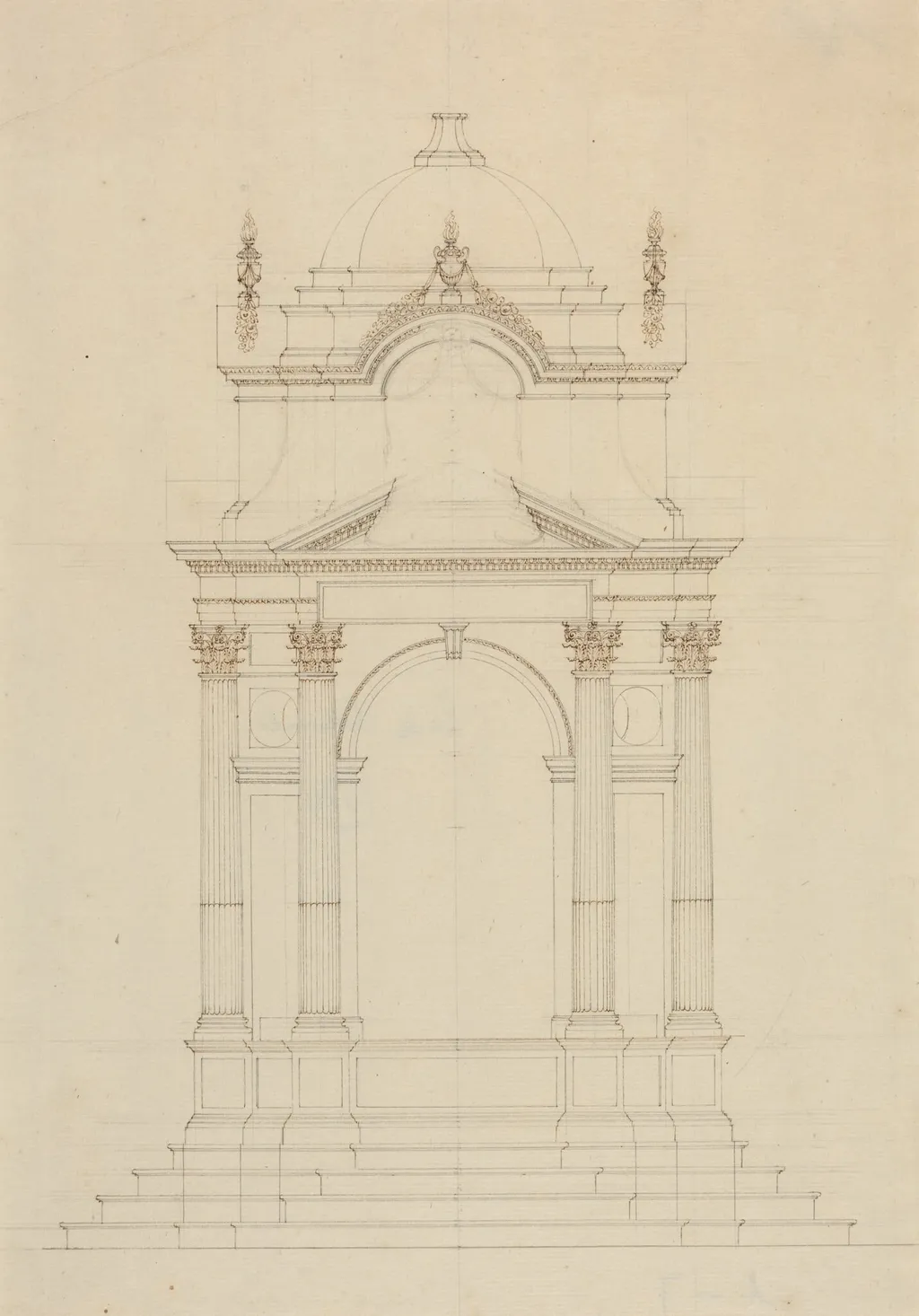
Design for a Baldaquin is an ink drawing by the Baroque artist French 18th Century. It dates from 1750 and is held in the collection of the National Gallery of Art.
About this work
Overview
The composition emphasizes verticality and ornamentation, suggesting a design intended for a prominent interior space such as a church altar or royal dais.
This ink drawing on laid paper presents a detailed architectural proposal for a baldaquin, a canopy-like structure often used in ecclesiastical or ceremonial settings. Executed in pen with black and brown ink over graphite underdrawing, it reflects the precision of a working blueprint. The composition emphasizes verticality and ornamentation, suggesting a design intended for a prominent interior space such as a church altar or royal dais.
Subject & Meaning
The structure depicted combines classical columns with elaborate capitals and a curved entablature adorned with decorative motifs. Its form implies a sacred or authoritative function, likely meant to frame a focal point such as a throne or altar. The emphasis on symmetry and elevated placement underscores its role in signaling importance within a ritual or ceremonial context.
Technique & Style
The artist employed fine, controlled lines to define architectural elements with clarity, using graphite for initial layout and ink for final definition. Details such as acanthus leaves, moldings, and rhythmic ornamentation are rendered with methodical precision. The absence of shading or color reinforces its function as a schematic design, prioritizing structural legibility over atmospheric effect.
History & Provenance
The drawing’s origin is tied to the Baroque period’s architectural practices, likely produced by a designer or draftsman working for a church, court, or noble patron. While its exact provenance remains undocumented, its style aligns with European workshop traditions of the 17th century, where such drawings served as proposals before construction or carving.
Context
In the Baroque era, baldaquins were integral to liturgical and dynastic spectacle, often commissioned for cathedrals and palaces to emphasize hierarchy and grandeur. This drawing reflects the period’s fascination with theatrical space and ornamental richness, where architecture functioned as both structure and symbol, blending classical forms with expressive embellishment.
Legacy
As a surviving example of architectural draftsmanship, the drawing illustrates the transition from conceptual design to built form in early modern Europe. It preserves the methodology of designers who translated abstract ideals into tangible structures, offering insight into the collaborative and iterative nature of Baroque architectural production.
Artist & collection

Artist
This artist worked in late 18th-century France, making portrait paintings and etched prints.

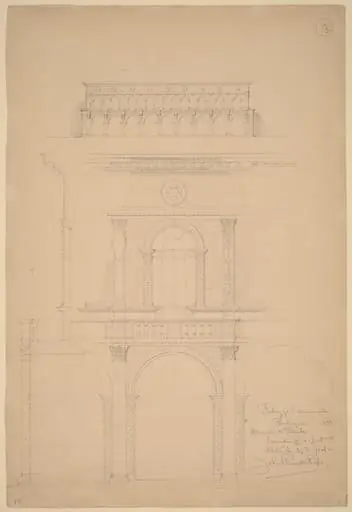 Palazzo Communale, Bologna
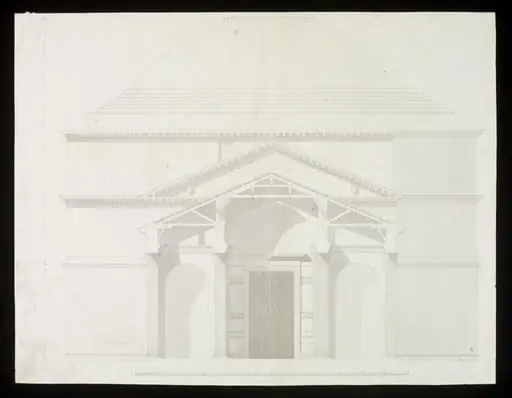 Longitudinal section through Pantheon portico
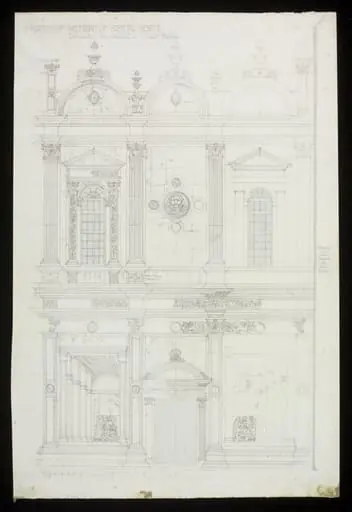 Untitled
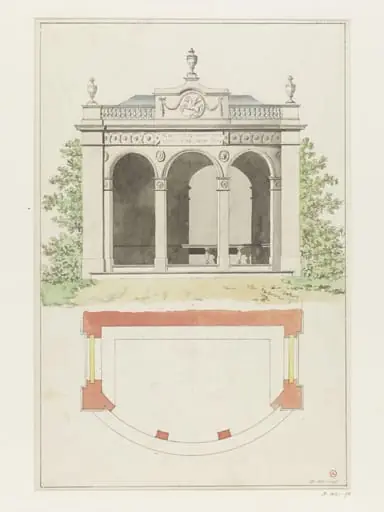 Drawing of a pavilion
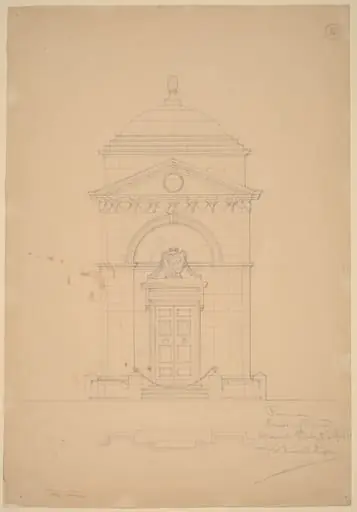 Tomb of Dante, Ravenna
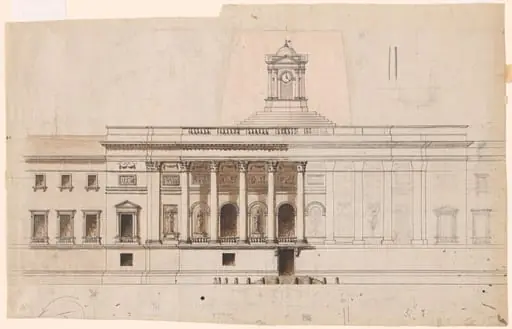 Architectural Study
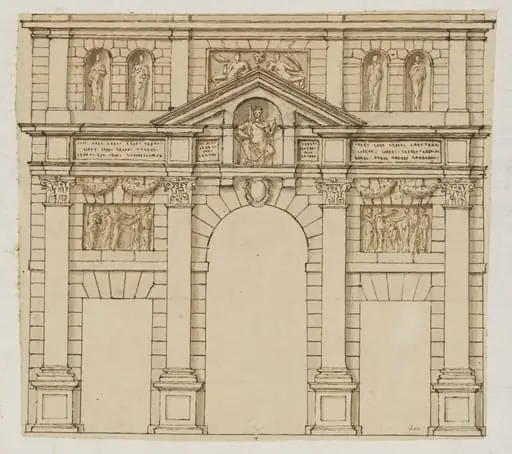 Study for a gateway
 Siena Cathedral, Entrance to Library
 Triumphal Gateway at Hyde Park Corner
 Study for "The Seconda Macchina for the Chinea of 1754: An Allegory of Waterworks"