Artwork
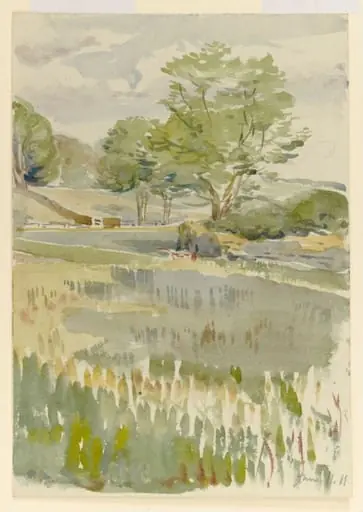
Sketch of the garden at Gwaynynog, Denbigh for <i>The Tale of the Flopsy Bunnies</i>
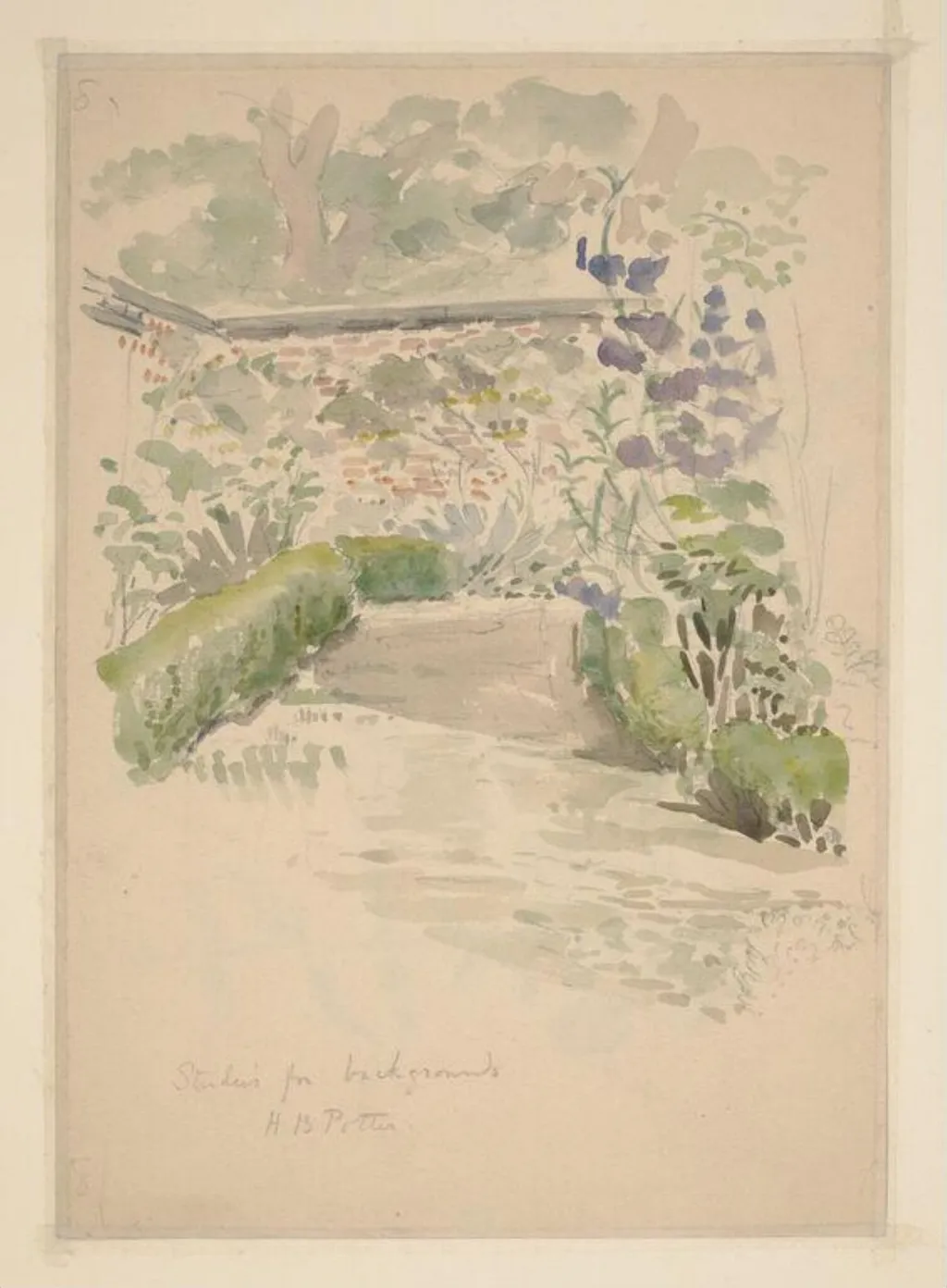
Sketch of the garden at Gwaynynog, Denbigh for <i>The Tale of the Flopsy Bunnies</i> is a watercolor work on paper by the Post-Impressionist artist Beatrix Potter. It dates from 1909 and is held in the collection of the Victoria and Albert Museum.
About this work
Beatrix Potter painted this watercolour of a garden in 1909. It was a place she visited often in Denbigh. The sketch later inspired a story she never finished.
Potter spent years drawing plants and landscapes. This garden scene shows how she blended real places with her imaginary tales.
Check out more of Potter’s work at the Victoria and Albert Museum.
Overview
The sketch was made during her work on The Tale of the Flopsy Bunnies and served as a reference for its illustrations.
This watercolour, created by Beatrix Potter in 1909, depicts the garden at Gwaynynog, a country house in Denbigh, Wales, where she spent time during annual family visits. The sketch was made during her work on The Tale of the Flopsy Bunnies and served as a reference for its illustrations. Though the garden inspired multiple unpublished stories, this piece remains a quiet record of her direct engagement with the natural world that shaped her narratives.
Subject & Meaning
The scene captures a cultivated yet informal garden, with flowering plants mingling among fruit bushes, reflecting Potter’s own description of the space as 'old-fashioned' and vibrant. While the illustration was used for a published tale, it also connects to an unpublished story, 'Llewellyn's Well,' suggesting the garden held personal resonance beyond its commercial use. The setting embodies her tendency to anchor fantasy in tangible, observed landscapes.
Technique & Style
Potter rendered the garden in delicate watercolour, using precise brushwork to distinguish individual blooms, foliage, and the texture of earth. Her approach combined botanical accuracy with a soft, atmospheric tone, avoiding overt sentimentality. The composition is uncluttered, focusing on natural arrangements rather than idealized beauty, revealing her training in natural history illustration and her preference for observational truth over fantasy embellishment.
History & Provenance
Potter first visited Gwaynynog in 1903, returning regularly until the early 1910s. The garden became a recurring motif in her work, appearing in both published and unpublished manuscripts. This 1909 sketch was made during a focused period of illustration work for The Tale of the Flopsy Bunnies, when she gathered numerous outdoor studies to complete the book efficiently. The watercolour remained in her personal collection until her death.
Context
During this period, Potter balanced her literary career with a deep interest in natural science, particularly mycology and landscape observation. Her illustrations drew from real locations—Gwaynynog, the Lake District, and Scottish estates—transforming them into believable backdrops for animal characters. The garden sketches were not mere decorations but essential tools in constructing immersive, grounded worlds for her stories.
Legacy
This watercolour exemplifies how Potter’s artistic practice bridged documentation and storytelling. Her habit of sketching from life informed the authenticity of her book illustrations and contributed to the enduring realism of her fictional settings. Though many of her unpublished tales faded from view, her garden studies remain as evidence of her disciplined observation and the quiet, persistent connection between place and narrative in her creative process.
Artist & collection
Artist
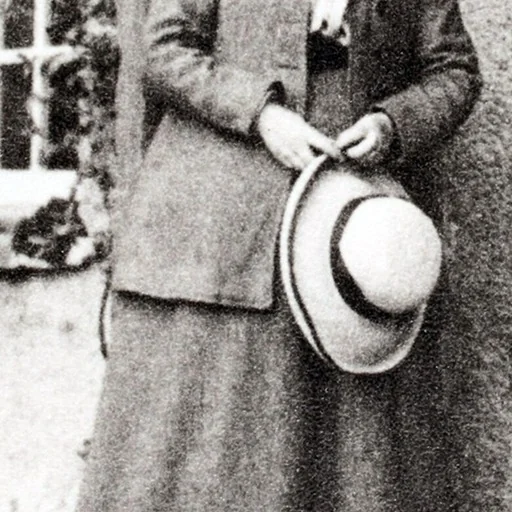
Helen Beatrix Heelis (née Potter; 28 July 1866 – 22 December 1943), usually known as Beatrix Potter ( BEE-ə-triks), was an English writer, illustrator, natural scientist, and conservationist.

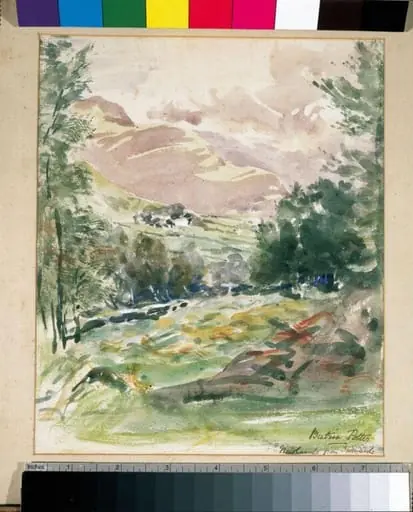
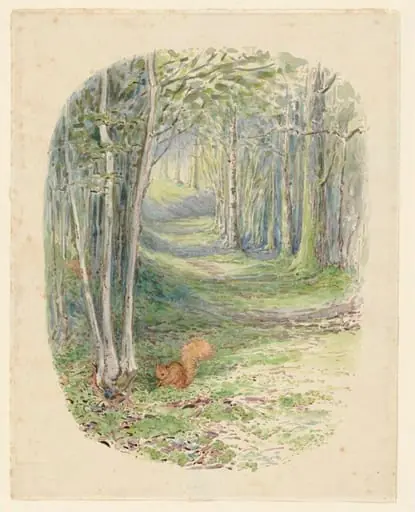
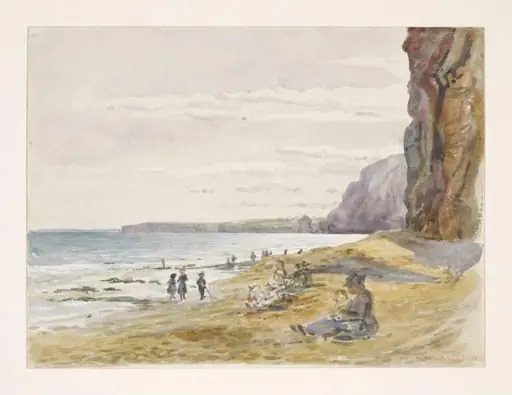
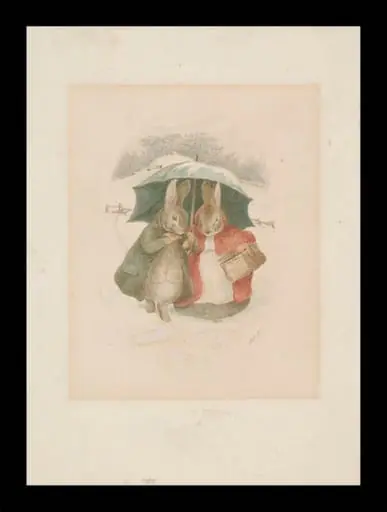
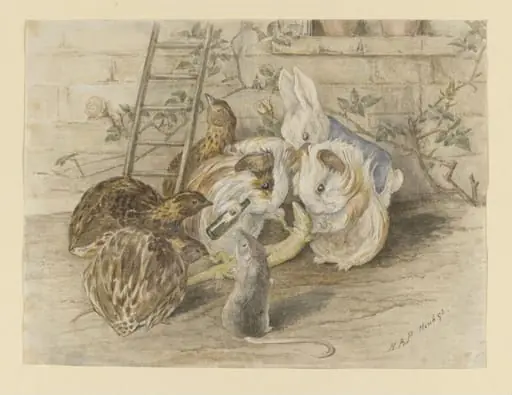
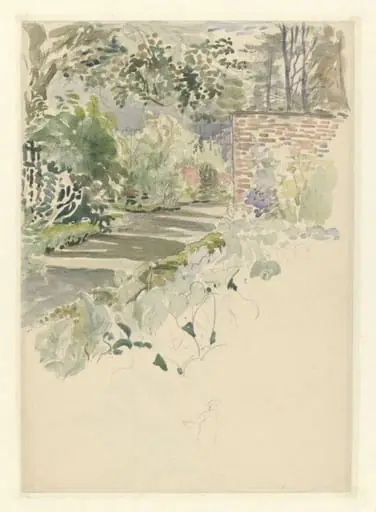 Sketch of the garden at Gwaynynog for the frontispiece of <i>The Tale of the Flopsy Bunnies</i>
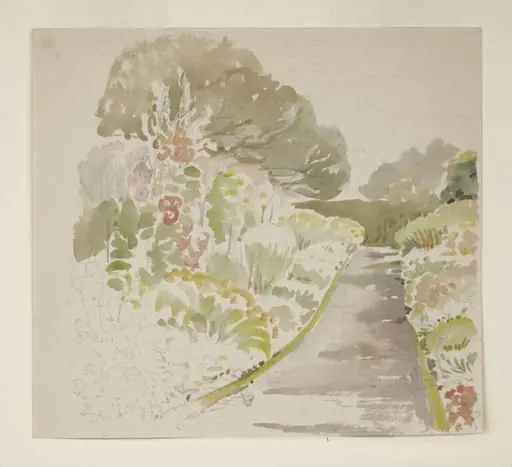 Sketch of a path and flower beds in the garden at Gwaynynog
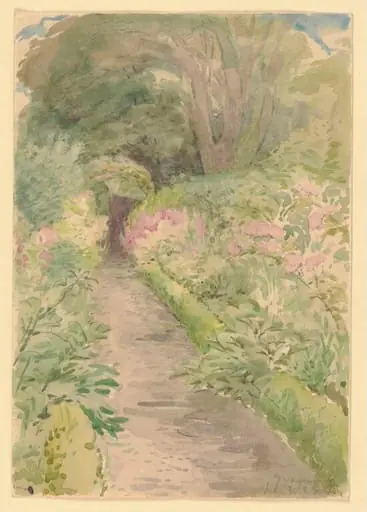 Sketch of the garden at Gwaynynog
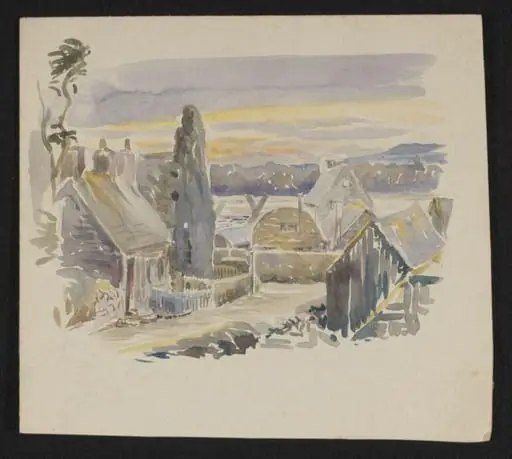
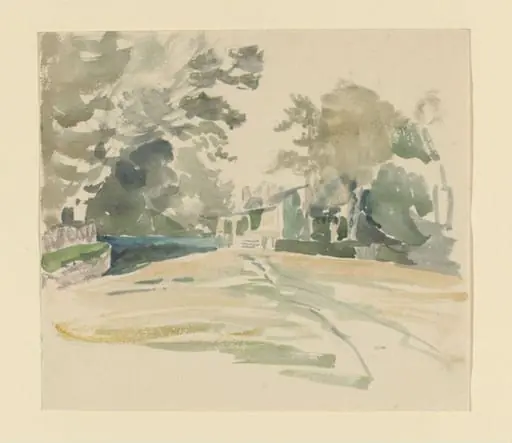 Sketch of Gwaynynog, Denbigh
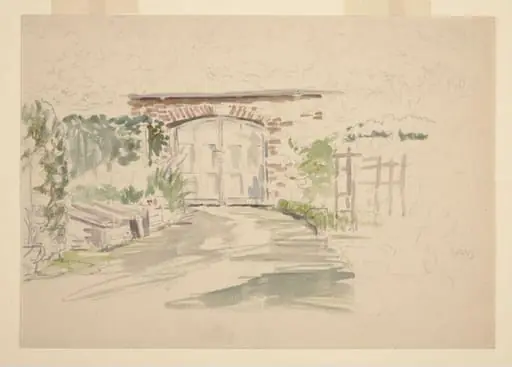 Sketch of a path and gate in the garden at Gwaynynog
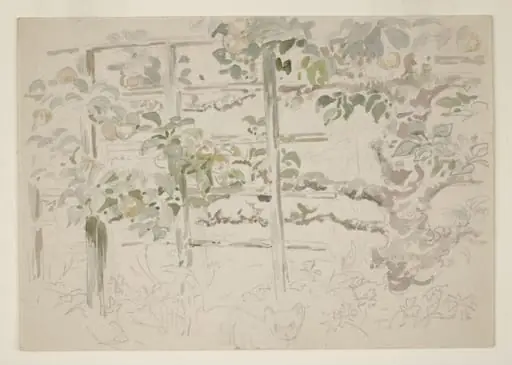 Trellis and apple tree in the garden at Gwaynynog
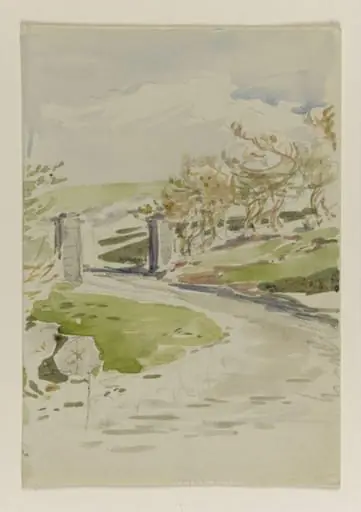 A pathway to moorland, passing through a stone gateway
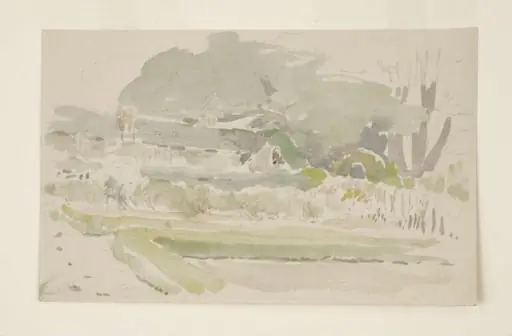 Sketch of the garden and potting shed at Gwaynynog
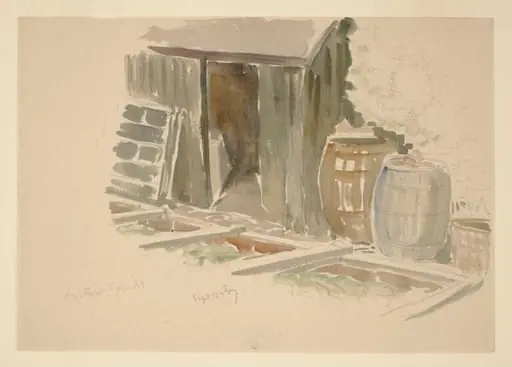 Sketch of a shed, cold frames and water butts in the garden at Gwaynynog
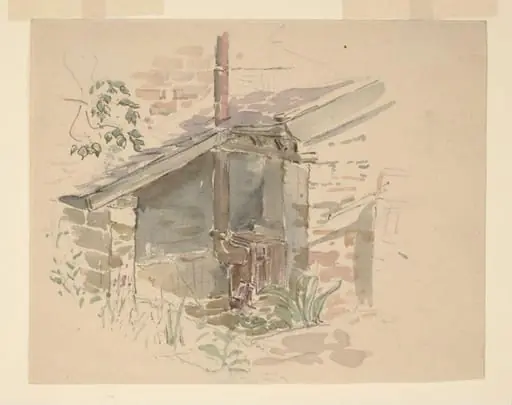 A garden shed with iron stove and chimney in the garden at Gwaynynog
 Untitled
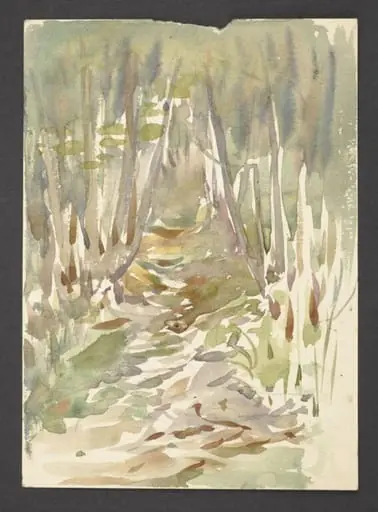 A path through a woodland in autumn