Artwork
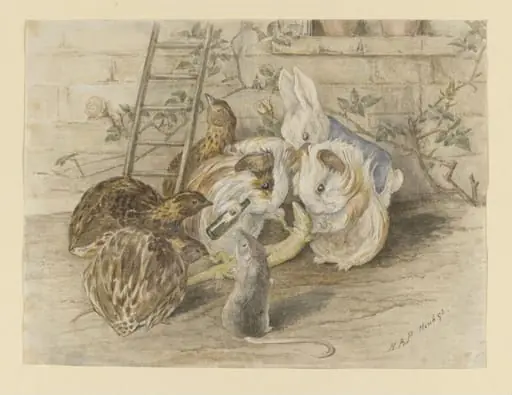
The Amiable Guinea-pig
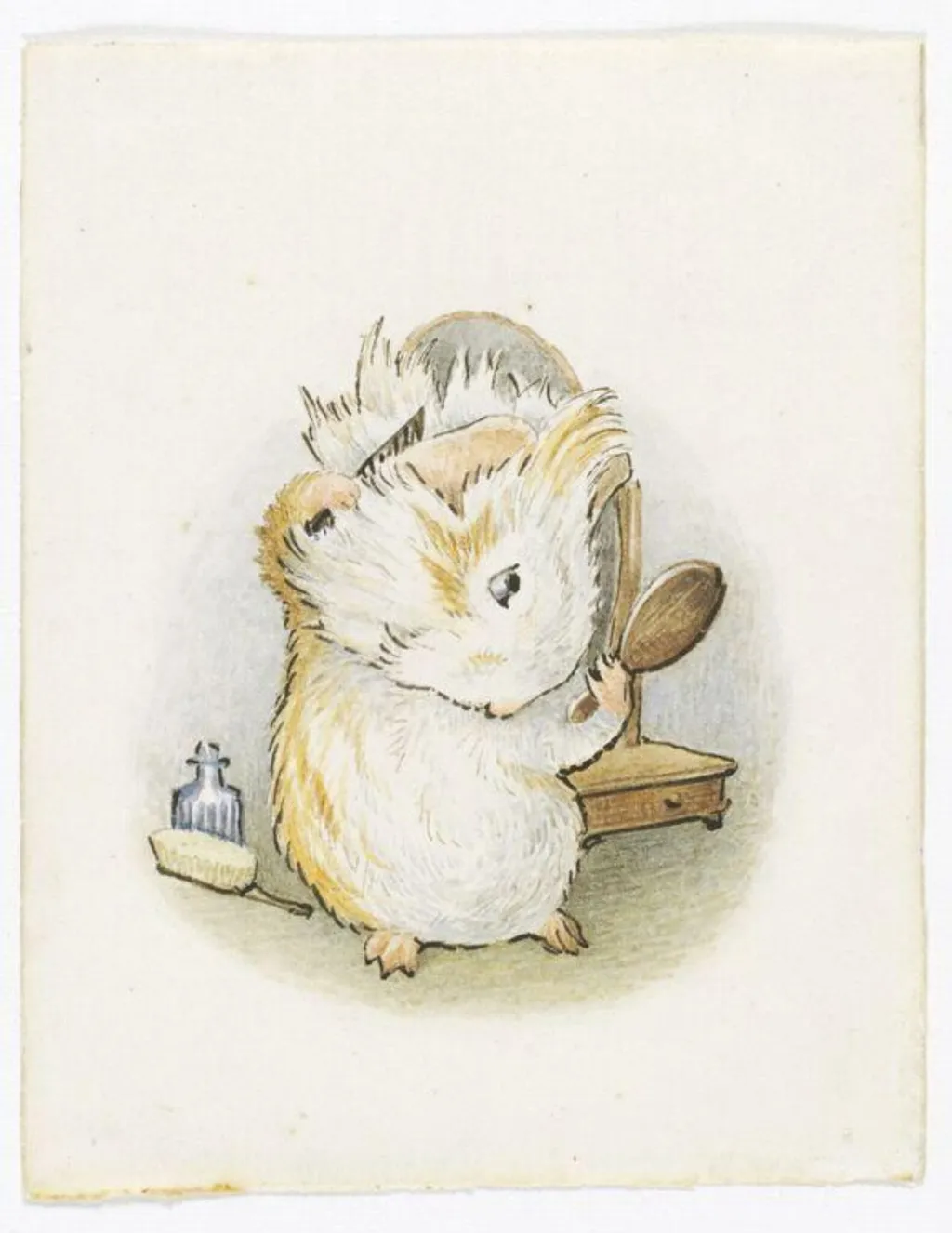
The Amiable Guinea-pig is a watercolor work on paper by Beatrix Potter. It dates from 1917 and is held in the collection of the Victoria and Albert Museum.
About this work
Overview
The Amiable Guinea-pig is a watercolour illustration by Beatrix Potter, created around the time of her work on Appley Dapply's Nursery Rhymes (1917). Although not featured in the book, a line version of the piece appeared on the title page.
Subject & Meaning
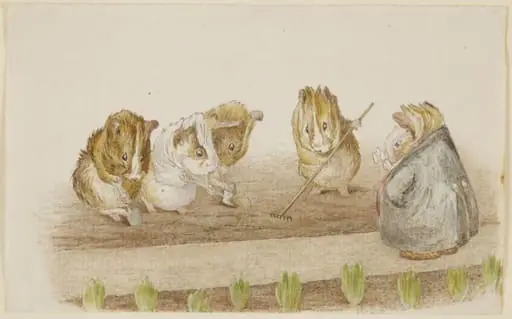
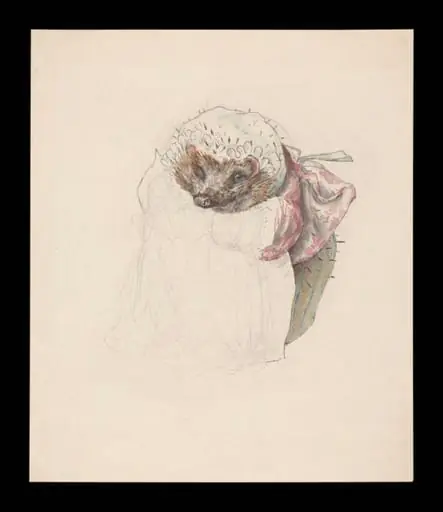
The illustration depicts a personified guinea-pig with human-like grooming habits and attire, reflecting Potter's whimsical interpretation of a nursery rhyme character. The subject's unusual appearance, as described in the accompanying verse, showcases Potter's ability to bring playful, imaginative storytelling to life.
Technique & Style
Executed in watercolour, the piece exhibits Potter's characteristic attention to detail and ability to convey personality through subtle, expressive rendering. The style aligns with her work in children's literature, blending realism with fantastical elements.
History & Provenance
Originally conceived for a book of rhymes in the early 1900s, the illustration was revisited and adapted in 1917 for potential inclusion in Appley Dapply's Nursery Rhymes. Despite not being used in its full form within the book, a line version was incorporated into the title page design.
Context
Created during a period when Potter was revisiting earlier ideas to support her publisher, Frederick Warne, through financial difficulties, The Amiable Guinea-pig reflects her ongoing engagement with nursery rhyme traditions, notably influenced by Edward Lear's style.
Artist & collection
Artist
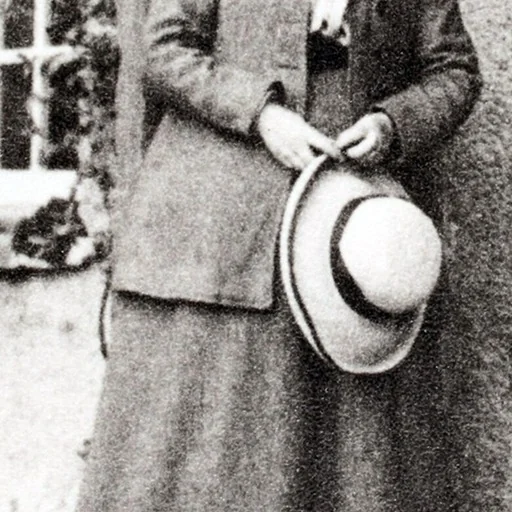
Helen Beatrix Heelis (née Potter; 28 July 1866 – 22 December 1943), usually known as Beatrix Potter ( BEE-ə-triks), was an English writer, illustrator, natural scientist, and conservationist.