Artwork
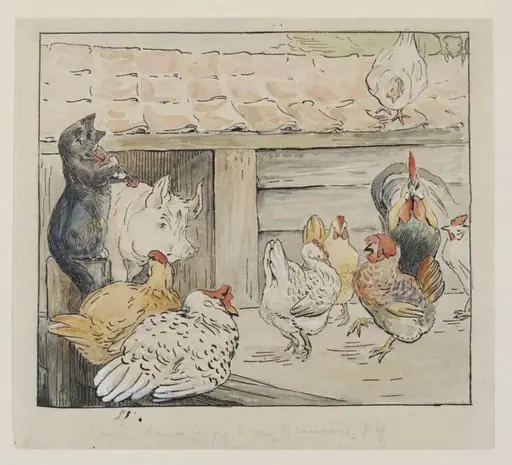
Aunt Pettitoes feeding her piglets
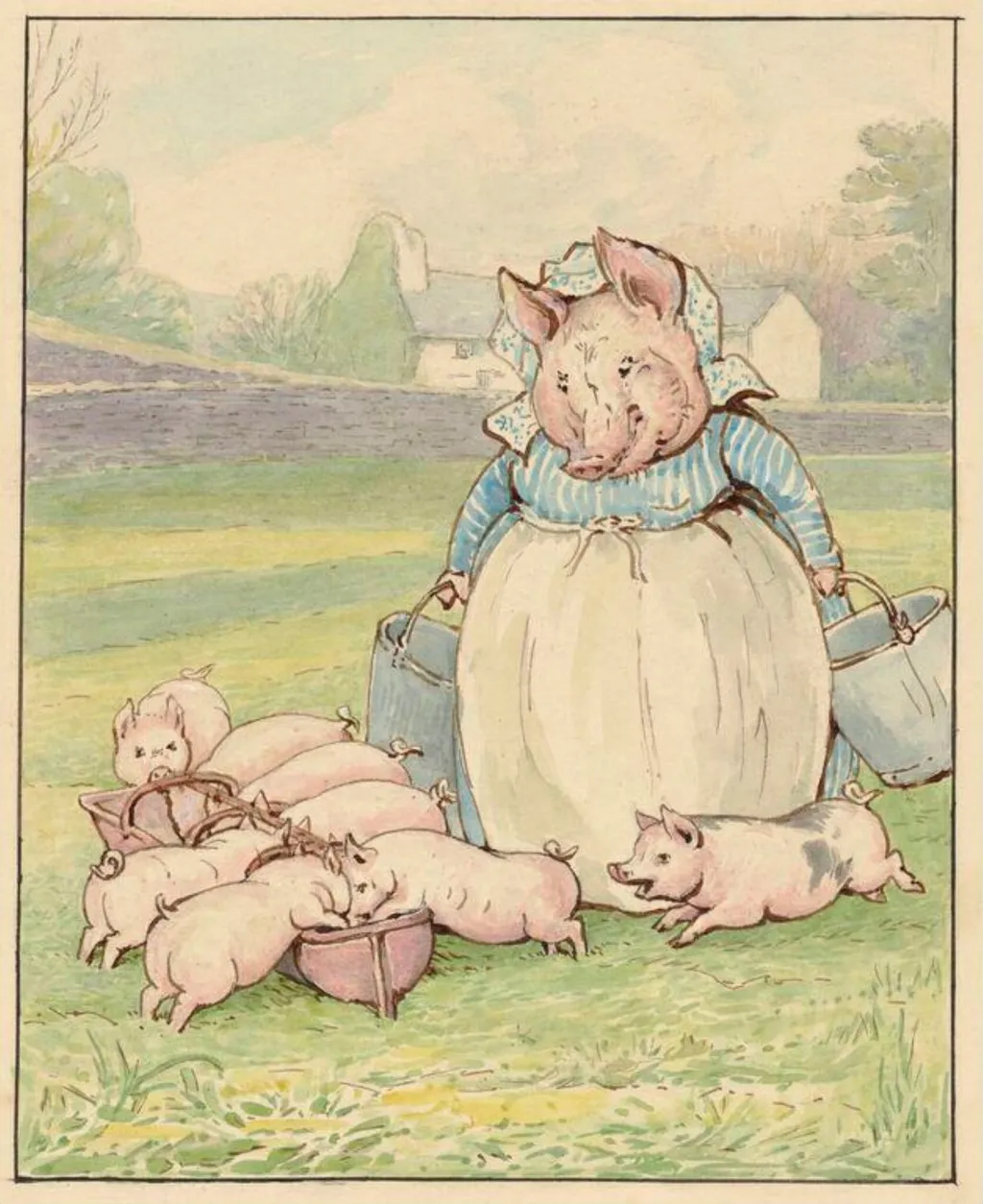
Aunt Pettitoes feeding her piglets is a watercolor work on paper by Beatrix Potter. It dates from 1913 and is held in the collection of the Victoria and Albert Museum.
About this work
Beatrix Potter painted it in 1913 for her book *The Tale of Pigling Bland*.
This watercolor shows Aunt Pettitoes tending to her piglets. Beatrix Potter painted it in 1913 for her book *The Tale of Pigling Bland*. She often made small paintings like this for her stories.
Potter had eight piglets in the tale. She wrote that eight was too many to care for at once. The watercolor was a working sketch, not the final book illustration.
Check out more at the Victoria and Albert Museum.
Overview
This watercolour by Beatrix Potter, created in 1913, served as a preparatory study for her illustrated book The Tale of Pigling Bland. Unlike the final published image, this version captures a private, observational moment—Aunt Pettitoes, a mother pig, tending to her litter. Potter produced numerous such sketches during her book-making process, using watercolour to explore composition and character before committing to print.
Subject & Meaning
The scene depicts Aunt Pettitoes, a character introduced as overwhelmed by the burden of raising eight piglets, a detail Potter included to reflect practical limits of care. The painting emphasizes quiet domesticity rather than anthropomorphic whimsy. Her posture and the piglets’ clustered forms suggest exhaustion and tenderness, reinforcing the story’s subtle commentary on overpopulation and responsibility.
Technique & Style
Potter employed delicate watercolour washes with precise, fine-line detailing to render fur, skin, and the texture of the pigsty. Her brushwork is restrained, avoiding theatricality in favour of naturalism. The palette is muted—earthy browns, soft greys, and pale pinks—mirroring the rural setting and enhancing the sense of quiet realism that underpins her storytelling.
History & Provenance
The watercolour was made as part of Potter’s working process for The Tale of Pigling Bland, published in 1913. It was never intended for public display but remained in her personal collection. After her death, many such studies entered institutional holdings; this piece is now held by the Victoria and Albert Museum, where it is preserved as evidence of her meticulous artistic method.
Context
During the early 20th century, Potter balanced commercial illustration with personal interest in natural history and animal husbandry. Her illustrations drew from direct observation of farm life, particularly around her Lake District property. The inclusion of eight piglets reflects her familiarity with livestock breeding, and her choice to depict their care underscores a quiet realism uncommon in children’s literature of the time.
Legacy
This sketch exemplifies Potter’s commitment to accuracy and emotional restraint in her visual narratives. While her published tales gained enduring popularity, these preparatory works reveal the depth of her artistic discipline. Today, such studies are valued not merely as children’s book artifacts but as significant examples of early 20th-century British illustration grounded in close observation.
Artist & collection
Artist
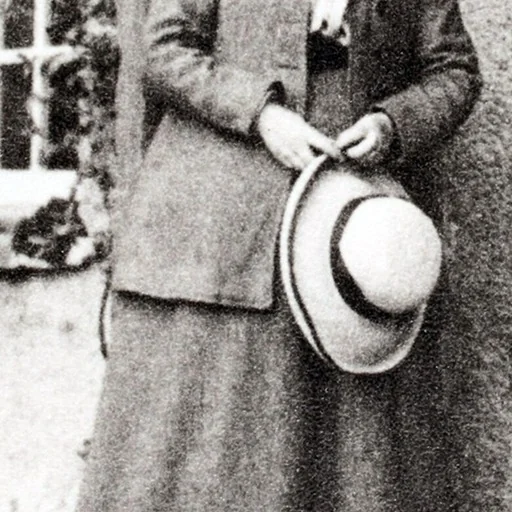
Helen Beatrix Heelis (née Potter; 28 July 1866 – 22 December 1943), usually known as Beatrix Potter ( BEE-ə-triks), was an English writer, illustrator, natural scientist, and conservationist.

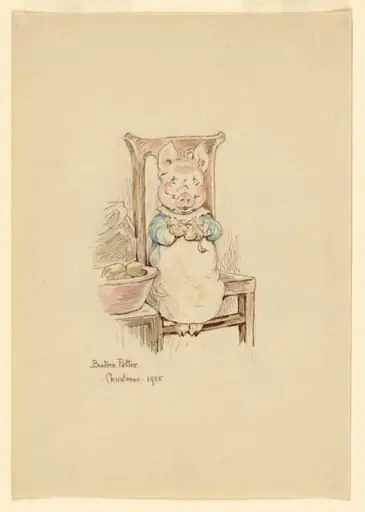 Design for a Christmas card: little pig sitting in a chair
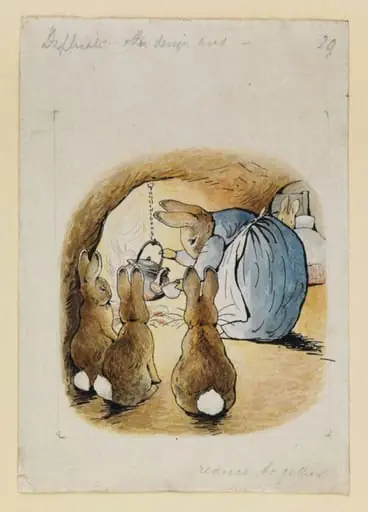 Mrs Rabbit pouring out the tea for Peter while her children look on: variant illustration for The tale of Peter Rabbit
 Pigs in a Barnyard
 A mouse knitting
 Peter by the door in the wall
 "Gentlemen came every day"
 Come dance a jig to my Granny's pig