Artwork
Standing Cow (Cow with a Crumpled Horn)
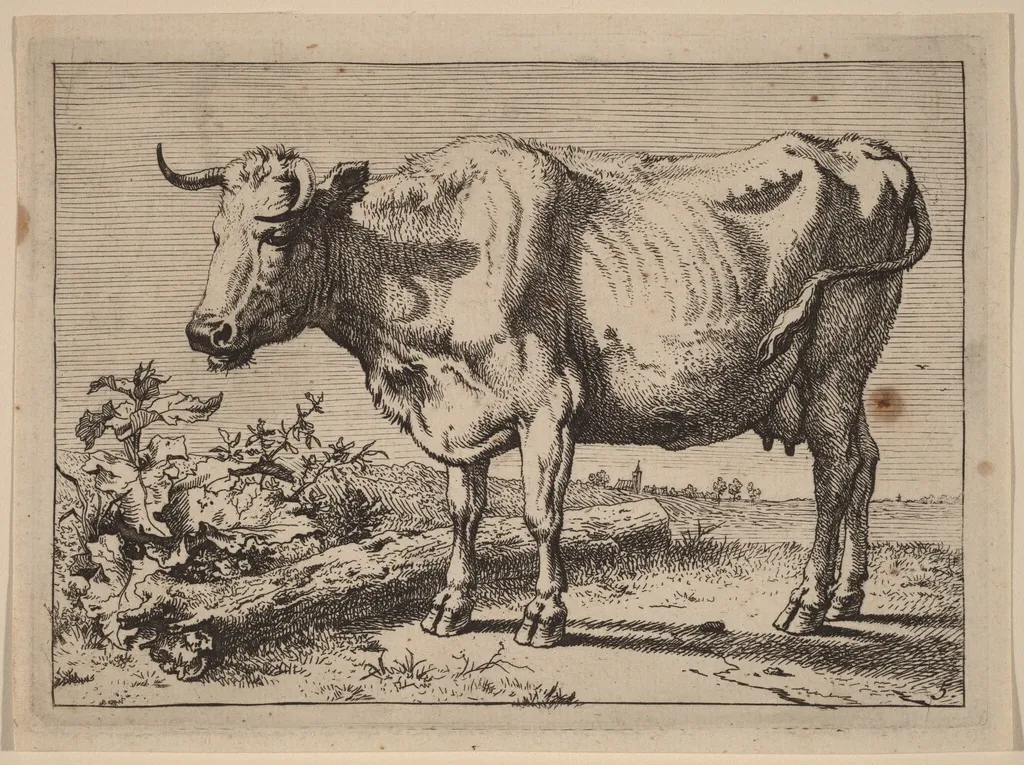
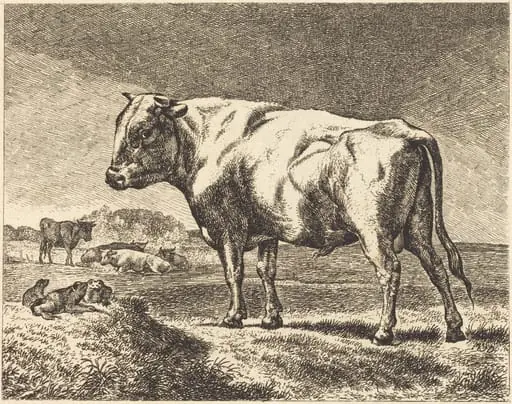
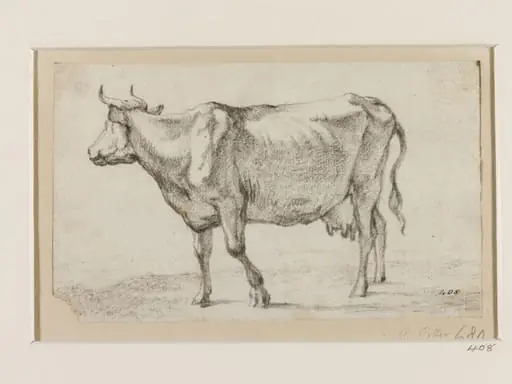
Standing Cow (Cow with a Crumpled Horn) is an ink print by the Baroque artist Paulus Potter. It dates from 1650 and is held in the collection of the National Gallery of Art.
About this work
Overview
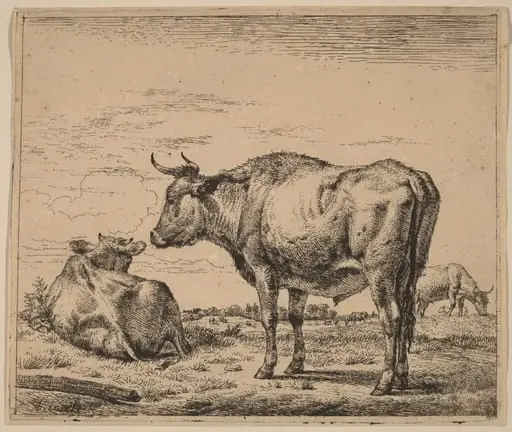
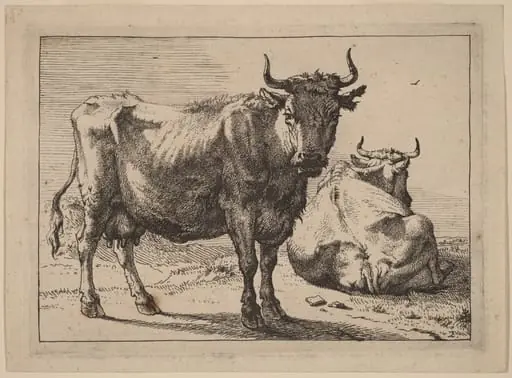
Standing Cow (Cow with a Crumpled Horn) is a 1650 etching by Dutch artist Paulus Potter, known for his animal-centric landscapes. The work features a cow in a natural setting, characterized by meticulous line work and texture rendering.
Subject & Meaning
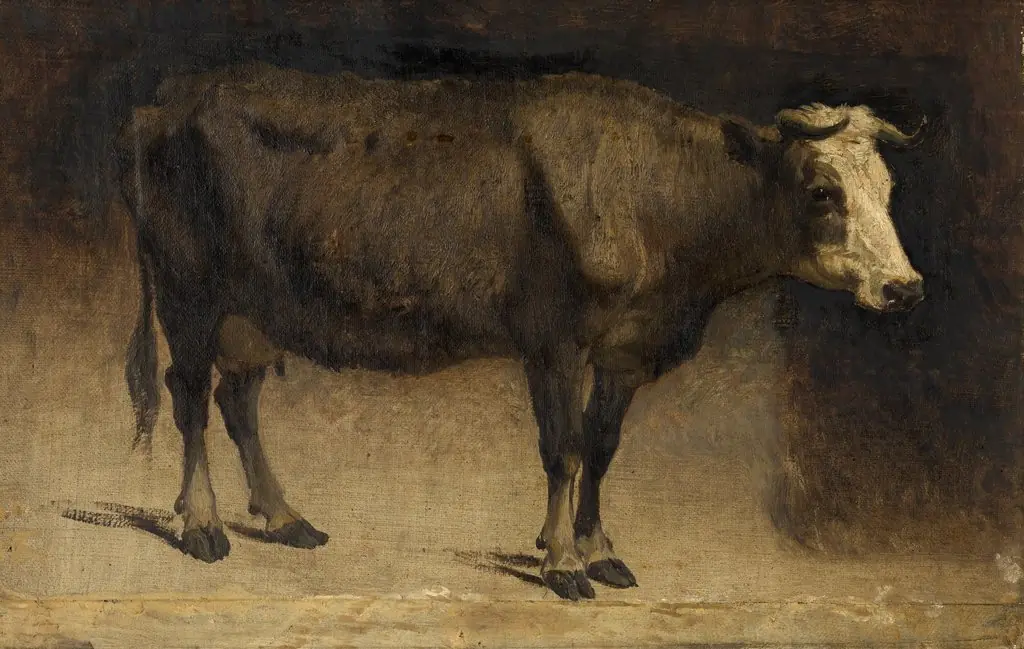
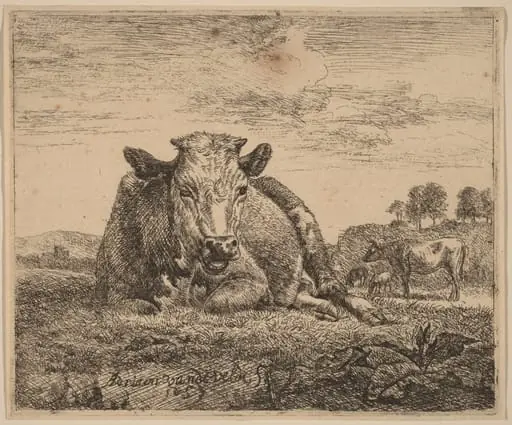
The etching depicts a standing cow with distinctive features: a large head, curved horns (one of which appears crumpled), and a patchy coat. The cow is engaged in eating grass near bushes, with a distant village or church steeple in the background, situating the animal within a serene, inhabited landscape.
Technique & Style
Potter utilized etching techniques to achieve detailed textures, such as the cow's fur and the grass, without the use of color. The low vantage point, a hallmark of Potter's style, emphasizes the cow's presence.
History & Provenance
Created in 1650 by Paulus Potter (1625-1654), who died at 28 from tuberculosis, having produced approximately 100 works in his short career. Specific provenance details for this etching are not provided.
Context
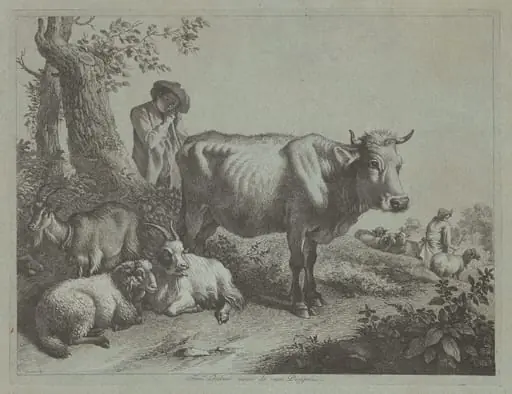
Standing Cow reflects Potter's specialization in animal depictions, often from a low perspective, contributing to the Dutch Golden Age's emphasis on detailed, realistic natural and animal scenes in art.
Legacy
While Standing Cow exemplifies Potter's contributions to Dutch animalist art, the broader impact of this specific etching on subsequent art movements or trends is not explicitly documented in the provided information.
Own this work as a print
Artist & collection
Artist
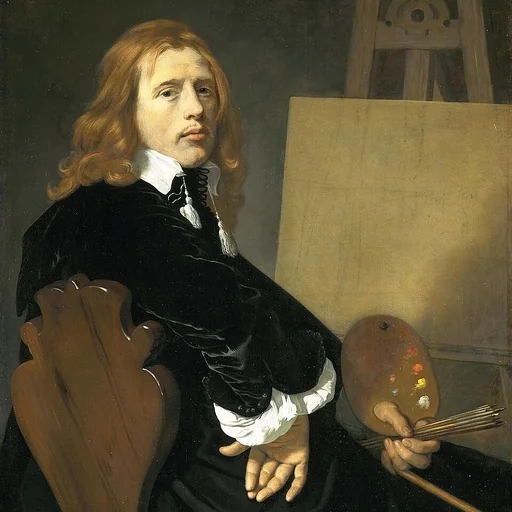
Paulus Potter (Dutch pronunciation: ; 20 November 1625 (baptised) – 17 January 1654 (buried)) was a Dutch painter who specialized in landscapes featuring animals, often from a low vantage point.