Artwork
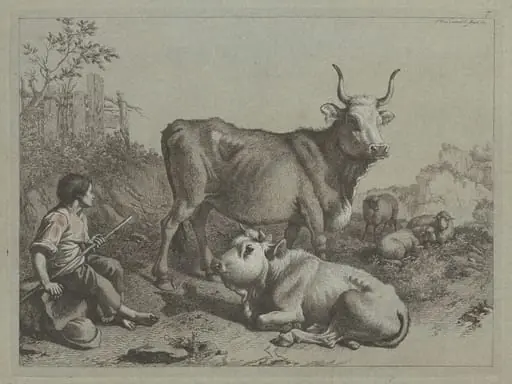
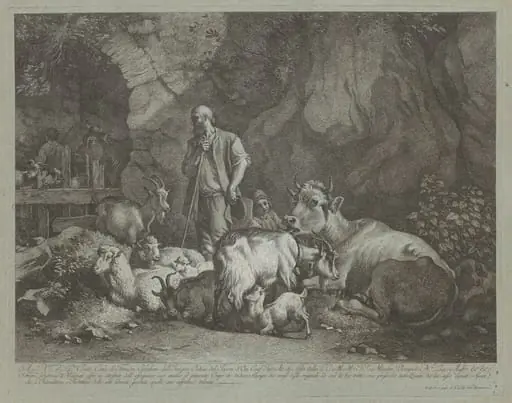
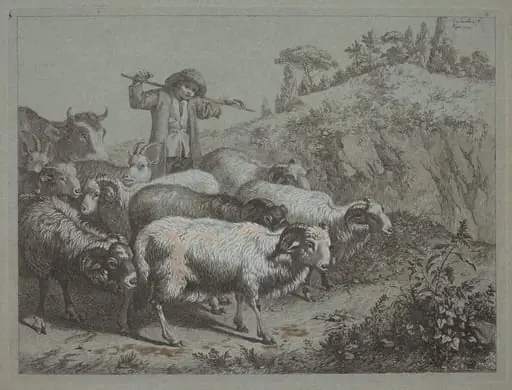
Standing Cow and a Shepherd Boy with Flock
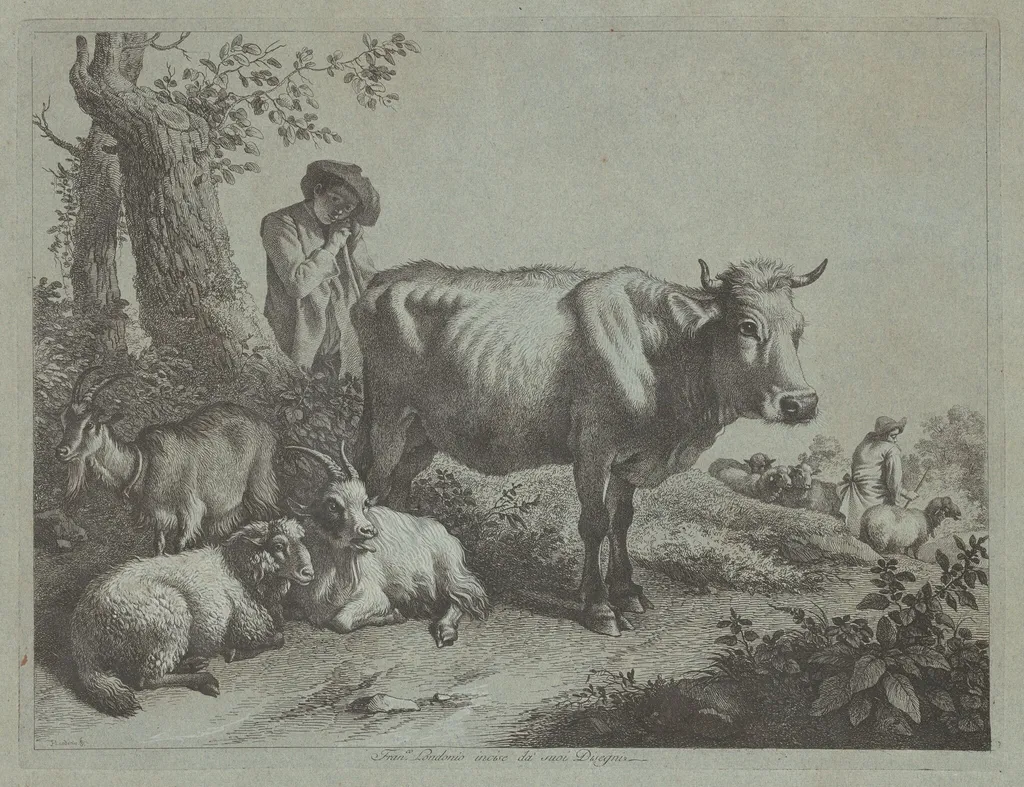
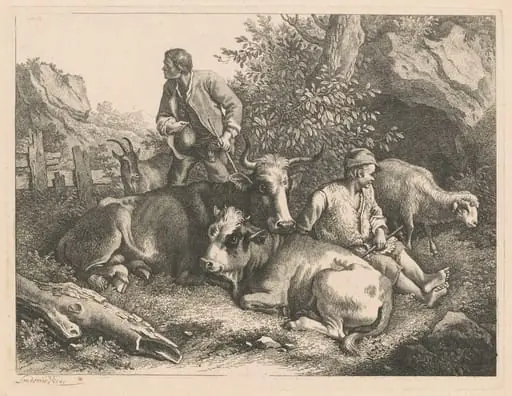
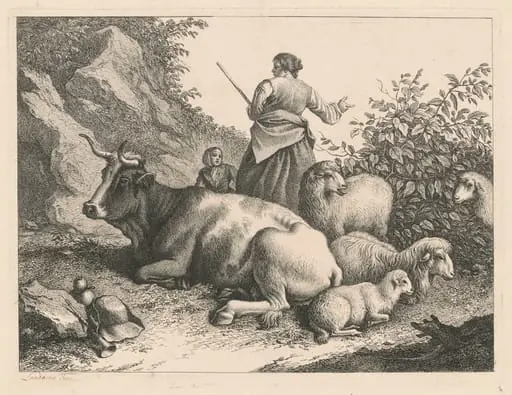
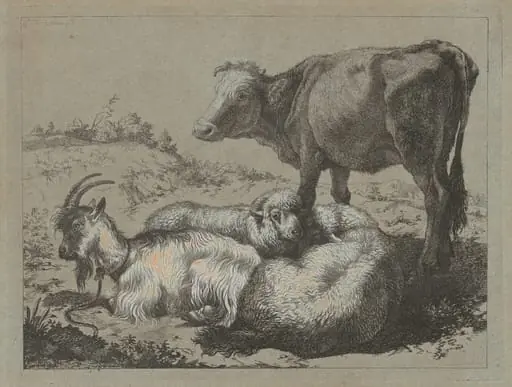
Standing Cow and a Shepherd Boy with Flock is an ink print by the Romanticist artist Francesco Londonio. It dates from 1764 and is held in the collection of the National Gallery of Art.
About this work
Overview
This print, dated circa 1764, is an etching by Francesco Londonio, an artist active in Milan during the late Baroque and Rococo periods.
This print, dated circa 1764, is an etching by Francesco Londonio, an artist active in Milan during the late Baroque and Rococo periods. Executed on blue laid paper with white heightening, it exemplifies the artist’s engagement with pastoral subjects. Londonio’s training in Milan under Ferdinando Porta and Giovanni Battista Sassi, alongside his study of engraving with Benigno Bossi, informed his approach to composition and technique.
Subject & Meaning
The scene depicts a shepherd boy standing beside a cow, accompanied by a flock of sheep. The contrast between the boy’s modest scale and the cow’s imposing form underscores a quiet harmony between human and animal. Such pastoral imagery, drawn from rural life, catered to the tastes of Northern Italian patrons, who valued depictions of the countryside as both idyllic and morally instructive.
Technique & Style
Londonio employed etching on blue laid paper, a method that allowed for subtle tonal variation. White heightening—applied to emphasize the cow’s form—creates a luminous effect, making the animal appear almost spectral against the darker background. This technique, combined with fine linear detail, lends the work a delicate yet dynamic quality, characteristic of his printmaking.
History & Provenance
Active in Milan, Londonio produced this work during a period when pastoral scenes gained popularity among collectors. His travels to Rome and Naples may have influenced his thematic choices, though the print itself remains tied to the artistic circles of Northern Italy. Little documentation survives regarding its early ownership, but it reflects the broader market for genre scenes in the late 18th century.
Context
Pastoral themes flourished in European art during the 18th century, appealing to urban elites who romanticized rural simplicity. Londonio’s work aligns with this trend, offering an idealized vision of peasant life. His focus on animals and shepherds also reflects the era’s interest in naturalism, though filtered through a decorative and sentimental lens suited to aristocratic patrons.
Legacy
Londonio’s prints contributed to the dissemination of pastoral imagery in Northern Italy, reinforcing the genre’s appeal among collectors. While less celebrated than his paintings, his etchings demonstrate a mastery of technique and composition. Today, works like this provide insight into the artistic tastes of the Rococo period and the enduring fascination with rural subjects.
Own this work as a print
Artist & collection

Artist
Francesco Londonio (1723–1783) was an Italian painter, engraver, and scenographer, active mainly in his native Milan in a late-Baroque or Rococo style.