Artwork
The Cowherd
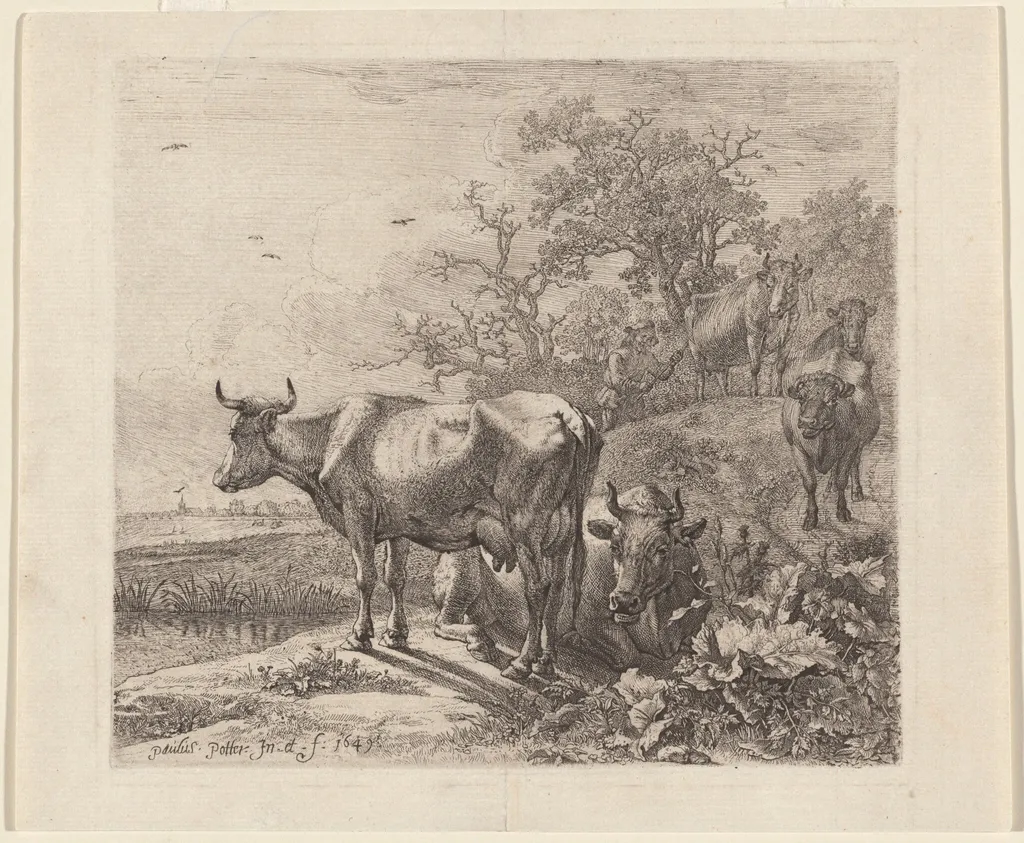
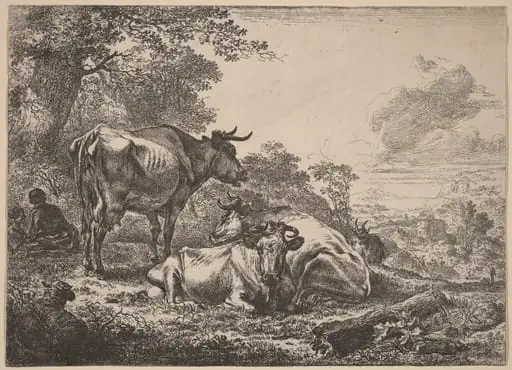
The Cowherd is an ink print by the Baroque artist Paulus Potter. It dates from 1643 and is held in the collection of the National Gallery of Art.
About this work
Overview
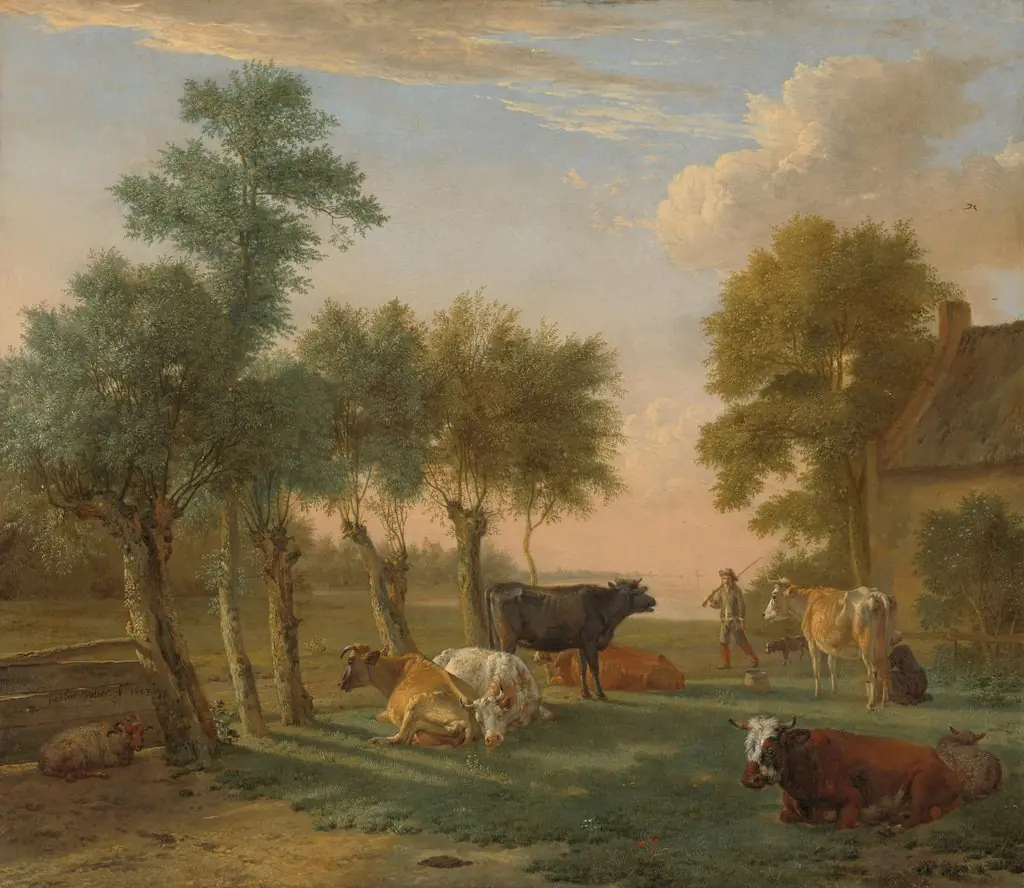
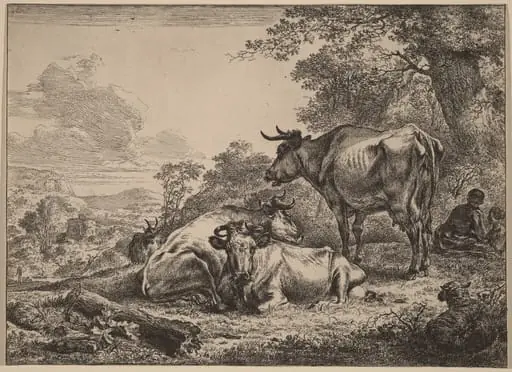
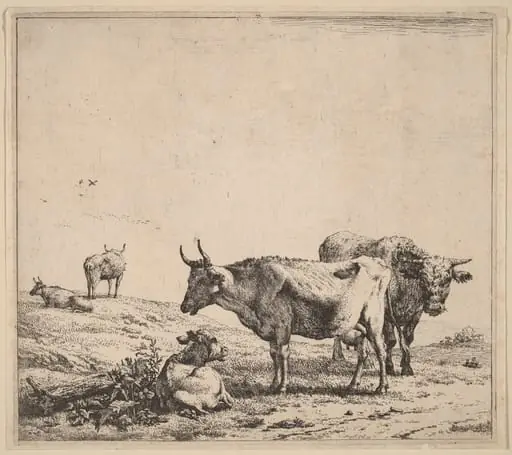
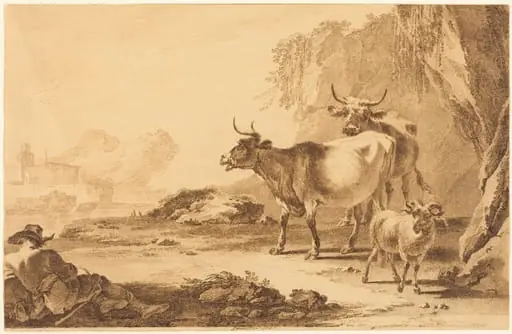
Created in 1643, *The Cowherd* is an etching on laid paper by Dutch artist Paulus Potter. The print presents a quiet pastoral tableau in which a herder watches over a small herd of cattle set upon a gentle rise, framed by vegetation and a distant waterway.
Subject & Meaning
The composition centers on three cows positioned in the foreground and a fourth further back, all under the watchful eye of a lone cowherd. The figure appears absorbed in his duties, evoking a sense of calm labor and the harmonious relationship between man and livestock in a rural setting.
Technique & Style
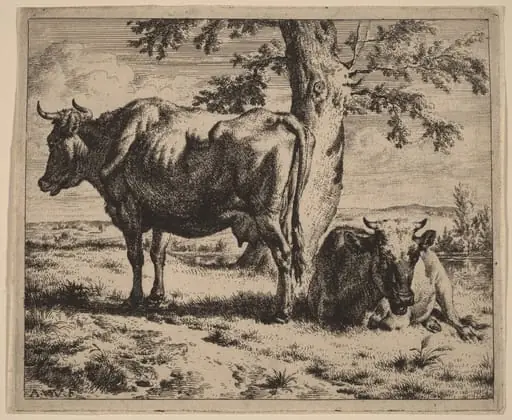
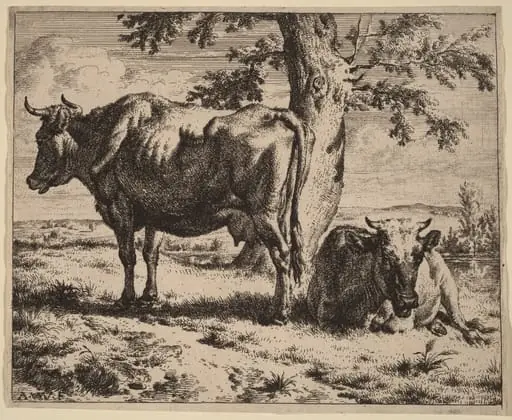
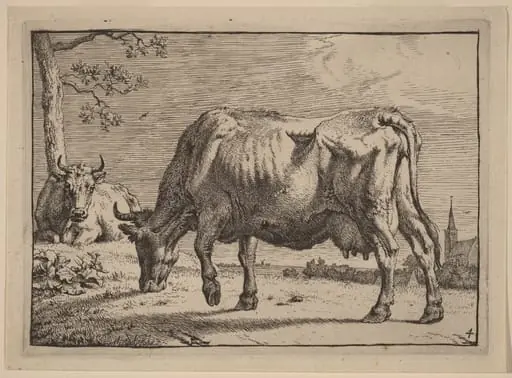
Executed with fine etched lines, the work exploits the texture of laid paper to render delicate shading and intricate detail. Potter’s handling of line creates depth through the placement of a solitary tree and distant landscape elements, while the tonal variations suggest the soft atmospheric light typical of mid‑17th‑century Dutch landscape prints.
History & Provenance
Paulus Potter, baptized in 1625, produced a modest output before his death from tuberculosis in 1654 at the age of twenty‑eight. Though primarily a painter of animal scenes, his foray into printmaking resulted in a limited number of works, of which *The Cowherd* is a representative example of his graphic practice.
Context
The print belongs to the broader Baroque period in the Netherlands, a time when artists frequently explored naturalistic depictions of the countryside. Potter’s focus on animals aligns with contemporary interests in detailed observation of everyday life and the Dutch fascination with agrarian prosperity.
Own this work as a print
Artist & collection
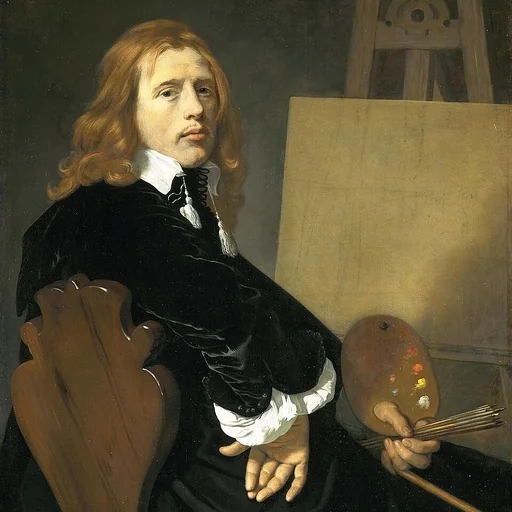
Artist
Paulus Potter (Dutch pronunciation: ; 20 November 1625 (baptised) – 17 January 1654 (buried)) was a Dutch painter who specialized in landscapes featuring animals, often from a low vantage point.