Artwork
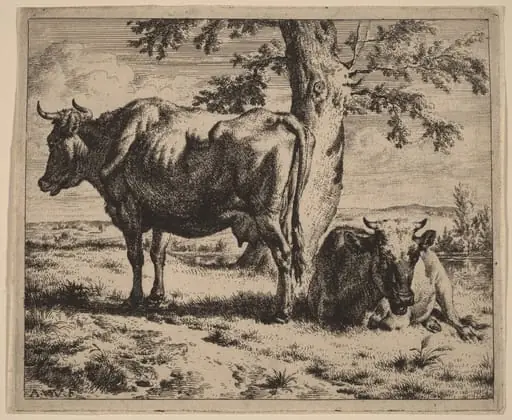
Cow, Bull and Calf
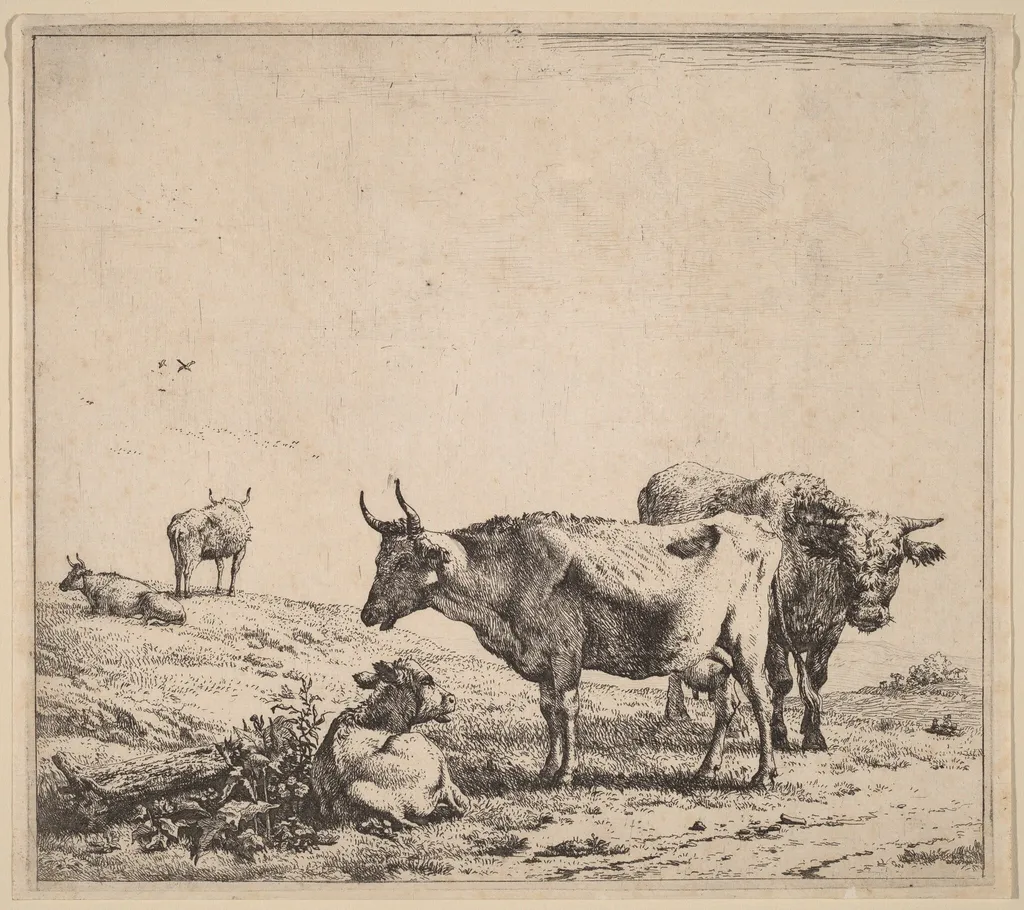
Cow, Bull and Calf is an ink print by the Baroque artist Karel Dujardin. It dates from 1650 and is held in the collection of the National Gallery of Art.
About this work
Overview
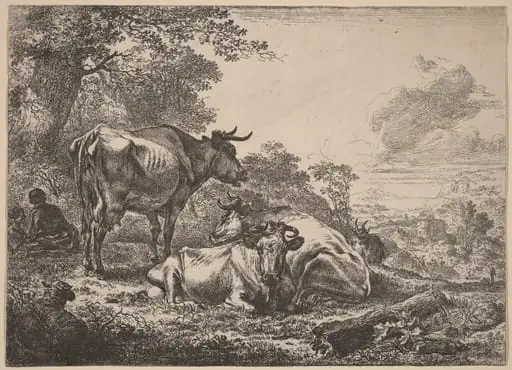
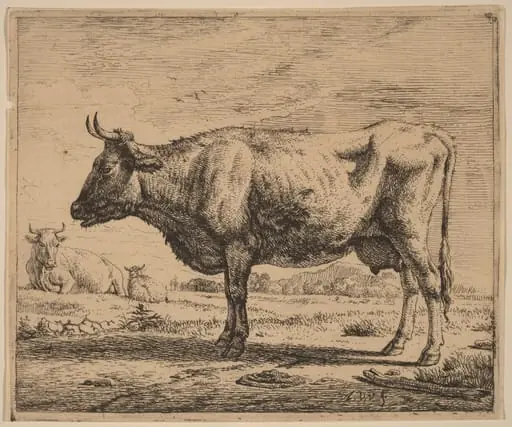
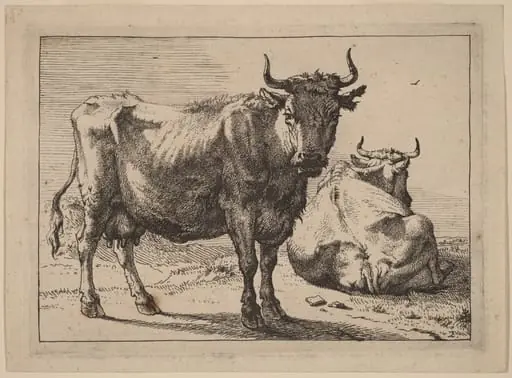
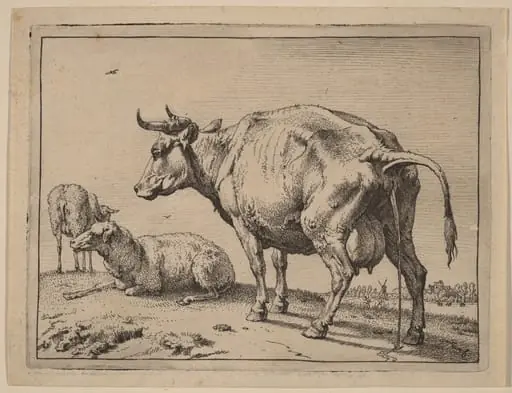
Created in 1650, this etching by Karel Dujardin portrays a tranquil interior of a Dutch barn. Three bovine figures dominate the composition: a large brown bull, a white cow, and a small black calf that is nursing. Light streams through the timbered roof, illuminating the animals and emphasizing the calm atmosphere of the scene.
Subject & Meaning
The work focuses on everyday rural life, presenting a moment of maternal care within an agricultural setting. By grouping the bull, cow, and calf together, Dujardin underscores the continuity of the herd and the natural bond between mother and offspring, reflecting the artist’s interest in the quiet dignity of farm animals.
Technique & Style
Executed as an etching, the image relies on precise, sharply defined lines that render the textures of fur, wood, and light with clarity. Dujardin’s handling of the medium allows subtle gradations of tone, while the crisp detailing conveys both the solidity of the barn structure and the softness of the animals’ forms.
History & Provenance
Karel Dujardin, primarily known as a painter of genre and animal subjects, produced this print early in his career. The etching has been catalogued among his limited output of graphic works and is documented in several European collections, including the National Gallery of Art in Washington, where related drypoint pieces are also held.
Artist & collection