Artwork
Untitled
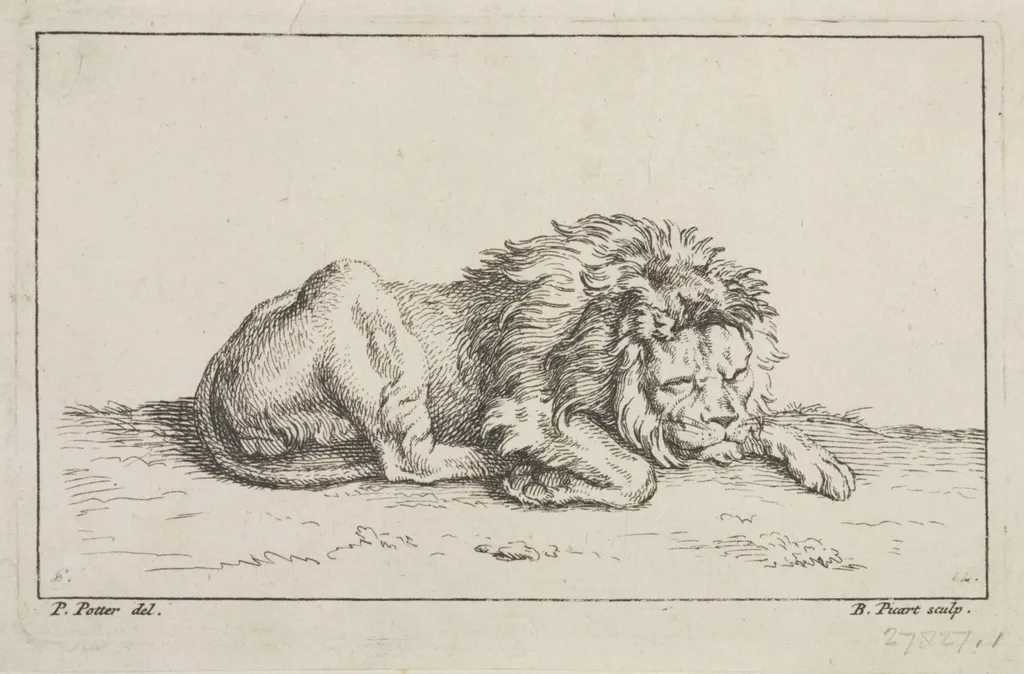
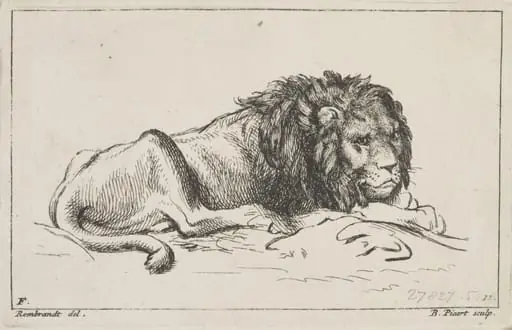
Untitled is a print by Paulus Potter. It dates from 1650 and is held in the collection of the Victoria and Albert Museum. This black-line print depicts a reclining male lion, rendered with minimal yet precise strokes on a light ground.
About this work
Overview
This black-line print depicts a reclining male lion, rendered with minimal yet precise strokes on a light ground. The animal lies with its head lowered and turned to the right, enclosed within a thin, continuous border. The absence of tone or color emphasizes form through contour alone, reflecting a restrained aesthetic common in early modern animal studies.
Subject & Meaning
The lion, shown in repose rather than in motion or aggression, suggests contemplation or exhaustion rather than dominance. Its lowered head and resting paw convey stillness, possibly evoking themes of vulnerability or quiet authority. The absence of context or narrative elements invites focus on the animal’s physical presence, stripping away symbolic tropes often associated with the species.
Technique & Style
The artist employed a single continuous line to define the lion’s form, using varied pressure to suggest musculature and the texture of the mane.
The artist employed a single continuous line to define the lion’s form, using varied pressure to suggest musculature and the texture of the mane. Quick, loose strokes render the fur, contrasting with smoother contours of the body. The background is reduced to faint indications of terrain, allowing the figure to dominate. This linear approach prioritizes structure over detail, aligning with contemporary print traditions focused on observational clarity.
History & Provenance
The work originates from a period when animal studies were frequently produced as preparatory sketches or standalone prints, often circulated among artists and collectors. Though its exact origin remains undocumented, its style and format are consistent with European printmaking practices of the late 18th to early 19th century, where naturalistic depictions of wildlife gained renewed interest.
Context
During this era, increased access to zoological specimens and travel accounts fueled artistic interest in accurate animal representation. Prints like this served both educational and aesthetic purposes, often used to study anatomy or as decorative motifs. The simplicity of the composition reflects a shift toward direct observation over idealized or mythologized portrayals of wildlife.
Legacy
This print exemplifies a quiet tradition in naturalistic animal drawing that influenced later scientific illustration and modern wildlife art. Its emphasis on form through line, rather than color or drama, contributed to a broader movement valuing precision and restraint. Though unsigned and unattributed, it remains a representative example of its time’s observational discipline.
Artist & collection
Artist
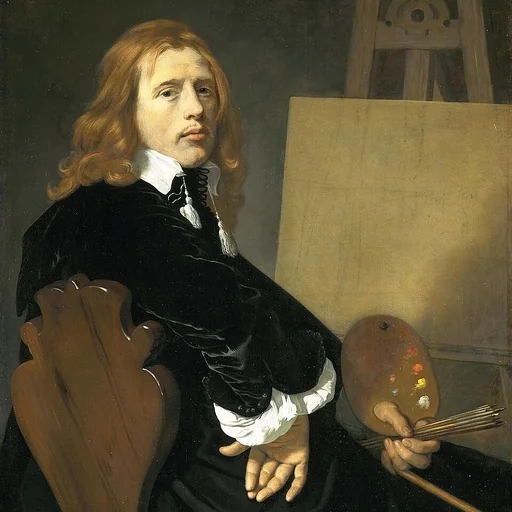
Paulus Potter (Dutch pronunciation: ; 20 November 1625 (baptised) – 17 January 1654 (buried)) was a Dutch painter who specialized in landscapes featuring animals, often from a low vantage point.

 Untitled
 Lion
Lion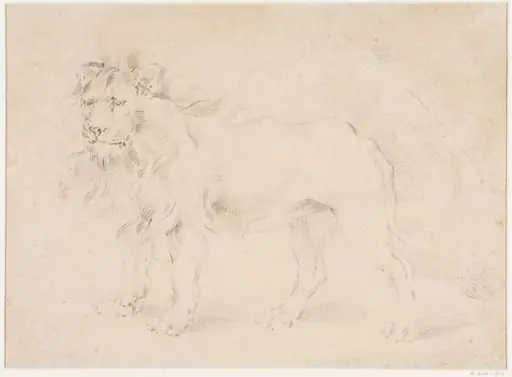 Study of a lion
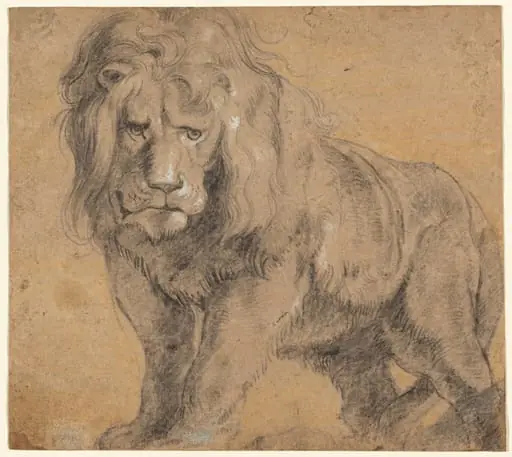 Lion
Lion![Contending Group after Nature [A Lion Fighting a Tiger and a Leopard], by Edwin, Sir Landseer](https://artifactworldgallery.com/img/edwin-sir-landseer--contending-group-after-nature-a-lion-fighting-a-tiger-and-a--3801d18d30f50081-w320.webp) Contending Group after Nature [A Lion Fighting a Tiger and a Leopard]
Contending Group after Nature [A Lion Fighting a Tiger and a Leopard]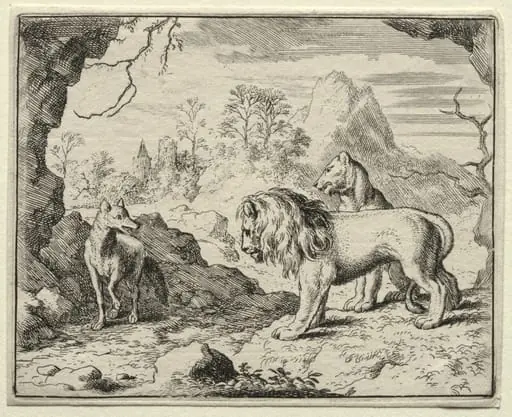 Reynard the Fox: Reynard Tells of Hidden Treasure
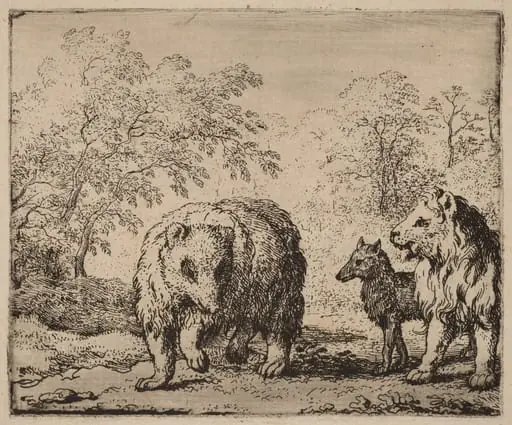 The Lion Frees the Bear and the Wolf
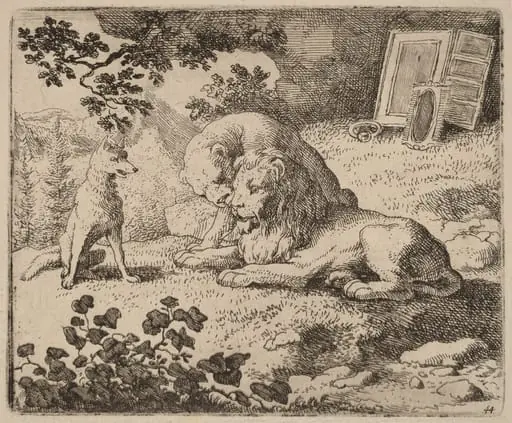 Reynard Describes the Missing Treasures
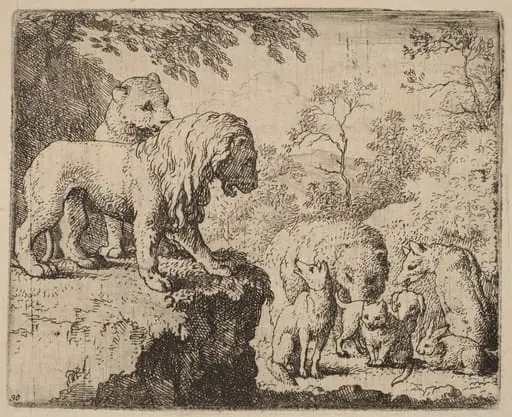 The Lion Pardons Reynard before the Other Animals
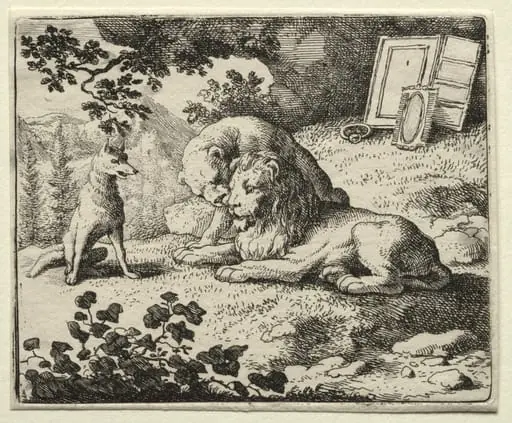 Reynard the Fox: Reynard Promises Gifts to the Lion
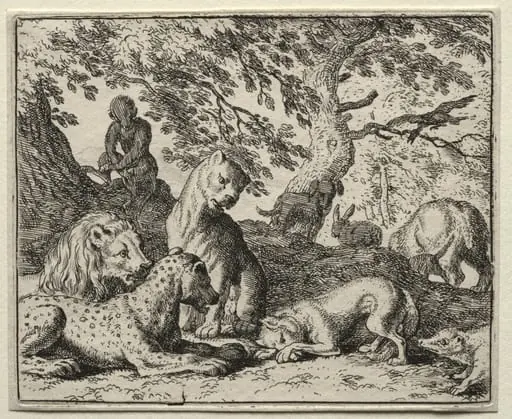 Reynard the Fox: Reynard Describes a False Plot Against the Lion
 Reynard the Fox