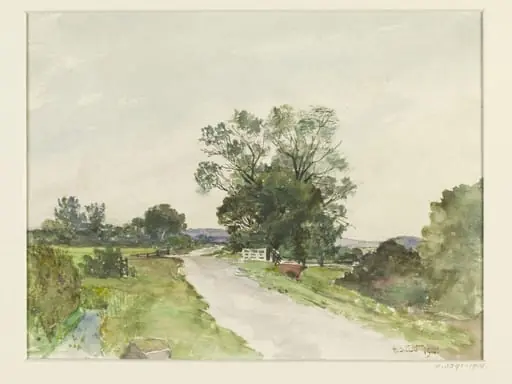
Artwork
Summer
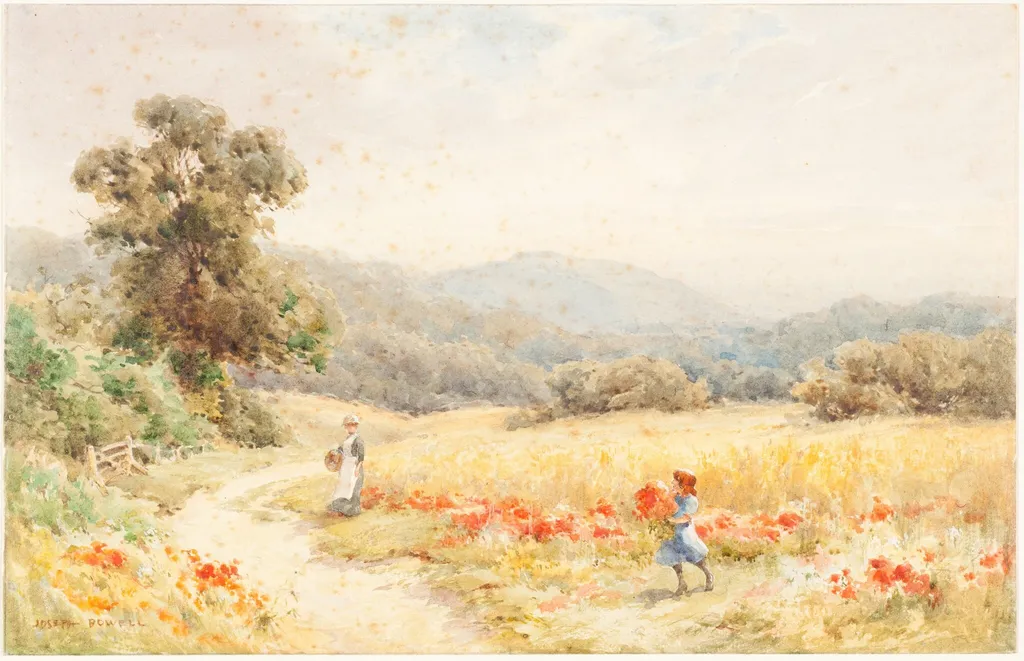
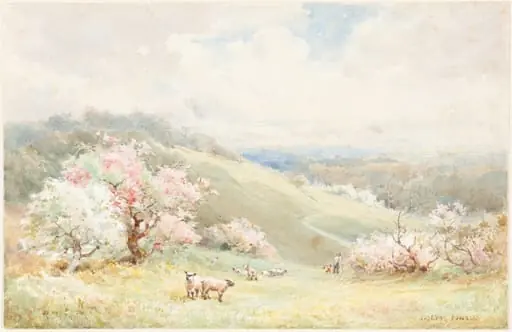
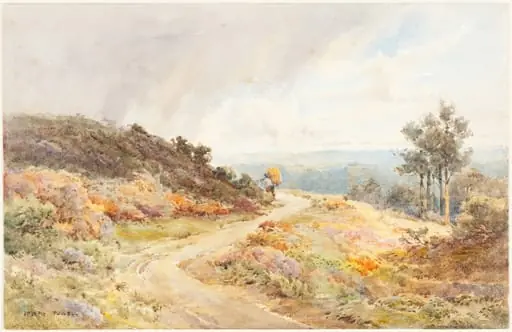
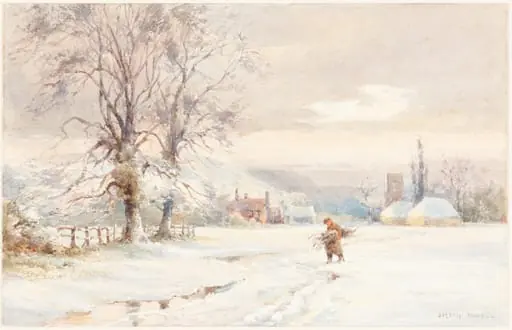
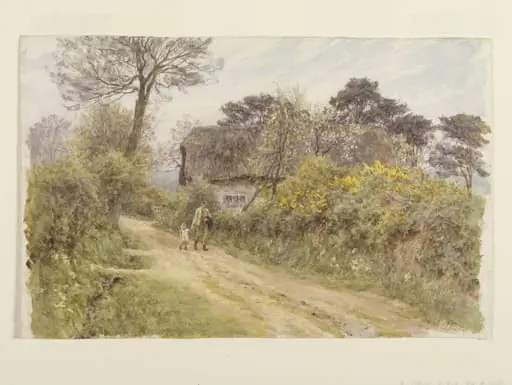
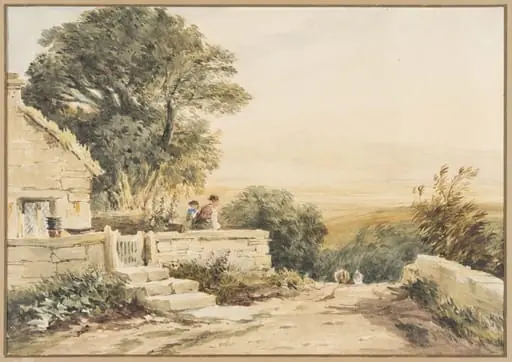
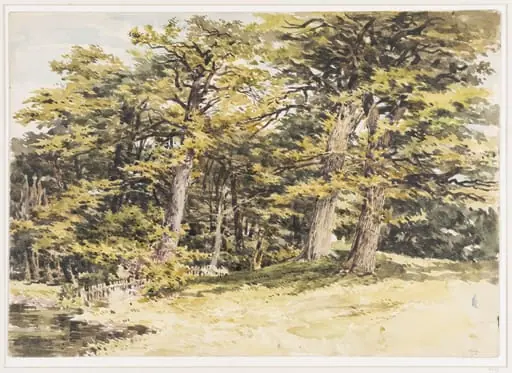
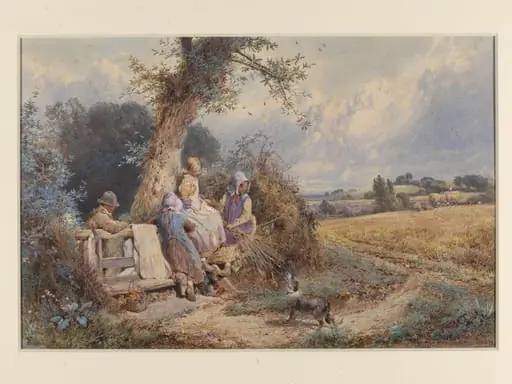
Summer is a gouache drawing by the Romanticist artist Joseph Rubens Powell. It dates from 1843 and is held in the collection of the National Gallery of Art.
About this work
Overview
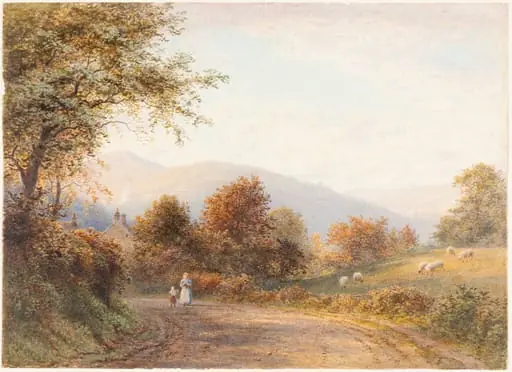
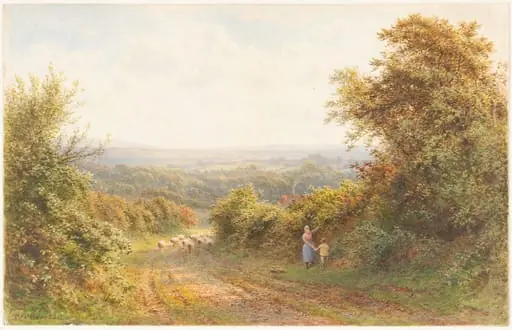
Created in 1843, Summer is a watercolor and gouache drawing on wove paper by Joseph Rubens Powell. It depicts a quiet rural scene featuring a woman and child traversing a dirt path through a field of tall grass and wildflowers. The composition is grounded in delicate graphite underdrawing, with layered washes suggesting the warmth of a summer afternoon.
Subject & Meaning
The figures—a woman in a dark dress and apron carrying a basket, and a child in blue walking ahead and glancing back—suggest a moment of daily life, not a staged narrative. Their small scale against the expansive landscape emphasizes harmony with nature rather than human dominance. The scene conveys quiet companionship and the rhythm of rural existence, avoiding overt sentimentality.
Technique & Style
Powell employed translucent watercolor washes over light graphite lines, adding opaque gouache for highlights in the flowers and fabric. The texture of the wove paper enhances the softness of the grass and sky. Brushwork is restrained, favoring atmospheric gradation over detail, aligning with the quiet lyricism of mid-19th-century American landscape drawing.
History & Provenance
The work was completed in 1843, during Powell’s active period in the Northeastern United States. It remained in private collections until entering a public institution’s holdings in the late 20th century. No exhibition or publication history is documented prior to its acquisition, suggesting it was a personal study rather than a commissioned piece.
Context
Powell worked in a tradition of American topographical drawing that blended observation with poetic restraint. While European Romanticism often dramatized nature, American artists like Powell favored subdued, intimate scenes. Summer reflects this domesticated romanticism, where nature’s calmness is valued over grandeur or turmoil.
Legacy
Though Powell is not widely known today, Summer exemplifies a quiet strain of 19th-century American watercolor that prioritized mood over spectacle. It contributes to the understanding of how everyday rural life was rendered with sensitivity, influencing later regionalist artists who sought authenticity in ordinary scenes.
Artist & collection