Artwork
A man standing and another seated
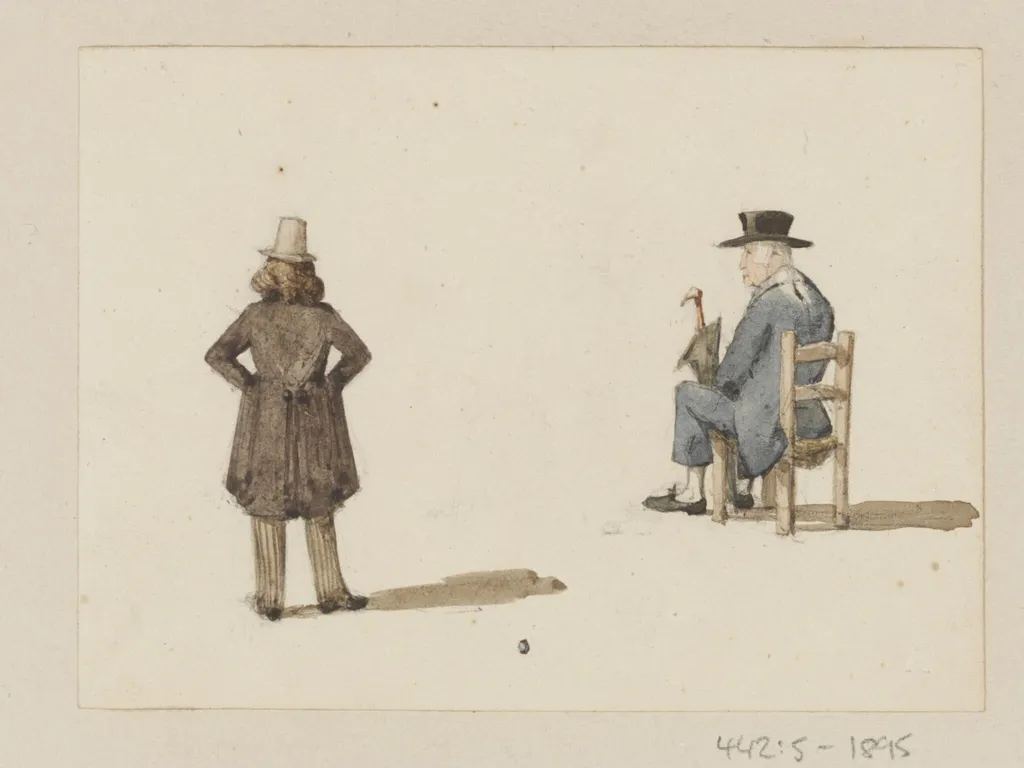
A man standing and another seated is a watercolor work on paper by the British Romanticist artist Ambrose Poynter. It dates from 1835 and is held in the collection of the Victoria and Albert Museum. This watercolour sketch is one of six small works mounted as a group, accessioned in 1895 under the numbers 442:1 to 6.
About this work
Overview
This watercolour sketch is one of six small works mounted as a group, accessioned in 1895 under the numbers 442:1 to 6. Executed in muted tones of brown and gray, it captures two male figures in quiet repose—one standing, one seated—against an indistinct background. The simplicity of the composition and restrained palette suggest a focus on everyday presence rather than narrative drama.
Subject & Meaning
The two figures, both dressed in formal early 19th-century attire with top hats and long coats, appear engaged in a moment of stillness. The standing man, hands on hips, and the seated figure, holding an umbrella, suggest a pause in routine—perhaps waiting or conversing. No clear story is told; instead, the work conveys a sense of ordinary human dignity and quiet observation.
Technique & Style
The artist employed transparent watercolour washes to build subtle gradations of tone, avoiding sharp outlines. The limited palette of earthy grays and browns unifies the figures and background, creating a cohesive, atmospheric effect. Delicate brushwork defines fabric folds and hat brims, while the absence of detail in the setting emphasizes the figures’ stillness and isolation.
History & Provenance
The watercolour entered the collection in 1895 as part of a set of six, likely acquired as a group. Its origin prior to acquisition is undocumented, though the style and subject align with British amateur or minor professional watercolourists of the early 1800s. No record of the artist’s identity survives, and the work has remained within institutional custody since its accession.
Context
Though often associated with Romanticism for its emphasis on mood and individual presence, this work lacks the dramatic or sublime elements typical of the movement. Instead, it reflects a quieter trend in early 19th-century British watercolour—focused on domestic or urban vignettes, often produced for private rather than public display, valuing observation over spectacle.
Legacy
As one of six related sketches, this piece contributes to a small but coherent body of work that illustrates the appeal of everyday scenes in watercolour during the period. Its anonymity and modest scale have preserved it as a quiet example of non-heroic visual record, offering insight into the aesthetic preferences of collectors and artists who valued subtlety over grandeur.
Artist & collection
Artist
Ambrose Poynter was a British architect. He was one of the founding members of the Institute of British Architects in 1834.

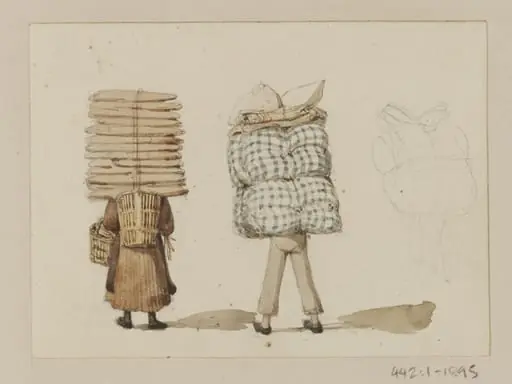
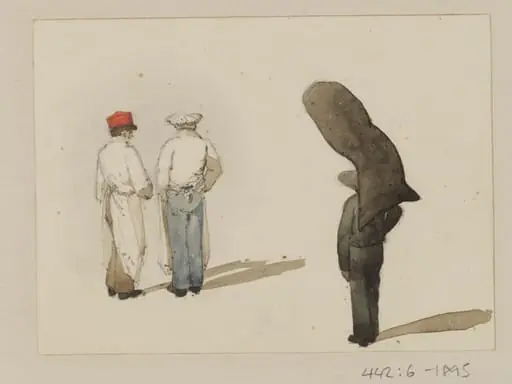 Three men standing, one with a load
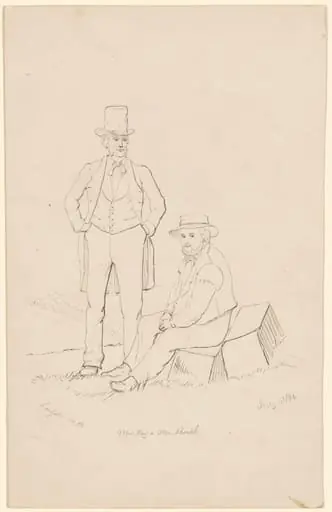 Mr. Way and Mr. Booth
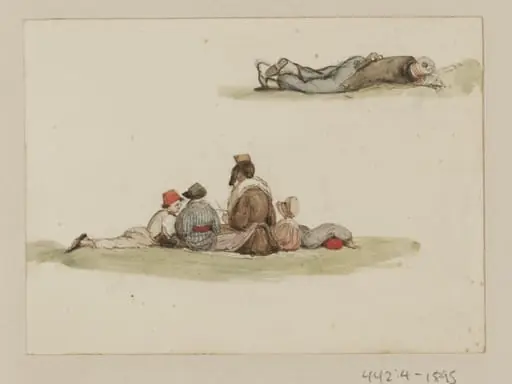
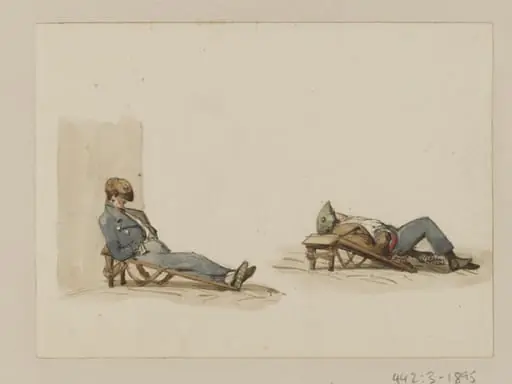 Two men sleeping
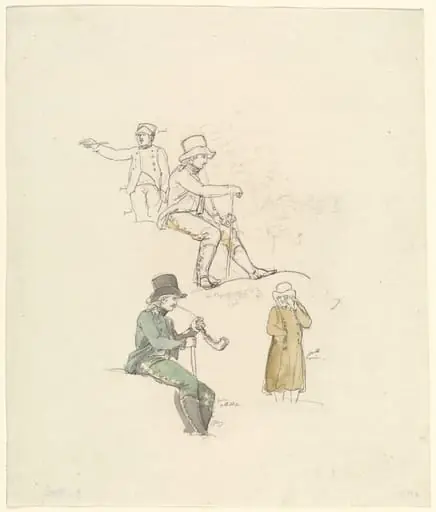 Figure Studies
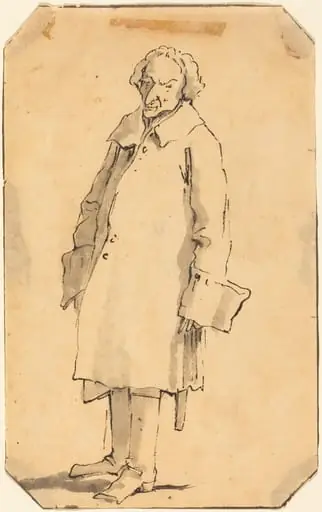 A Standing Man Wearing a Great Coat and Boots
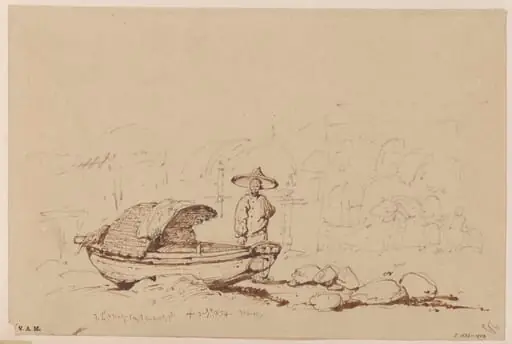 A boatman beside a beached Tanka boat
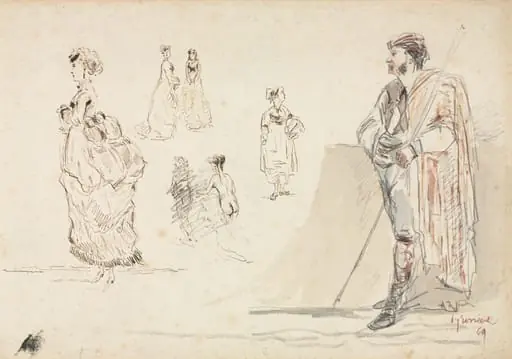 Sketches of Figures
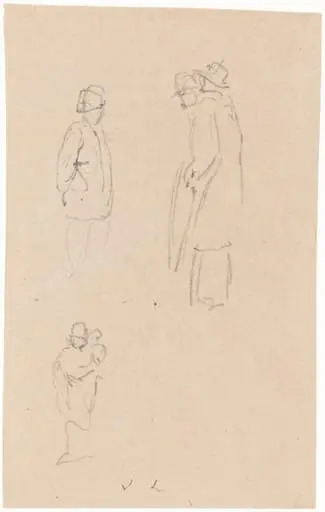 Figure Studies
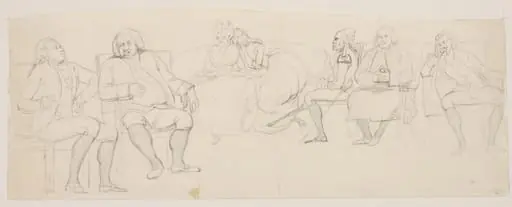 Interior of a drawing room
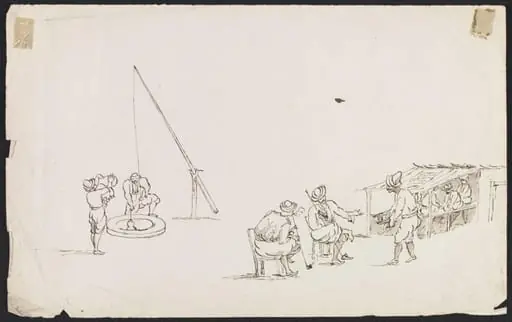 Wayside café, with men drawing water from a well, and others seated, smoking, being served with coffee