Artwork
Figure Studies
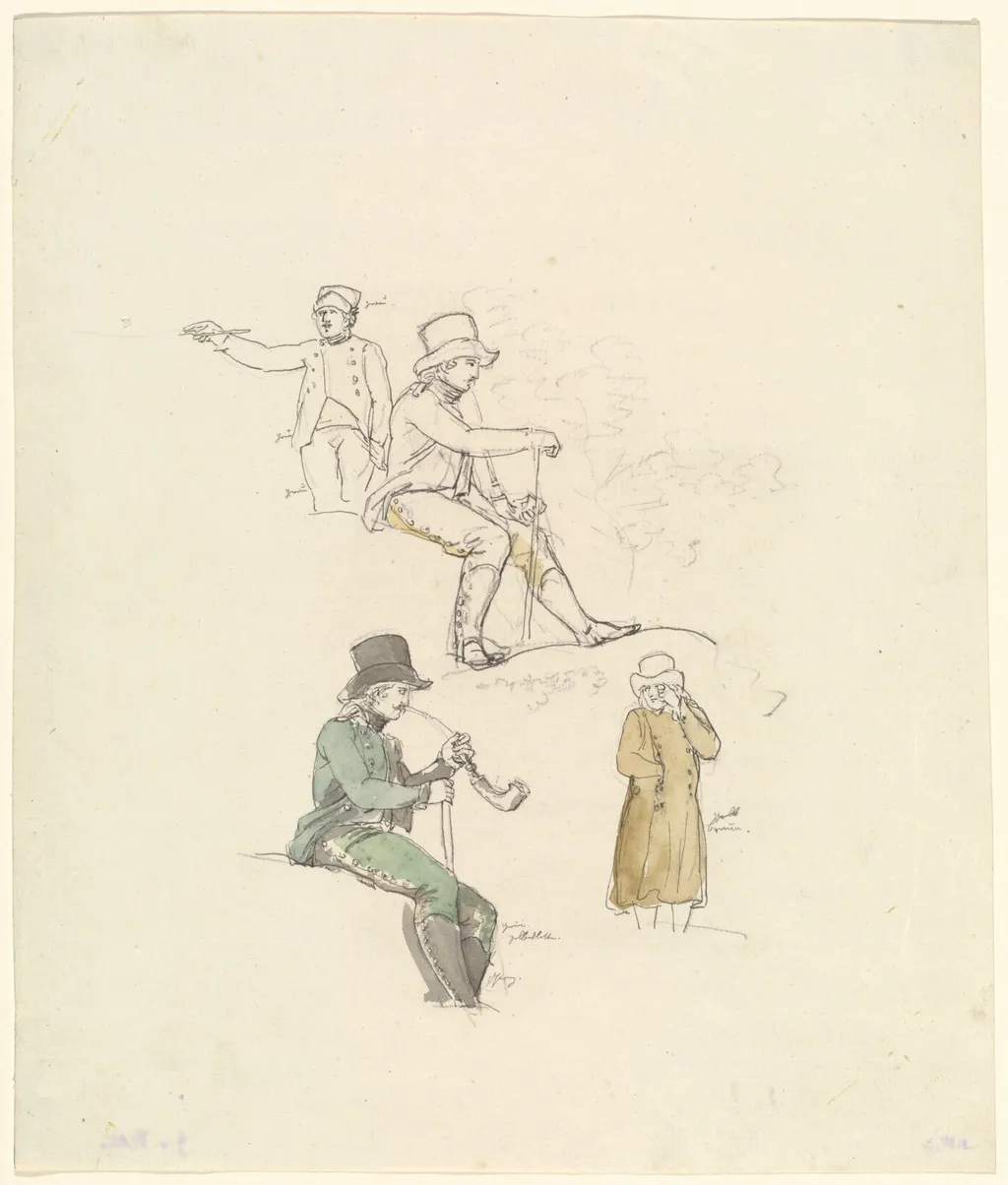
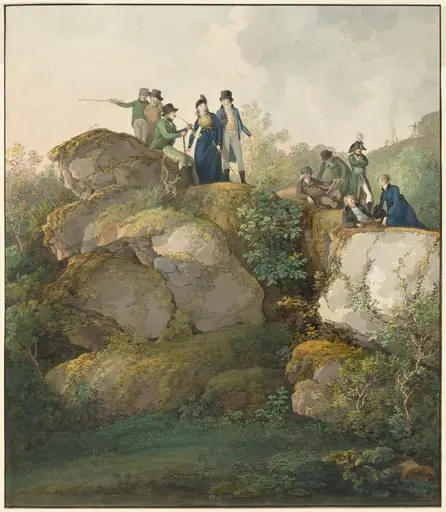
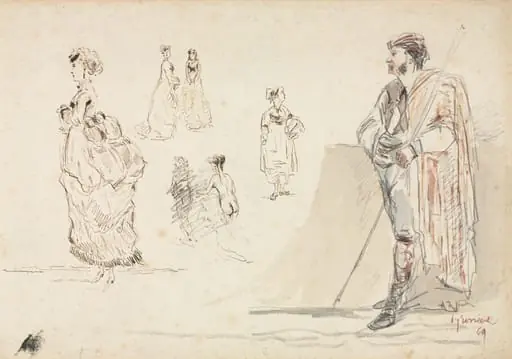
Figure Studies is an ink drawing by the Romanticist artist Johann Georg von Dillis. It dates from 1801 and is held in the collection of the National Gallery of Art.
About this work
Overview
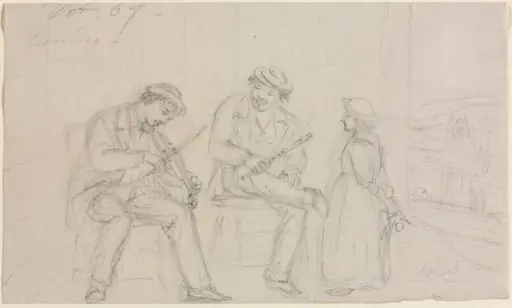
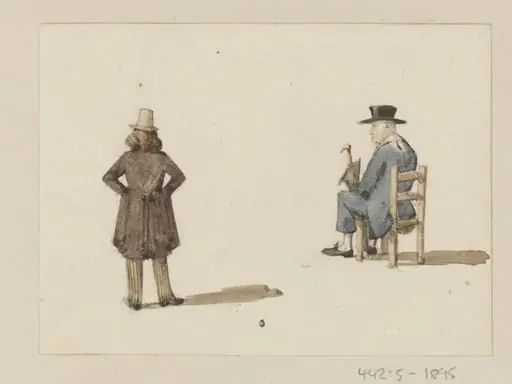
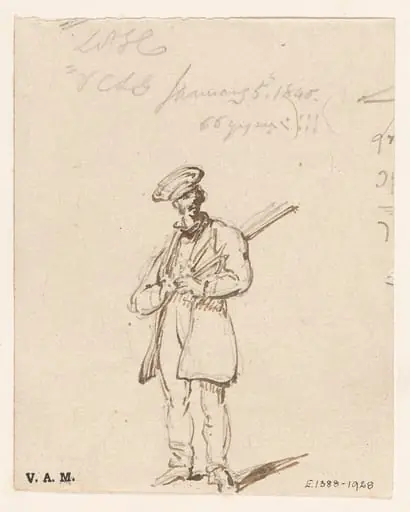
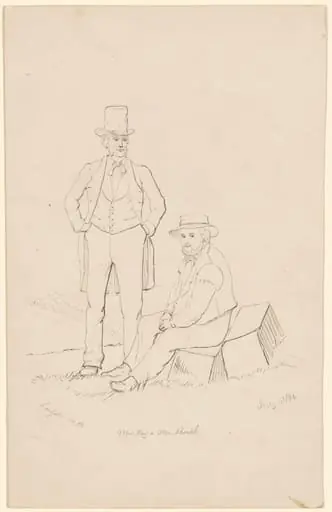
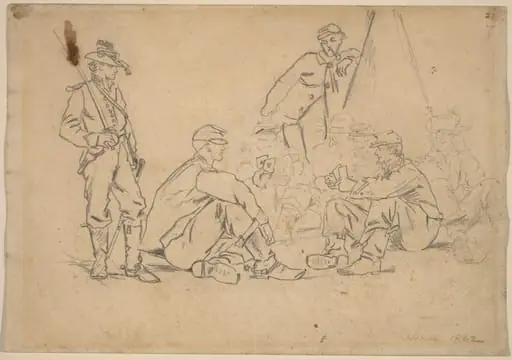
Figure Studies, executed in 1801 by Johann Georg von Dillis, is a drawing on laid paper that combines pen, black ink, and watercolor applied over a black chalk underdrawing. The work records four male figures in a spontaneous, sketch-like manner, emphasizing gesture and costume rather than detailed facial features.
Subject & Meaning
The composition presents four men engaged in everyday actions: one extends an arm, another rests on a cane, a third sits while smoking a pipe, and the fourth adjusts his coat. Their attire—tight jackets, broad-brimmed hats, and high boots—evokes an early‑19th‑century fashion, suggesting a study of contemporary street life or a preparatory observation for a larger narrative work.
Technique & Style
Dillis employed thin ink lines to define the figures, overlaying them with light washes of watercolor that retain the translucency of the underlying black chalk. The rapid, gestural strokes convey immediacy, while the limited palette keeps the drawing airy, functioning more as a visual note than a finished illustration.
History & Provenance
Created in the early 1800s, the piece reflects Dillis’s interest in quick observational studies, a practice common among artists preparing for larger compositions. The drawing has remained within the artist’s oeuvre, documented in catalogues of his work, and is currently held in a public collection dedicated to German art of the period.
Context
During the turn of the 19th century, German artists increasingly valued on‑site sketching to capture the vitality of modern life. Dillis’s Figure Studies aligns with this trend, offering a glimpse into the everyday attire and posture of men in an era of social and sartorial transition.
Artist & collection