Artwork
Honeysuckle
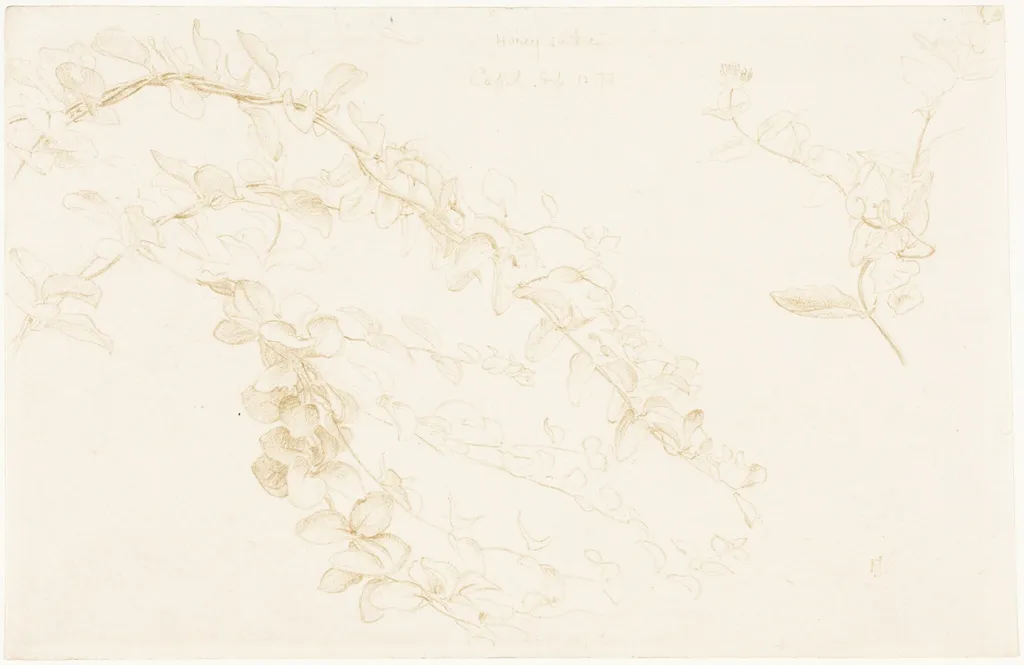
Honeysuckle is a graphite drawing by the Impressionist artist Edward John, Sir Poynter. It dates from 1878 and is held in the collection of the National Gallery of Art.
About this work
Overview
Created in 1878, *Honeysuckle* is a small-scale drawing executed with green‑gray colored pencil on a sheet of wove paper. The work presents a close study of the plant’s blossoms and leaves, rendered with a meticulous hand that emphasizes form and texture.
Subject & Meaning
The drawing depicts the delicate flowers and foliage of the honeysuckle vine, focusing on the interplay of light and shadow across the petals. By isolating the botanical subject, the artist invites contemplation of nature’s intricate structures, a common preoccupation of the period.
Technique & Style
Using a limited palette of green‑gray pencil, the artist achieves subtle tonal variations through fine hatching and cross‑hatching. The linear precision and careful shading reflect a blend of scientific illustration and aesthetic refinement characteristic of late‑Victorian draftsmanship.
History & Provenance
The piece was produced by Sir Edward John Poynter, an English painter and later President of the Royal Academy, during a phase when he devoted considerable time to drawing from nature. Its provenance traces back to Poynter’s personal collection before entering public holdings in the early twentieth century.
Context
In the late nineteenth century, British artists and scholars pursued detailed botanical documentation, driven by both scientific inquiry and decorative arts movements. *Honeysuckle* aligns with this tradition, illustrating the era’s fascination with accurate plant representation for educational and aesthetic purposes.
Artist & collection
Artist
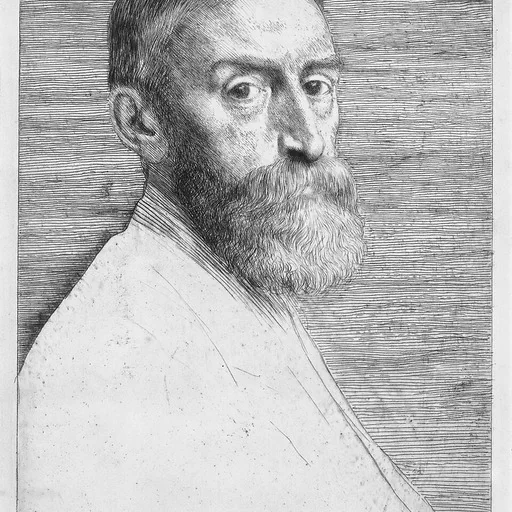
Sir Edward John Poynter, 1st Baronet (20 March 1836 – 26 July 1919) was an English painter, designer, and draughtsman, who served as President of the Royal Academy.

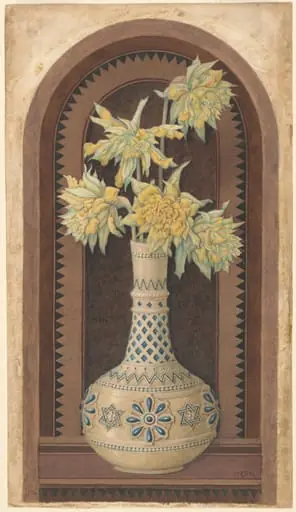
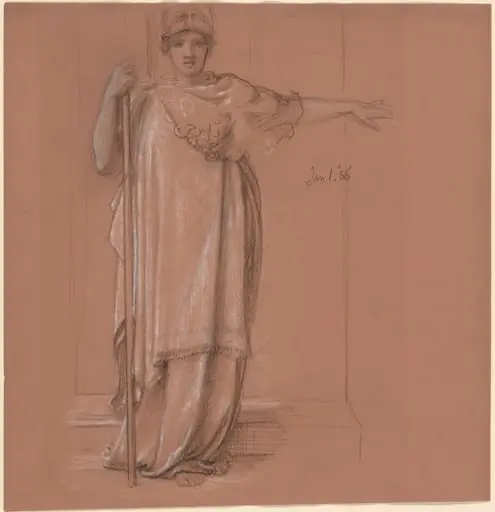
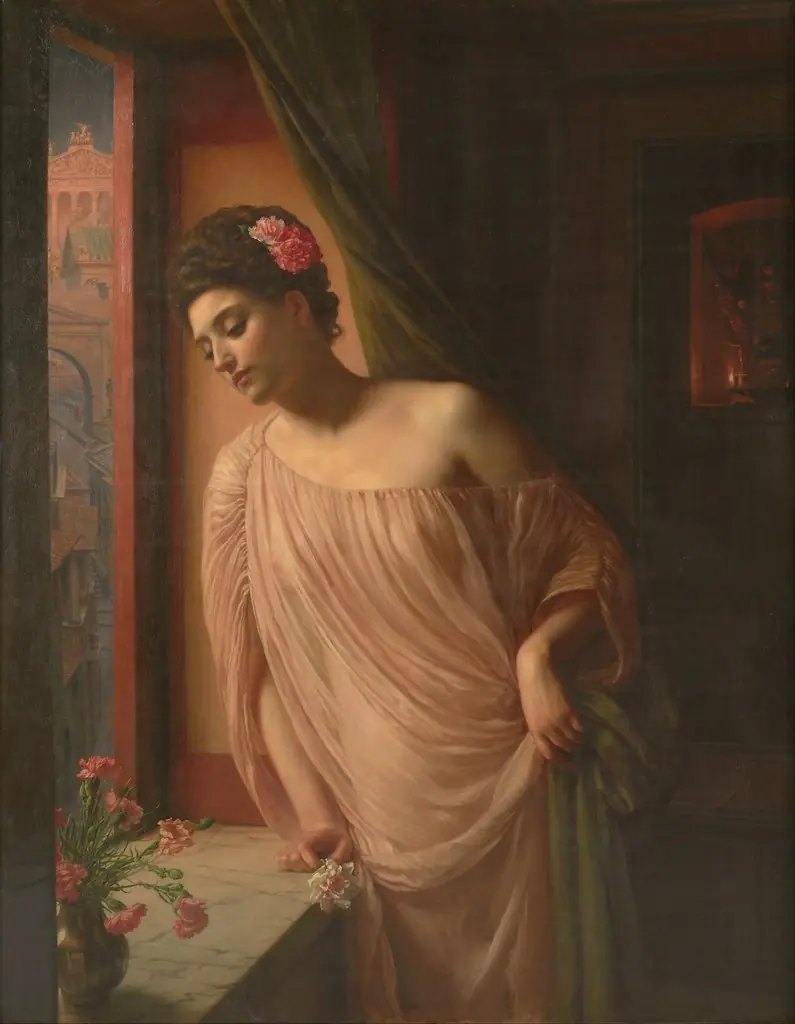
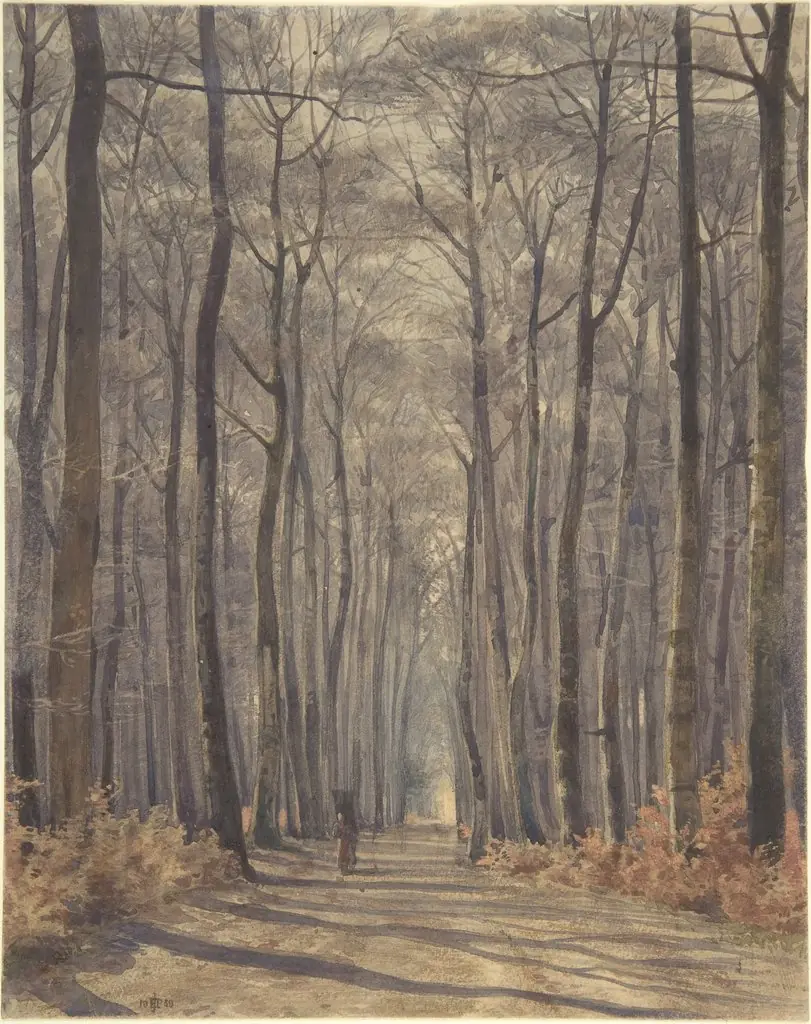
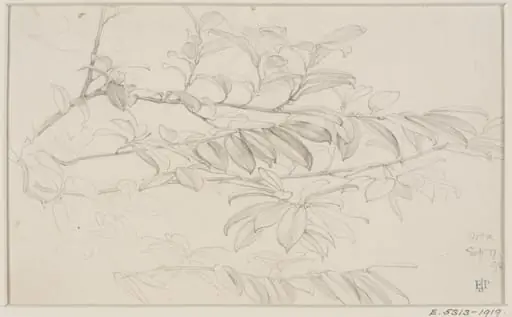 Studies of Flowers and Plants, 1876-1898
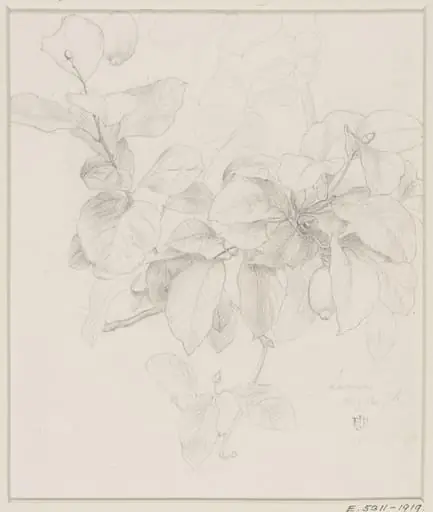 Studies of Flowers and Plants, 1876-1898
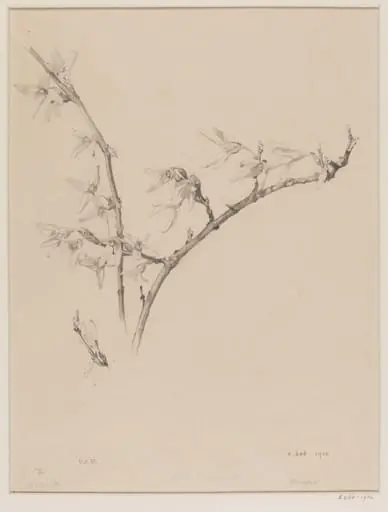 Forsythia
 Studies of Flowers and Plants, 1876-1898
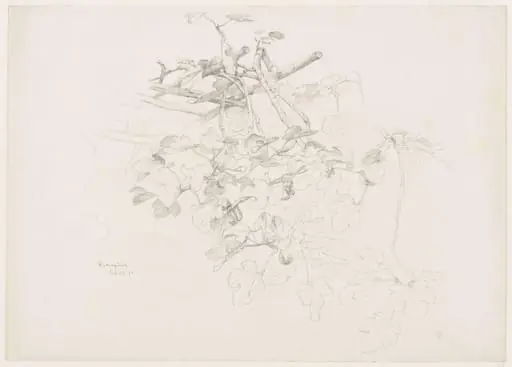 Studies of Flowers and Plants, 1876-1898
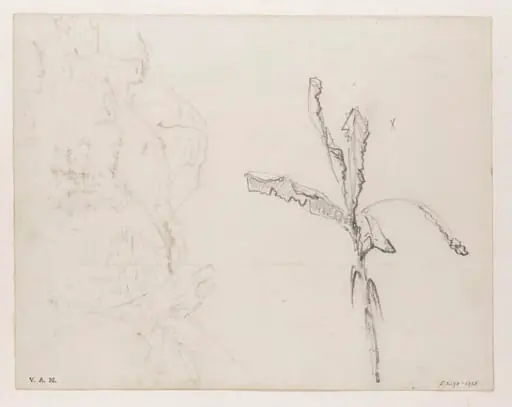 Banana or plantain leaves
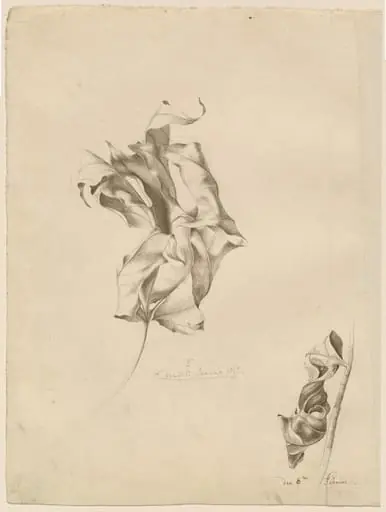 Shriveled Leaves
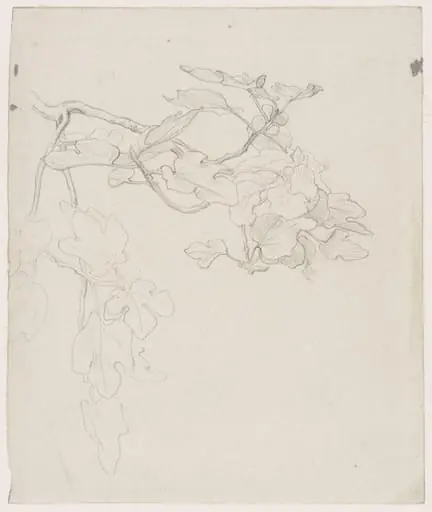 Study of the Stem of a Fig Tree
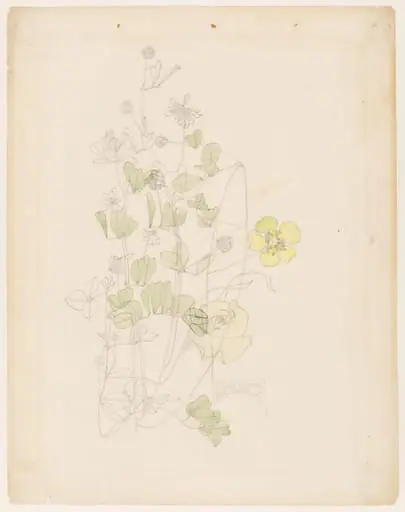 Yellow clover
 Lemon blossom. Capri
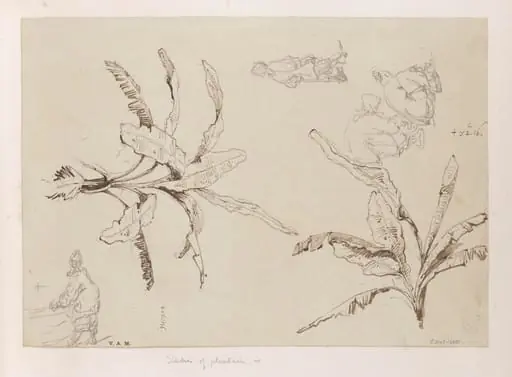 Two drawings of plantain plants, with sketches of boatwomen
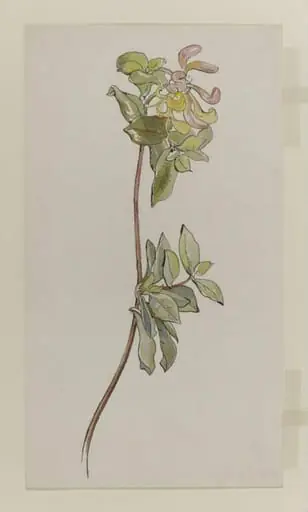 Spray of honeysuckle