Artwork
Untitled
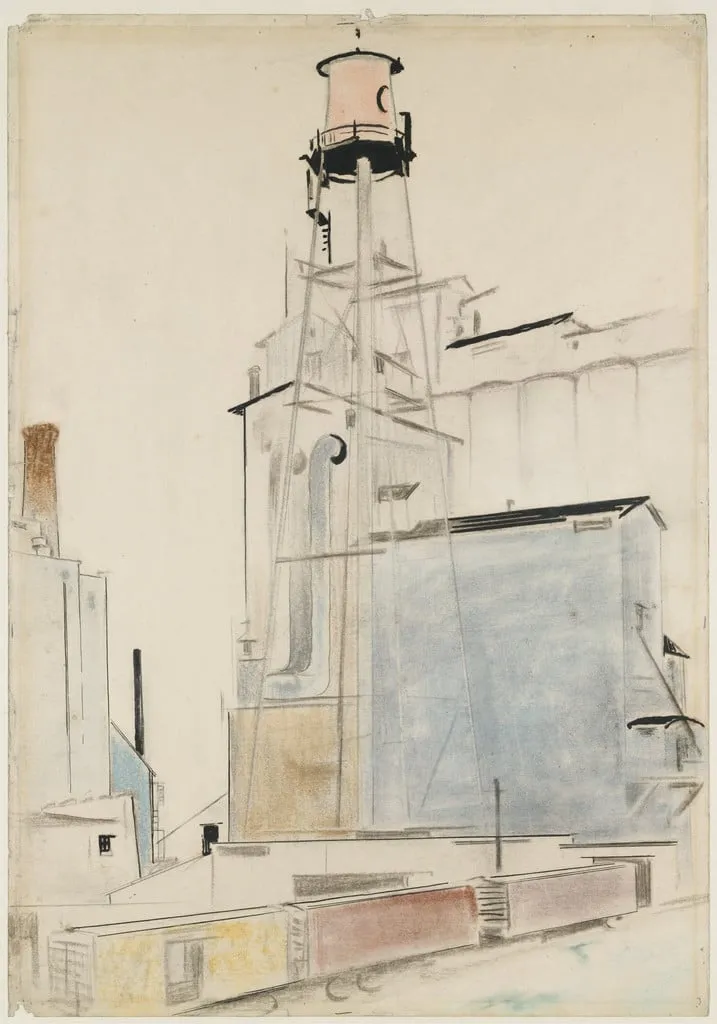
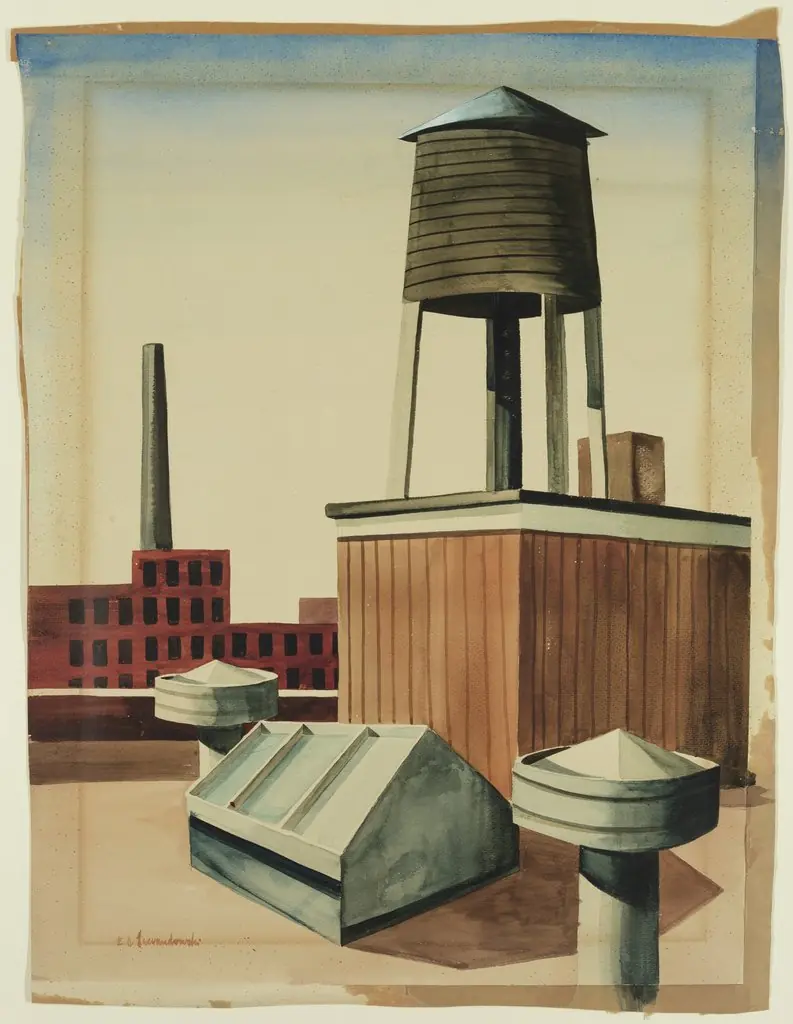
Untitled is a pastel drawing by Preston Dickinson. It dates from 1924 and is held in the collection of the Museum of Modern Art.
About this work
Overview
It is part of The Museum of Modern Art’s collection and exemplifies Dickinson’s engagement with early 20th-century American industrial architecture.
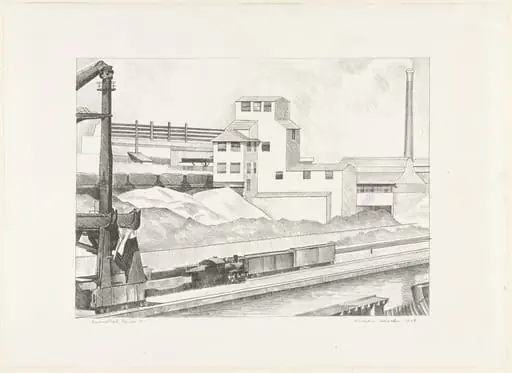
Created in 1924, this drawing by Preston Dickinson combines ink, charcoal, pencil, and pastel on paper to capture an industrial urban scene. It is part of The Museum of Modern Art’s collection and exemplifies Dickinson’s engagement with early 20th-century American industrial architecture. Though untitled, the work reflects his consistent focus on man-made structures as subjects of quiet visual inquiry.
Subject & Meaning
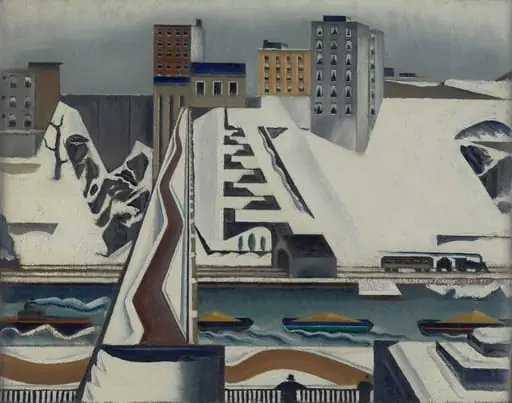
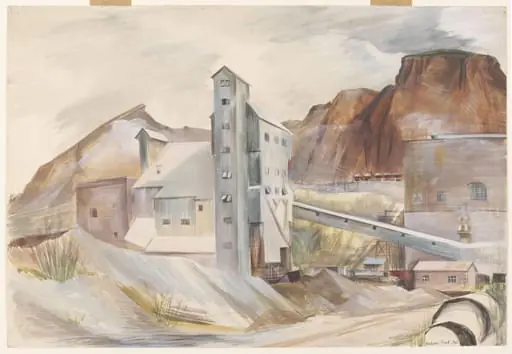
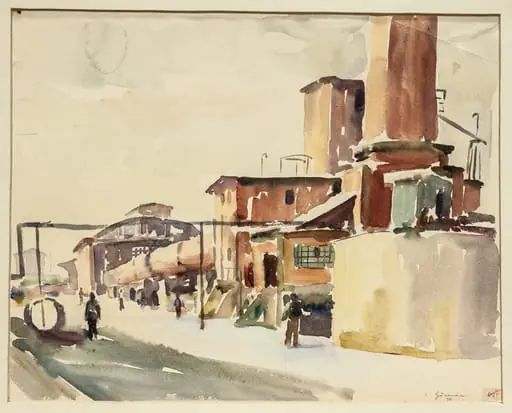
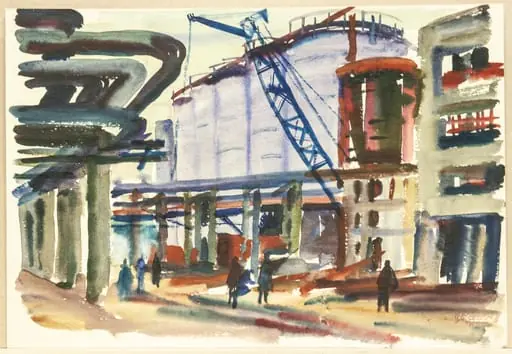
The composition centers on a water tower, flanked by a factory with a tall chimney and a stationary train car below. These elements suggest the quiet rhythm of industrial infrastructure—functional, enduring, and largely unpeopled. The absence of human figures emphasizes the autonomy of machinery and architecture, framing industry not as dynamic progress but as a settled, almost silent presence in the landscape.
Technique & Style
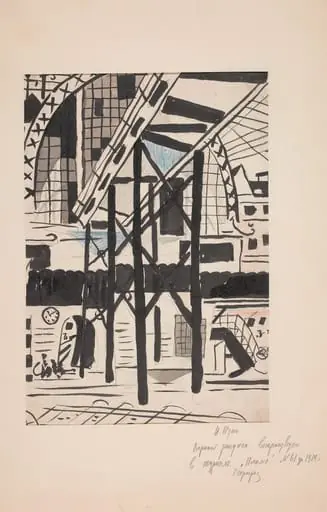
Dickinson employed a restrained palette of pastel pinks and whites against charcoal blacks and pencil outlines, softening the harshness of industrial forms. Clean, geometric lines define the tower and building, aligning with Precisionist aesthetics, yet the blended pastel tones introduce a lyrical ambiguity. This tension between sharp structure and muted color distinguishes the work from more rigid examples of the style.
History & Provenance
The drawing was made during Dickinson’s most active period, shortly before his death in 1930. It entered The Museum of Modern Art’s collection in the decades following its creation, reflecting early institutional interest in American modernist drawings. Its preservation underscores its significance as a representative work from a relatively underrepresented figure in the Precisionist movement.
Context
In the 1920s, American artists increasingly turned to factories, bridges, and towers as symbols of national identity. Dickinson’s work emerged alongside figures like Charles Sheeler and Georgia O’Keeffe, yet his approach was more subdued. Rather than glorifying industry, he presented it as an ambient feature of the modern environment—neither celebratory nor critical, but observed with quiet attention.
Legacy
Though Dickinson’s career was brief, his drawings contributed to a nuanced understanding of Precisionism beyond its more famous practitioners. This work, with its delicate balance of structure and atmosphere, continues to inform discussions about how early modernists interpreted industrialization—not as spectacle, but as a quiet, pervasive reality shaping the American landscape.
Artist & collection
Artist
William Preston Dickinson (September 9, 1889 – November 25, 1930) was an American modern artist, best known for his paintings of industrial subjects in the Precisionist style.