Artwork
The Fiord Between Tunes and Dales
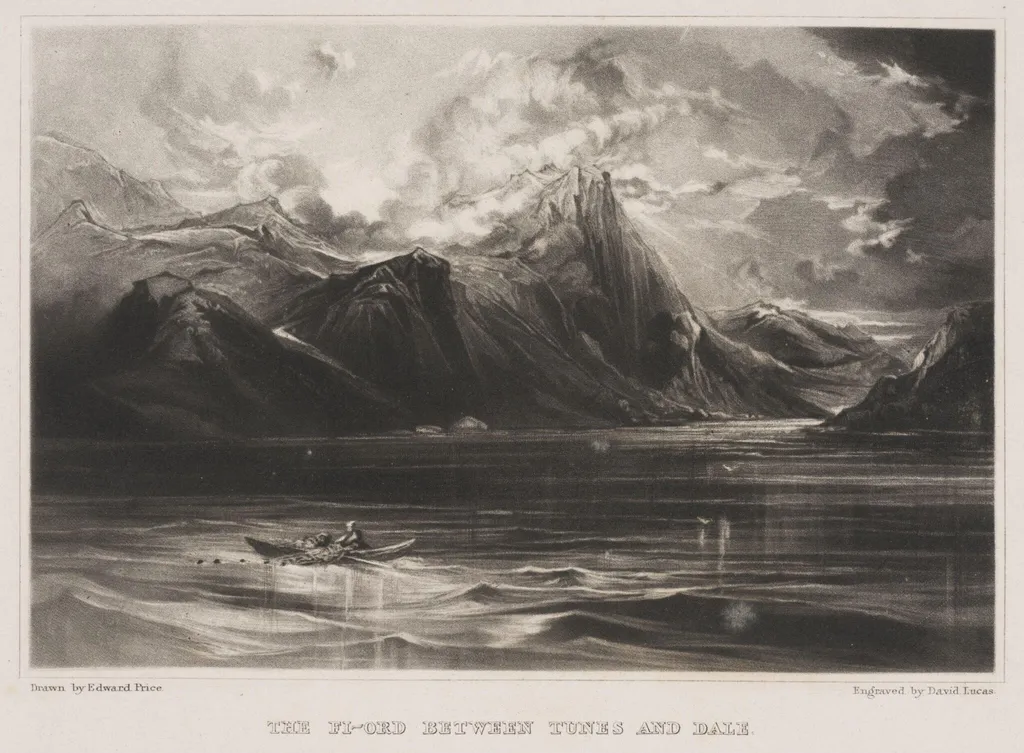
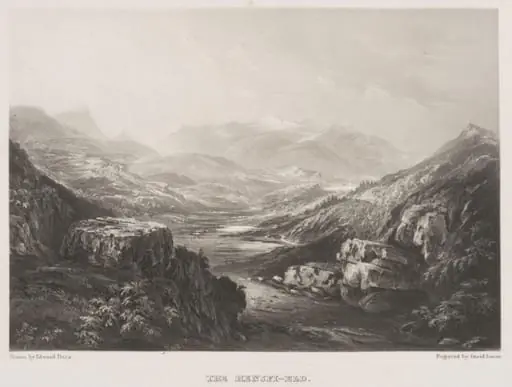
The Fiord Between Tunes and Dales is a print by the Romanticist artist Edward Price. It dates from 1834 and is held in the collection of the Victoria and Albert Museum.
About this work
Overview
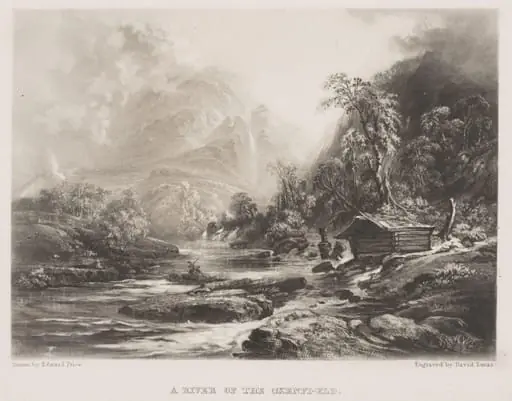
Edward Price’s print *The Fiord Between Tunes and Dales* is one of twenty-one works in a bound volume featuring illustrated landscapes and accompanying texts.
Edward Price’s print *The Fiord Between Tunes and Dales* is one of twenty-one works in a bound volume featuring illustrated landscapes and accompanying texts. The book, bound in blue cloth with a red spine, was part of the Lennox-Boyd collection—a curated assembly of mezzotints and 18th-century decorative objects. Acquired by the Victoria and Albert Museum in 2015, the volume reflects the collector’s interest in both printmaking and historical material culture beyond fine art alone.
Subject & Meaning
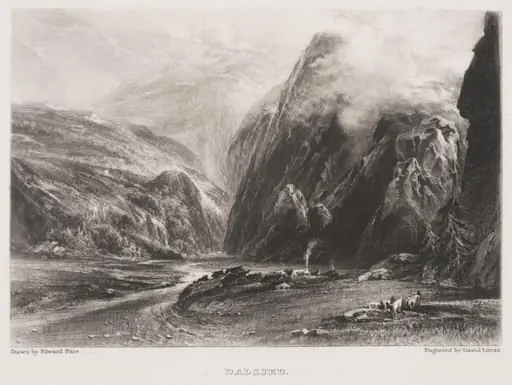
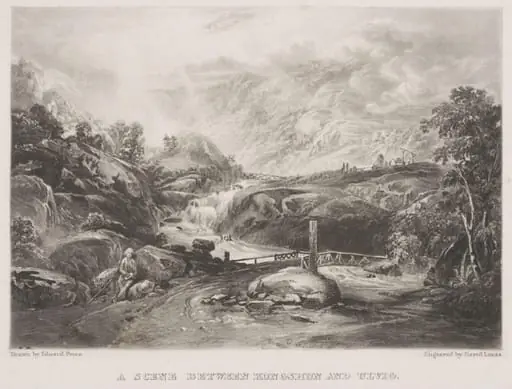
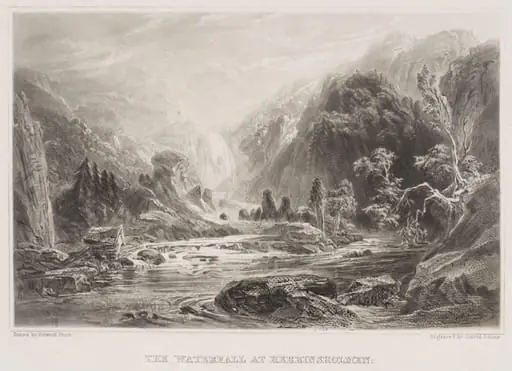
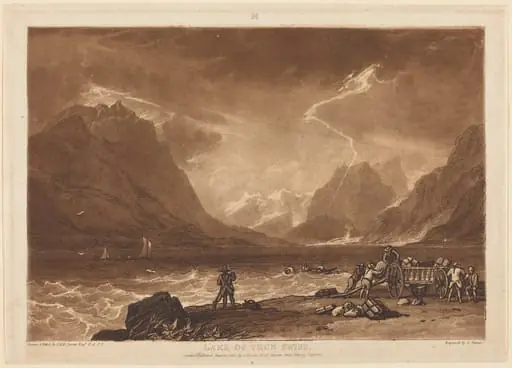
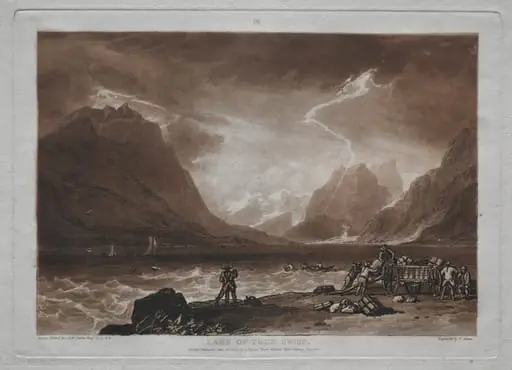
The image depicts a rugged Scottish fiord, dominated by a steep, dark cliff rising from choppy waters. A small boat with two figures moves toward the shore, emphasizing human scale against nature’s immensity. The title suggests a specific locale, yet the composition prioritizes atmosphere over geography. The scene evokes isolation and elemental force, aligning with 19th-century sensibilities that viewed wild landscapes as sites of emotional and spiritual resonance.
Technique & Style
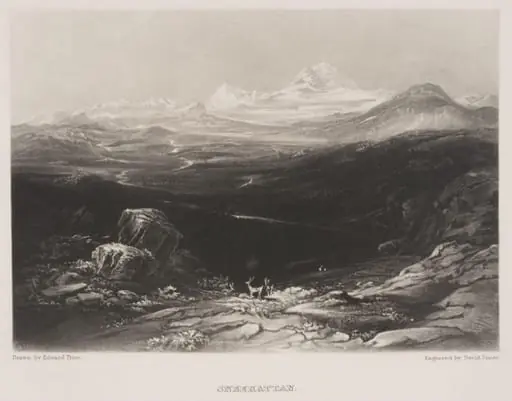
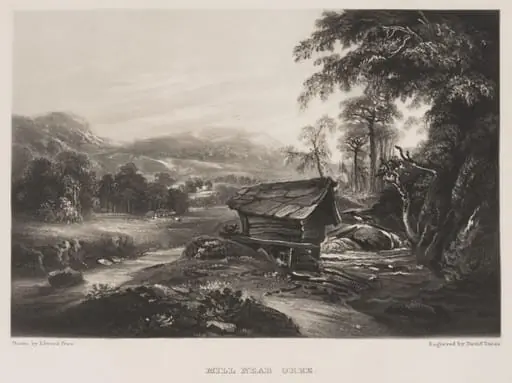
Price employed mezzotint to achieve a range of deep blacks and subtle grays, creating a somber, atmospheric effect. The texture of the rock face is rendered through dense, irregular etching, while the sky and water are suggested by soft, swirling tones. The contrast between the heavy shadows and the faintly lit boat enhances the sense of mystery. This technique, popular in the 18th century, was revived in the 19th for its capacity to convey mood rather than precise detail.
History & Provenance
The print originated in a private collection assembled by Lennox-Boyd, a dealer and enthusiast who operated Sanders of Oxford and specialized in mezzotints. His holdings extended to unrelated artifacts—antique shoes, fans, and frames—reflecting a broader fascination with historical objects. After his death, the collection was acquired by the Victoria and Albert Museum in 2015, preserving both the prints and their context as a cultural artifact of collecting practices.
Context
Created during a period when British artists increasingly turned to dramatic natural scenery, the print aligns with Romantic-era interests in sublime landscapes. Though not part of a major artistic movement, Price’s work participates in a wider trend of using print to disseminate evocative views of remote regions. The inclusion of such images in bound volumes suggests an audience seeking contemplative, rather than purely decorative, imagery.
Legacy
The print survives not as a standalone work but as part of a larger, idiosyncratic collection that reveals how private collectors shaped the preservation of print culture. Its presence in the V&A underscores the value placed on contextual integrity—where prints, frames, and ephemera together illuminate historical taste. Price’s image remains a quiet example of how landscape prints conveyed emotional depth without overt narrative.
Own this work as a print
Artist & collection