Artwork
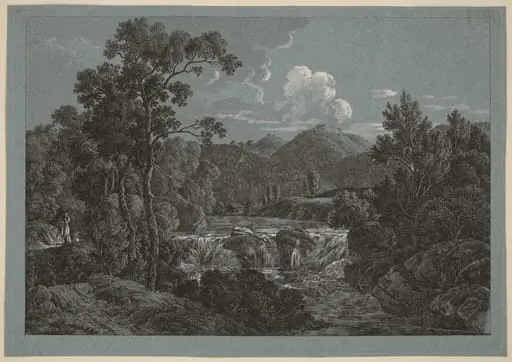
The Waterfall at Herrinsholmen
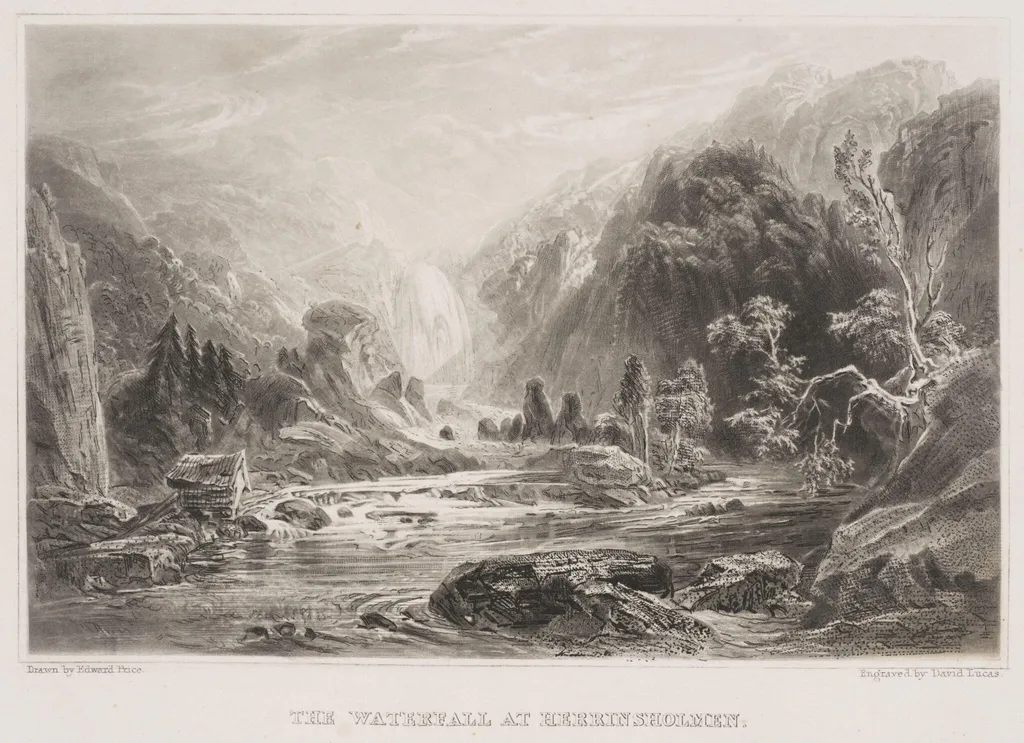
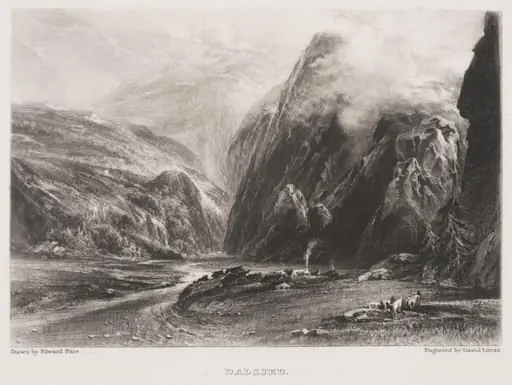
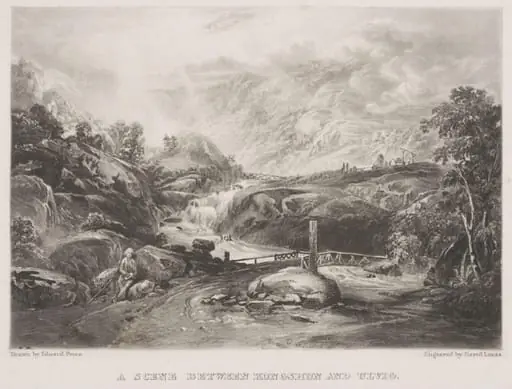
The Waterfall at Herrinsholmen is a print by the Romanticist artist Edward Price. It dates from 1834 and is held in the collection of the Victoria and Albert Museum.
About this work
Overview
The print was originally included in a private collection assembled by Lennox-Boyd, known for its focus on mezzotints after John Constable.
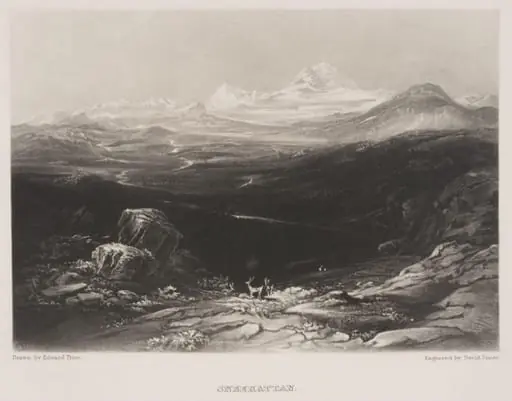
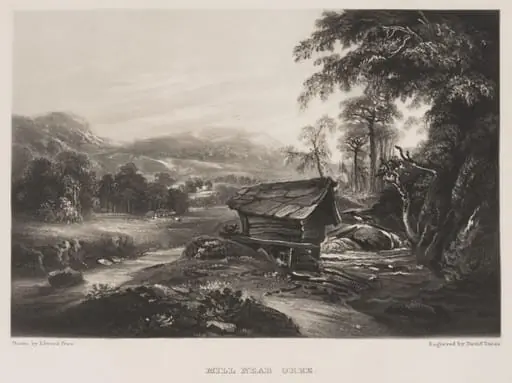
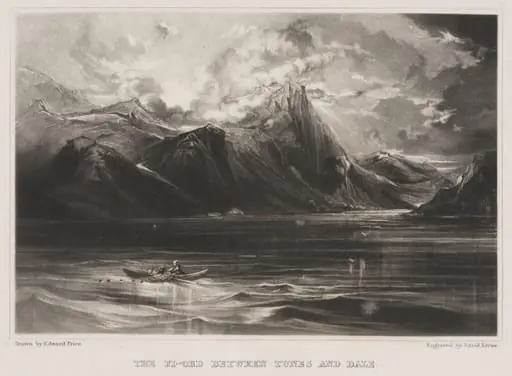
The Waterfall at Herrinsholmen is a black-and-white print by Edward Price, published in 1834 as part of a bound volume containing 21 illustrated plates with accompanying text. The print was originally included in a private collection assembled by Lennox-Boyd, known for its focus on mezzotints after John Constable. The entire collection, along with other 18th- and 19th-century objects, was transferred to the Victoria and Albert Museum in 2015 through an inheritance tax settlement.
Subject & Meaning
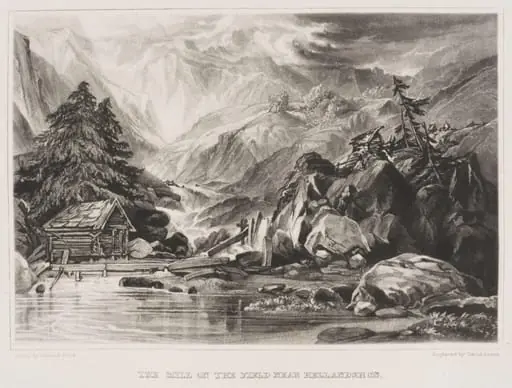
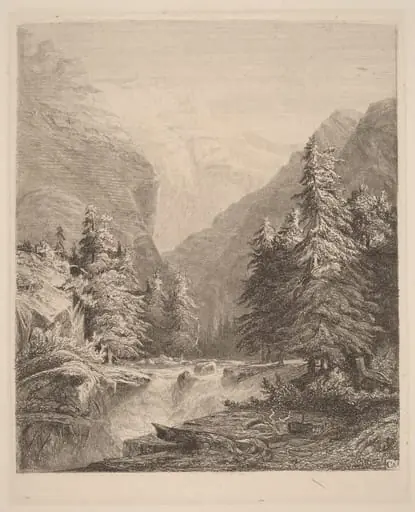
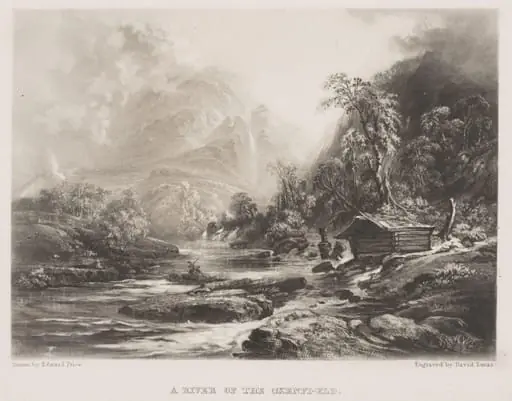
The scene depicts a rugged natural landscape centered on a cascading waterfall, surrounded by dense trees and jagged rocks under a brooding sky. Absent of human figures, the image emphasizes nature’s raw power and untamed beauty. The composition reflects a Romantic sensibility, valuing the sublime in wilderness rather than human intervention, inviting contemplation of nature’s force and isolation.
Technique & Style
Executed in fine, incised lines, the print uses tonal contrast and textured hatching to convey the movement of water and the roughness of stone. The absence of color heightens the dramatic interplay of light and shadow, typical of mezzotint techniques that emphasize depth and atmosphere. The meticulous rendering of spray and rock surfaces suggests a close observation of natural forms, aligning with topographical print traditions of the period.
History & Provenance
The print belonged to the Lennox-Boyd collection, a private assemblage notable for its concentration on mezzotints by David Lucas after Constable. Over time, the collector expanded his interests to include theatrical prints, works by George Stubbs, and diverse ephemera such as antique shoes and printed handkerchiefs. The collection was acquired by the Victoria and Albert Museum in 2015 via a government inheritance tax arrangement, ensuring public access.
Context
Produced during the height of Romanticism, the print reflects broader cultural fascination with wild landscapes and the sublime. Though not by a major name like Constable, Price’s work participated in a thriving market for illustrated natural history and scenic prints. Such volumes catered to middle-class audiences seeking aesthetic and educational experiences through accessible, printed imagery of remote natural sites.
Legacy
The print survives as part of a larger archival legacy preserved in a major public institution. Its inclusion in the Lennox-Boyd collection underscores the historical value placed on modestly produced, high-quality prints as cultural artifacts. Today, it contributes to scholarly understanding of 19th-century print culture, the dissemination of landscape imagery, and the evolving role of private collecting in public heritage.
Artist & collection