Artwork
Sf. Gheorghe, ucigând balaurul
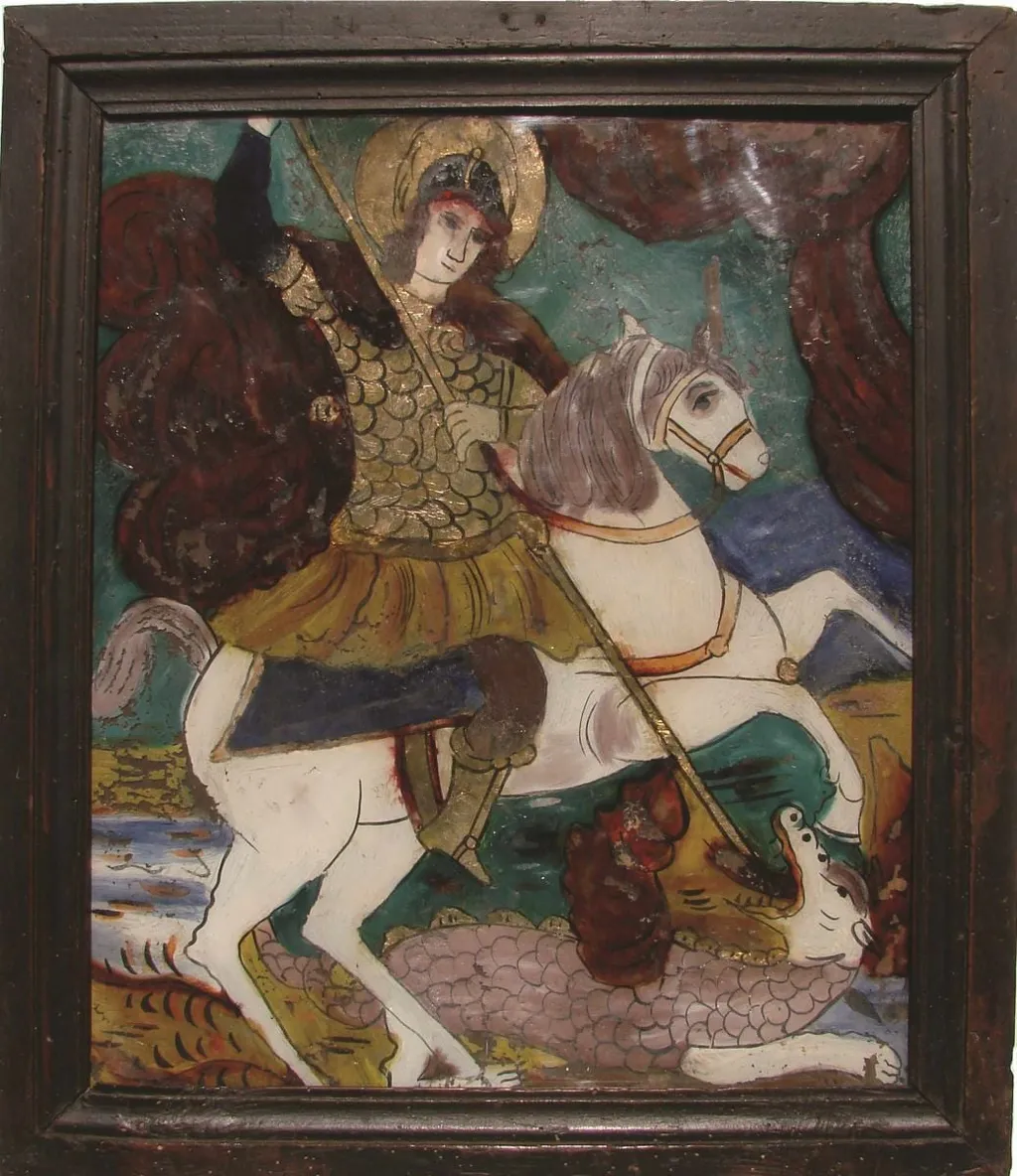
Sf. Gheorghe, ucigând balaurul is an unspecified painting by Maria Prodan. It is held in the collection of the Alba Iulia Orthodox Archdiocese. This image depicts Saint George slaying a dragon, rendered in a stylized, symbolic manner.
About this work
Overview
The composition is arranged to direct attention toward the moment of confrontation, using color and form to convey divine intervention.
This image depicts Saint George slaying a dragon, rendered in a stylized, symbolic manner. The central figures—a mounted knight and a coiled serpent-like beast—are framed by a turbulent, dark sky. Bold hues of gold, red, and blue contrast sharply with the somber background, emphasizing spiritual and narrative tension. The composition is arranged to direct attention toward the moment of confrontation, using color and form to convey divine intervention.
Subject & Meaning
The scene illustrates the legendary victory of Saint George over a dragon, a widely recognized Christian allegory representing good triumphing over evil. The golden halo around the knight’s head signifies sanctity, identifying him as a holy figure. The dragon, though menacing, is shown in defeat, its body contorted beneath the horse’s hooves. The imagery reinforces faith as a force that overcomes chaos and darkness.
Technique & Style
The painting employs flat, non-naturalistic forms and heightened color contrasts to prioritize symbolic meaning over realism. The knight and horse are rendered with rigid, almost geometric precision, while the dragon’s body twists in an organic, chaotic pattern. Swirling cloud forms in the background suggest supernatural energy. The use of gold for the halo and red for the saddle draws the eye, guiding the viewer through the narrative hierarchy.
History & Provenance
The work originates from a devotional tradition common in Eastern European religious art, likely created for a church or private chapel. Its style aligns with medieval iconography, where saints were depicted in standardized poses to convey theological truths. Though the exact origin and artist are unrecorded, similar compositions appear in 15th- to 17th-century Orthodox and Byzantine-influenced regions, suggesting a shared visual language across communities.
Context
During the late medieval and early modern periods, images of Saint George were widely produced across Europe and the Orthodox world as symbols of protection and moral courage. This painting reflects the enduring popularity of the saint as a military patron and spiritual defender. Its visual language—haloed figures, symbolic animals, and dramatic skies—echoes liturgical and manuscript traditions meant to inspire piety and reinforce doctrinal narratives.
Legacy
The image continues to function as a visual archetype of righteous combat, influencing later religious and folk art. Its simplified forms and symbolic palette allowed for easy reproduction in icons, prints, and textiles. Though not tied to a single renowned artist, its persistence in regional traditions underscores its role as a cultural touchstone, preserving a narrative of divine aid through visual continuity rather than innovation.
Artist & collection
Artist
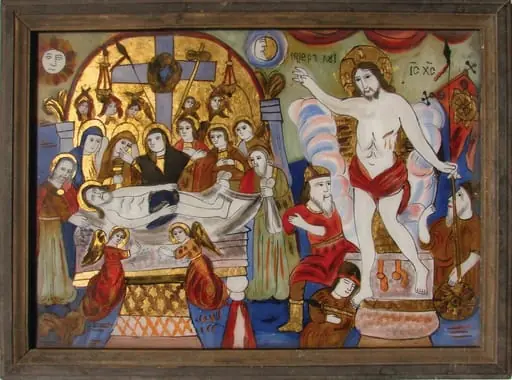
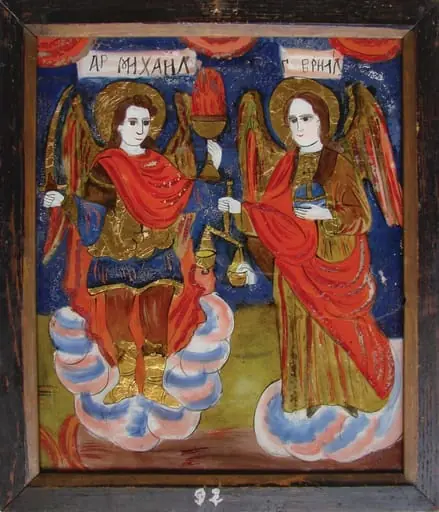
Maria Prodan's work belongs to a traditional era of religious art. She painted "Sfinții Mihail și Gavril" and drew "Prohodul și Învierea lui Iisus". These pieces, along with "Iisus Hristos arhiereu și învățător,…
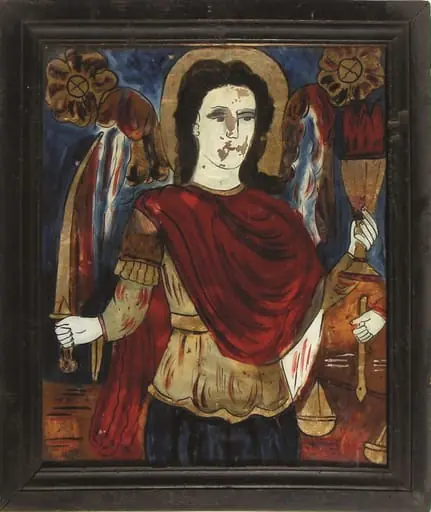
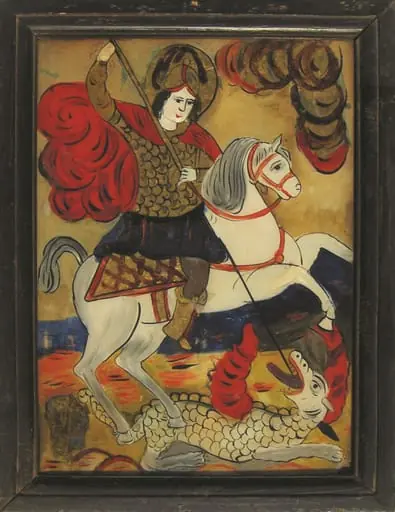
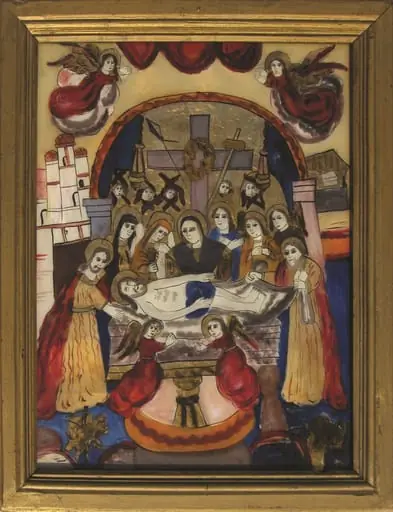
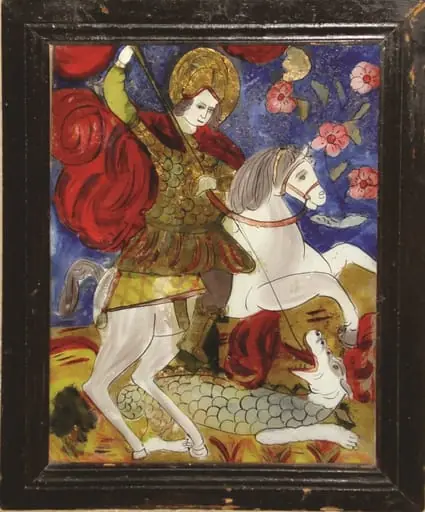
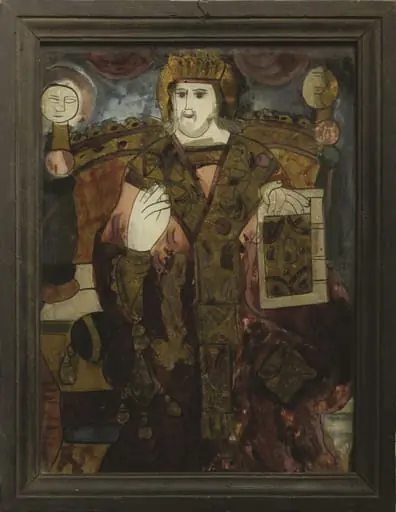
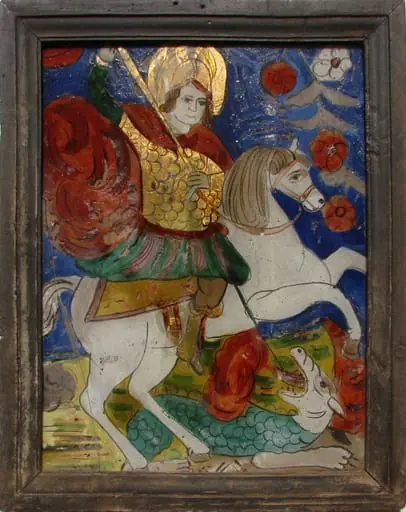 Sf. Gheorghe, ucigând balaurul
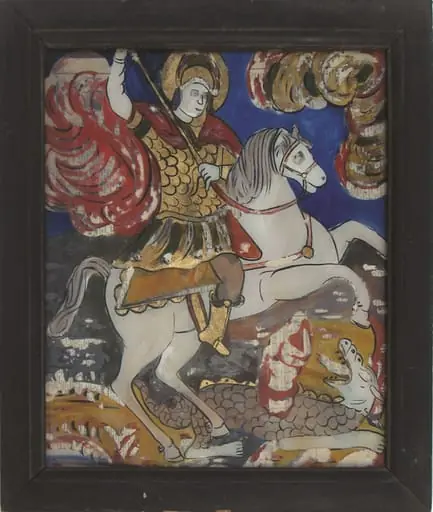 Sf. Mucenic Gheorghe ucigând balaurul
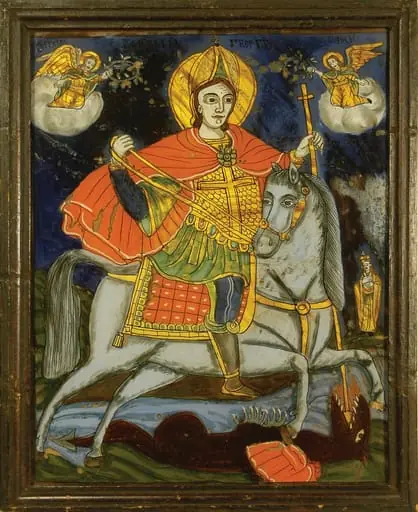 Sf. Mucenic Gheorghe, ucigând balaurul
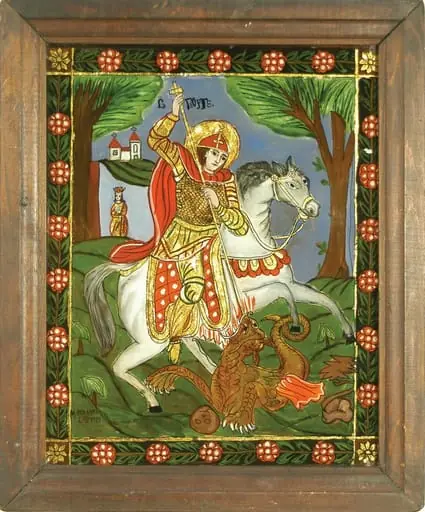 Sf. Mucenic Gheorghe, ucigând balaurul
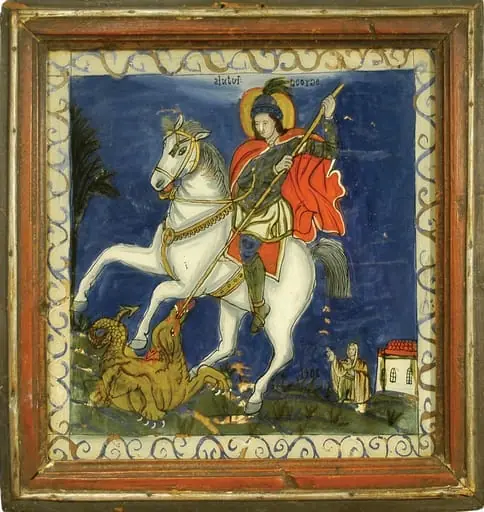 Sf. Mucenic Gheorghe, ucigând balaurul
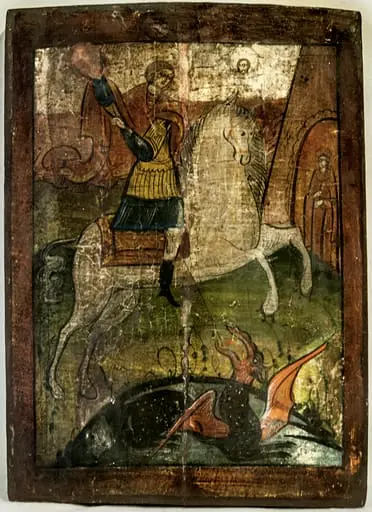 Tema iconografică este "Sfântul Gheorghe omorând balaurul". În prim plan, Sf. Gheorghe, în veșminte ostășești, călare pe un cal alb, cambrat, ridicat în două picioare, omoară balaurul plasat în registrul inferior. Veșmintele sfântului au o tentă țărănească(tunica albastră acoperită 3/4 de lorica argintie, pantaloni albi, cu motiv floral, cizme înalte. Calul are ambii ochi vizibili, coama bogată, coada în fuior. Partea dinspre privitor a ansamblului cal cu călăreț este supradimensionată, creând o impresie optică de înălțare a sfântului. În partea dreaptă, fata de împărat pe care o salvează sfântul, sub portalul palatului. privind scena. Veșminte lungi, simple, coroană împărătească. Înveșmântată în haine simple, lungi, cu coroană pe cap, privește scena cu brațele la piept. În colțul din stânga dreapta sus, Iisus Hristos așa cum apare pe sfântul Keramion. Nimbul cruciger. Balaurul plasat în registrul inferior asemănător unui grifon, corp diform, terminat cu o coadă în săgeată, aripile și capul roșii. Motiv mai elaborat decât în alte icoane unde redarea balaurului este minimizată. Compoziția este dinamică, chipurile expresive, gesturile bine realizate. Linia desenului variază, contribuind la efectul optic. Fondul foiței argintii(superior), relief din benzi late în tonuri de brun, brun roșcat, galben, alb, verde, cu elemente de vegetație. Bordura roșiatică lată, specifică icoanelor de tip krashnuska. Inscripție pe chenar, în partea superioară.
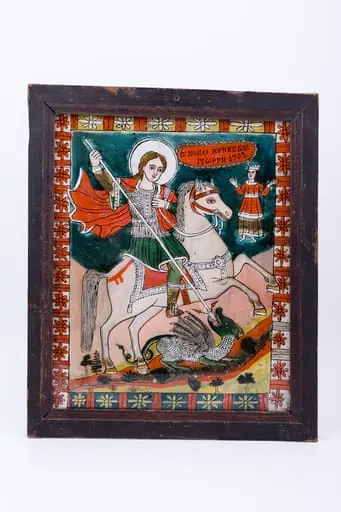 Sfântul Mare Mucenic Gheorghe este așezat călare pe un cal alb, omorând balaurul brun cu lancea, pe care o ține în amândouă mâinile. Balaurul este pictat cu brun-nisipiu, având solzi și coarne. În partea stângă a Sfântului Gheorghe este pictată domnița salvată și ocrotită de marele mucenic. Fondul este turcoaz, în registrul superior și roz- verde-ocru în cel inferior, în centrul icoanei ușor întrepătrundu-se toate culorile. Mantia Sfântului Mucenic Purtător de Biruință este roșie, având pantalonii albi și cămașa de zale de cavaler gri. Cromatica este armonioasă; roșu vermillon, roz, turcoaz, ocru, galben, alb și negru. Inscripția din româno-chirilică se traduce Sf Mare Mucenic Gheorghe. Icoana este rafinată prin acuratețea desenului, compoziția echilibrată și armonia cromatică, Icoana este datată 1902. Icoana este pictată de Matei Țimforea, din Cârțișoara, Țara Făgărașului.
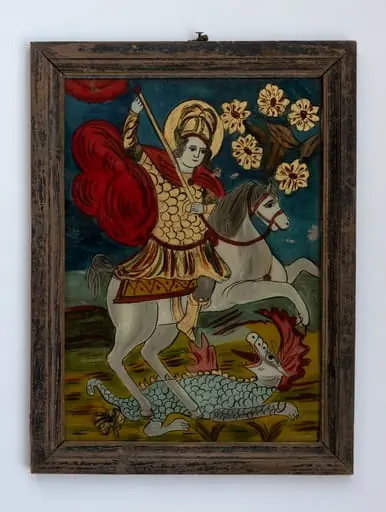 Sfântul Gheorghe
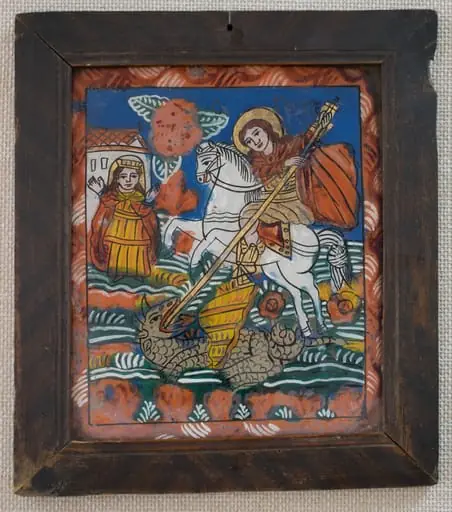 Icoana îl reprezintă pe sfântul Gheorghe omorând balaurul. Sfântul, călare pe cal alb, plasat central. Veșmintele sunt asemănătoare celor ale soldaților chezaro-crăiești, cizme înalte, tunică scurtă, zale, mantie roșie fluturând în vânt. Are capul descoperit, plete lungi, castanii, ochi mari, gura roșie, trăsăturile bine definite, expresive. În mână ține o suliță lungă, cruciformormă,aurită, cu care omoară balaurul înaripat, căzut la pământ, scoțînd limbi ascuțite. Calul este alb, capul mic, coada înnodată. Relieful este realizat prin linii albe) și vrâste de culoare(verde, galben,roșu), marcate cu motive fitomorfe. Câmp albastru închis, înviorat de o floare roșie cu frunze delimitate de nervuri albe. În partea stângă, în plan îndepărtat, în fața palatului sugerat printr-o clădire simplă,albă, înaltă, cu acoperiș de olane roșii, se află fata de împărat pe care o salvează sfântul conform legendei. Întreaga compoziție este încadrată de un chenar rectangular de culoare roșie, traversat longitudinal de o linie spiralată ale cărei meandre sunt însoțite de blicuri albe și verzui. Desenul complicat, tușa groasă, culorile intense, asemănător vitraliilor. Umplerea cu culoare neglijentă indică o producție de serie. Rama din lemn de brad este vopsită în cafeniu închis și decorată cu u motiv în formă de V Dosul este realizat din două scândurele de brad dispuse orizontal.
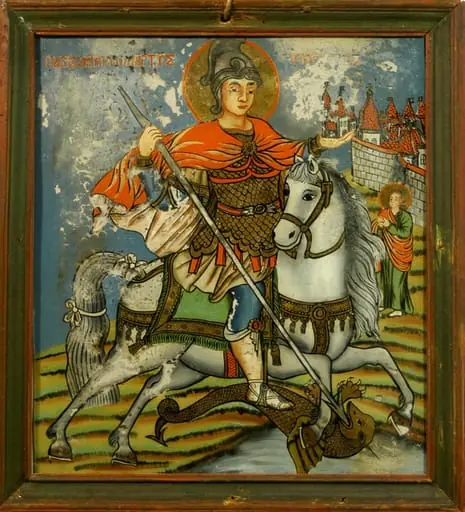 Sf. Gheorghe