Artwork
Sf. Gheorghe
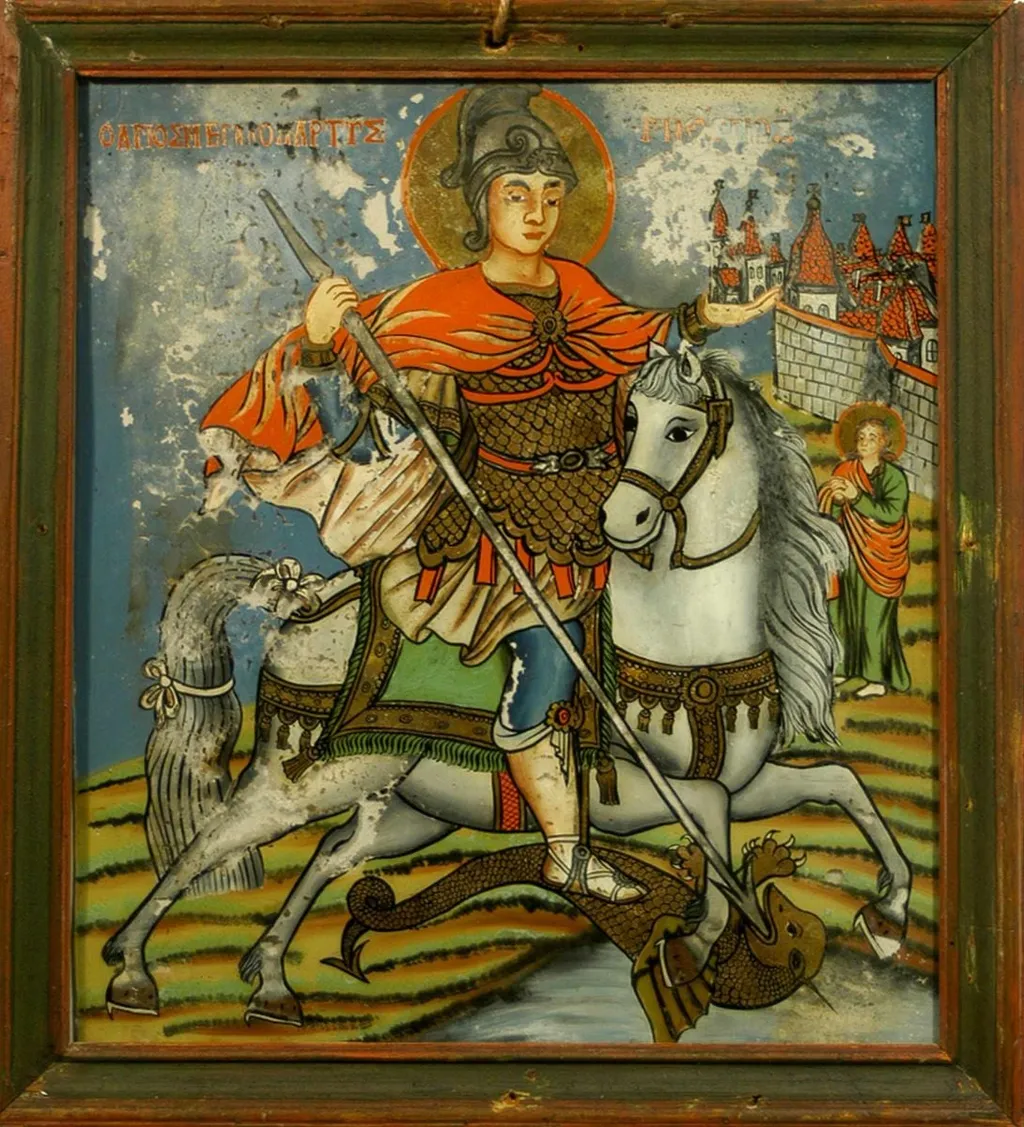
Sf. Gheorghe is a drawing by the Baroque artist Ioan Pop de la Făgăraș. It is held in the collection of the Alba Iulia Orthodox Archdiocese. This image portrays a mounted figure in armor, clad in a red cape, thrusting a spear while riding a rearing white horse.
About this work
Overview
The style aligns with folk artistic traditions of 19th-century Transylvania, particularly those associated with Ioan Pop de la Făgăraș.
This image portrays a mounted figure in armor, clad in a red cape, thrusting a spear while riding a rearing white horse. The dynamic pose and vivid coloring suggest motion, set against a simple sky with scattered clouds. A small human figure stands below, possibly indicating a narrative context. The style aligns with folk artistic traditions of 19th-century Transylvania, particularly those associated with Ioan Pop de la Făgăraș.
Subject & Meaning
The central figure, likely Saint George, is commonly depicted in Christian iconography slaying a dragon, though here no dragon is present. The rearing horse and spear imply a moment of confrontation or divine intervention. The solitary figure on the ground may represent a supplicant or witness, reinforcing the scene’s spiritual or heroic character without explicit mythological detail.
Technique & Style
Bold outlines and flat areas of bright color—especially the red cape and white horse—create visual emphasis. The composition avoids perspective depth, focusing instead on rhythmic movement and symbolic clarity. Brushwork is direct and unmodulated, typical of regional icon painters who prioritized expressive form over naturalistic detail.
History & Provenance
The work bears stylistic traits linked to Ioan Pop de la Făgăraș, a known illustrator and folk artist active in the mid-1800s. While no documented provenance exists, its format and iconography suggest it originated as a devotional or decorative panel, possibly from a church or private home in the Făgăraș region of Transylvania.
Context
In 19th-century Romanian rural communities, images of Saint George were common in both religious and secular contexts, symbolizing protection and moral strength. This painting reflects a local adaptation of broader Orthodox iconographic traditions, filtered through the visual language of itinerant artists who blended sacred themes with folk aesthetics.
Legacy
Though not attributed to a major institutional collection, the image preserves a strand of Transylvanian folk art that persisted alongside formal ecclesiastical painting. Its continued recognition stems from its clear connection to regional artistic practices, offering insight into how religious narratives were interpreted outside academic traditions.
Artist & collection
Artist
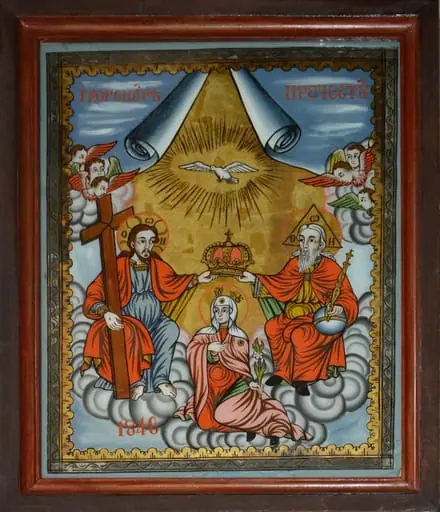
Ioan Pop de la Făgăraș painted religious scenes in the mid-1800s, like *Încoronarea Fecioarei* (1846) and *Duminica Floriilor*.
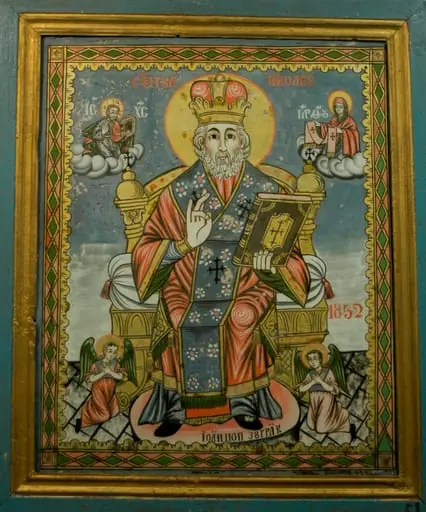
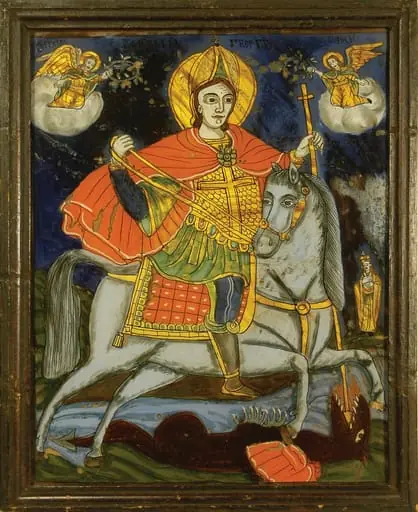 Sf. Mucenic Gheorghe, ucigând balaurul
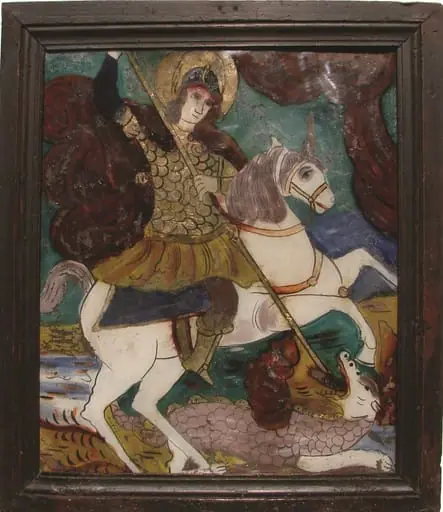 Sf. Gheorghe, ucigând balaurul
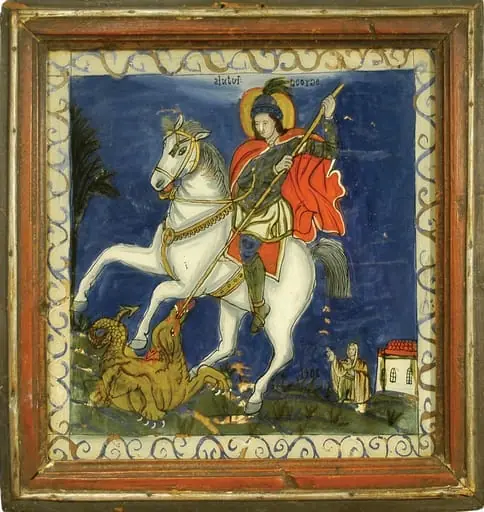 Sf. Mucenic Gheorghe, ucigând balaurul
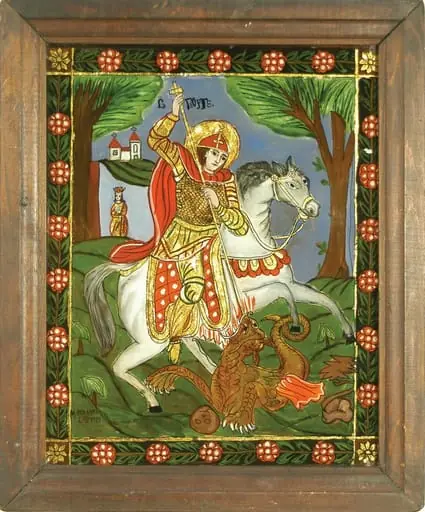 Sf. Mucenic Gheorghe, ucigând balaurul
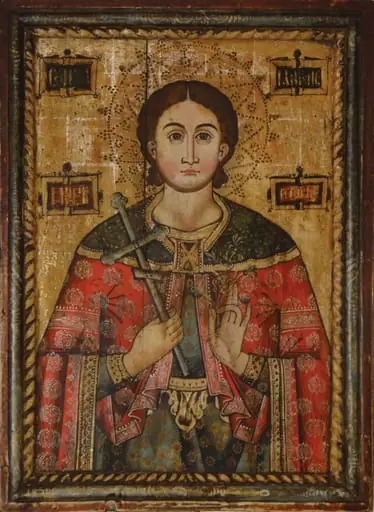 Sf. Gheorghe
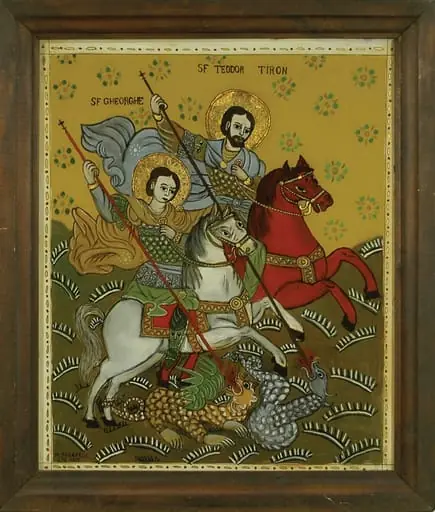 Sfinții Gheorghe și Teodor Tiron
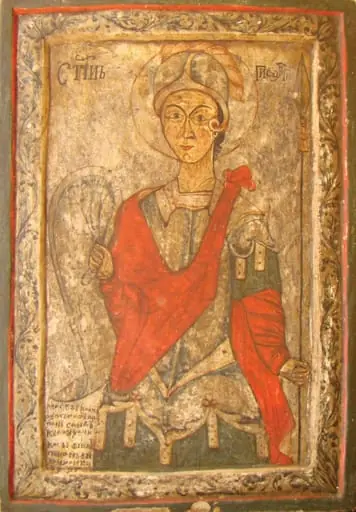 Sf. Gheorghe
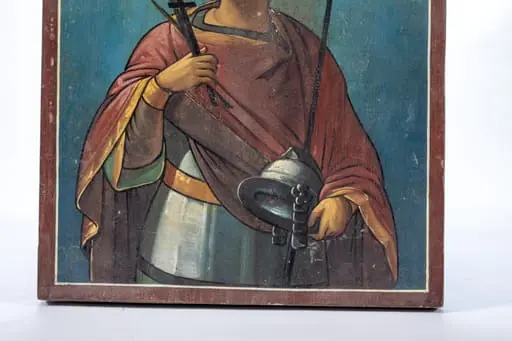 Sfântul Mucenic Gheorghe
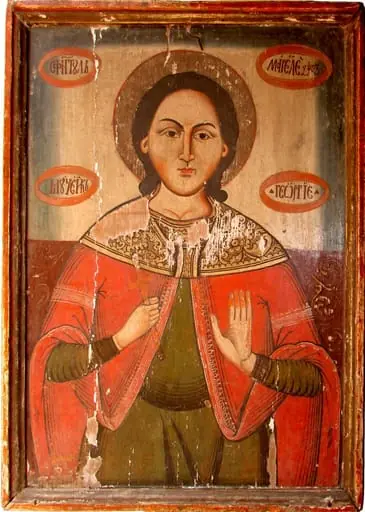 Sf. Gheorghe
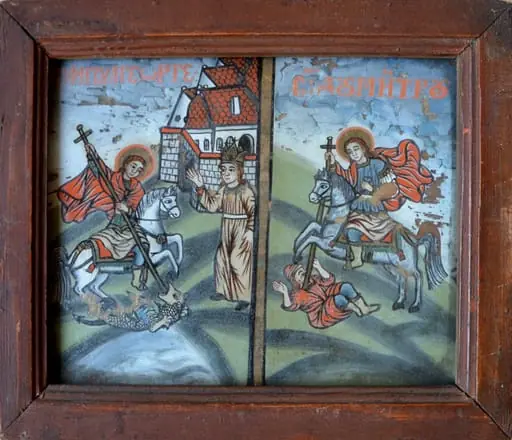 Sfinții Gheorghe și Dumitru
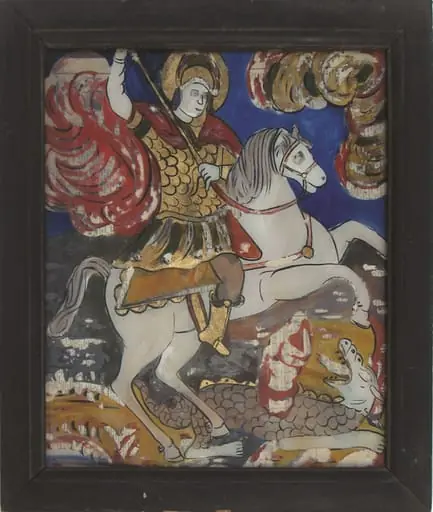 Sf. Mucenic Gheorghe ucigând balaurul