Artwork
Sf. Mucenic Gheorghe, ucigând balaurul
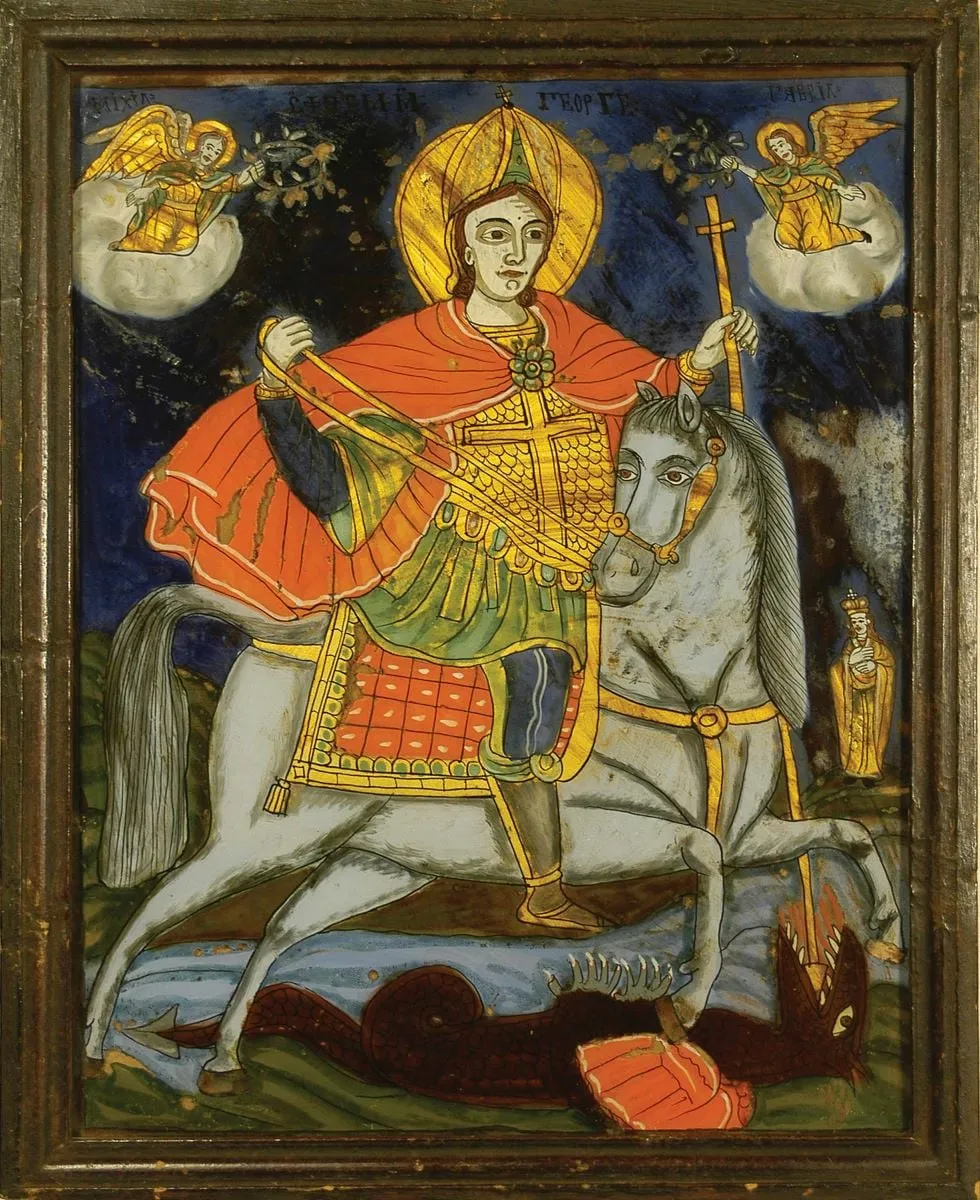
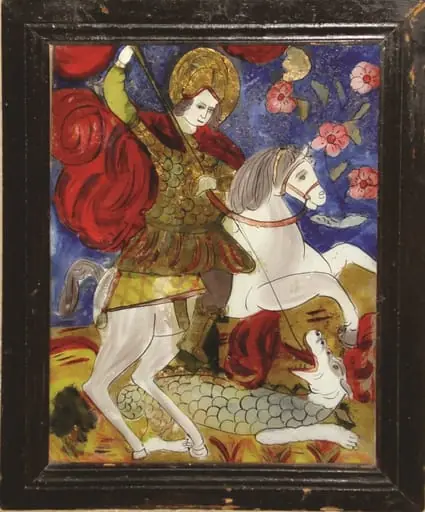
Sf. Mucenic Gheorghe, ucigând balaurul is an unspecified painting by Ilie Poienaru. It is held in the collection of the Alba Iulia Unification National Museum. This religious painting portrays Saint George slaying the dragon, rendered in vivid hues and dramatic lighting.
About this work
Overview
This religious painting portrays Saint George slaying the dragon, rendered in vivid hues and dramatic lighting. The central figure, mounted on a white horse, is clad in a rich red and gold robe and crowned with a large golden hat. His focused gaze and raised cross suggest divine authority, while the surrounding angels and contrasting light intensify the scene’s spiritual gravity.
Subject & Meaning
The imagery reflects the traditional hagiographic narrative of Saint George defeating a dragon, symbolizing the triumph of faith over evil.
The imagery reflects the traditional hagiographic narrative of Saint George defeating a dragon, symbolizing the triumph of faith over evil. The cross in his hand signifies divine mandate, while the angels—holding a branch of victory and a sword—embody heavenly support. The composition frames the saint as an instrument of divine justice, reinforcing his role as a protector and martyr in Orthodox tradition.
Technique & Style
The artist employs chiaroscuro to model form and heighten emotional tension, with sharp contrasts between illuminated figures and shadowed backgrounds. Bold, saturated colors—particularly the red robe and gold accoutrements—draw the eye to the central figure. Dynamic lines in the horse’s posture and the angels’ gestures create a sense of motion, anchoring the scene in theatrical religious drama.
History & Provenance
The work originates from a Romanian Orthodox devotional context, likely produced in the 18th or early 19th century. It was probably commissioned for a church or monastery, serving both liturgical and didactic purposes. Its style aligns with regional iconographic traditions that blended Byzantine conventions with local artistic interpretations of saintly legends.
Context
In Eastern Orthodox communities, depictions of Saint George were common in ecclesiastical settings, especially in regions under Ottoman rule, where such imagery reinforced cultural and spiritual identity. The inclusion of angels as witnesses reflects liturgical emphasis on heavenly intercession. The painting’s intensity mirrors broader devotional trends favoring emotionally resonant, narrative-driven sacred art.
Legacy
This image contributes to a sustained visual tradition of Saint George veneration in Eastern Europe. While not attributed to a known master, its adherence to established iconographic codes and skilled execution suggest it was produced by a trained workshop. It remains a representative example of how regional artists adapted universal hagiographic themes for local spiritual needs.
Artist & collection
Artist
Ilie Poienaru kept his life quieter than his bold ink lines. He drew saints and biblical scenes with a steady hand, using nothing but black and white to make halos glow and robes drape real. If you’ve ever stood in a…
Museum
Alba Iulia Unification National Museum
Continue through works from the same source collection.
 Sf. Mucenic Gheorghe ucigând balaurul
 Sf. Gheorghe, ucigând balaurul
 Sf. Gheorghe, ucigând balaurul
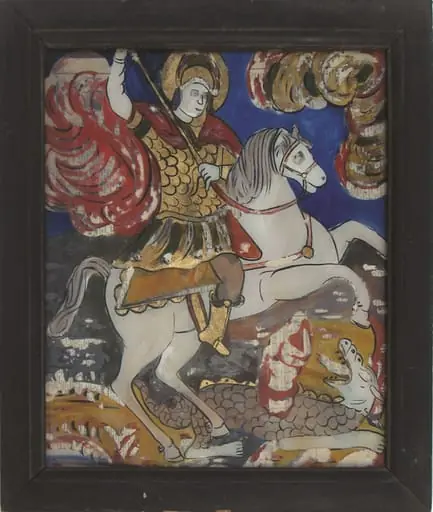 Sf. Mucenic Gheorghe ucigând balaurul
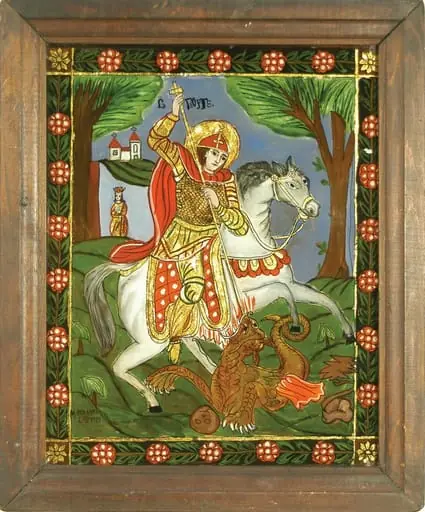 Sf. Mucenic Gheorghe, ucigând balaurul
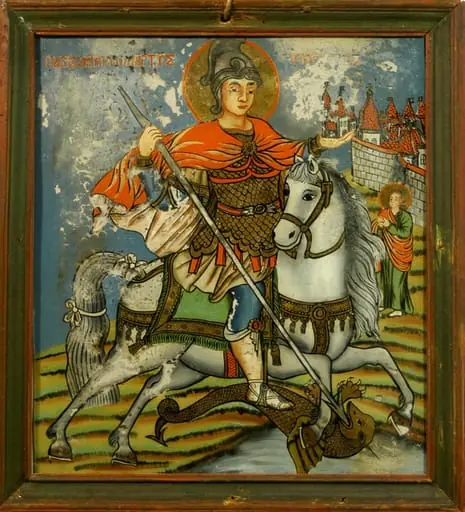 Sf. Gheorghe
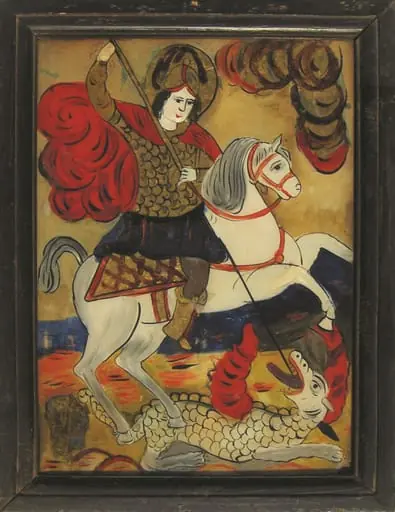 Sf. Mucenic Gheorghe, ucingând balaurul
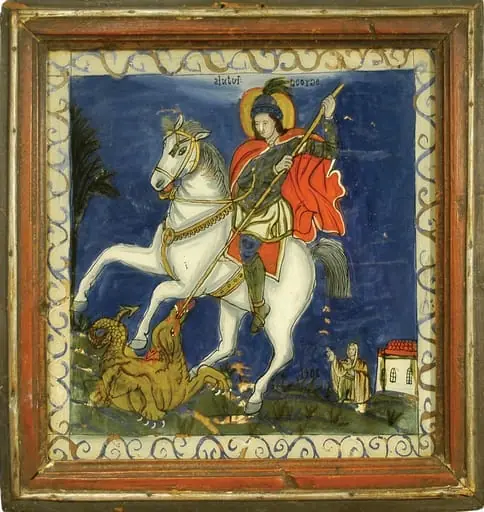
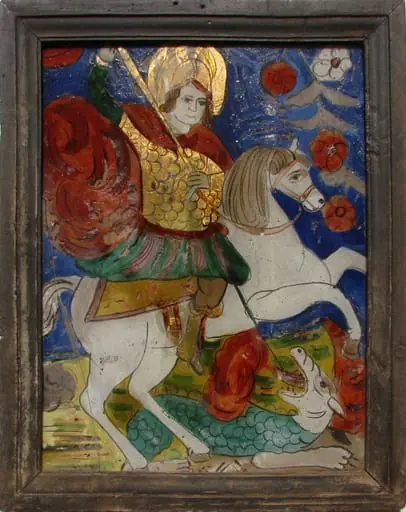
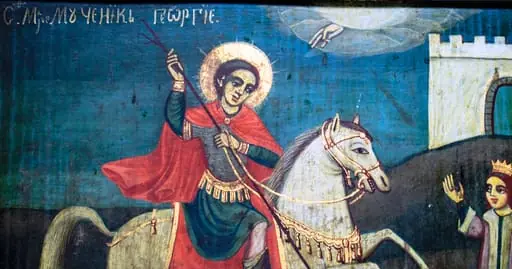 Icoana este pictată pe un suport de lemn de formă dreptunghiulară, în ax orizontal. Tema iconografică este "Sfântul Gheorghe omorînd balaurul". În prim plan, Sf. Gheorghe, înveșmântat ostășește(tipic epocii medievale, cămașă de zale, tunică până la genunghi, cizme înalte, mantie), călare pe un cal alb, ridicat în două picioare, omoară balaurul cu o suliță. Aureolă aurită, cu raze fine pe margine. În mâna cu sulița ține și o cruce. Balaurul(reprezentînd răul în forma lui cea mai joasă) cu coada în săgeată este încolăcit sub picioarele calului, . În partea dreaptă, fecioara pe care o scapă sfântul de la moarte, în veșmânt împărătesc și coroană pe cap, privește scena cu bucurie, cu brațele ridicate. În spatele ei, peste o colină, este reprezentată schematic cetatea, printr-un zid alb crenelat. Deasupra lor, dintr-un nor luminos, mâna dreaptă a lui Dumnezeu, binecuvântând. Compoziția este dinamică, chipurile expresive, gesturile bine realizate. Cromatica este bine echilibrată, zugravul folosește contrastele pentru a da profunzime scenei. Cerul albastru de Prusia, ușor luminat pe linia orizontului.Cromatica este specifică pentru mai multe icoane aparținînd bisericii Răpciuni cam din aceeași perioadă. Rama este realizată din patru stinghii subțiri profilate, îmbinate oblic. Icoana cu ramă este montată într-un panou pictată în roșu stins, care făcea parte din friza de jos a iconostasului.
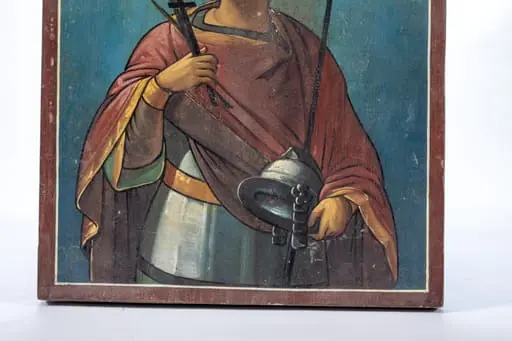 Sfântul Mucenic Gheorghe
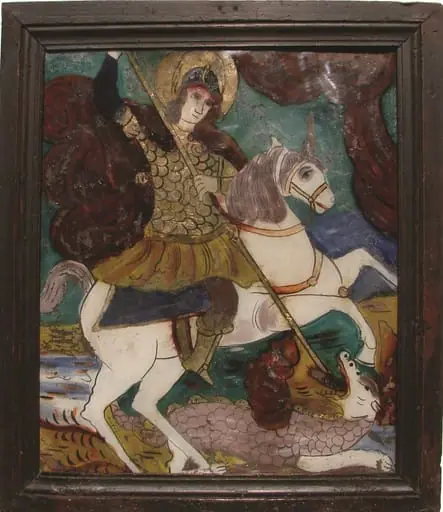
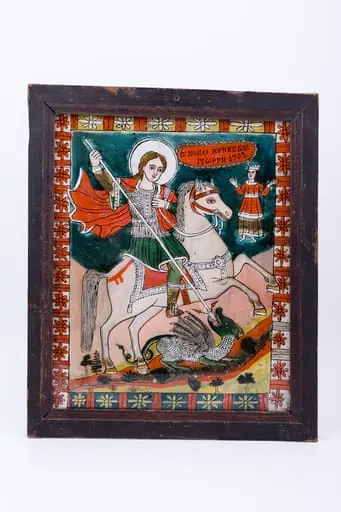 Sfântul Mare Mucenic Gheorghe este așezat călare pe un cal alb, omorând balaurul brun cu lancea, pe care o ține în amândouă mâinile. Balaurul este pictat cu brun-nisipiu, având solzi și coarne. În partea stângă a Sfântului Gheorghe este pictată domnița salvată și ocrotită de marele mucenic. Fondul este turcoaz, în registrul superior și roz- verde-ocru în cel inferior, în centrul icoanei ușor întrepătrundu-se toate culorile. Mantia Sfântului Mucenic Purtător de Biruință este roșie, având pantalonii albi și cămașa de zale de cavaler gri. Cromatica este armonioasă; roșu vermillon, roz, turcoaz, ocru, galben, alb și negru. Inscripția din româno-chirilică se traduce Sf Mare Mucenic Gheorghe. Icoana este rafinată prin acuratețea desenului, compoziția echilibrată și armonia cromatică, Icoana este datată 1902. Icoana este pictată de Matei Țimforea, din Cârțișoara, Țara Făgărașului.
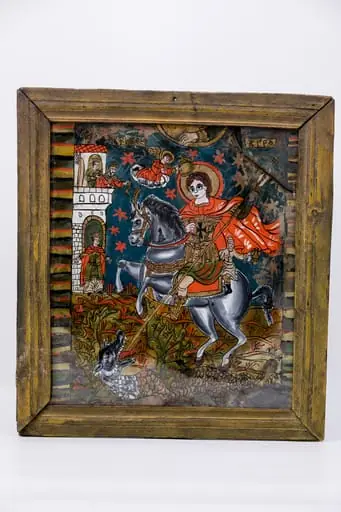 Sfântul Mare Mucenic Gheorghe este așezat călare pe un cal alb-gri, cu elemente de harnașament bronzii și șa roșie, omorând balaurul gri-gaben-verde cu creastă, solzi și coadă lungă, cu lancea, pe care o ține cu amândouă mâinile, înfingându-i-o animalului în gâtlej. În partea dreaptă a Sfântului Gheorghe, în registrul îndepărtat, este pictată domnița salvată și ocrotită de marele mucenic, cu mâinile ridicate, atât de teamă și spaimă, cât și de mulțumire către sfântul purtător de biruință. În registrul superior este Dumnezeu-Tatăl Binecuvântând cu mâna dintr-o deschidere a Cerurilor și un înger serafim care aduce Sfântului Gheorghe cununa de mucenic. În balconul castelului sunt două personaje cu cheile turnului în mână și pe șaua calului, în spatele Sfântului Mare Mucenic Gheorghe este un personaj foarte mic, îmbrăcat în haine arăbești, având în mână o candelă-amforă-cădelniță. Fondul icoanei este cerul albastru-gri-întunecat cu elemente astrale, stele roșii și câmpuri brune-kaki cu elemente vegetale roșii vermillon, în registrul inferior. Mantia Sfântulu Mucenic Purtător de Biruință este roșie-fluturândă având cămașa de cavaler cu zale și o cruce neagră de cavaler pe piept. Culoarea roșie este caracteristică mucenicilor și martirilor. Atât în dreapta, cât și în stânga sunt elemente de arhitectură, astfel spațializându-se narațiunea iconografică. Cromatica este armonioasă; roșu vermillon, albastru-gri întunecat, galben-ocru, verde văratic, verde brad, kaki, bronziu, alb și negru. Inscripția din româno-chirilică se traduce Sfântul Gheorghe. Icoana este din Țara Oltului. Icoana este mai rară, datorită diversității personajelor.