Artwork
The Virgin and Child
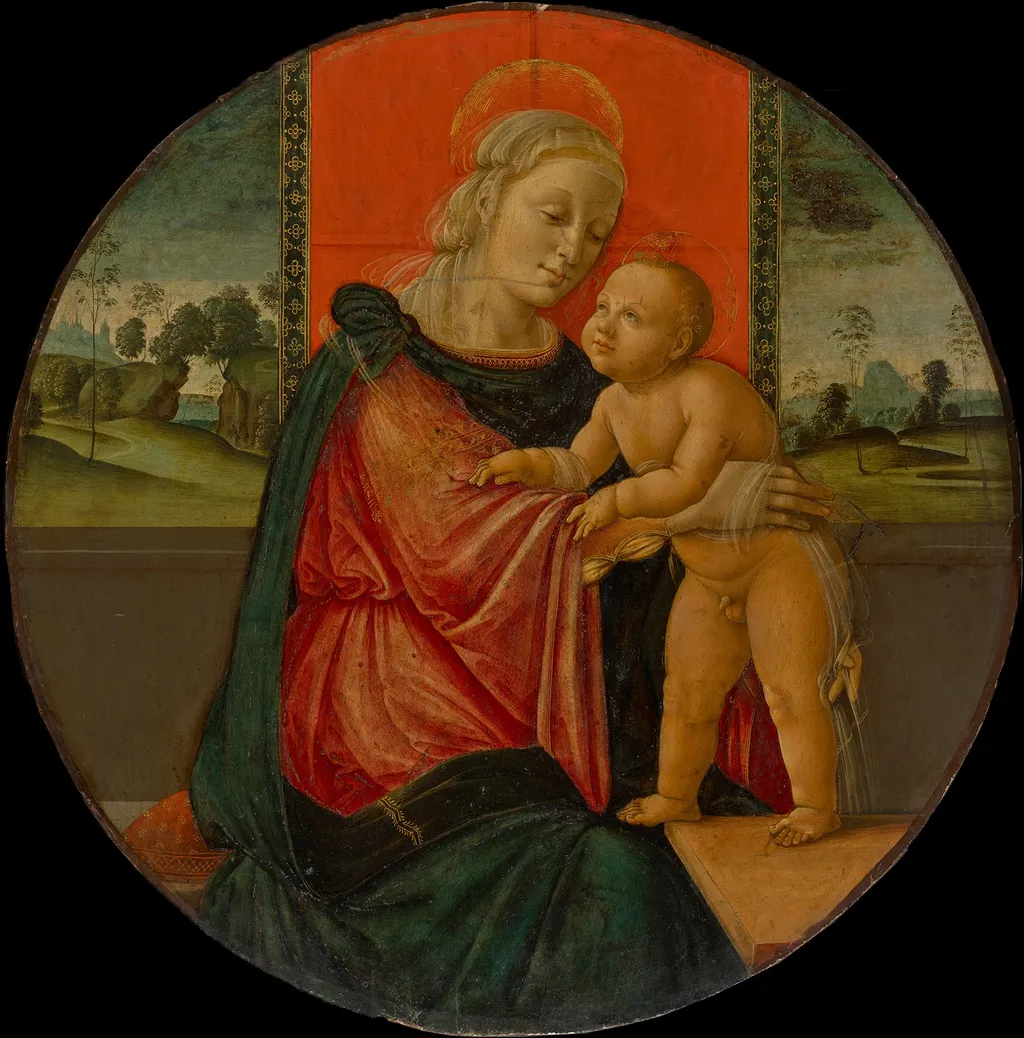
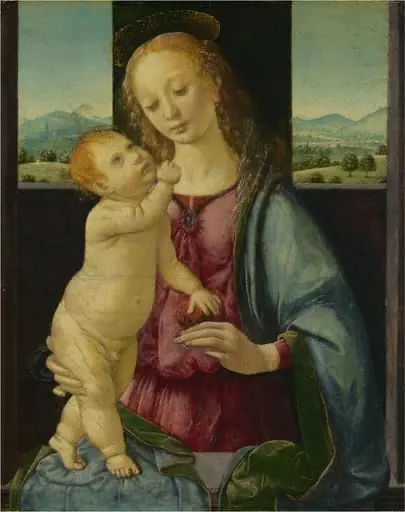
The Virgin and Child is a paint painting by Pseudo Granacci. It dates from 1510 and is held in the collection of the Gemäldegalerie Berlin. Created around 1510, this painted panel portrays the Virgin Mary and the infant Christ in an intimate encounter.
About this work
Overview
Created around 1510, this painted panel portrays the Virgin Mary and the infant Christ in an intimate encounter. The work is attributed to the anonymous hand known as Pseudo‑Granacci and is part of the collection of the Gemäldegalerie in Berlin. Its modest dimensions and subdued palette focus attention on the central figures rather than on elaborate background scenery.
Subject & Meaning
The composition presents Mary seated, her eyes gently closed, while she cradles the nude Christ Child, who leans forward with his arms around her. The tender exchange emphasizes the human bond between mother and son, a common devotional theme intended to evoke empathy and piety among viewers.
Technique & Style
Executed in oil on panel, the painting displays careful modeling of flesh and fabric through delicate brushwork. The Virgin’s red robe and green cloak are rendered with subtle folds that suggest texture and volume. A muted red wall forms the backdrop, punctuated by a modest landscape glimpsed through a window, adding depth without distracting from the figures.
History & Provenance
Attributed to the workshop of Pseudo‑Granacci, the work reflects early‑16th‑century Florentine influences. It entered the Gemäldegalerie Berlin’s holdings in the early 20th century, though earlier ownership records remain sparse. The painting has been catalogued as a representative example of devotional imagery produced for private contemplation.
Artist & collection
Artist
Pseudo Granacci made religious paintings in early 1500s Italy. One signed work here shows the Virgin holding the Christ Child in tempera paint, a common choice before oil took over. The figures have soft folds in their…

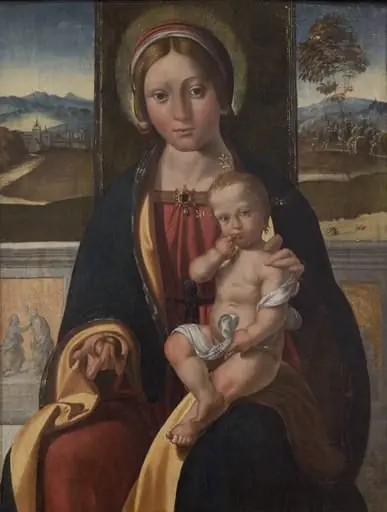 The Virgin and Child
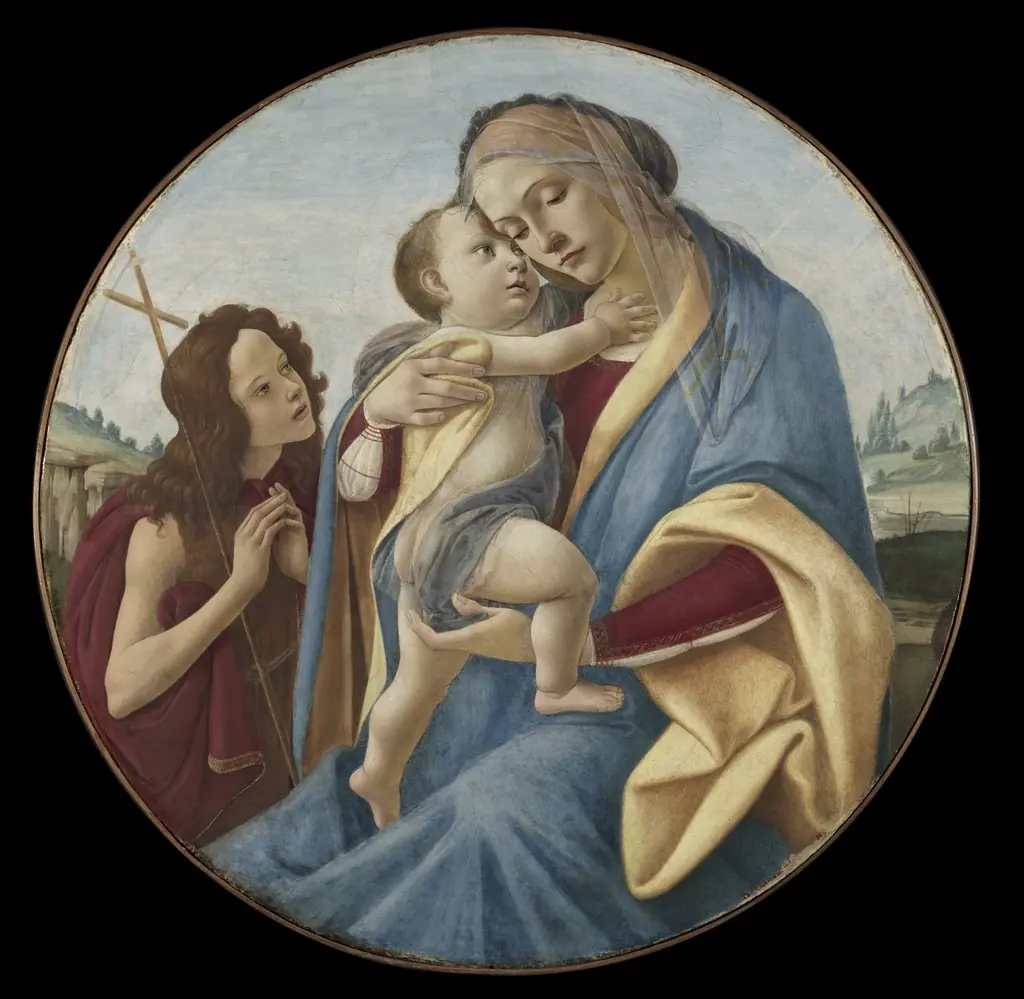 Virgin and Child with the Young Saint John the Baptist
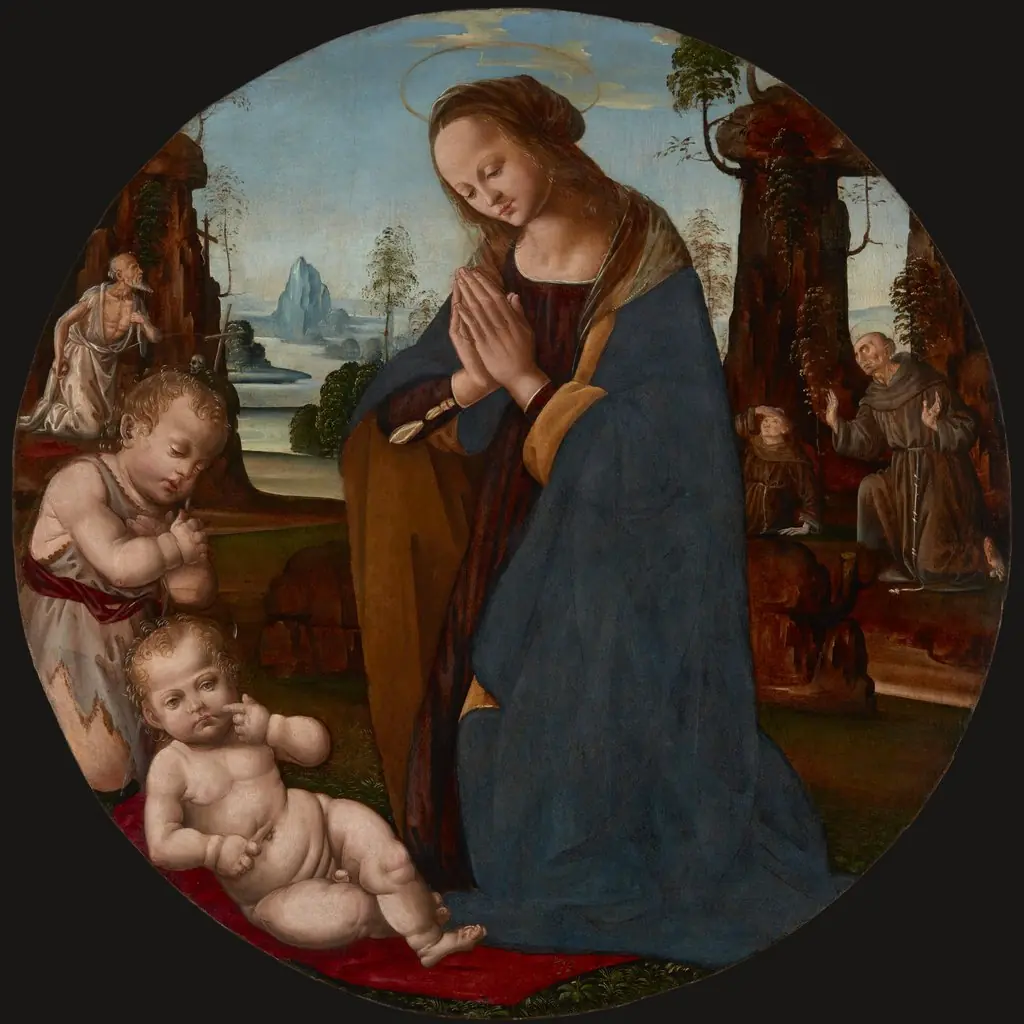 Adoration of the Child with Young St John the Baptist – Tondo
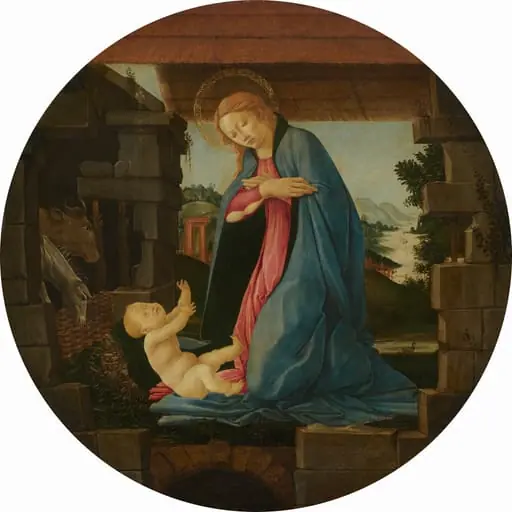 The Virgin Adoring the Child
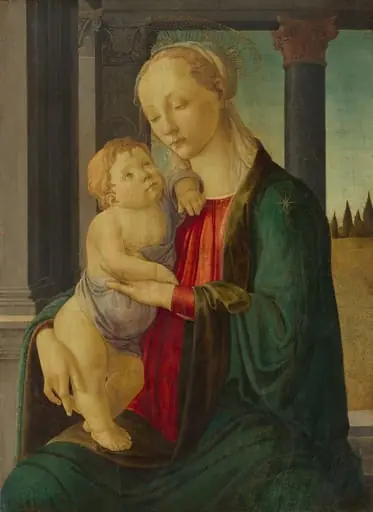 Madonna and Child
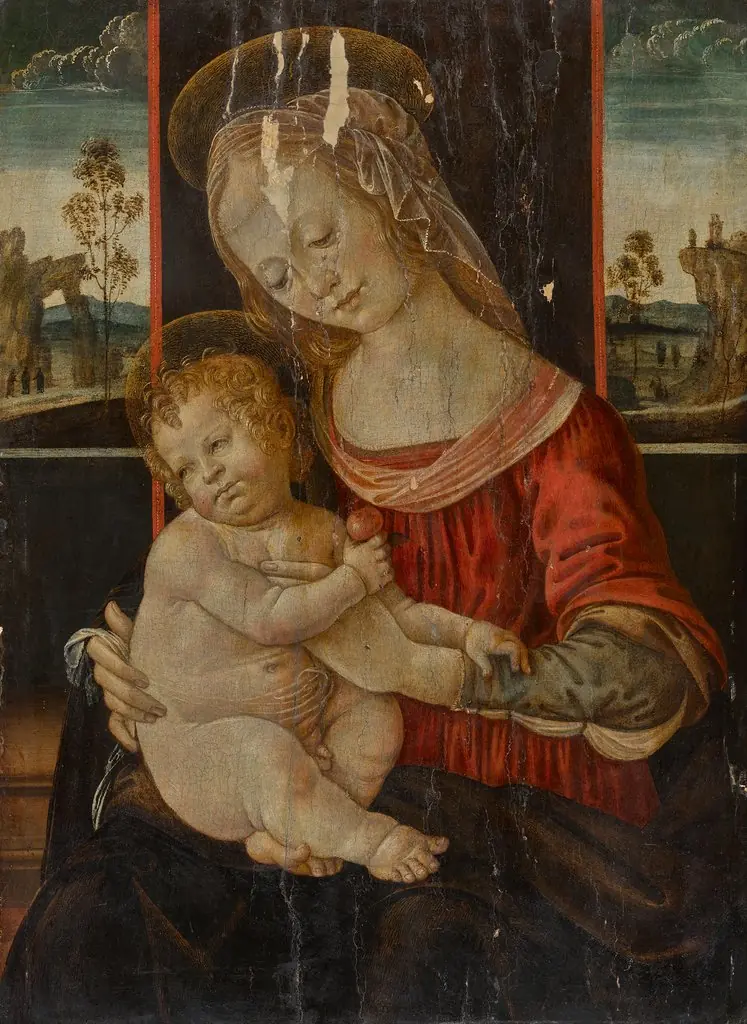 Madonna and Child
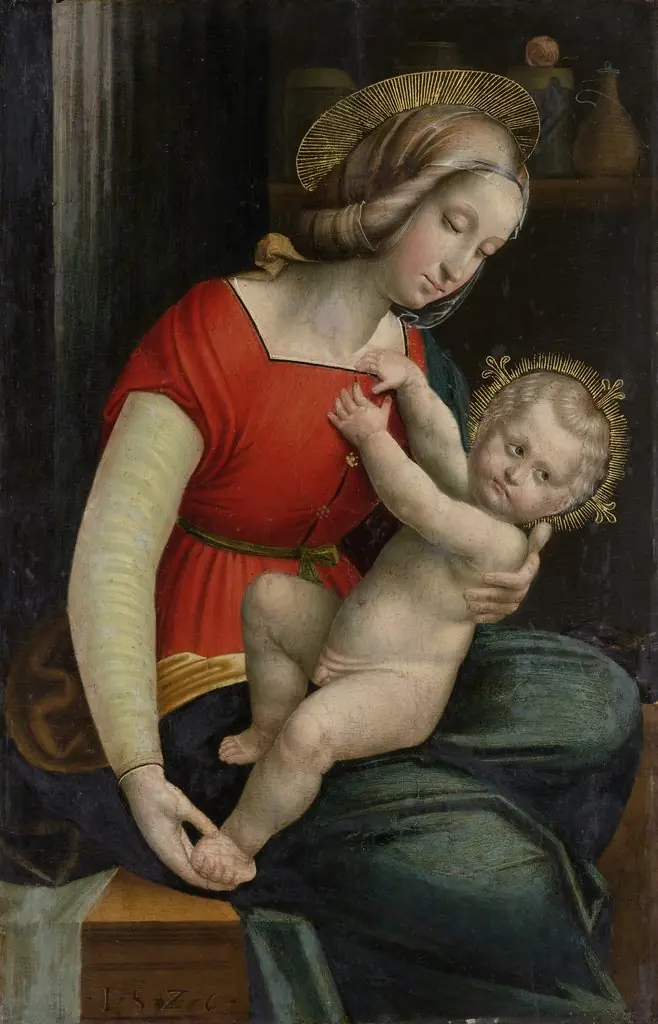 Virgin and Child
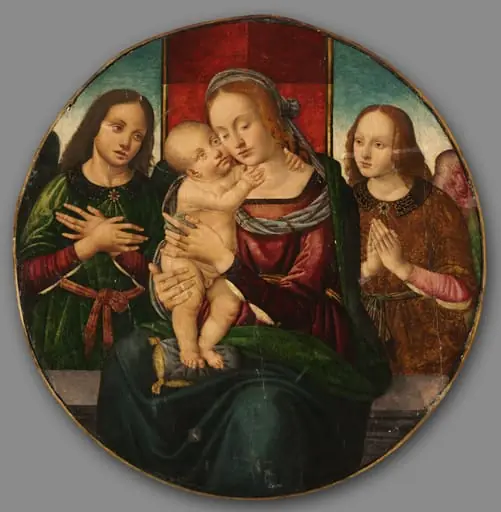 Virgin and Child with Angels
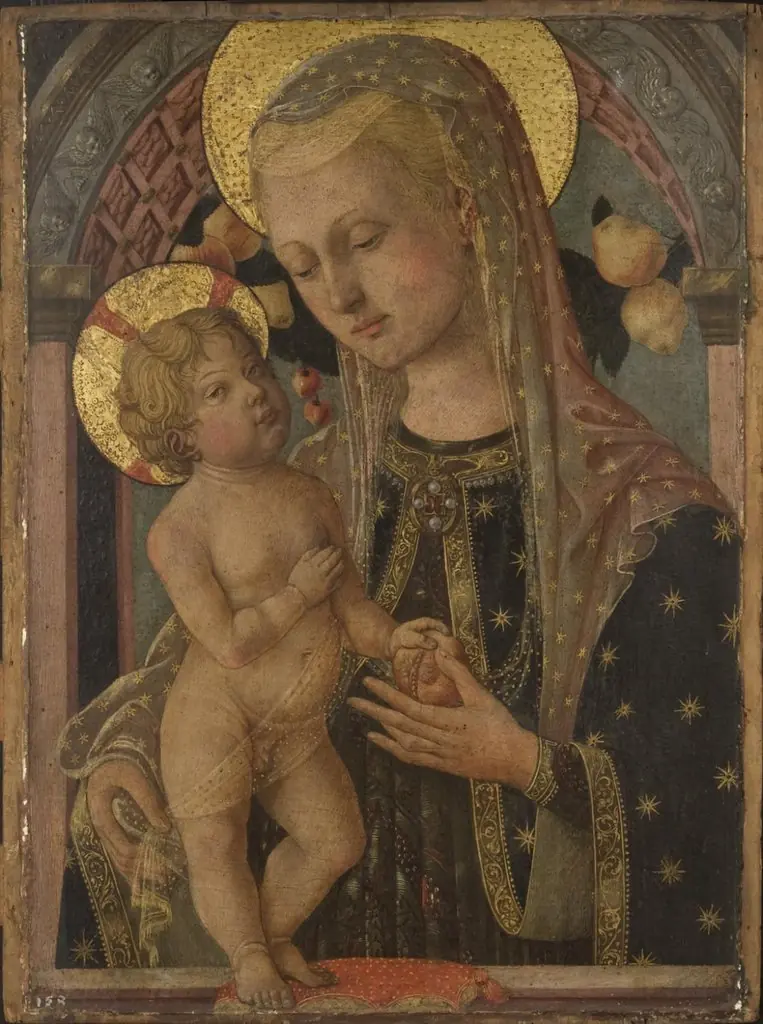 Virgin and Child with a Pomegranate
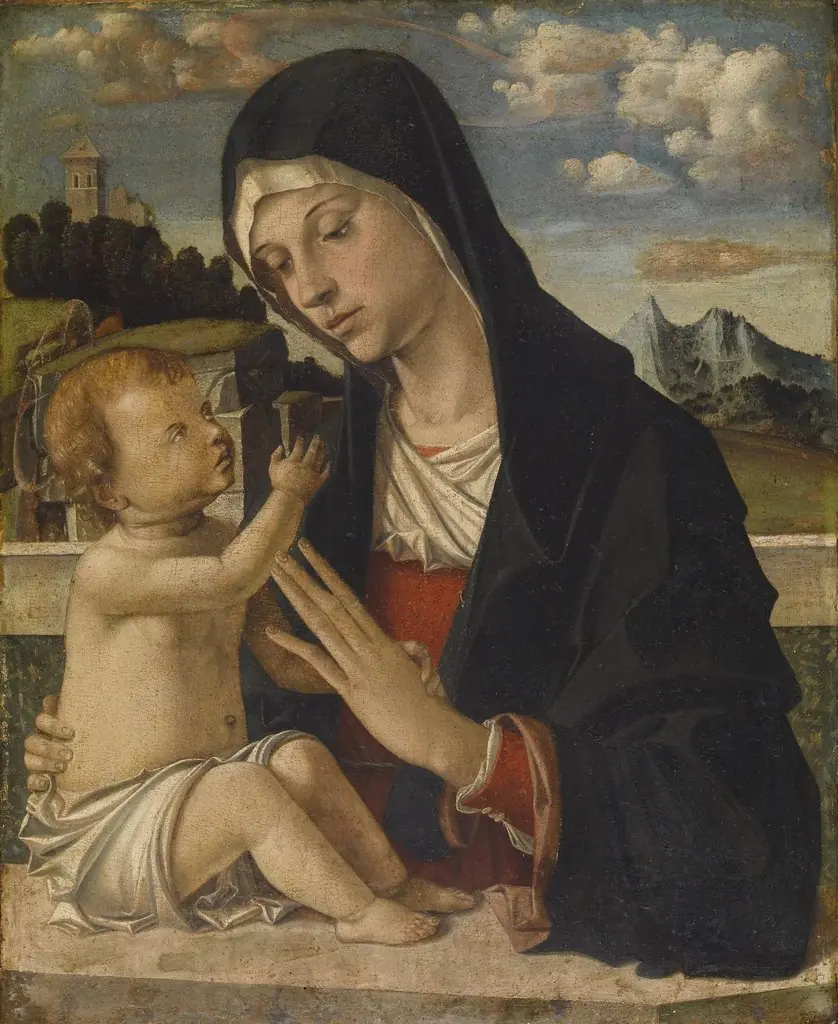 Madonna and Child
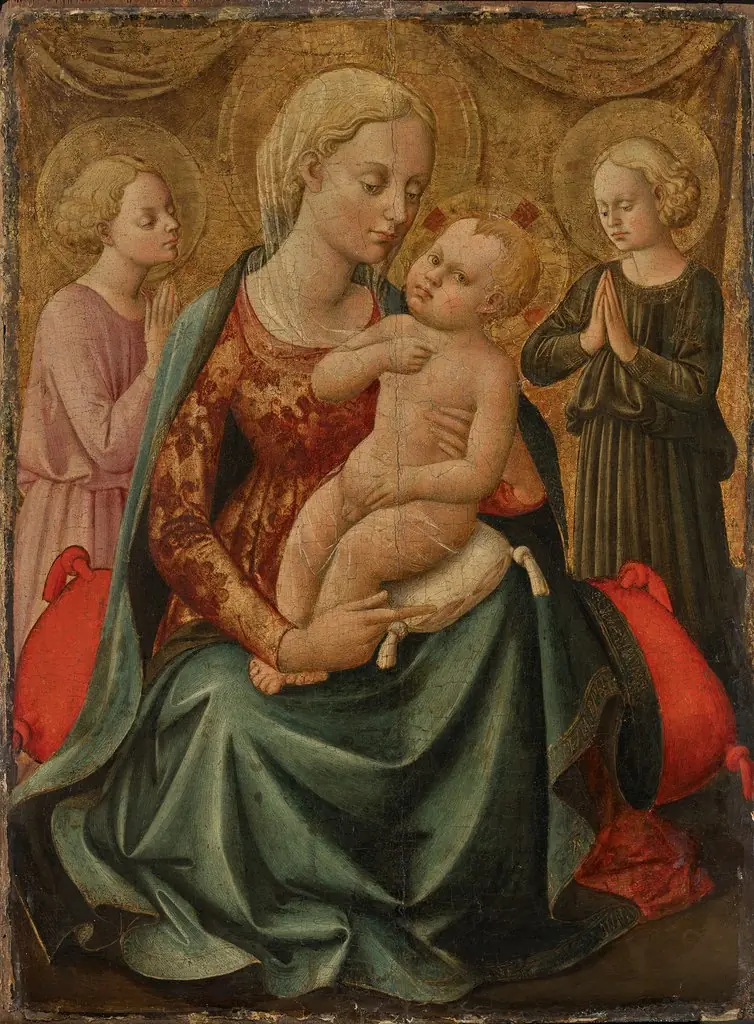 Madonna and Child
 Madonna and Child with a Pomegranate