Artwork
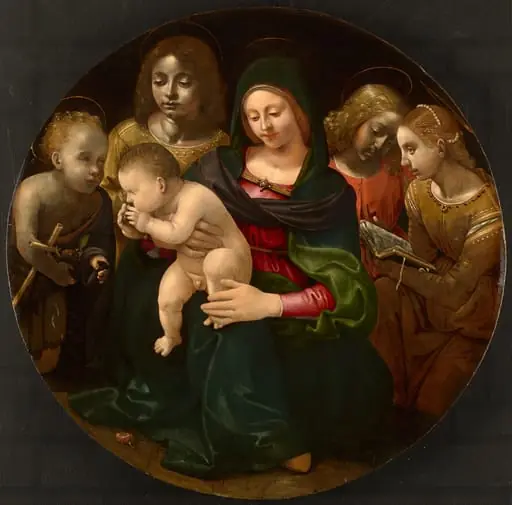
Virgin and Child with Angels
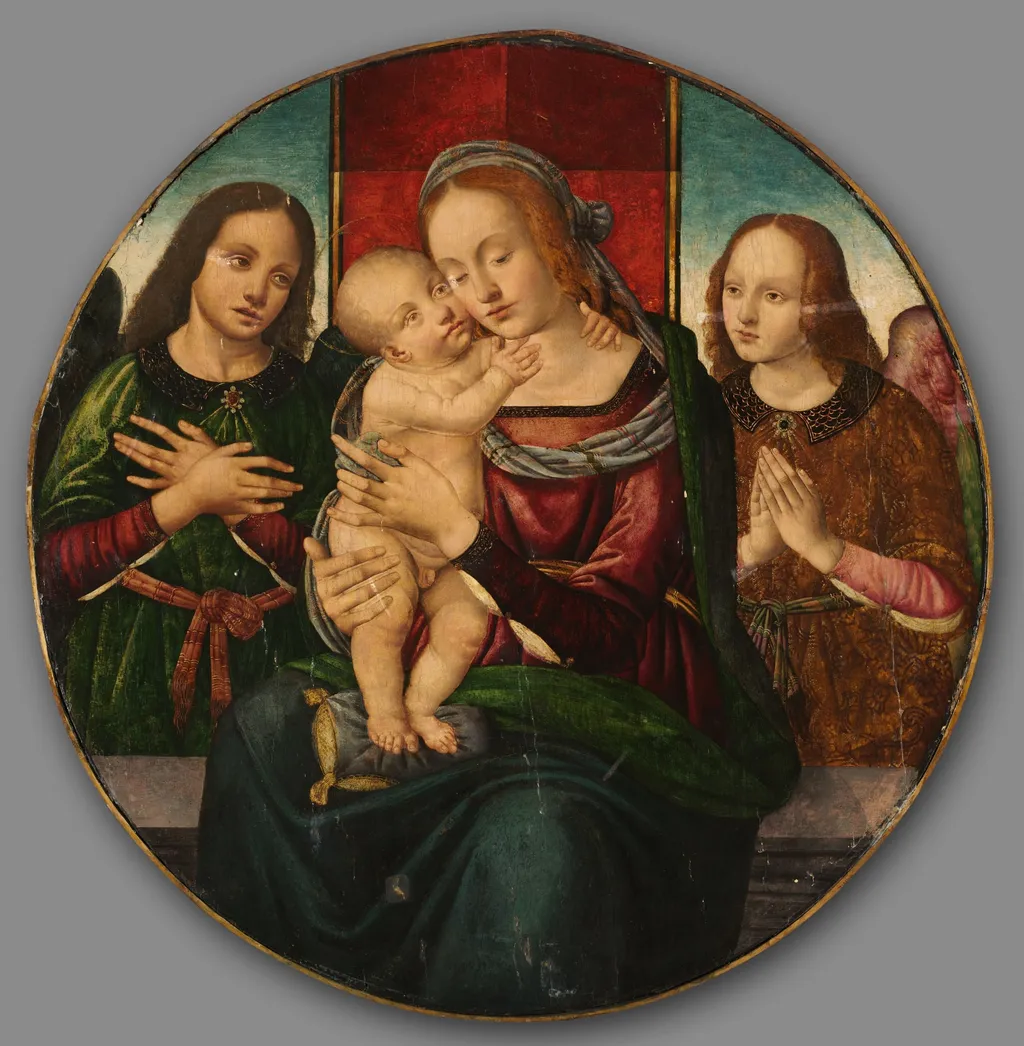
Virgin and Child with Angels is an unspecified painting by the Early Renaissance artist Master of the Holden Tondo. It dates from 1504 and is held in the collection of the Cleveland Museum of Art.
About this work
Overview
Created around 1504, the round panel titled *Virgin and Child with Angels* is attributed to the enigmatic Master of the Holden Tondo. The work is part of the collection of the Cleveland Museum of Art. It presents a compact, symmetrical scene in which the Virgin, clothed in a red gown and blue mantle, cradles the infant Christ while two attendant angels stand on either side.
Subject & Meaning
The composition centers on the intimate bond between mother and child, a common motif in devotional imagery of the early sixteenth century.
The composition centers on the intimate bond between mother and child, a common motif in devotional imagery of the early sixteenth century. The infant’s gaze toward the left-hand angel and the subtle shift of his foot toward the ground suggest a nascent movement, hinting at the future incarnation of Christ’s earthly mission. The angels, one with green sleeves and a red sash, the other in a brown robe with clasped hands, embody reverence and intercession.
Technique & Style
Executed on a circular panel, the painting employs a restrained palette of bright yet muted reds, greens, and gold accents that delineate the background into two contrasting fields. The figures are rendered with a calm, solemn expression, and the delicate modeling of flesh conveys a gentle three‑dimensionality. Gold leaf framing outlines the scene, reinforcing its sacred character while the overall composition reflects the balanced harmony typical of early Renaissance portraiture.
History & Provenance
The work entered the Cleveland Museum of Art through acquisition in the twentieth century, though its earlier ownership remains undocumented. The attribution to the Master of the Holden Tondo, a name assigned to an anonymous painter active in northern Italy, is based on stylistic parallels with other small devotional panels of the period.
Context
Produced during a time when private devotional objects were in demand, the painting aligns with the trend of intimate, portable religious images intended for personal contemplation. Its circular format, known as a *tondo*, was popular among patrons seeking a harmonious, meditative focal point for private chapels or domestic settings.
Artist & collection

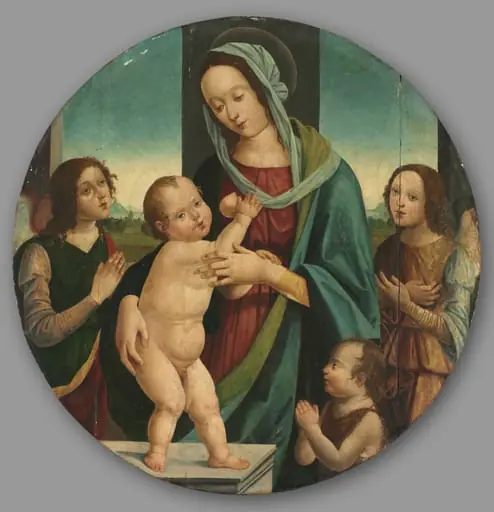 Virgin and Child with John the Baptist and Angels
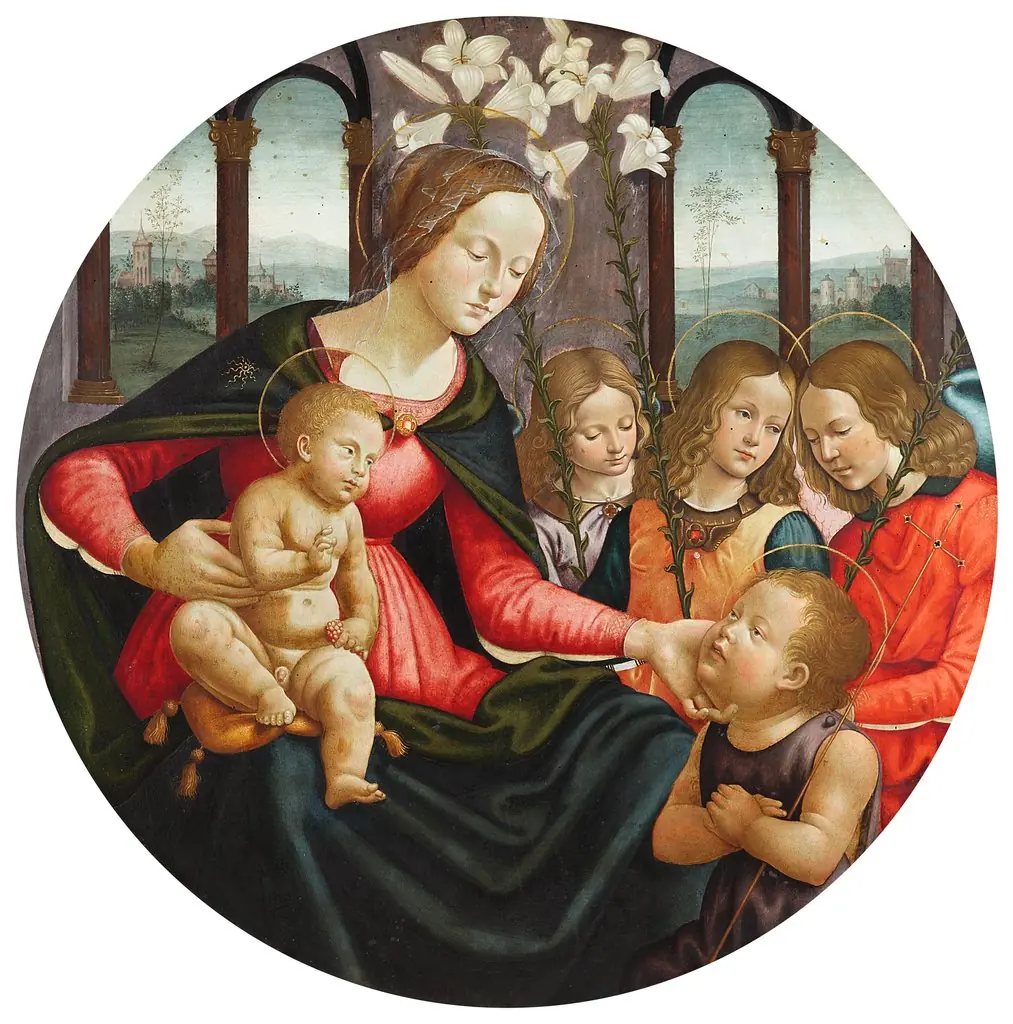 The Virgin and Blessing Child, Young St. John and three Angels
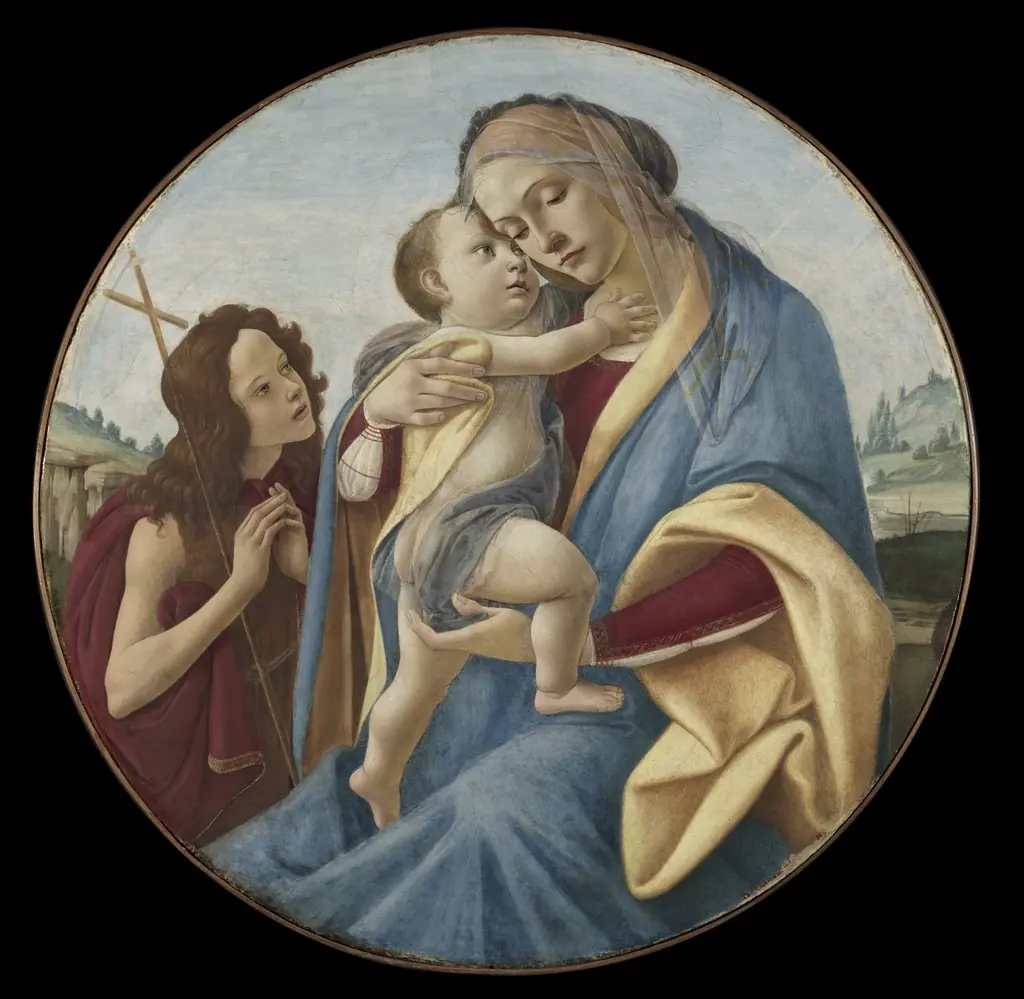 Virgin and Child with the Young Saint John the Baptist
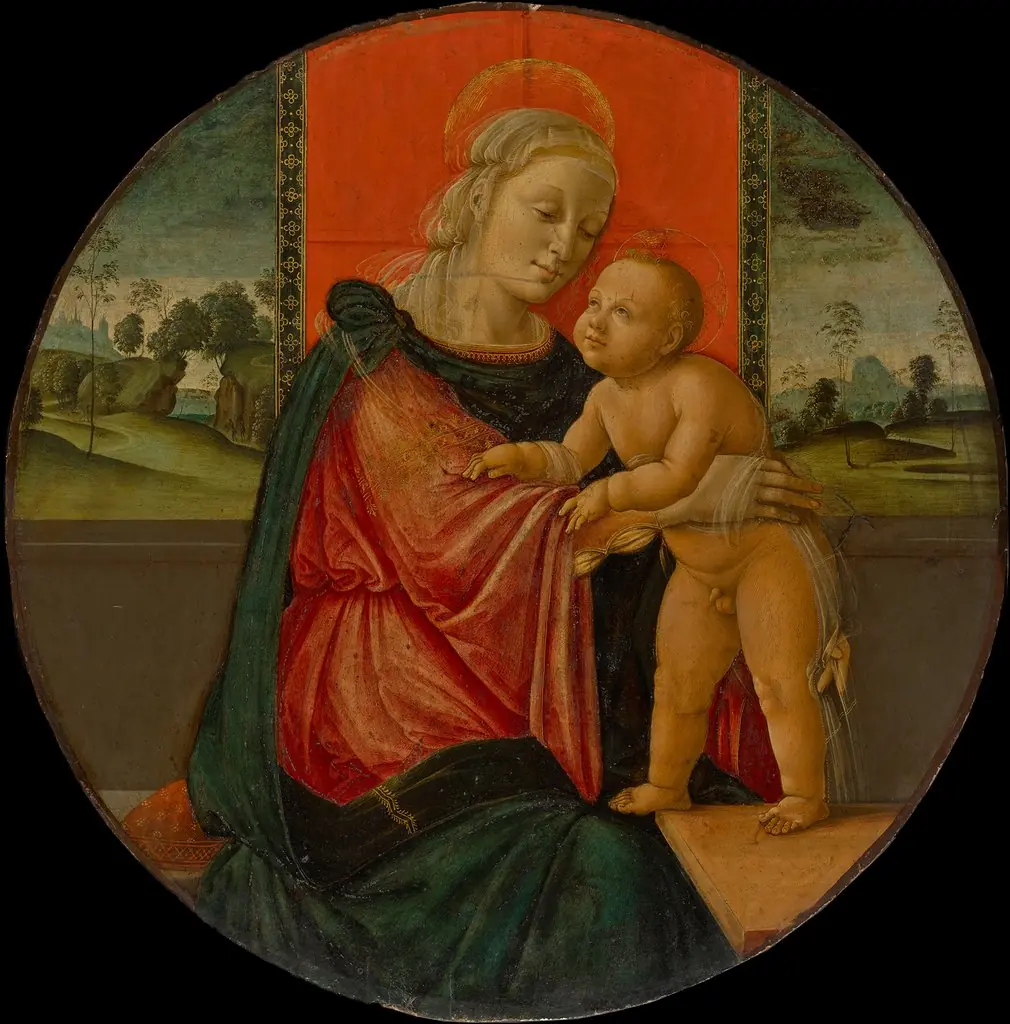 The Virgin and Child
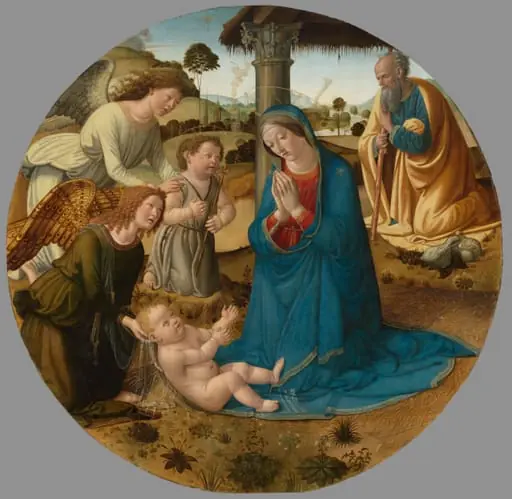 De aanbidding van het Christuskind
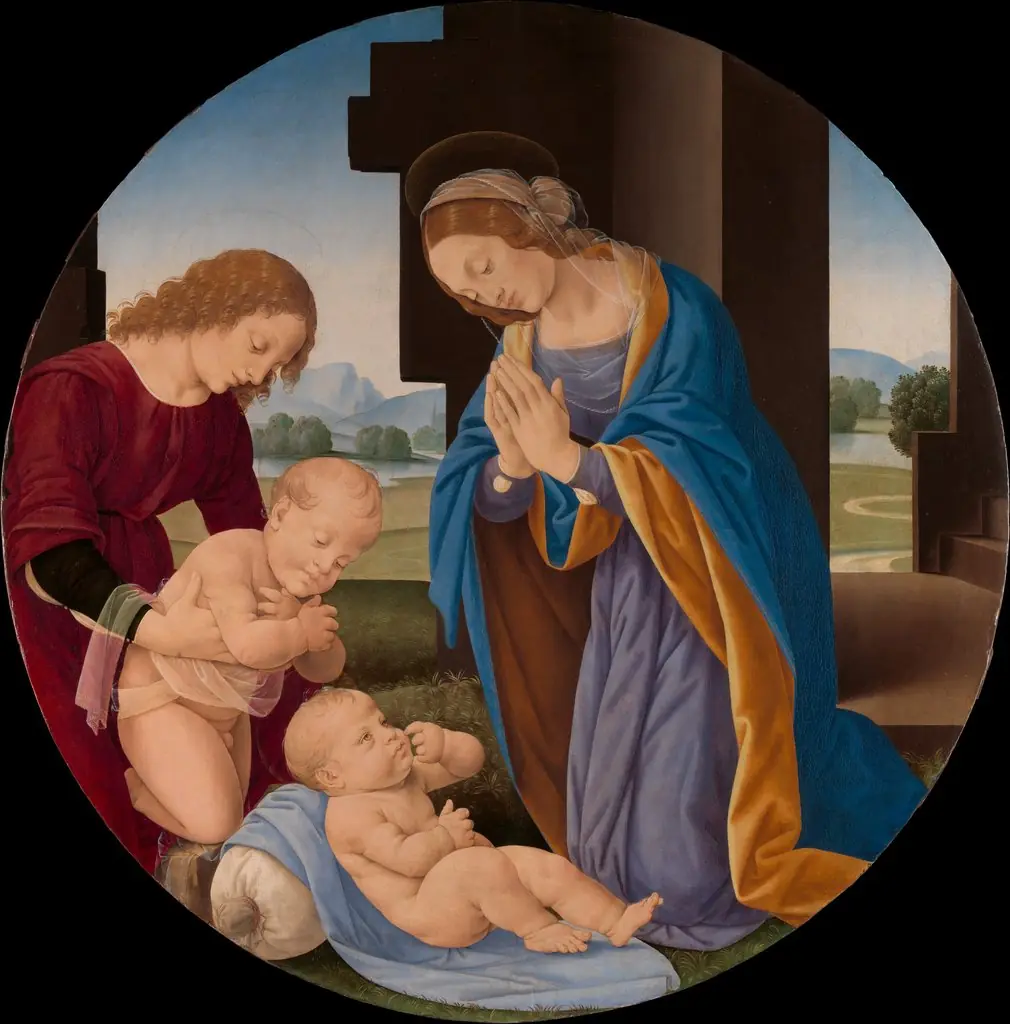 Madonna Adoring the Child with the Infant Saint John the Baptist and an Angel
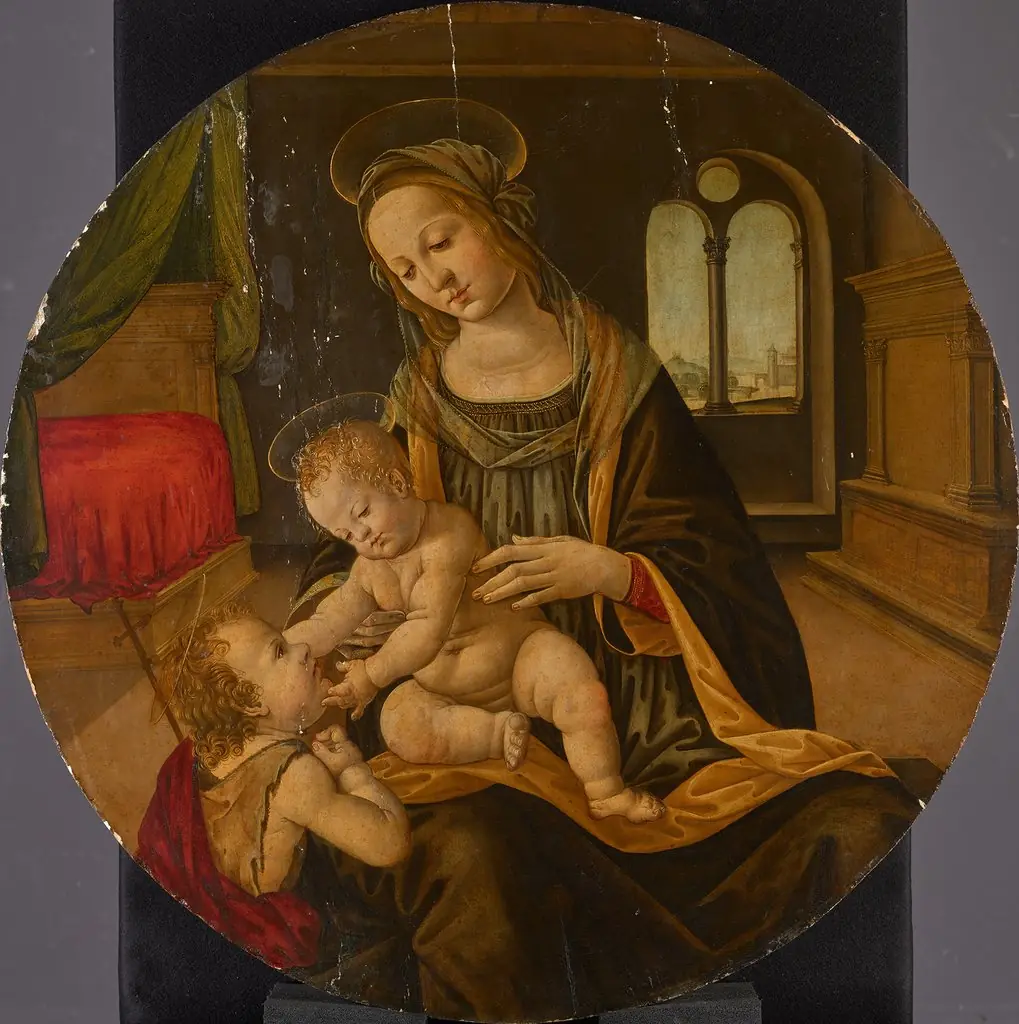 The Virgin with the Child and Young St. John
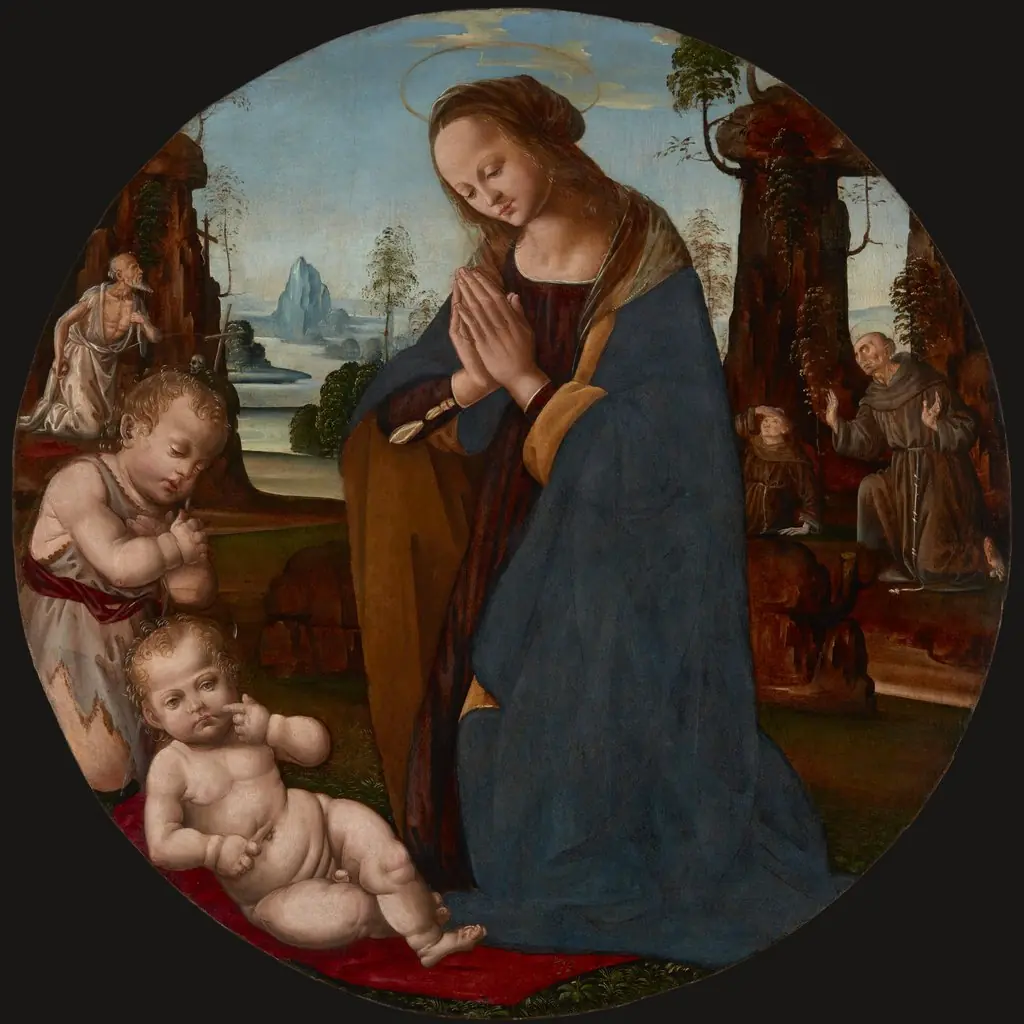 Adoration of the Child with Young St John the Baptist – Tondo
 Virgin and Child with the Young Saint John the Baptist, Saint Cecilia, and Angels