Artwork
Ironmonger's Shop, Tetbury
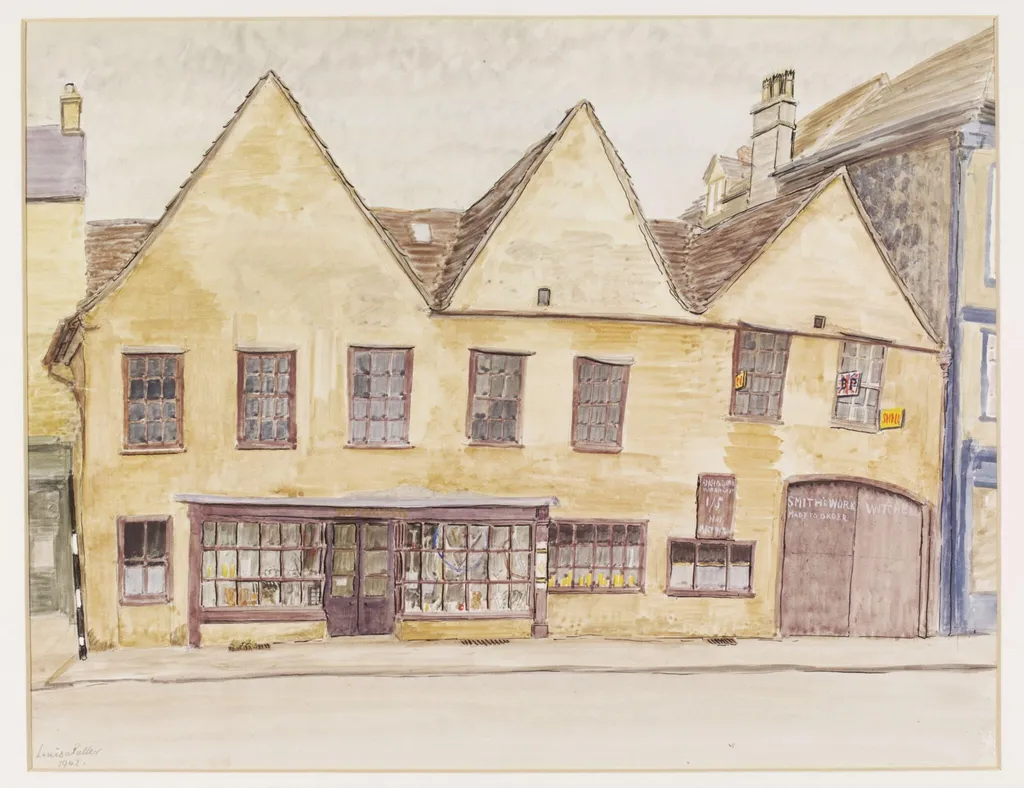
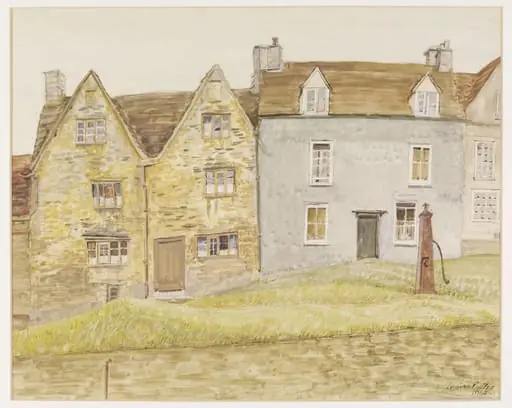
Ironmonger's Shop, Tetbury is a watercolor work on paper by the Social Realist artist Puller. It is held in the collection of the Victoria and Albert Museum.
About this work
Overview
Painted in 1942, this watercolour by Puller captures a modest ironmonger’s shop in Tetbury, Gloucestershire. Executed as part of the Recording Britain initiative, the work documents everyday architecture and commerce during wartime. Its modest scale and unadorned subject reflect the project’s aim to preserve visual records of ordinary English life under threat of change or loss.
Subject & Meaning
Above the entrance, a hand-painted sign reads 'Smith’s Work Witches Made to Order,' hinting at regional vernacular and perhaps local folklore.
The shop, identified by faded BP and Shell signage, served as a local hub for metalwork and hardware. Above the entrance, a hand-painted sign reads 'Smith’s Work Witches Made to Order,' hinting at regional vernacular and perhaps local folklore. The building’s weathered surfaces and accumulated details suggest decades of use, embodying the quiet resilience of small-town industry during a period of national upheaval.
Technique & Style
Puller employed loose, rapid brushwork and a restrained palette of muted yellows, browns, and greys to convey the shop’s texture and atmosphere. The watercolour medium allowed for quick execution, capturing transient light and surface wear without idealization. Wooden window frames, glass panes, and uneven brickwork are rendered with suggestive precision, emphasizing authenticity over polish.
History & Provenance
Created under the Recording Britain project, initiated by Sir Kenneth Clark in 1939, the work was commissioned to safeguard images of Britain’s vanishing landscapes. The piece entered the Victoria and Albert Museum’s collection alongside over 1,500 other works from the scheme. Its survival reflects the project’s success in archiving vernacular architecture before wartime destruction and modernization erased it.
Context
During the Second World War, Britain faced widespread disruption to its rural and industrial fabric. The Recording Britain project responded by directing artists to document buildings, workshops, and streetscapes deemed vulnerable. This watercolour is one of many that recorded the persistence of pre-industrial commerce, offering a counter-narrative to the war’s focus on destruction and progress.
Legacy
The painting remains part of a significant archive of wartime British visual culture. It contributes to ongoing scholarly interest in how art documented social change and regional identity. Today, it stands as a quiet testament to the endurance of local trade and the value placed on preserving the mundane as historical record.
Artist & collection

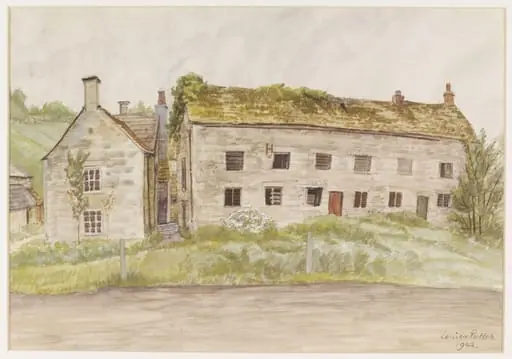 House and Factory at Burleigh near Brimscombe
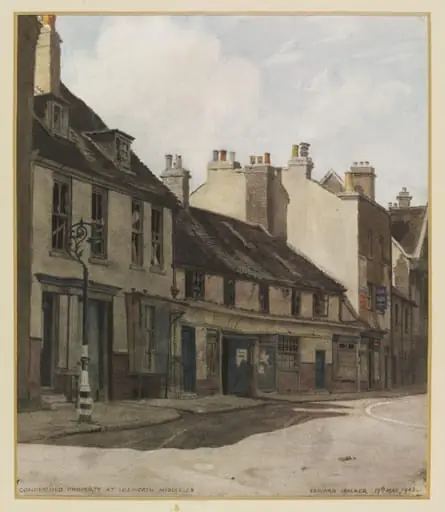 Condemned Property at Isleworth
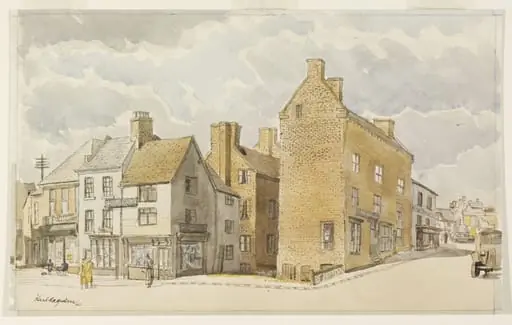 Ashbourne
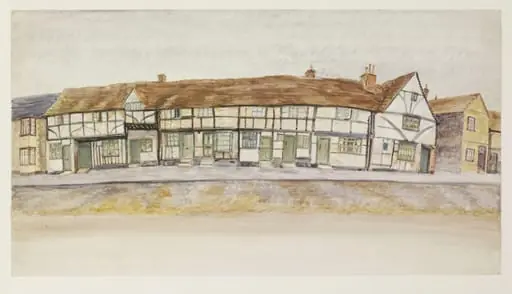 Houses in Rose Street, Wokingham
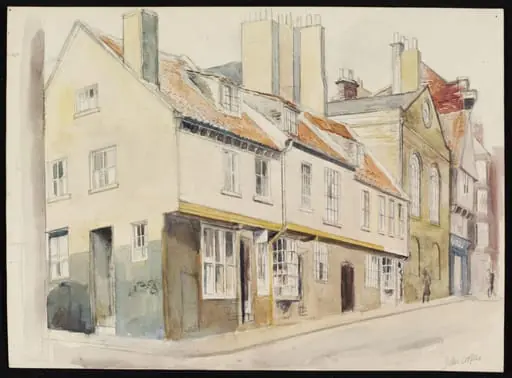 Tudor Houses, Church Street, Whitby
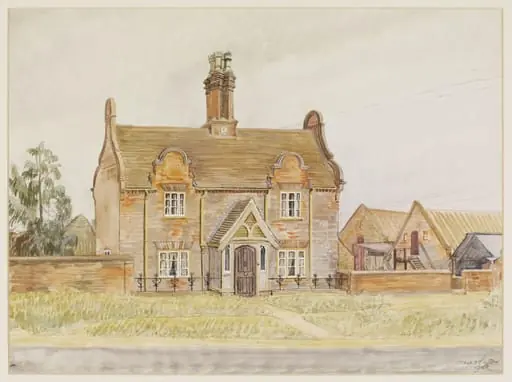 Chantry Farm in Orford
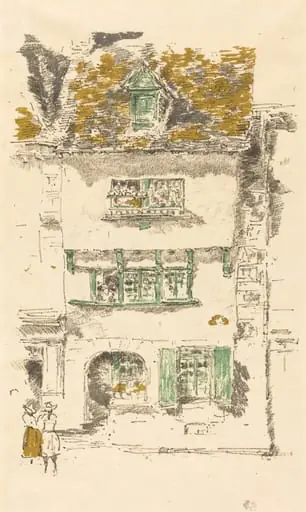 Yellow House, Lannion
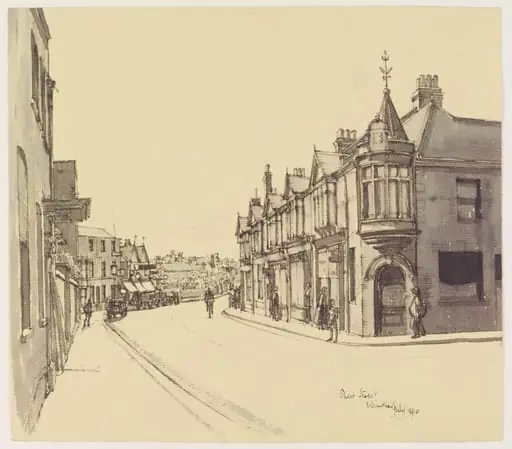 Sheet Street, Windsor
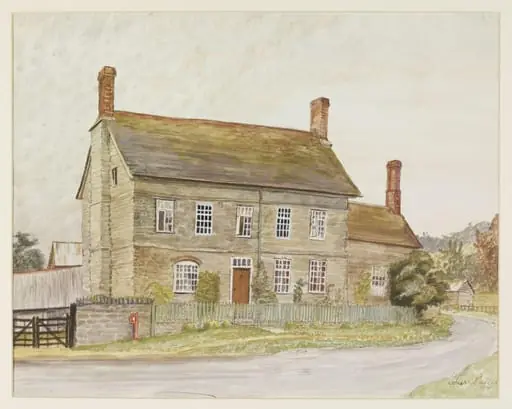 Hall Farm, Leinthall Earls
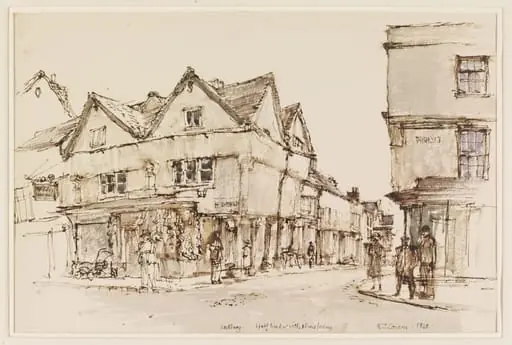 Entrance to New Street, Ledbury
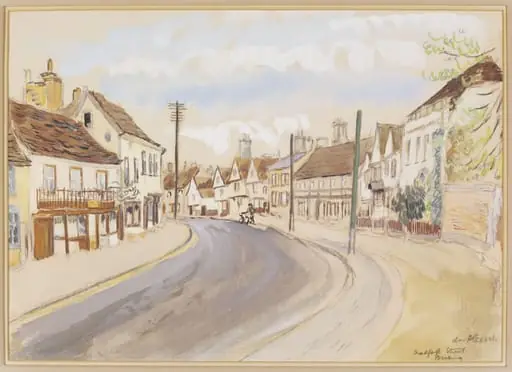 Bradford Street, Bocking
 Houses on the Green, Tetbury