Artwork
The Goose Bridge, Malmesbury
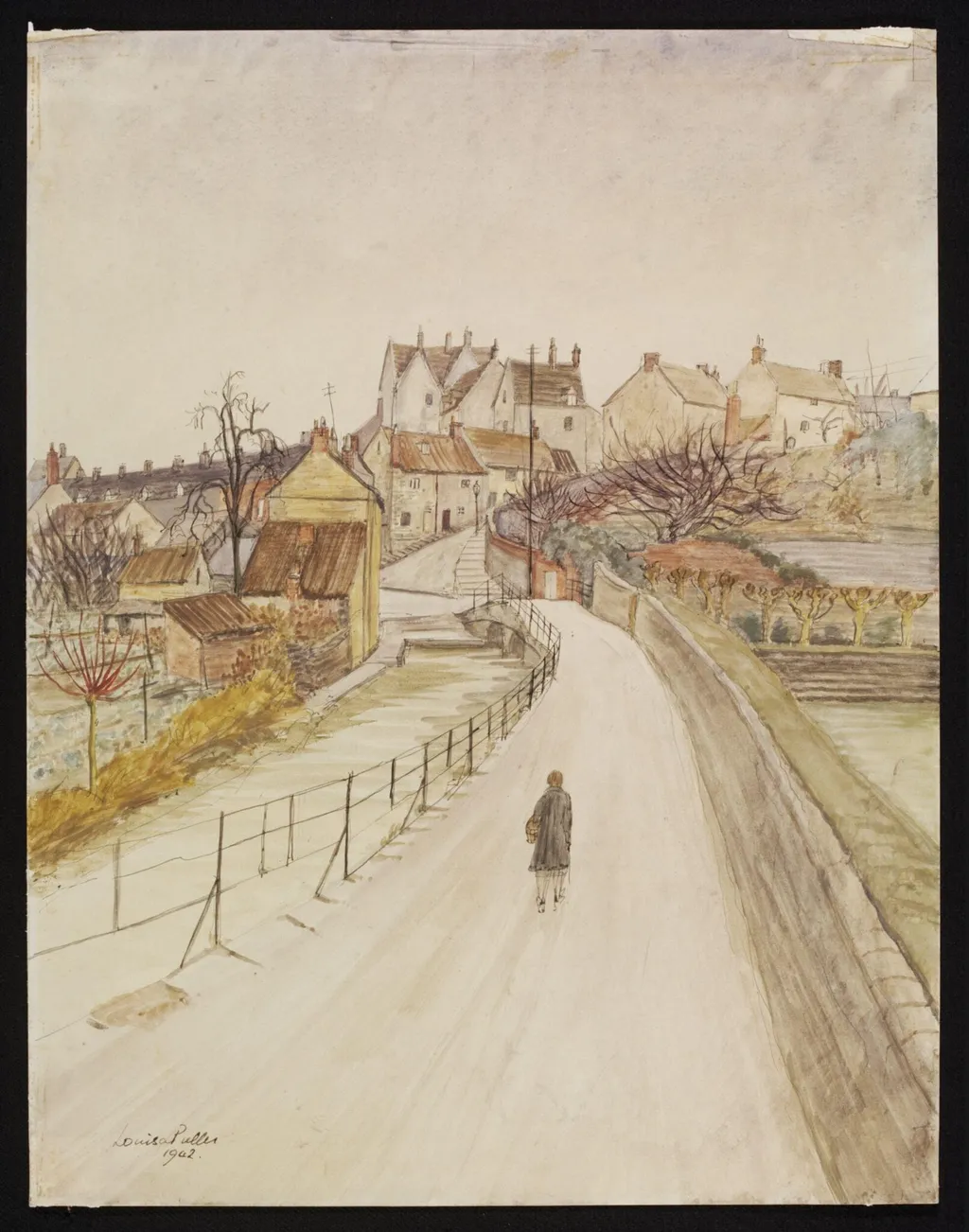
The Goose Bridge, Malmesbury is a watercolor work on paper by Puller. It dates from 1942 and is held in the collection of the Victoria and Albert Museum.
About this work
The Goose Bridge, Malmesbury, painted by Puller in 1942, is a watercolour piece held at the Victoria and Albert Museum.
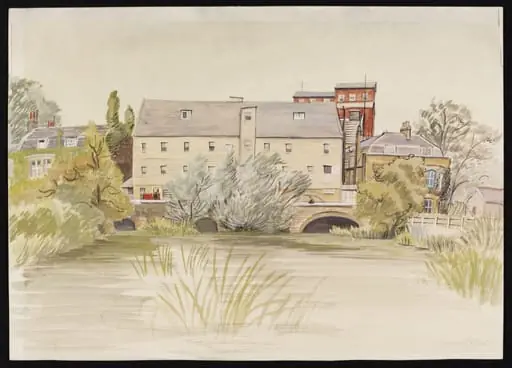
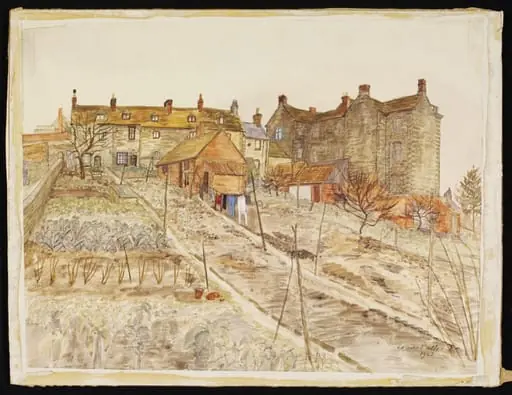
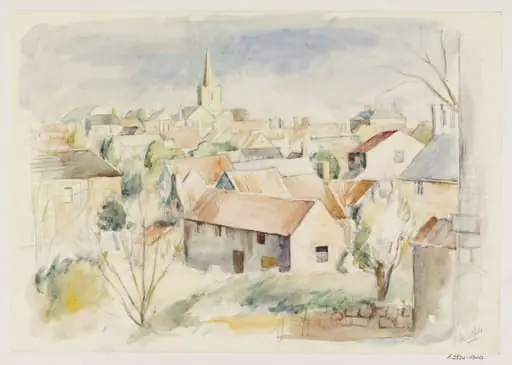
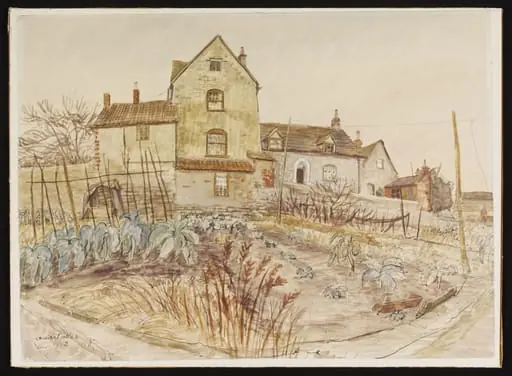
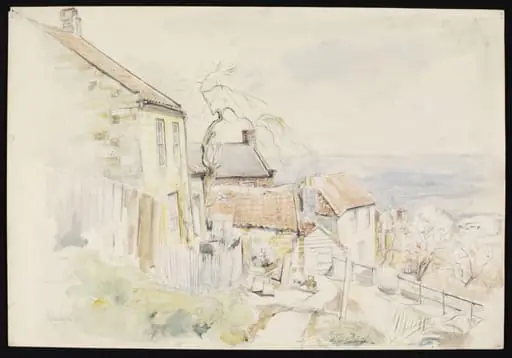
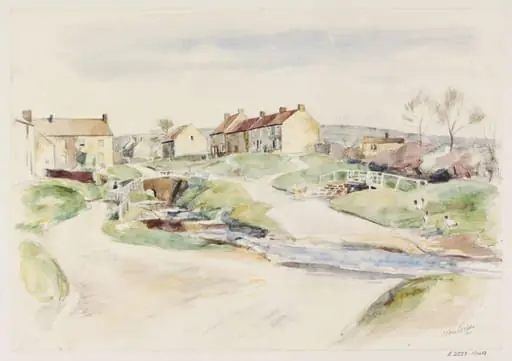
The Goose Bridge, Malmesbury, painted by Puller in 1942, is a watercolour piece held at the Victoria and Albert Museum. The painting depicts a serene scene of a bridge over a river, with trees and buildings in the background. The artist's use of watercolour creates a soft, dreamy effect.
A quiet detail in the painting is the way the light reflects off the water, creating a sense of depth and tranquility. The overall mood of the painting is one of peacefulness and calmness.
If you're interested in learning more about the artist's technique, you might want to look up Puller.
Overview
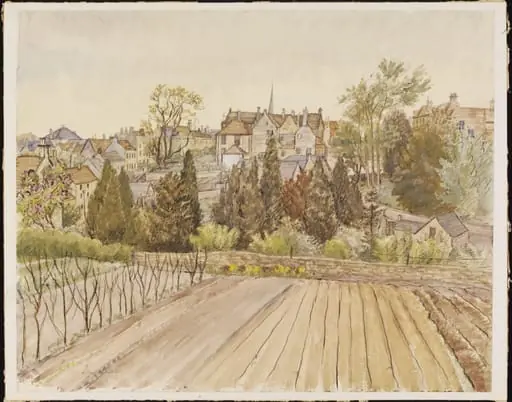
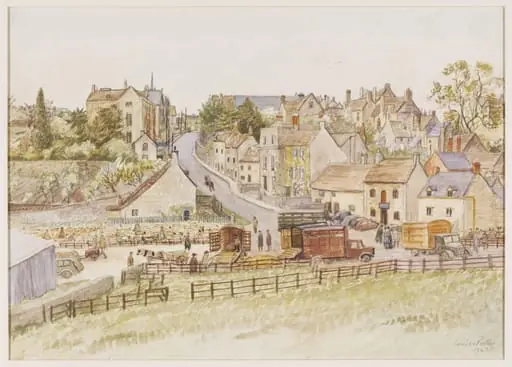
The Goose Bridge, Malmesbury is a watercolour painting by Puller, created in 1942. It captures a serene view of Malmesbury from the south-east, featuring a bridge, a road, and a solitary figure in the foreground.
Subject & Meaning
The painting depicts a tranquil scene of everyday life in a market town, reflecting themes of national identity and preservation of traditional landscapes during wartime.
Technique & Style
Executed in watercolour, the piece utilizes the medium's inherent qualities to achieve a soft, dreamy effect. Notable is the subtle play of light on water, enhancing depth and tranquility.
History & Provenance
Commissioned under the 'Recording Britain' scheme (1940-1943), initiated by the Committee for the Employment of Artists in Wartime and funded by the Pilgrim Trust, the work is now held at the Victoria and Albert Museum.
Context
Part of a wartime project directed by Sir Kenneth Clark, the painting aimed to document England's landscape and preserve traditional art forms amidst concerns over destruction and change.
Artist & collection