Artwork
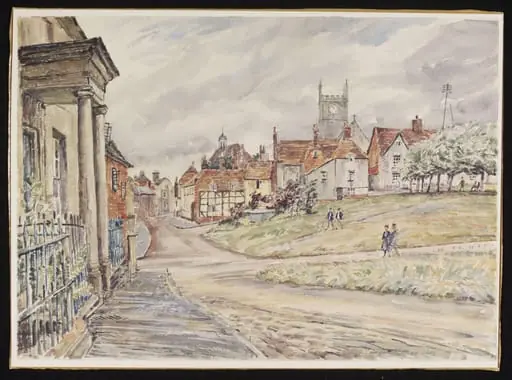
Wheelwright's Yard, Gloucester Street, Malmesbury
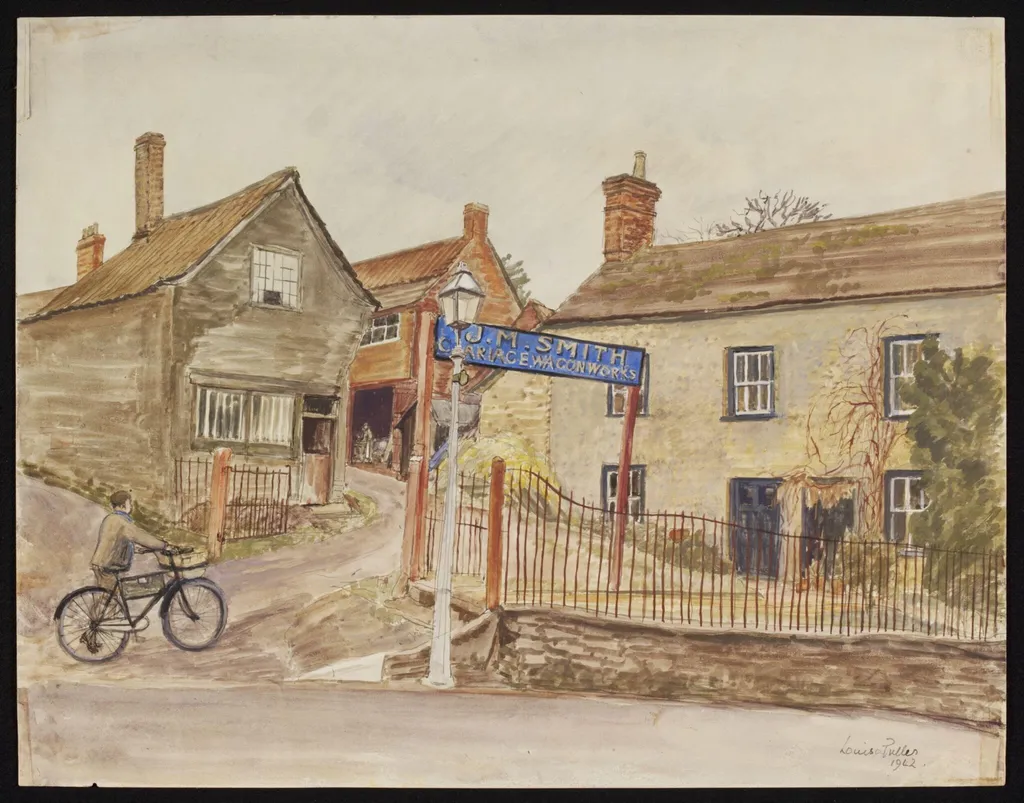
Wheelwright's Yard, Gloucester Street, Malmesbury is a watercolor work on paper by the Social Realist artist Puller. It is held in the collection of the Victoria and Albert Museum.
About this work
Overview
Painted in 1942 by Puller, this watercolour captures a quiet street corner in Malmesbury, featuring the entrance to a wheelwright’s workshop.
Painted in 1942 by Puller, this watercolour captures a quiet street corner in Malmesbury, featuring the entrance to a wheelwright’s workshop. Created as part of the 'Recording Britain' initiative, the work documents everyday scenes threatened by wartime disruption and modernization. Its subdued tones and precise observation align with the project’s mission to preserve visual records of traditional British environments during a period of national uncertainty.
Subject & Meaning
The scene centers on J.M. Smith’s carriage and wagon works, marked by a blue sign above the entrance. A lone cyclist in formal attire passes by, suggesting ordinary life continuing amid broader societal shifts. The inclusion of this working craft space reflects an intent to honor declining trades, framing the workshop not as a relic but as a living part of the community’s identity during wartime.
Technique & Style
Puller employs delicate watercolour washes to render the buildings and street with quiet precision. The palette is restrained—soft greys, browns, and muted greens—accented only by the blue sign and the cyclist’s hat. Brushwork is controlled yet fluid, capturing texture in brickwork and foliage without embellishment. The composition directs attention to the workshop’s entrance, balancing architectural detail with atmospheric light.
History & Provenance
The painting was produced under the 'Recording Britain' scheme, a government-backed project initiated in 1939 to commission artists to record the nation’s architectural and rural heritage. Puller was among those selected to document sites at risk of loss due to war or development. This work entered the Victoria and Albert Museum’s collection as part of the project’s archive, preserved for its historical rather than aesthetic value.
Context
During the Second World War, fears grew over the erosion of traditional crafts and vernacular architecture. The 'Recording Britain' project responded to these anxieties by systematically documenting scenes like this wheelwright’s yard, seen as emblematic of a pre-industrial past. The presence of the cyclist underscores continuity—daily routines persisting even as the nation faced upheaval.
Legacy
The painting endures as part of a significant visual archive of mid-20th-century Britain. It contributes to scholarly understanding of how wartime cultural initiatives sought to define national identity through place and craft. Today, it remains a quiet testament to the ordinary spaces that once sustained local economies, now preserved as historical artifacts rather than active workplaces.
Artist & collection

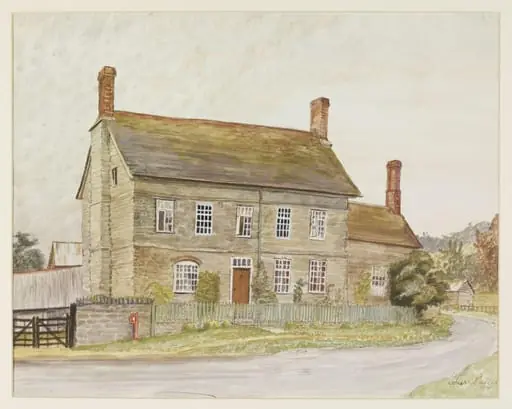 Hall Farm, Leinthall Earls
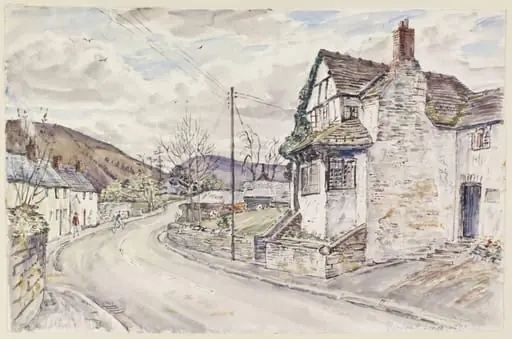 The Old Parsonage, New Radnor
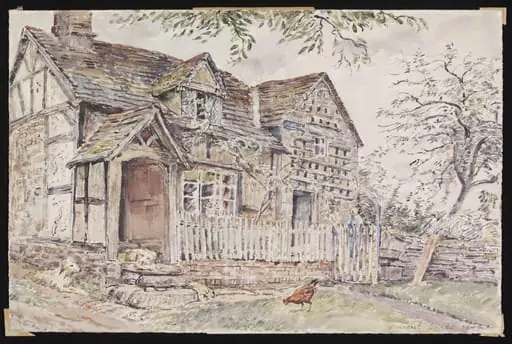 Pigeon House and Post Office, Mansel Lacy
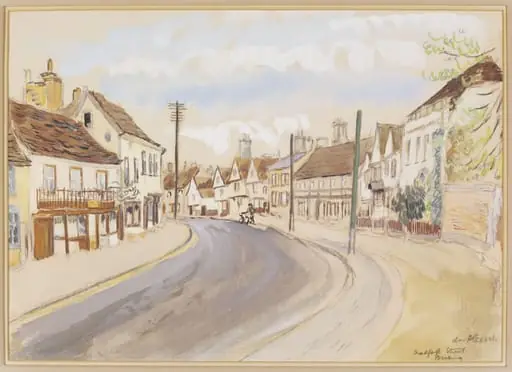 Bradford Street, Bocking
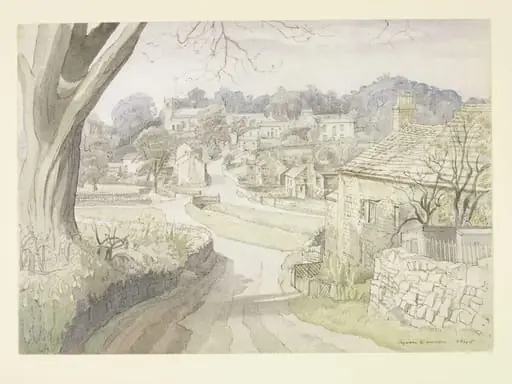 Downham Village, near Clitheroe, Lancashire
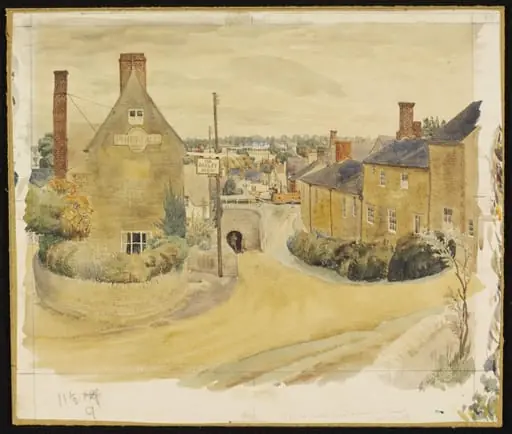 Cosgrove
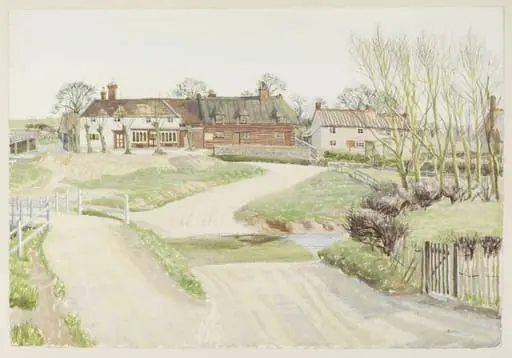 The Ford, Braughing
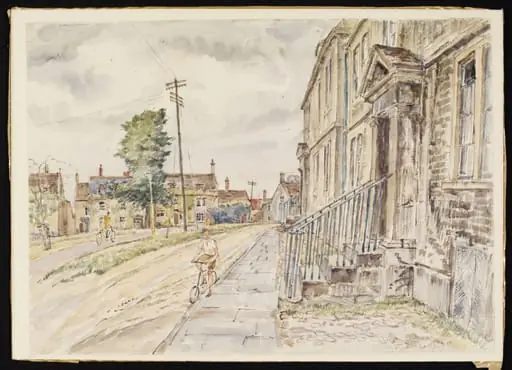 Houses on the Green, Calne
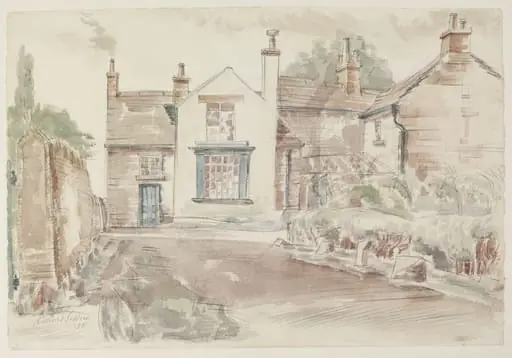 Cottages at Norton, No.1
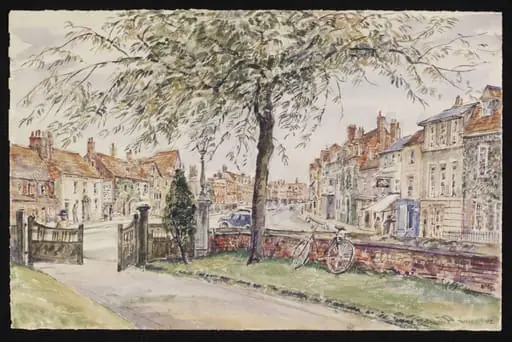 The High Street, Marlborough, from St.Peter's Churchyard
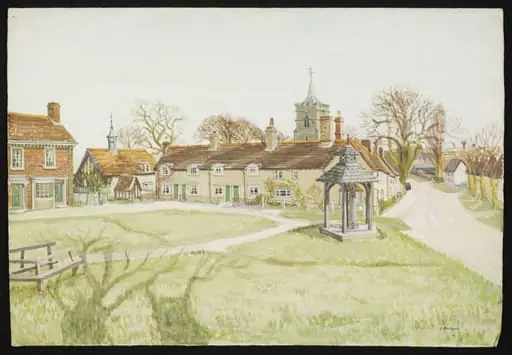 The Village Green, Westmill
 The Green and St.Mary's Church, Marlborough