Artwork
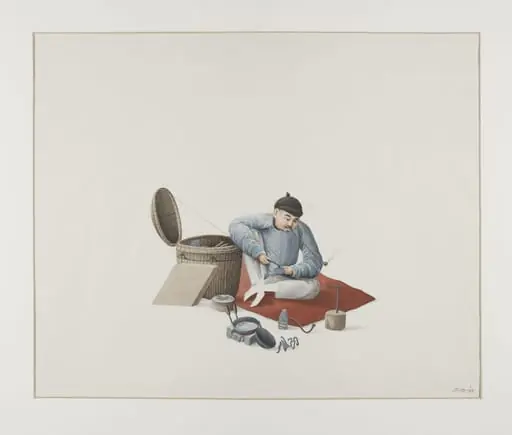
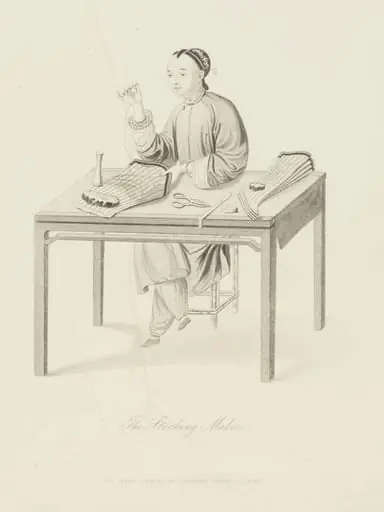
A Stocking Maker
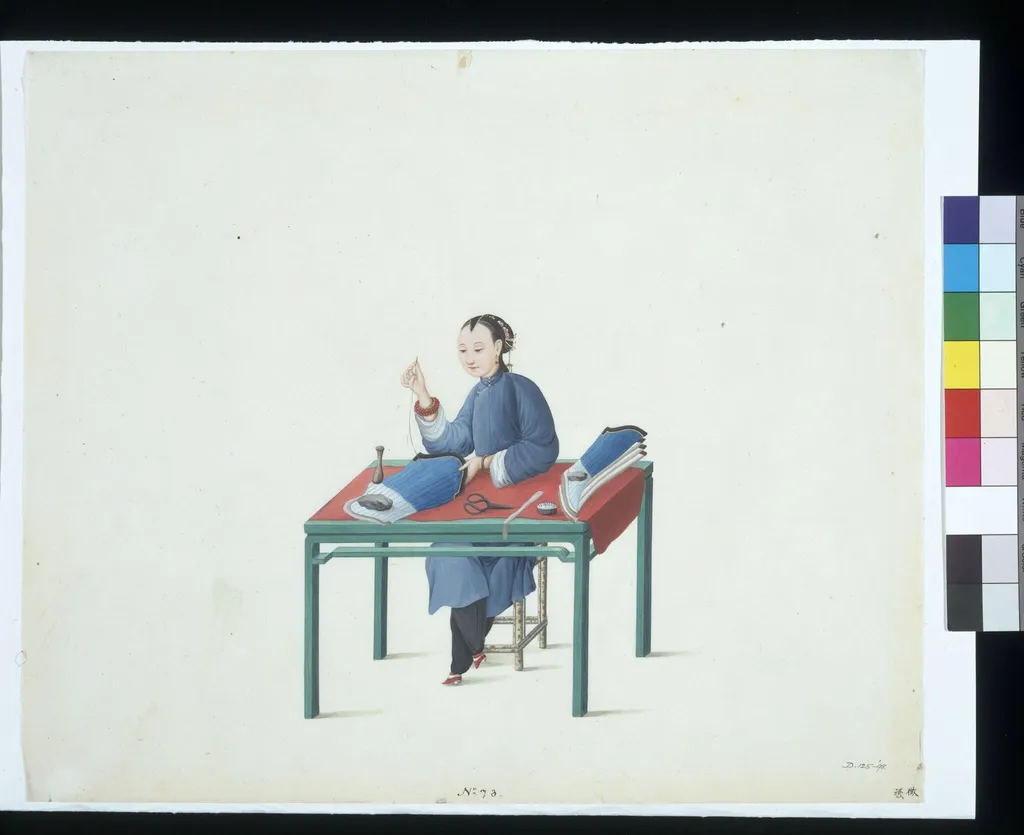
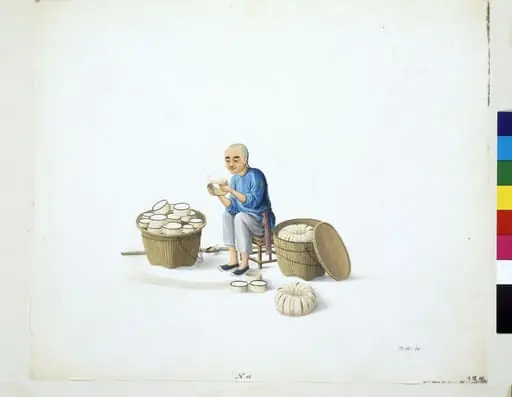
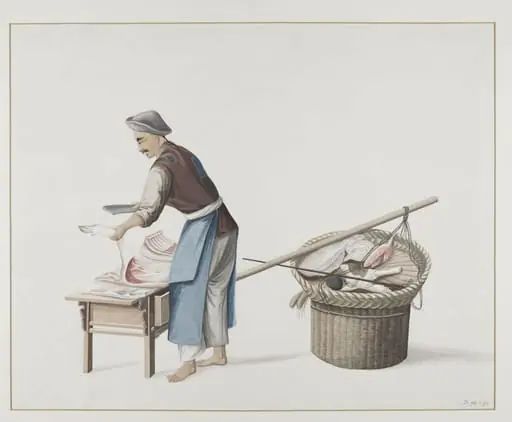
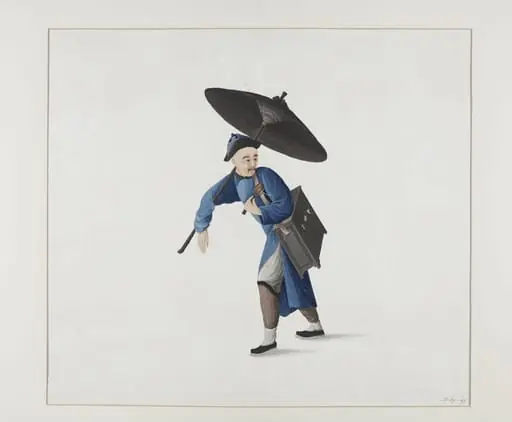
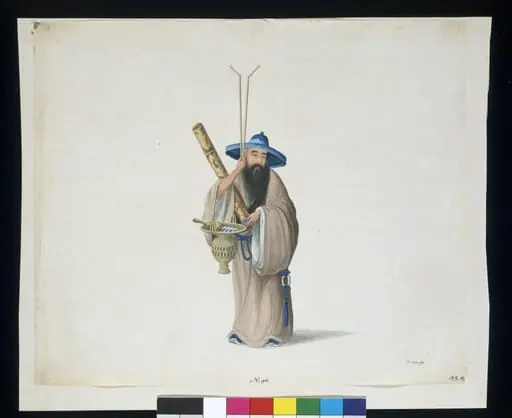
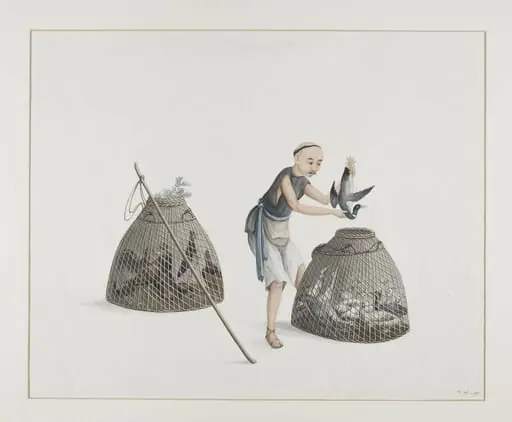
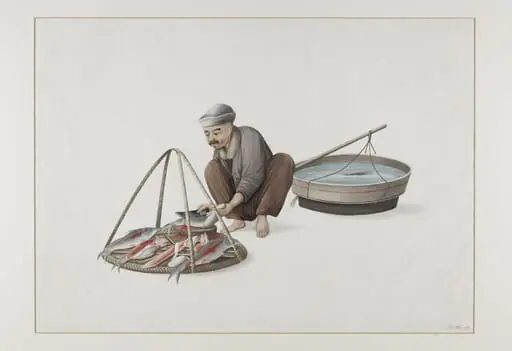
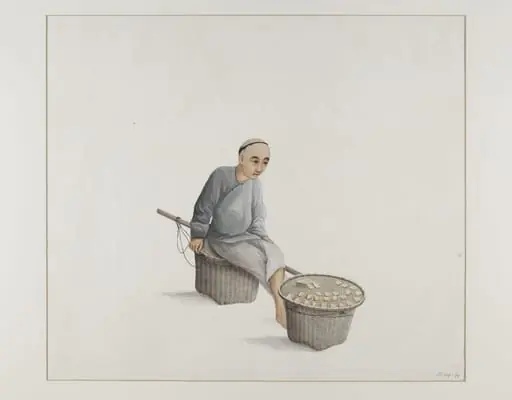
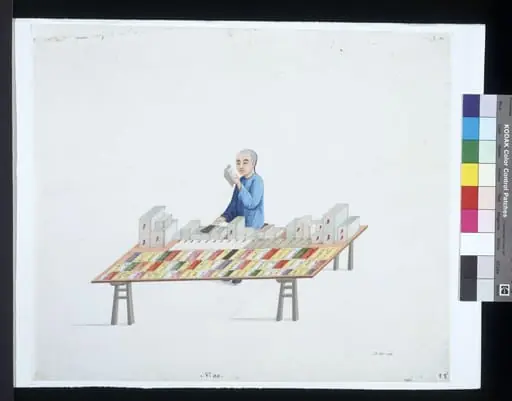
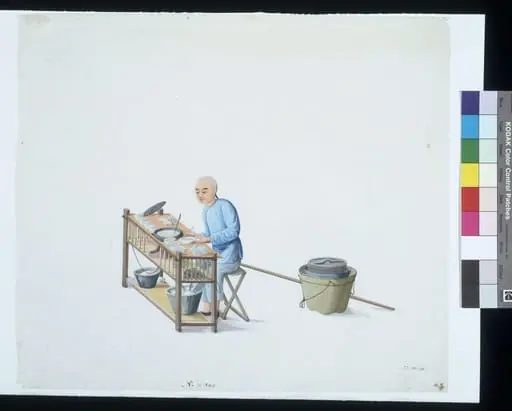
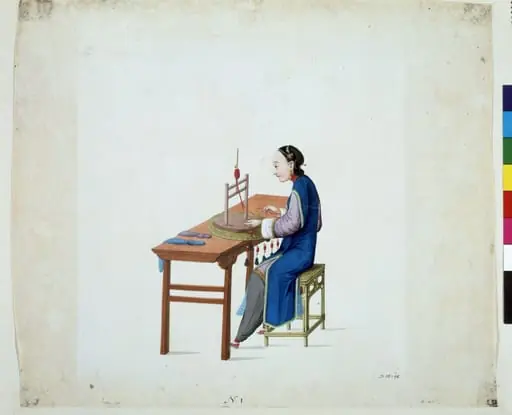
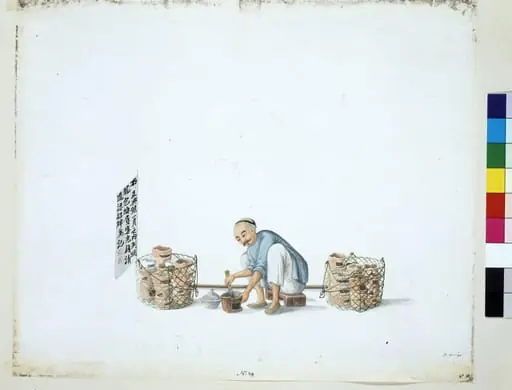
A Stocking Maker is a paint painting by the Patna School of Painting artist Puqua. It dates from 1790 and is held in the collection of the Victoria and Albert Museum. This painting is one of a hundred works produced in Canton during the late 18th century, each illustrating a distinct trade or occupation.
About this work
Overview
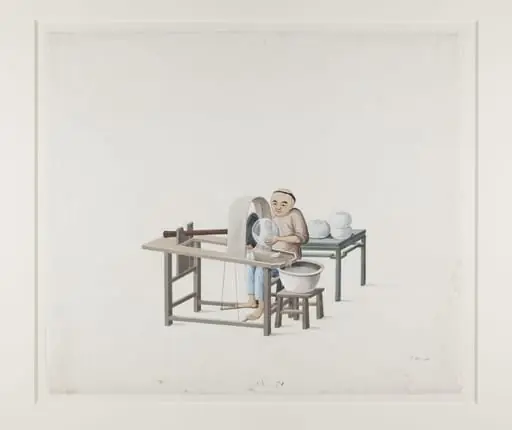
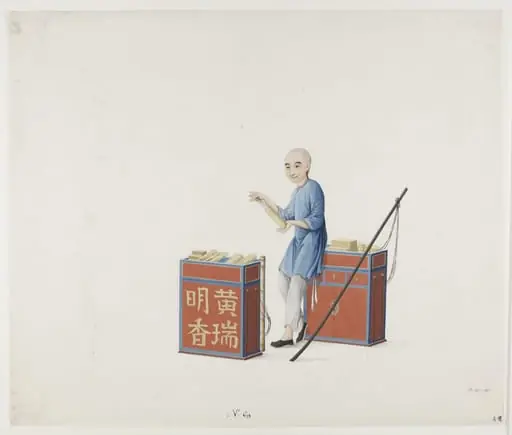
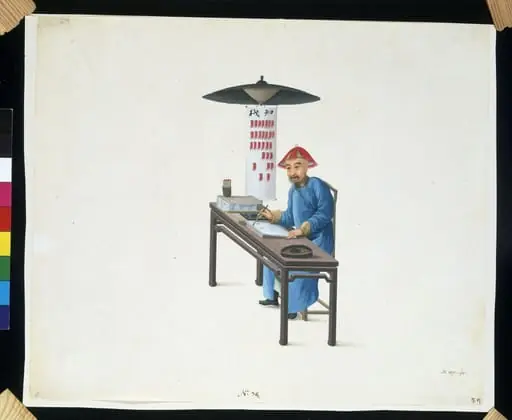
This painting is one of a hundred works produced in Canton during the late 18th century, each illustrating a distinct trade or occupation.
This painting is one of a hundred works produced in Canton during the late 18th century, each illustrating a distinct trade or occupation. Created for European patrons seeking visual records of Chinese daily life, the series functioned as both documentation and curiosity. The stocking maker is depicted in a modest interior, emphasizing the quiet focus of his labor rather than ornamentation or grandeur.
Subject & Meaning
The subject is a craftsman engaged in hand-knitting stockings, a common domestic industry in southern China at the time. His tools—long needles and a ball of yarn—are rendered with clarity, highlighting the skill involved. The plain room, with only a bench and wall behind him, directs attention to the act of work itself, suggesting dignity in routine labor rather than theatricality.
Technique & Style
The artist employed fine, soft brushwork to define textures and forms without excessive detail. This approach preserved legibility for distant viewers while maintaining a restrained aesthetic. Colors are muted, and lighting is even, avoiding dramatic contrasts. The style reflects a blend of local Chinese painting conventions and the demands of foreign buyers seeking clear, recognizable imagery.
History & Provenance
The paintings were produced for export to Europe, primarily through Canton’s trade ports during the height of the China trade. They were collected by merchants, diplomats, and travelers interested in ethnographic detail. While the full set’s original commission is undocumented, individual pieces now reside in institutions such as the Victoria and Albert Museum, where they serve as historical artifacts of cross-cultural exchange.
Context
In the late 1700s, European interest in Chinese society grew alongside expanding trade. Visual records like these filled a demand for authentic depictions of unfamiliar customs. Unlike idealized European engravings, these works offered direct observations of labor, dress, and environment, making them valuable as both souvenirs and informal ethnography for Western audiences.
Legacy
These paintings remain among the earliest systematic visual records of Chinese occupational life created for Western audiences. They provide insight into how China was perceived abroad and how local artists adapted their practice to meet foreign expectations. Today, they are studied for their cultural mediation, offering a quiet but significant window into 18th-century Sino-European interactions.
Artist & collection