Artwork
A Glass Grinder
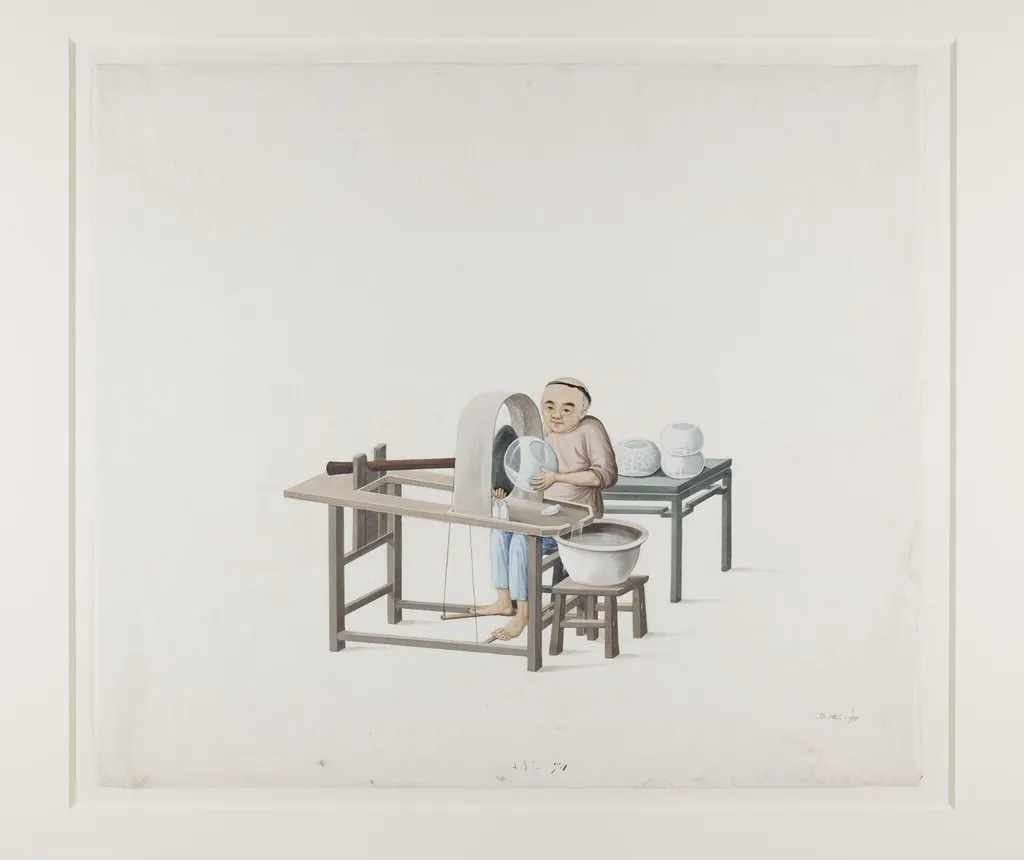
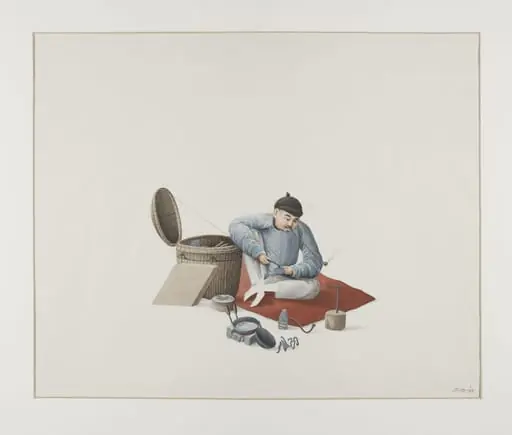
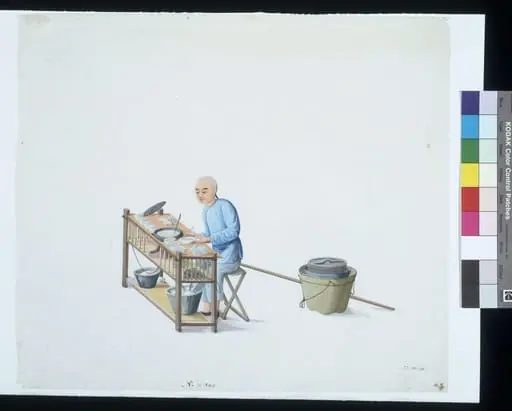
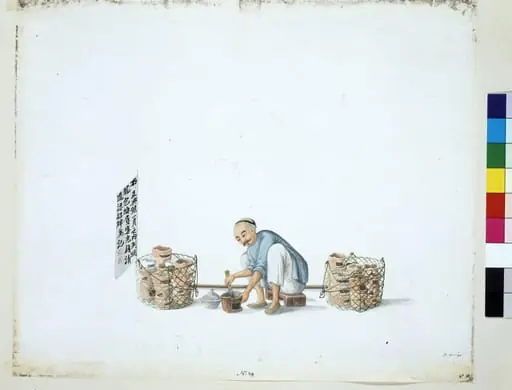
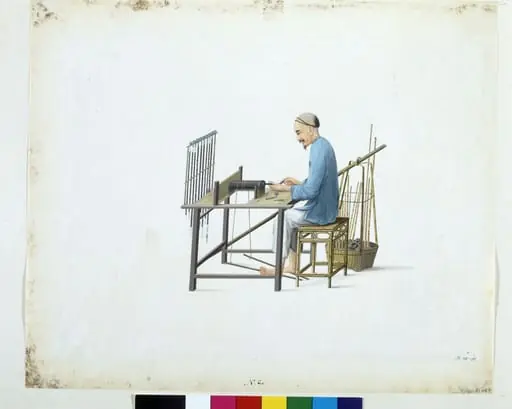
A Glass Grinder is a paint painting by the Patna School of Painting artist Puqua. It dates from 1790 and is held in the collection of the Victoria and Albert Museum. The work portrays a glass‑working artisan in a modest wooden interior, bent over a rotating glass wheel.
About this work
Overview
The work portrays a glass‑working artisan in a modest wooden interior, bent over a rotating glass wheel. He manipulates a heated glass fragment, producing sparks as sunlight filters through a narrow window. The composition captures a moment of skilled labor within a domestic setting.
Subject & Meaning
The figure represents a glass grinder, a specialized craft among the many occupations depicted in the series. By focusing on the precise hand movements and the interplay of light and fire, the image conveys the technical expertise required for shaping glass objects, offering a glimpse into everyday production in the city.
Technique & Style
Rendered in oil on canvas, the painting employs a restrained palette of earth tones punctuated by the bright glare of molten glass. The artist uses chiaroscuro to model the figure and the glowing wheel, while the shallow depth of field emphasizes the central activity over surrounding details.
History & Provenance
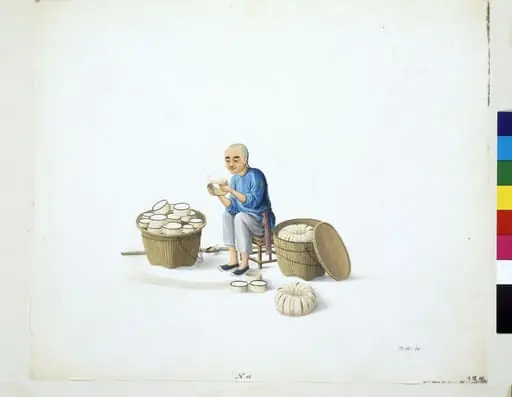
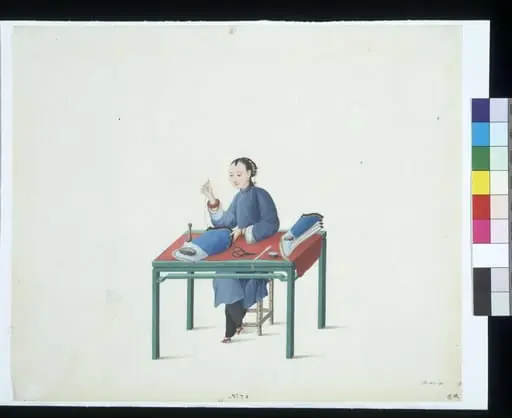
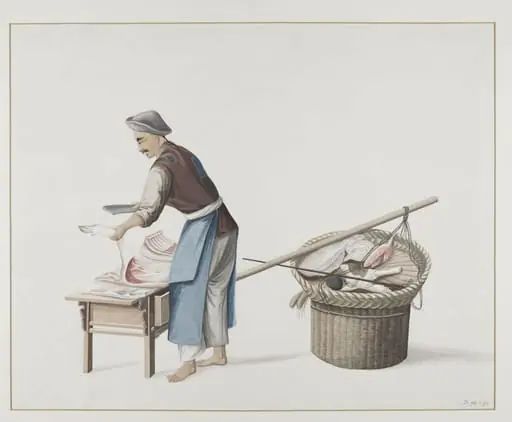
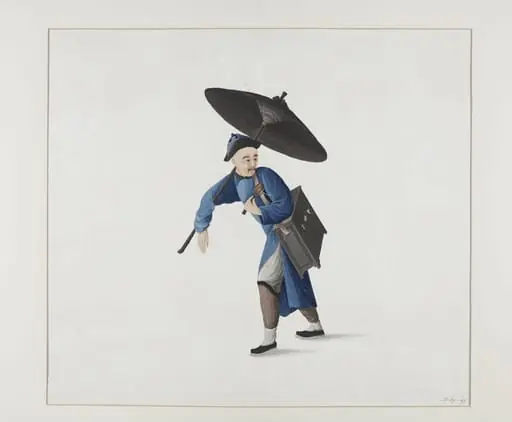
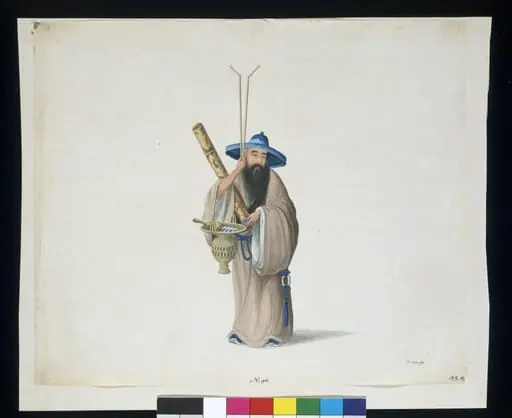
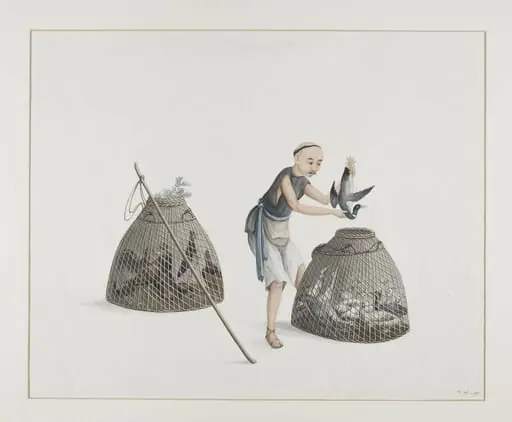
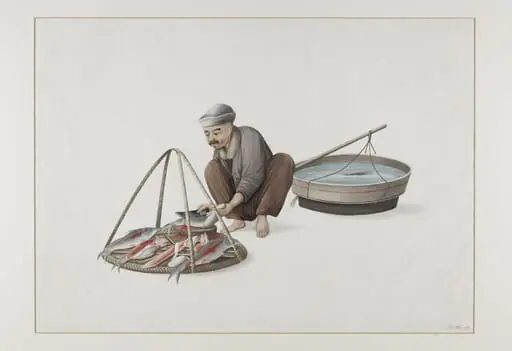
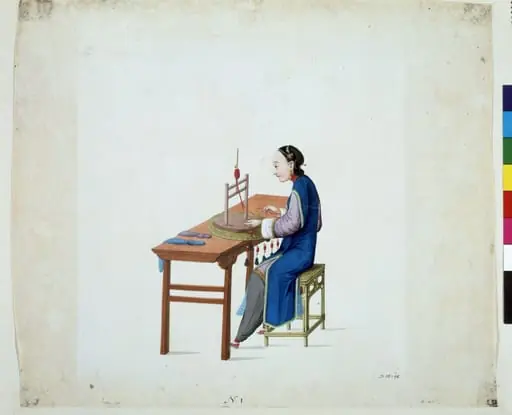
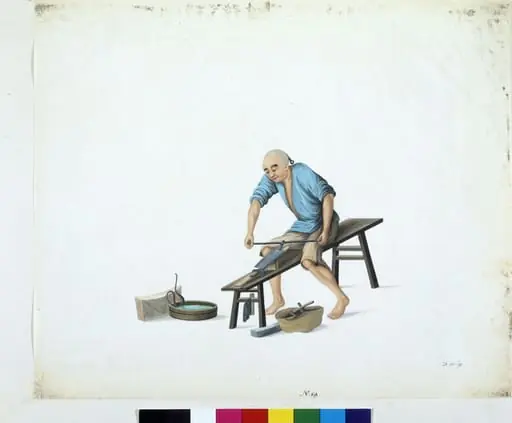
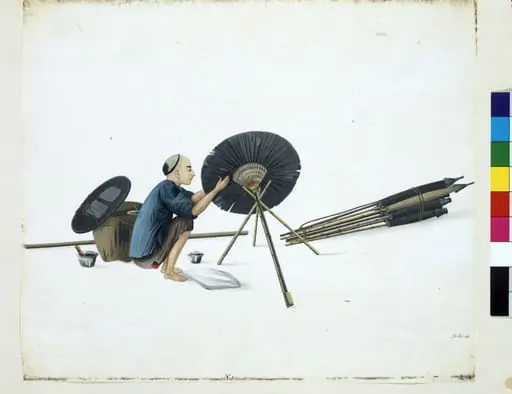
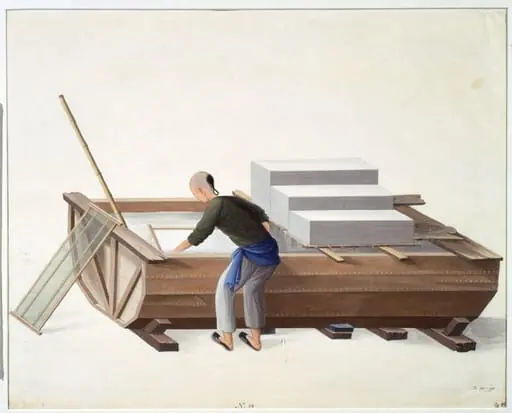
Created as part of a collection of one hundred paintings documenting various trades in Canton, the piece was intended for a European audience. The series catered to merchants and travelers who, despite extensive trade in tea and silk, possessed limited knowledge of Chinese domestic occupations.
Context
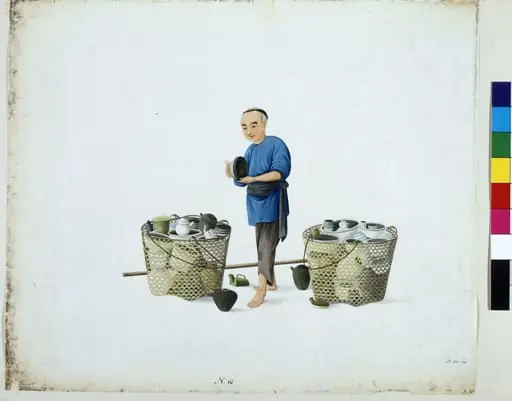
During the eighteenth and nineteenth centuries, European curiosity about China’s material culture prompted the production of visual records of local crafts. This series situates the glass grinder alongside other professions—such as tea pickers and toy makers—illustrating the breadth of urban labor in a major port city.
Legacy
The set remains a valuable documentary resource for scholars studying Sino‑European exchange and the visual representation of labor. Contemporary researchers reference the series, including works by artists like Puqua, to understand how Chinese occupational life was communicated to the West.
Artist & collection