Artwork
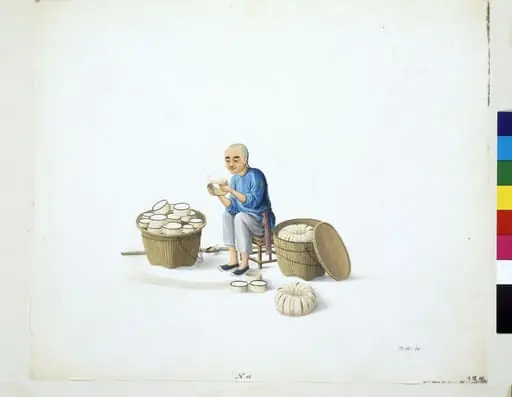
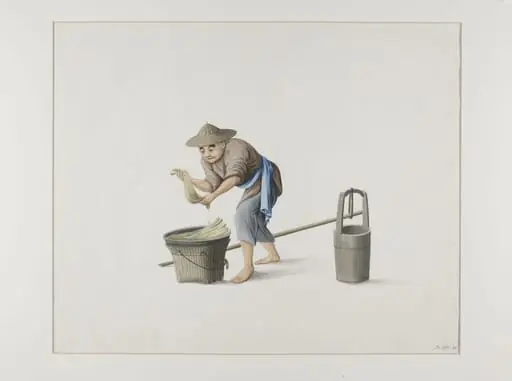
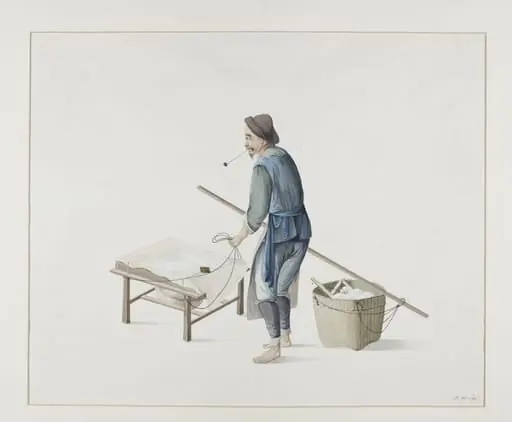
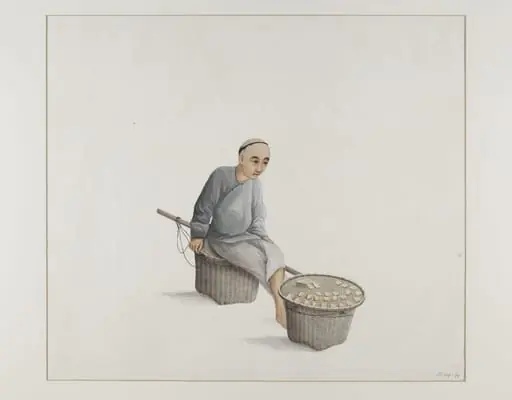
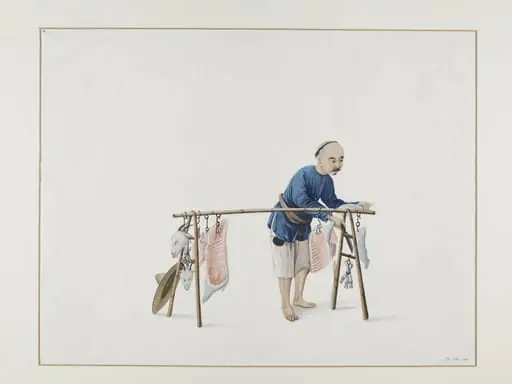
Man Selling Arowhead Plants
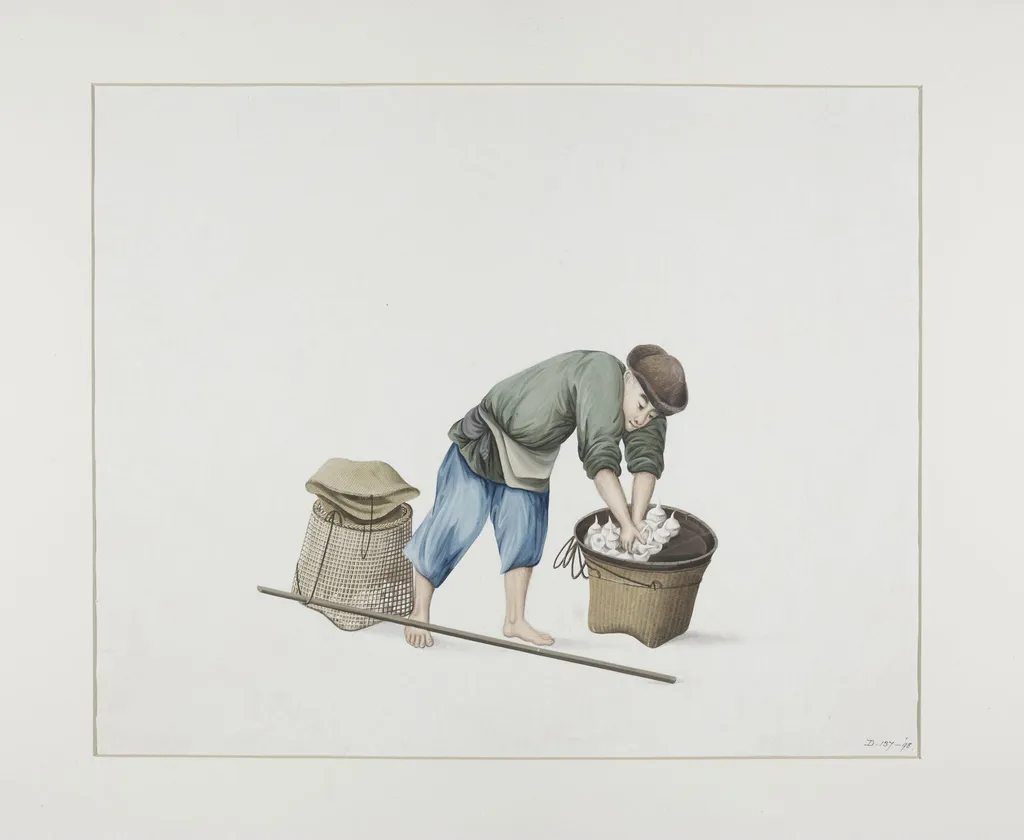
Man Selling Arowhead Plants is a paint painting by the Patna School of Painting artist Puqua. It dates from 1790 and is held in the collection of the Victoria and Albert Museum.
About this work
Overview
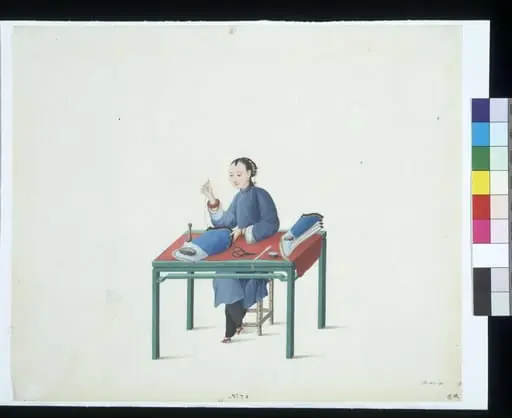
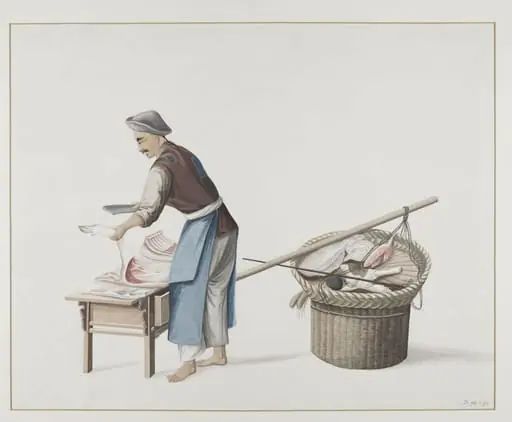
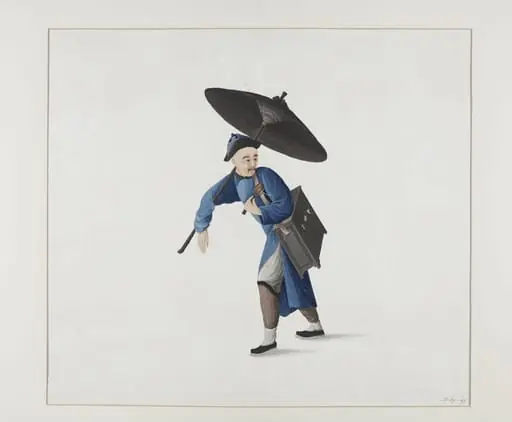
Created in 1790 by the Chinese artist Puqua, this watercolor painting is one of a hundred works documenting everyday trades in Canton.
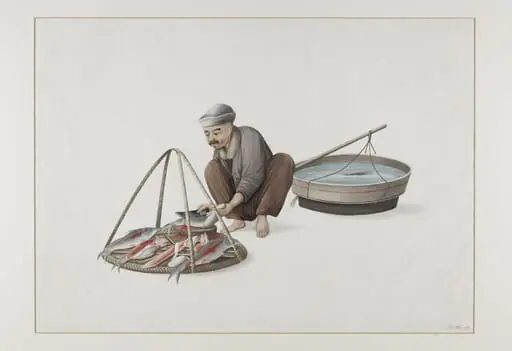
Created in 1790 by the Chinese artist Puqua, this watercolor painting is one of a hundred works documenting everyday trades in Canton. It portrays a street vendor offering arrowhead plants, a common aquatic crop used for food and medicine. The composition is modest and observational, avoiding theatricality in favor of quiet realism. The piece entered a major collection in 1898 after being acquired from Parsons & Sons.
Subject & Meaning
The painting captures a vendor crouched beside two woven baskets, one overflowing with fresh white arrowhead tubers. His loose clothing and wide straw hat suggest daily labor under the southern Chinese sun. The focus on a humble market activity reflects a broader interest in recording the lives of ordinary workers, not elite or mythological subjects. The plants themselves held practical value, grounding the scene in local economy and sustenance.
Technique & Style
Executed in delicate watercolor, the work employs soft washes and restrained tones to convey texture and light without bold contrasts. Brushwork is precise yet unobtrusive, particularly in rendering the damp sheen of the tubers and the weave of the baskets. Shadows under the hat and folds in the shirt are suggested with minimal strokes, enhancing the painting’s understated, observational quality.
History & Provenance
The painting was part of a commissioned series documenting Cantonese occupations, likely produced for export or local documentation. It passed into Western hands through the trade network of Parsons & Sons, a known dealer of Chinese art in the 19th century. Acquired by a British institution in 1898, it has since remained in public collection, preserved as an example of Qing-era genre painting.
Context
In late 18th-century Canton, foreign trade and local commerce flourished, prompting increased interest in documenting daily life. Artists like Puqua responded to both domestic and international curiosity about Chinese society. This series of hundred works functioned as ethnographic records, offering a glimpse into labor, material culture, and urban rhythm outside imperial or religious narratives.
Legacy
Though not widely known outside specialized circles, the painting contributes to a broader understanding of Chinese visual culture beyond courtly or religious art. Its quiet realism and attention to mundane detail have influenced later scholarly interest in vernacular painting traditions. Today, it remains a reference point for studies of Qing-era commerce and artistic documentation of labor.
Artist & collection