Artwork
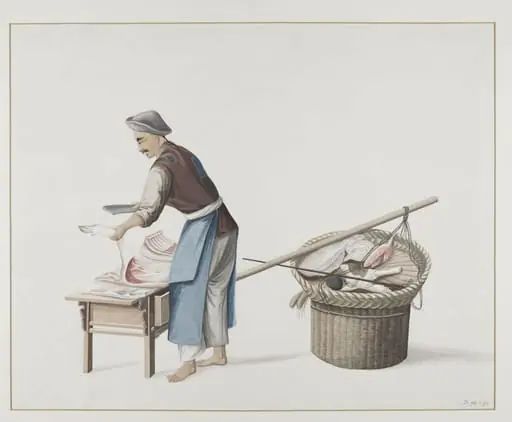
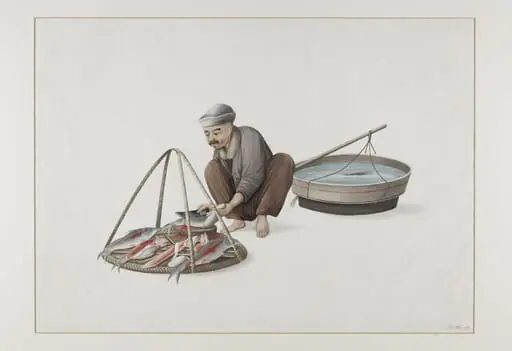
Man Selling Salted Fish
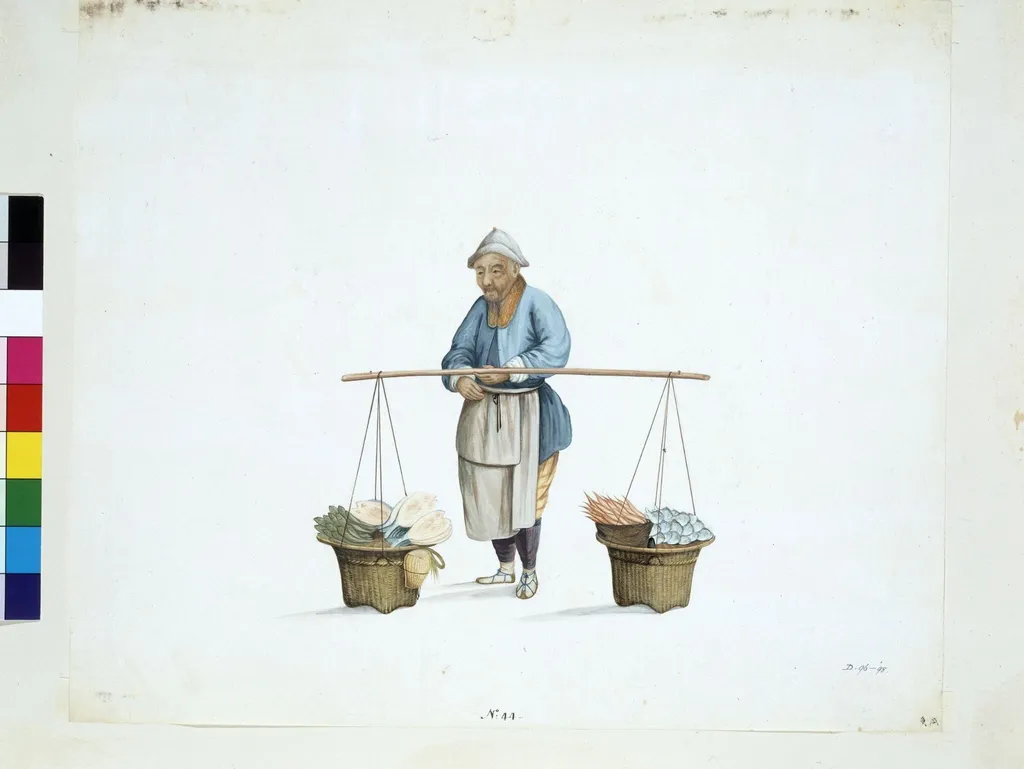
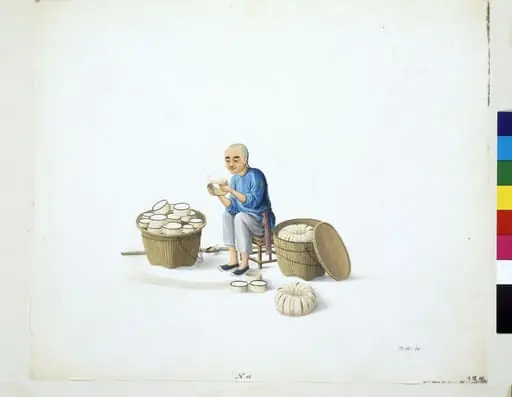
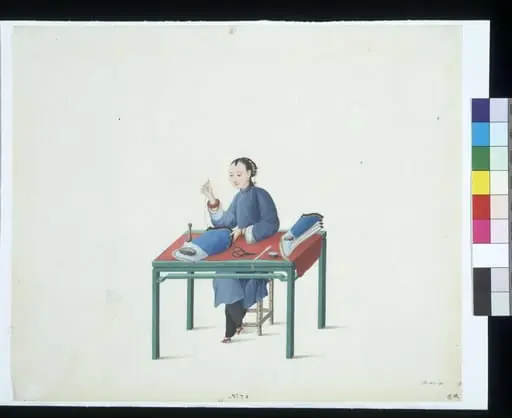
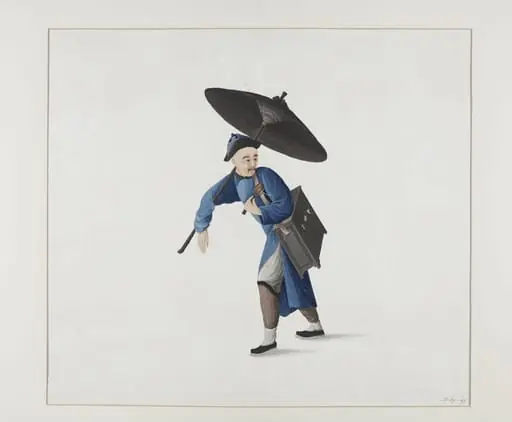
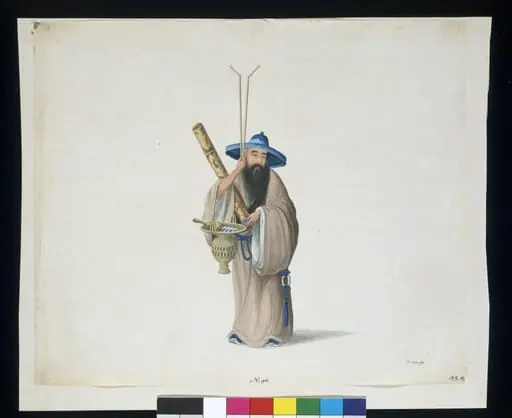
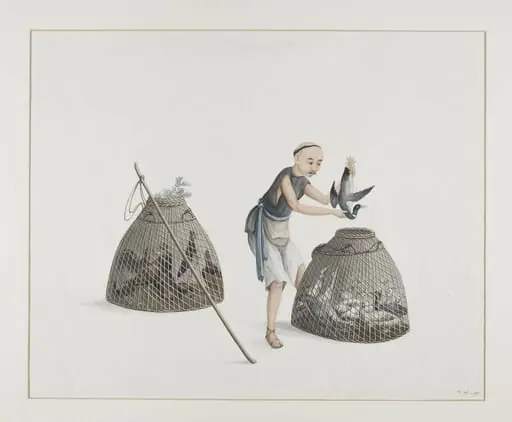
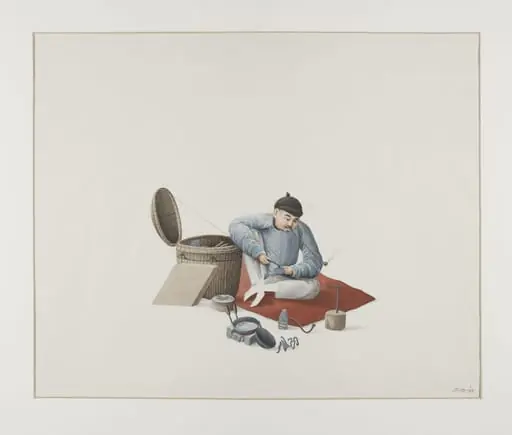
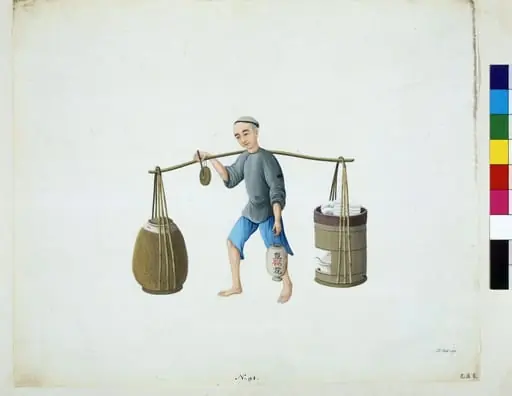
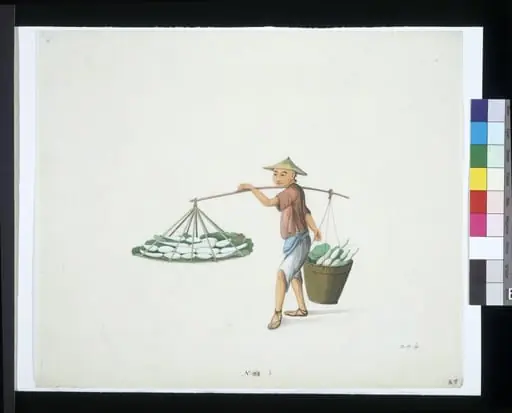
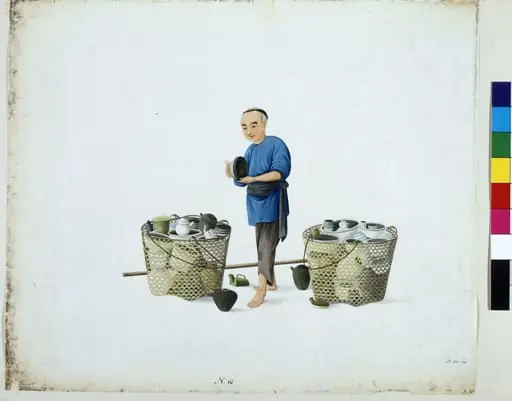
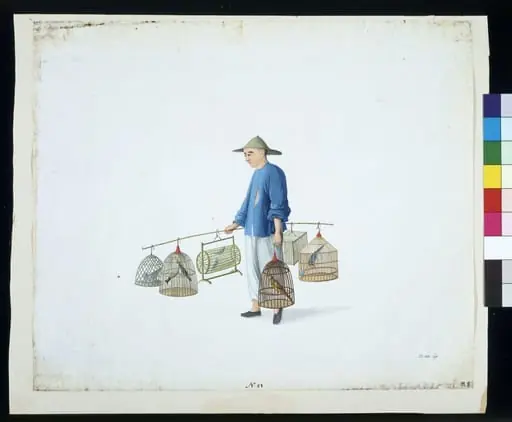
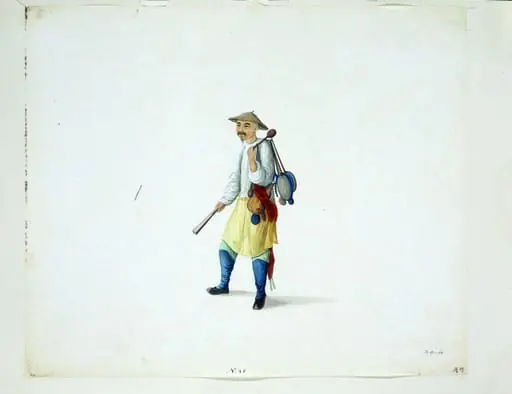
Man Selling Salted Fish is a paint painting by the Patna School of Painting artist Puqua. It dates from 1790 and is held in the collection of the Victoria and Albert Museum. This work belongs to a series of one hundred paintings that document a variety of occupations in 18th‑century Canton.
About this work
Overview
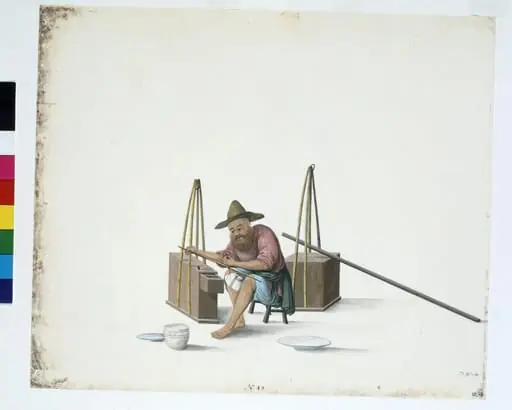
This work belongs to a series of one hundred paintings that document a variety of occupations in 18th‑century Canton. Executed as a small‑scale oil on paper, it portrays a street vendor arranging salted fish on a low counter. The series was commissioned to satisfy European curiosity about Chinese commercial life, offering a visual catalogue of everyday trades.
Subject & Meaning
The central figure is a male fishmonger, positioned behind a wooden stall where rows of glistening salted fish are displayed. His posture suggests active engagement with customers, emphasizing the bustling nature of market transactions. The image functions as a straightforward record of a common livelihood, reflecting the economic fabric of Canton’s port city.
Technique & Style
The artist employs chiaroscuro, contrasting illuminated surfaces of the fish and the vendor’s clothing with deeper shadows in the background. This handling of light creates a modest sense of depth on a relatively flat picture plane. Brushwork is economical, focusing on the texture of the fish and the roughness of the stall rather than elaborate detail.
History & Provenance
Created for a European audience, the series was likely assembled by a Dutch or Portuguese trading house seeking to market information about Chinese commerce. The paintings circulated among merchants and collectors in the late 1700s, and this particular panel entered the museum’s collection through a 20th‑century acquisition of Asian trade ephemera.
Context
Canton was a principal hub of the China trade, where foreign merchants encountered a wide range of local vendors. Visual records such as this series served both as ethnographic documentation and as decorative curiosities for patrons back home, bridging cultural gaps through pictorial representation of ordinary labor.
Artist & collection