Artwork
Mir Ja'far and Miran
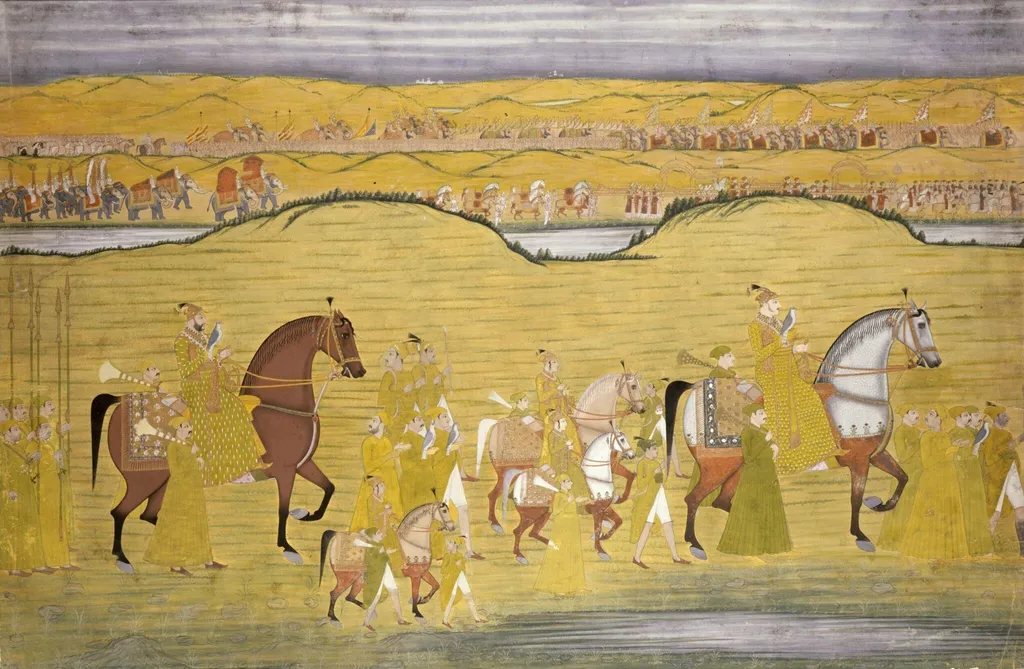
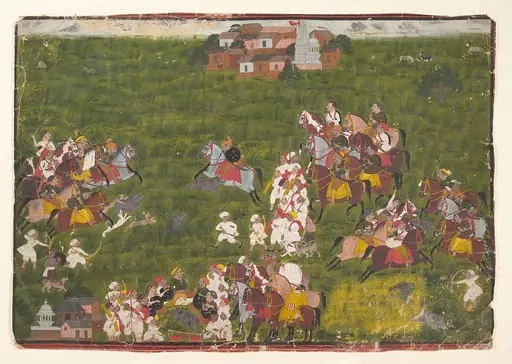
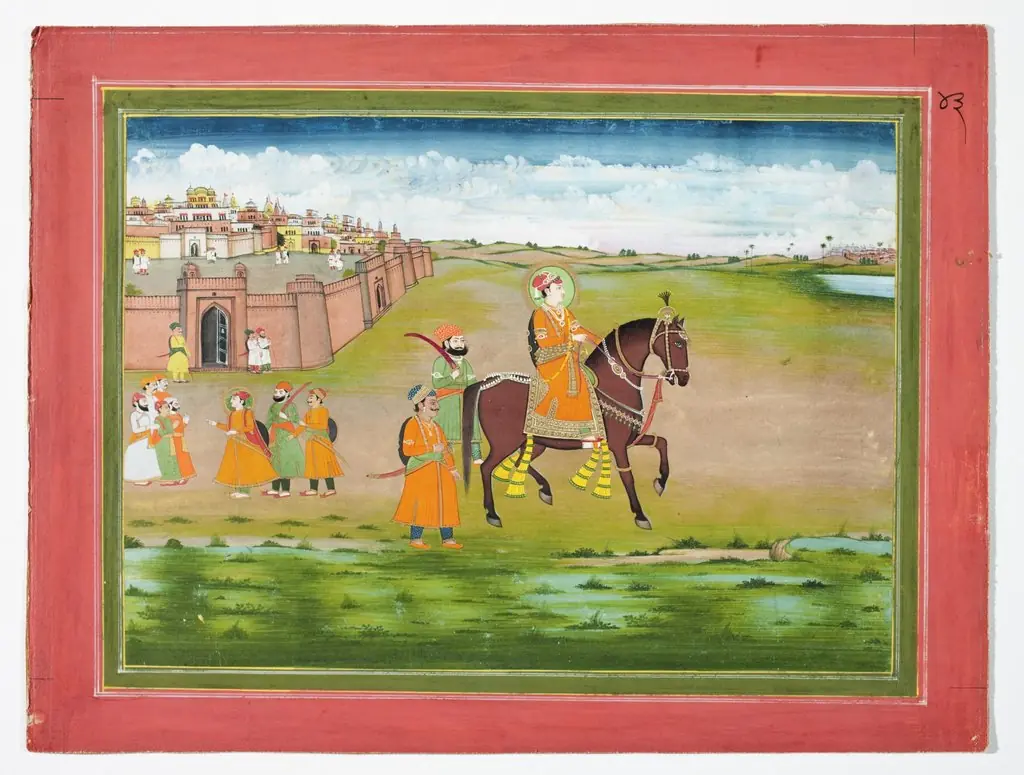
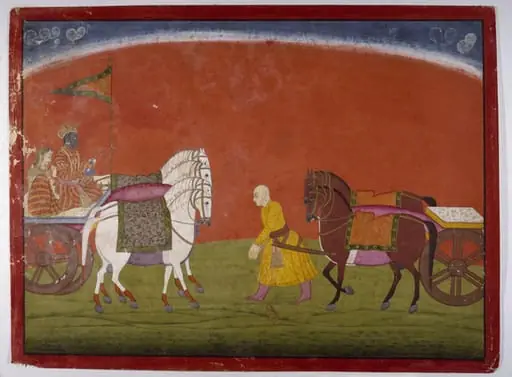
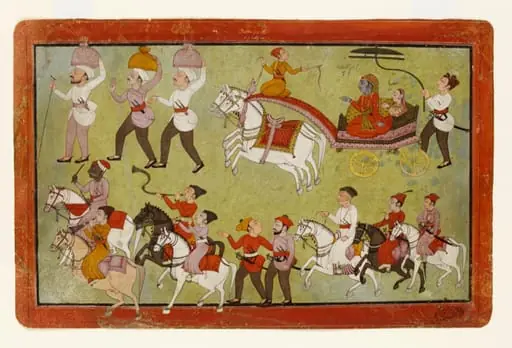
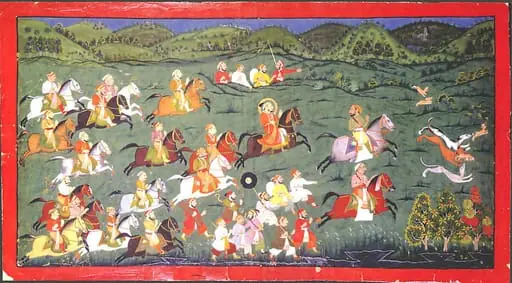
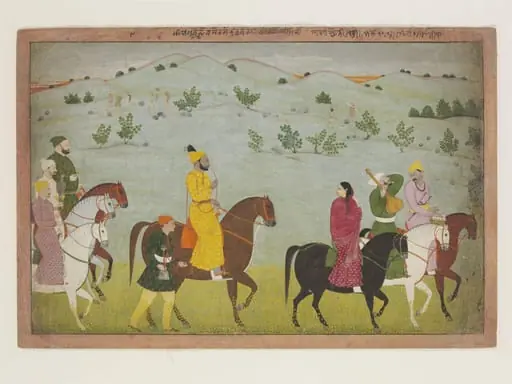
Mir Ja'far and Miran is a paint painting by the Mughal Painting artist Purannath. It dates from 1760 and is held in the collection of the Victoria and Albert Museum. This painting captures Mir Ja'far Ali Khan and his son Miran engaged in falconry, likely created in Bihar around 1759–1760.
About this work
Overview
Hunhar, along with his brother Nidhamal, belonged to a lineage of court painters, described as 'khanazad'—born into service within imperial households.
This painting captures Mir Ja'far Ali Khan and his son Miran engaged in falconry, likely created in Bihar around 1759–1760. Signed by Purannath, known by his honorific Hunhar, it is a rare documented work by an artist once attached to the Mughal court. Hunhar, along with his brother Nidhamal, belonged to a lineage of court painters, described as 'khanazad'—born into service within imperial households.
Subject & Meaning
The scene portrays a moment of aristocratic leisure, with father and son on horseback, hawks at the ready. Falconry was not merely recreation but a symbol of noble authority and martial tradition in Mughal culture. The intimate composition, focusing on the two figures, suggests a personal record rather than a grand ceremonial image, possibly intended to affirm lineage and status during a time of political fragmentation.
Technique & Style
Rendered in delicate watercolor, the figures are detailed with fine brushwork, their robes and accessories rendered with precision. The background features a muted, atmospheric landscape with soft tree forms, typical of late Mughal provincial styles. Hunhar’s signature, placed near the horse’s foreleg, indicates a deliberate assertion of authorship, uncommon in works of this period, reflecting his personal connection to the subject.
History & Provenance
Hunhar accompanied Prince Ali Gauhar, later Shah Alam II, during his eastern campaigns as the Mughal Empire weakened. The painting likely originated in Bihar during this period, where the prince sought alliances. Its survival as a signed work offers rare insight into the mobility of artists and the persistence of courtly traditions beyond Delhi. The artist’s family, including his brother Nidhamal, maintained artistic roles across generations.
Context
By the mid-18th century, Mughal authority had fractured, and regional courts like Bihar’s became centers of cultural patronage. Artists like Hunhar followed princes into the provinces, adapting imperial styles to local tastes. This painting reflects the transition from centralized court art to a more dispersed, personal mode of representation, where loyalty and lineage were visually affirmed amid political decline.
Legacy
Hunhar’s signed work stands as an exception among 18th-century Mughal paintings, where artists rarely claimed authorship. His lineage, shared with his brother Nidhamal, illustrates the hereditary nature of artistic service. The painting contributes to understanding how courtly traditions endured in provincial settings, preserving visual language even as imperial power waned.
Own this work as a print
Artist & collection
Artist
Purannath painted court scenes in 18th-century India. Their work Mir Ja'far and Miran (ca. 1760) shows two seated figures against a plain background, a quiet but telling snapshot from the Nawab era. The spare style…