Artwork
Rukma, Krishna and Rukmini
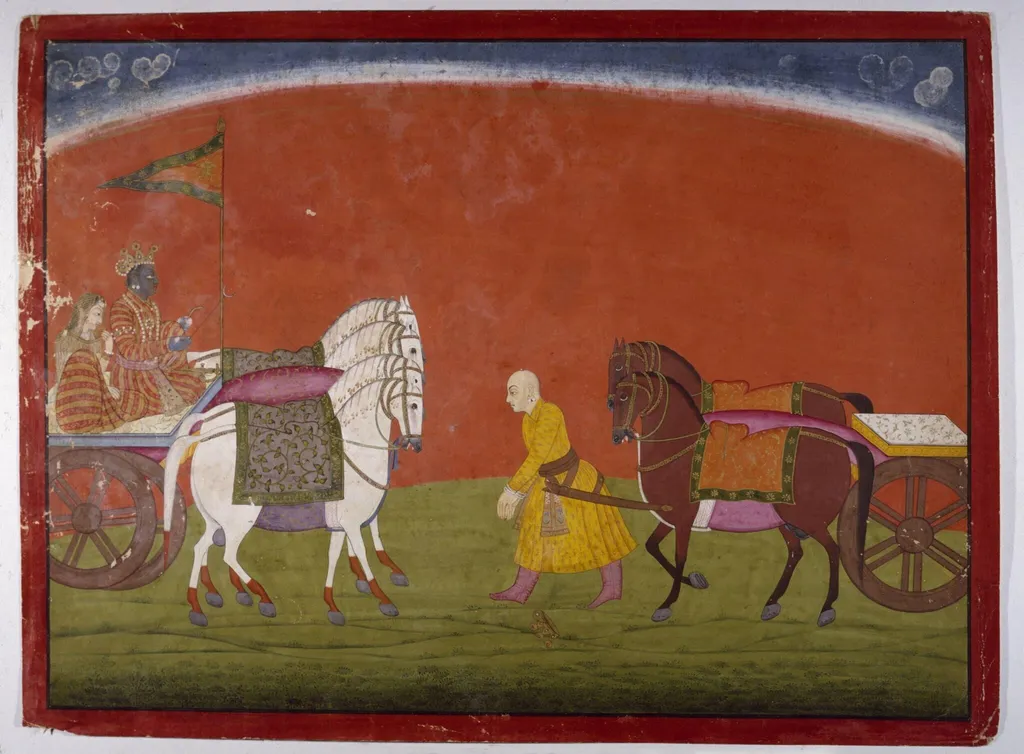
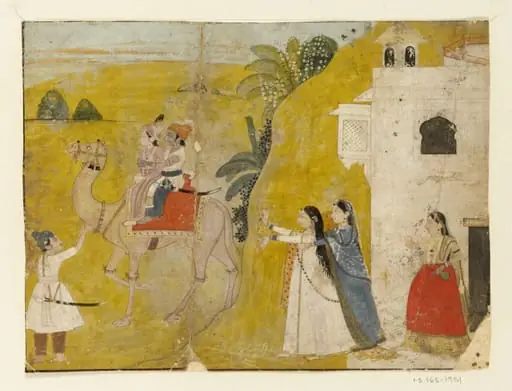
Rukma, Krishna and Rukmini is a paint painting by the Rococo painting artist Unknown. It dates from 1760 and is held in the collection of the Victoria and Albert Museum. The work is an opaque watercolor painting enhanced with gold leaf on paper, portraying a scene from the Bhagavata Purana.
About this work
Overview
The work is an opaque watercolor painting enhanced with gold leaf on paper, portraying a scene from the Bhagavata Purana. Central to the composition is Rukma, brother of Rukmini, whose hands are bound as he stands before the divine couple Krishna and Rukmini. The background is rendered in a vivid scarlet hue, giving the image a flat, decorative quality.
Subject & Meaning
The narrative captures a moment of tension in the mythic tale: Rukma is restrained while Krishna and Rukmini approach, suggesting a moment of confrontation or rescue. The inclusion of the chariot, horses and flags underscores the royal or divine status of the figures, aligning with the epic’s themes of devotion and divine intervention.
Technique & Style
Executed in opaque watercolor, the artist applies gold pigment to accentuate details, especially on clothing and the chariot. The palette is saturated, with bright reds, golds, purples and yellows, while the lack of chiaroscuro creates a two‑dimensional, ornamental surface typical of Indian manuscript illustration.
History & Provenance
The painting belongs to a series created to illustrate the fifth book of the Bhagavata Purana, a key text in Hindu tradition. It was produced within a workshop that specialized in religious narrative art, and later entered a European collection before being acquired by the museum.
Context
The fifth book of the Bhagavata Purana recounts the life of Krishna, including his marriage to Rukmini. Visual representations of this episode were common in devotional art, serving both as religious instruction and as a means to celebrate the divine love between Krishna and his consort.
Legacy
Works from this series exemplify the synthesis of narrative illustration and luxurious materials in pre‑modern Indian art. Their preservation offers insight into the visual language used to convey sacred stories and informs contemporary scholarship on devotional painting traditions.
Artist & collection

 Domestic Scene
 Giacomo and Cardinal Marco, investing Andrea, Abbot of San Zeno, with his Benefice
 The Nymph of Fontainebleau
 Portrait of a Woman
 Madonna and Child with Saints in the Enclosed Garden
 Venus and Minerva
 Family Group of Four on Sofa
 Wall painting from Room H of the Villa of P. Fannius Synistor at Boscoreale
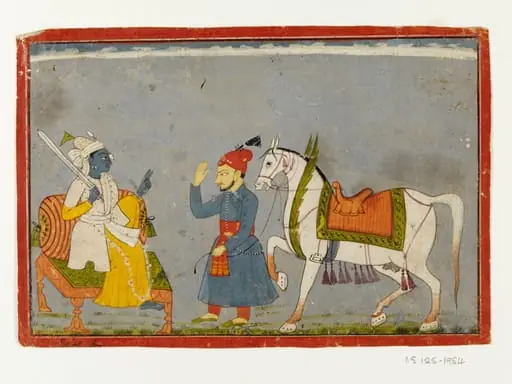 Vishnu as Kalki
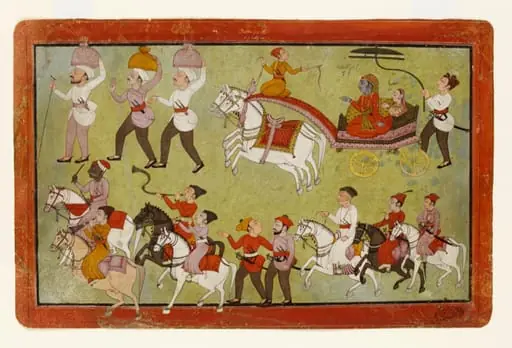 Rama and Sita
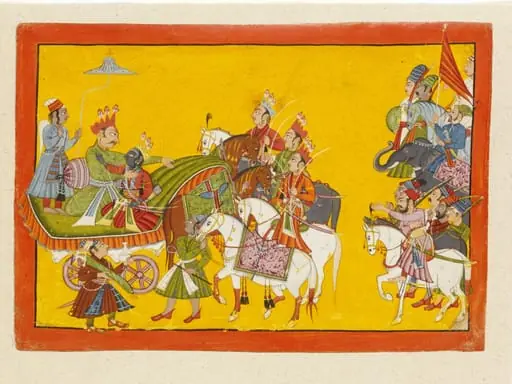 Dasaratha and Rama
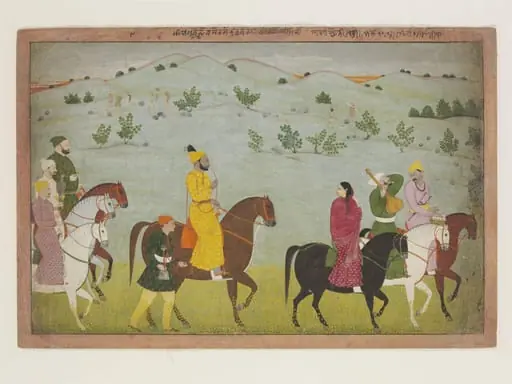 Mian Mukund Dev
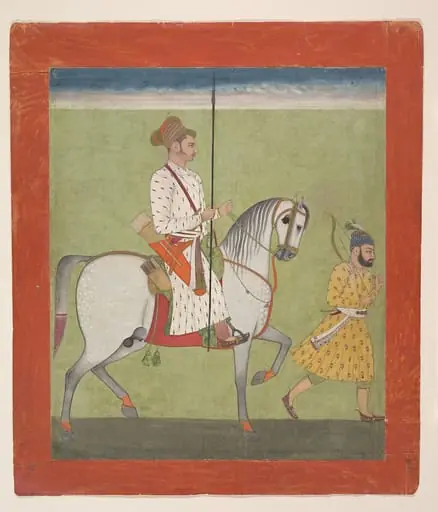 Untitled
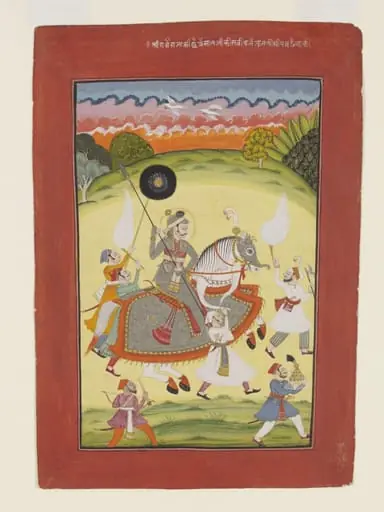 Rao Chhattar Sal
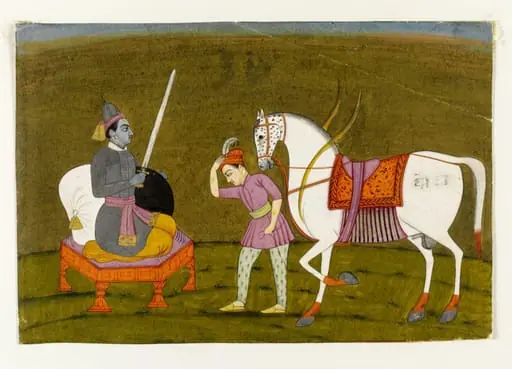 Kalki
Kalki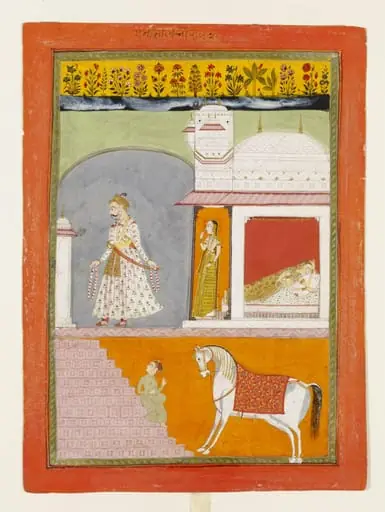 Lalita ragini
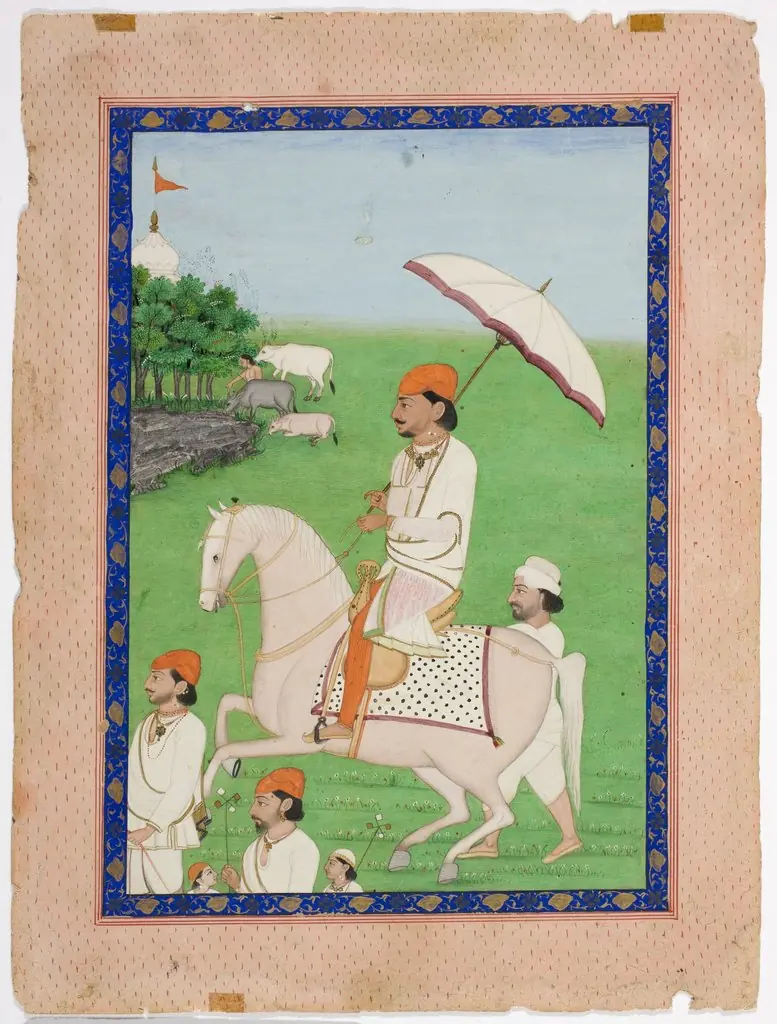 Sikh Gentleman Riding with Retainers
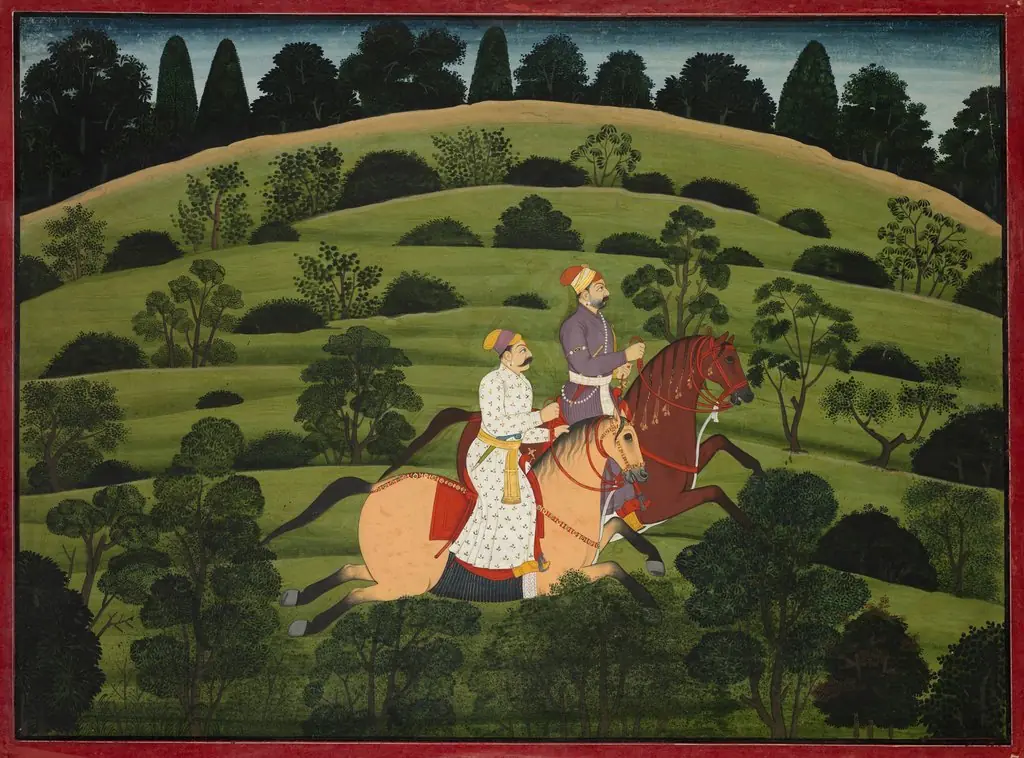 Akrura Rides toward Dwarka, page from the large Basohli Bhagavata Purana
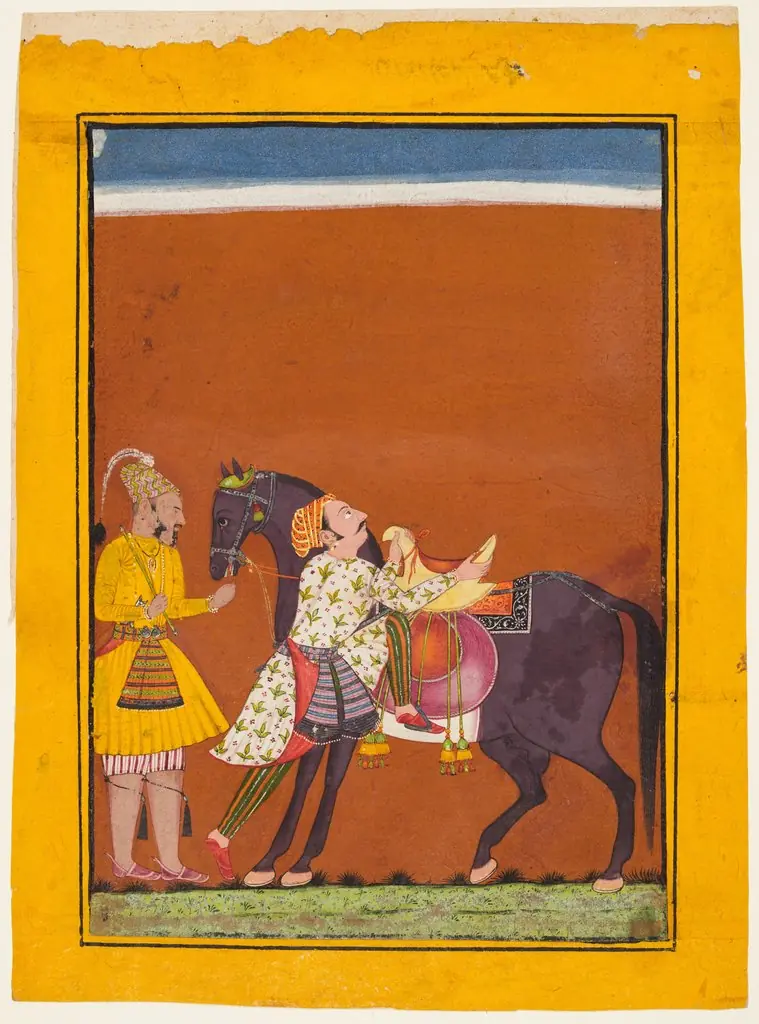 A Warrior Mounting a Held Horse: Saindhava Ragaputra of Shri, from a Chamba Ragamala
 Sassi and Punun