Artwork
Daedalus and Icarus
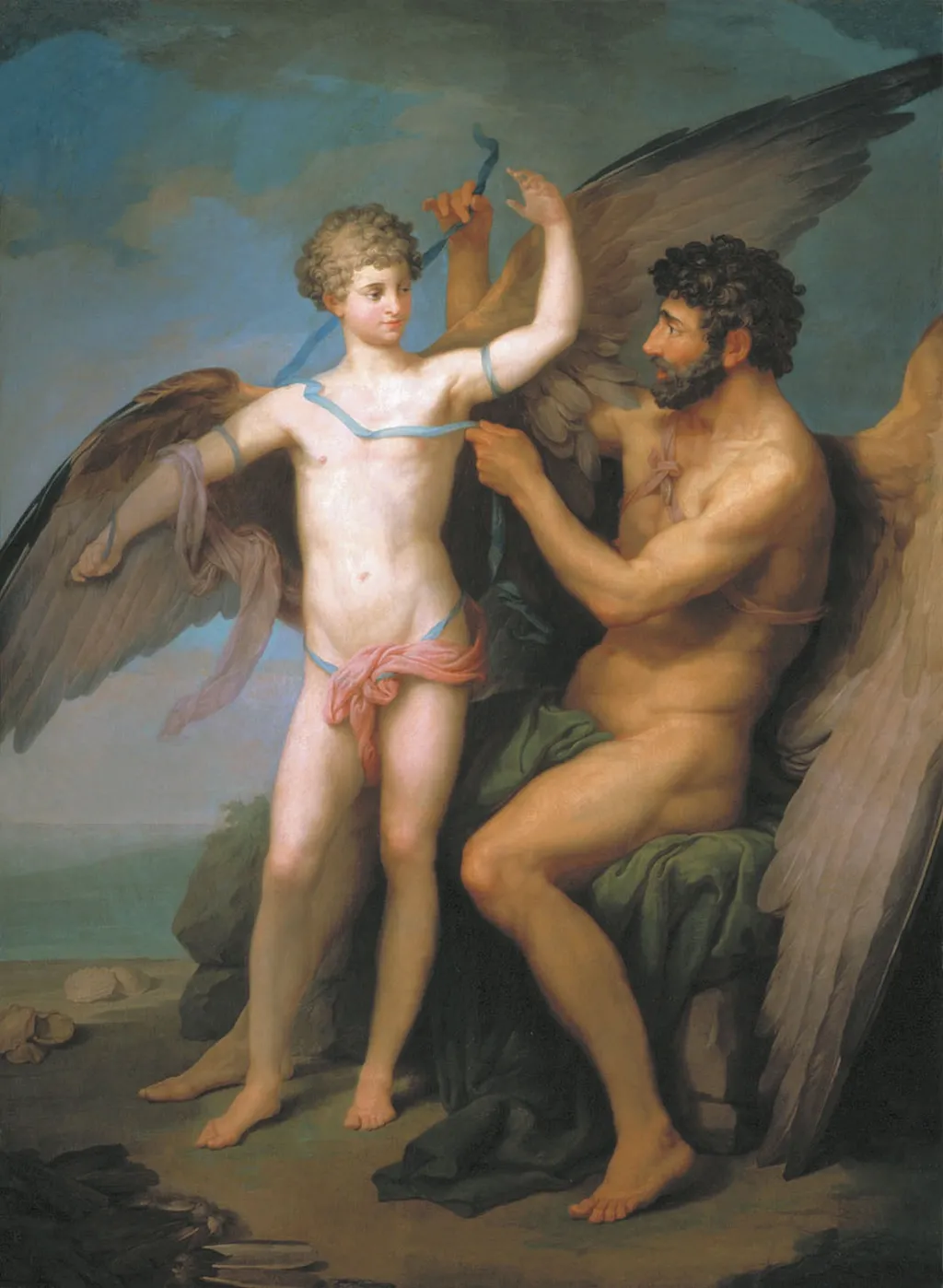
Daedalus and Icarus is an unspecified painting by the Rococo painting artist Pyotr Ivanovich Sokolov. It dates from 1788 and is held in the collection of the Tretyakov Gallery.
About this work
Overview
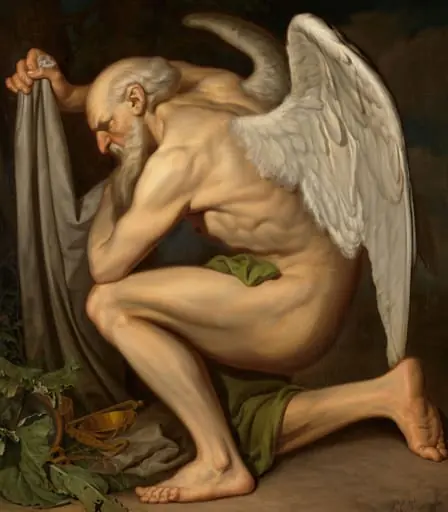
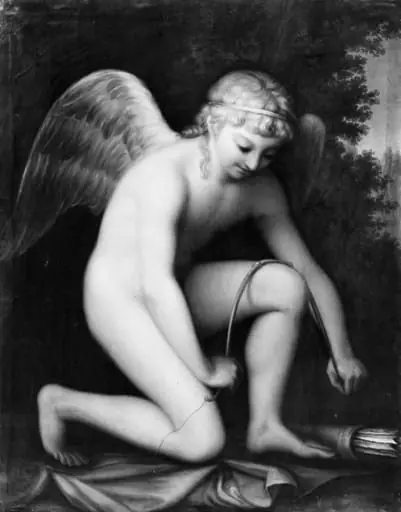
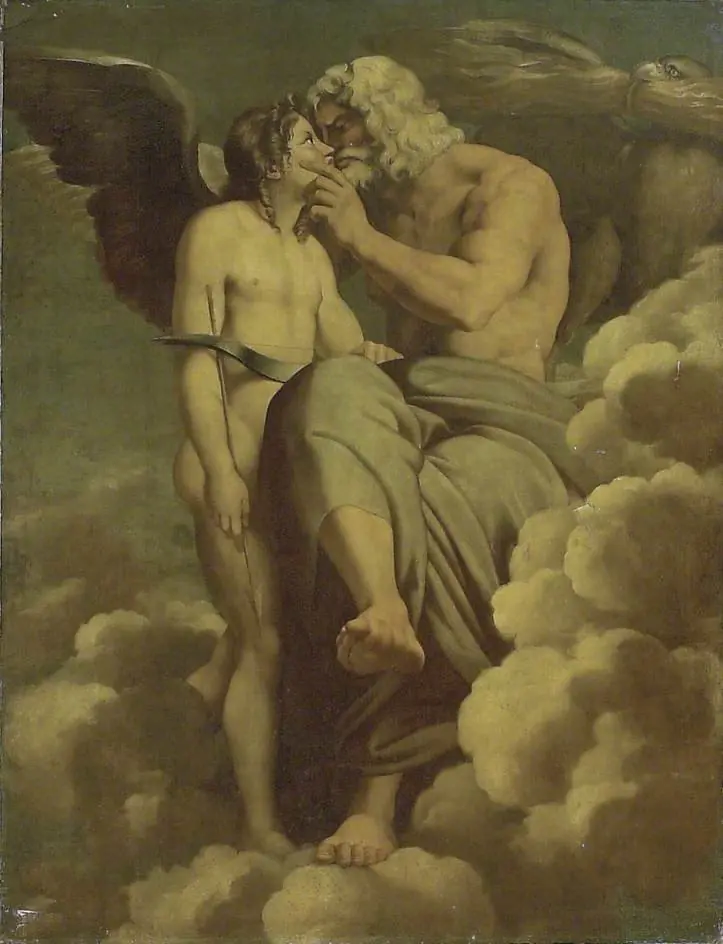
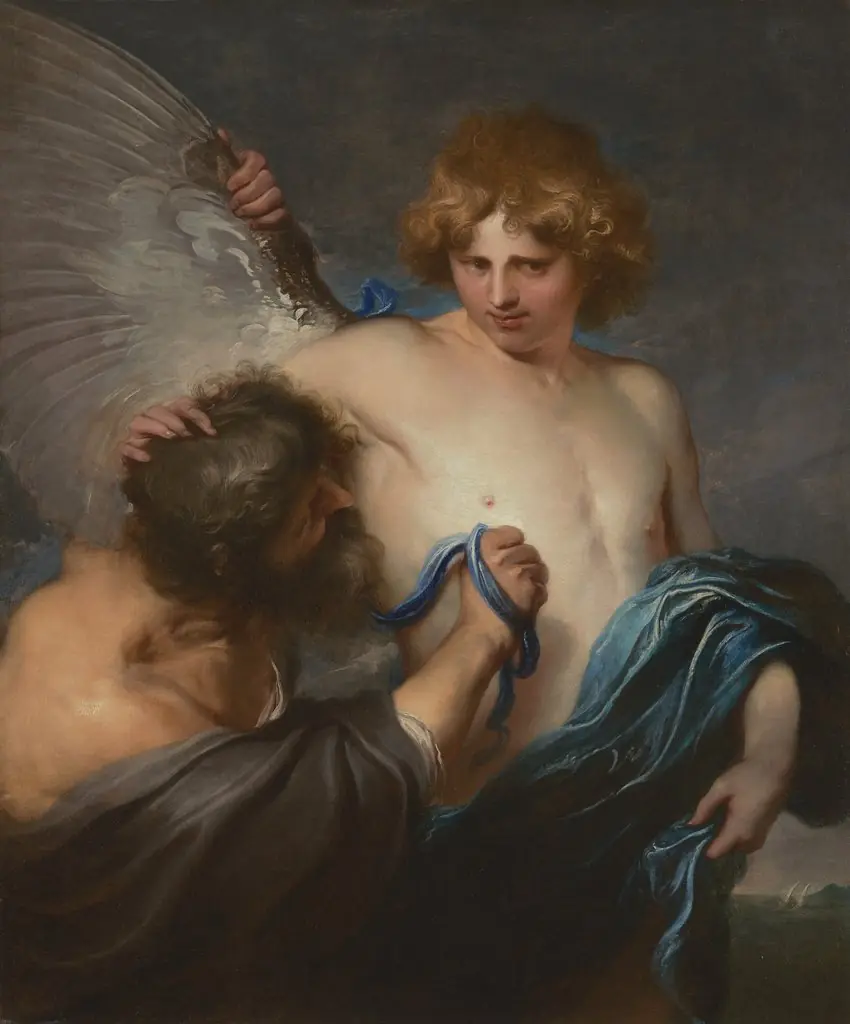
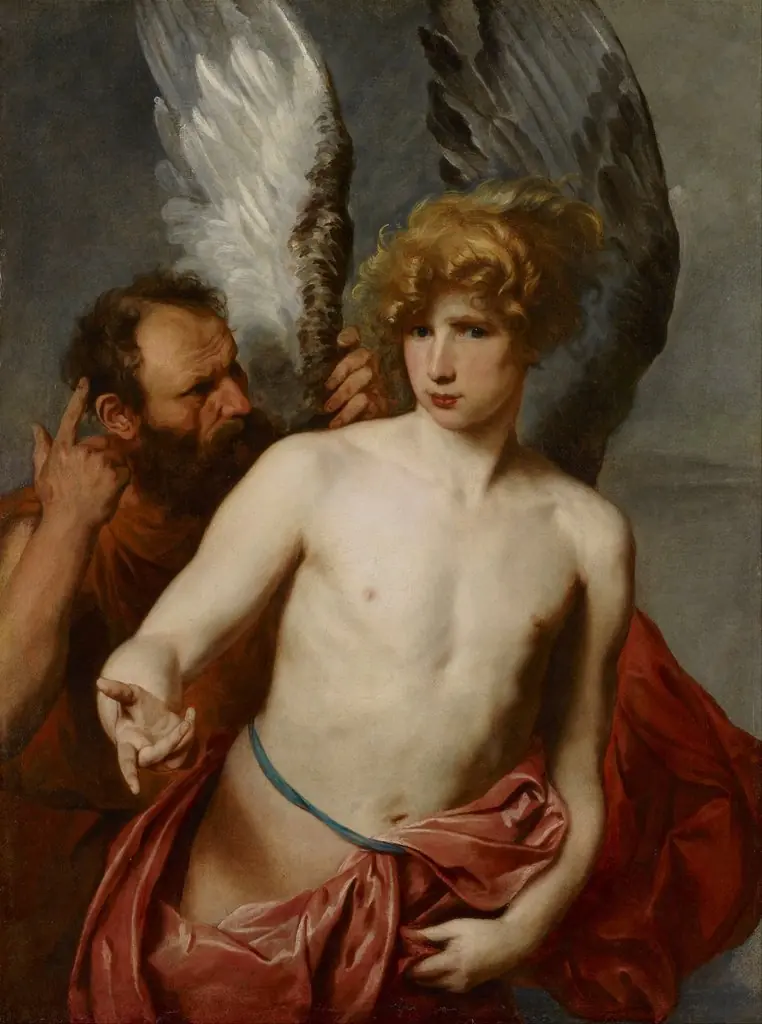
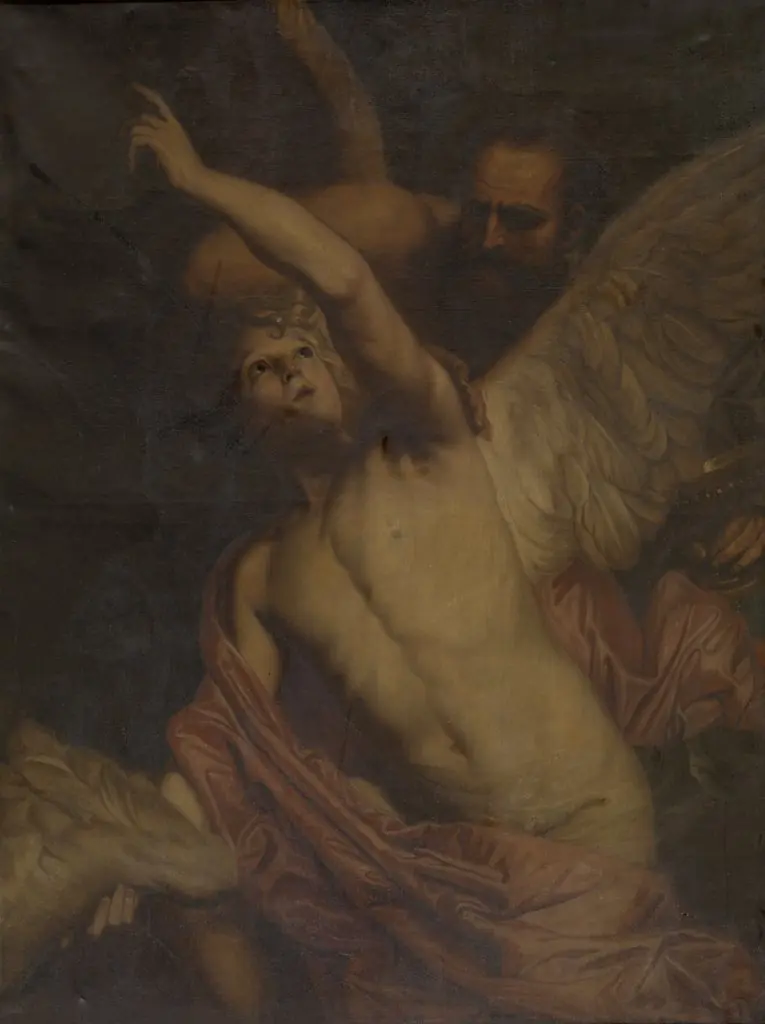
Painted in 1788 by Pyotr Ivanovich Sokolov, this work depicts the myth of Daedalus and Icarus as a quiet, intimate moment before flight.
Painted in 1788 by Pyotr Ivanovich Sokolov, this work depicts the myth of Daedalus and Icarus as a quiet, intimate moment before flight. The scene is stripped of dramatic spectacle, focusing instead on a tender exchange between father and son. Rendered in muted blues and earth tones, the composition emphasizes emotional restraint over action, setting it apart from more theatrical interpretations of the myth.
Subject & Meaning
The painting captures Daedalus, bearded and seated, securing a blue ribbon around his son Icarus as he prepares for flight. Icarus stands upright, arm raised in anticipation, his posture suggesting eagerness rather than recklessness. The ribbon, likely symbolizing the bonds of guidance and caution, contrasts with the open sky behind them. The moment is one of instruction, not warning — a pause before the inevitable, imbued with paternal care.
Technique & Style
Sokolov employs soft brushwork and a restrained palette of blues and browns to create a sense of quiet intimacy. The figures are rendered with delicate detail, particularly in the folds of fabric and the texture of wings, while the background remains ethereal and uncluttered. Light falls evenly across the scene, avoiding dramatic contrasts, reinforcing the painting’s contemplative tone and its focus on human connection over mythic grandeur.
History & Provenance
Completed in 1788, the painting entered the collection of the Tretyakov Gallery in Moscow, where it remains today. Sokolov, known for his portraits and mythological scenes, produced this work during a period of growing interest in classical narratives among Russian artists. Its preservation suggests early recognition of its emotional depth, though it was never widely reproduced or publicly exhibited beyond institutional circles.
Context
In late 18th-century Russia, mythological subjects were often used to explore moral and familial themes. Sokolov’s interpretation aligns with Enlightenment ideals emphasizing reason and paternal duty, diverging from Baroque excess. The painting reflects a broader cultural shift toward introspective storytelling, where myth served not as spectacle but as a mirror for human vulnerability and guidance.
Legacy
Though not widely known outside Russian art circles, the painting endures as a subtle meditation on mentorship and the limits of human ambition. Its quiet composition contrasts with later, more dramatic renditions of the myth, offering a quieter, more human-centered reading. It remains a significant example of how classical narratives were reimagined in late imperial Russia through emotional nuance rather than grandeur.
Artist & collection
Artist
Russian portrait painter from the late 1700s, Sokolov captured the faces and poses of his day.