Artwork
Perseus and Andromeda
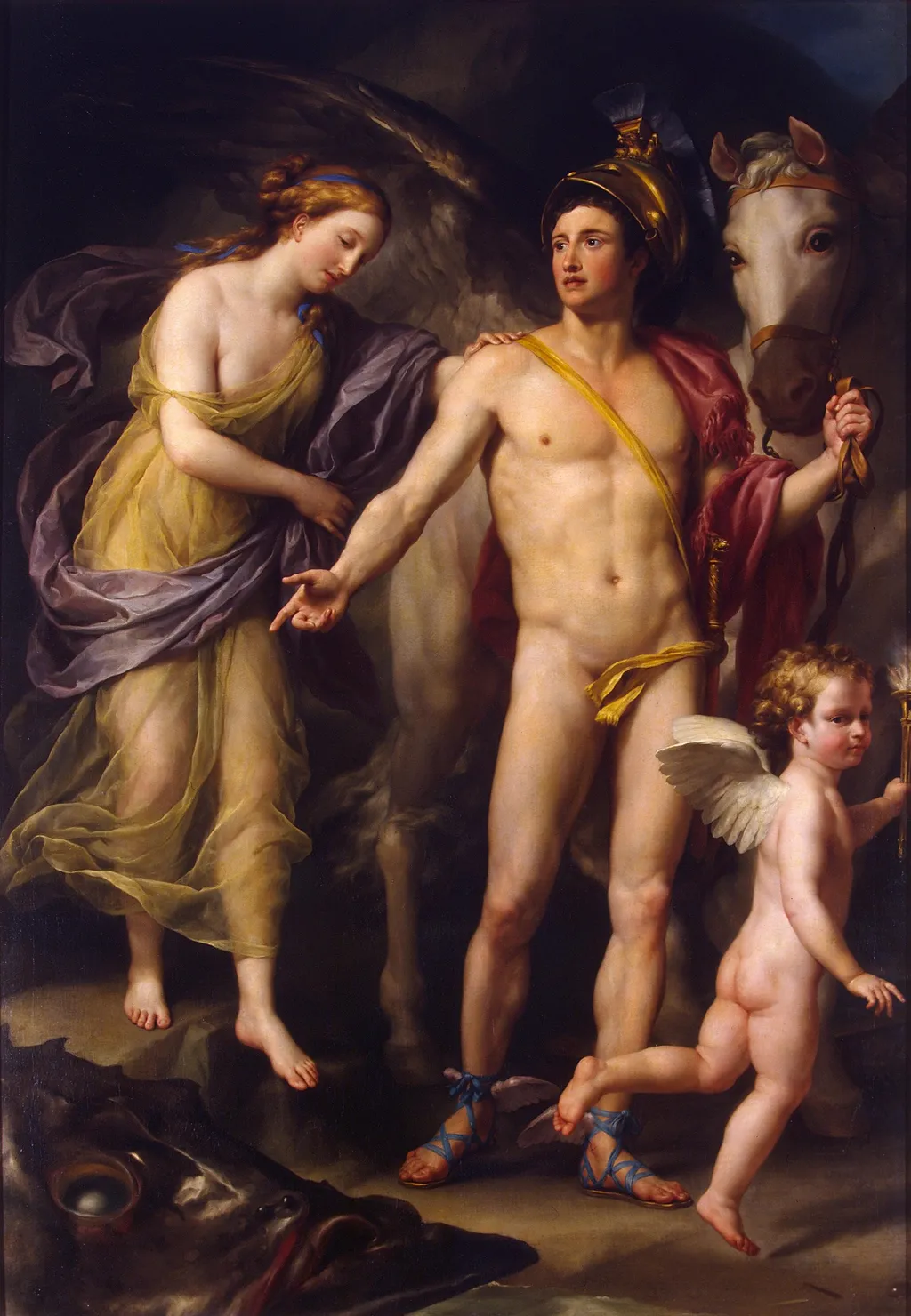
Perseus and Andromeda is an oil painting by the Neoclassicist artist Anton Raphael Mengs. It is held in the collection of the Hermitage Museum.
About this work
Overview
The composition centers on a nude male figure in a yellow drape, sword in hand, confronting a dark, storm‑filled seascape.
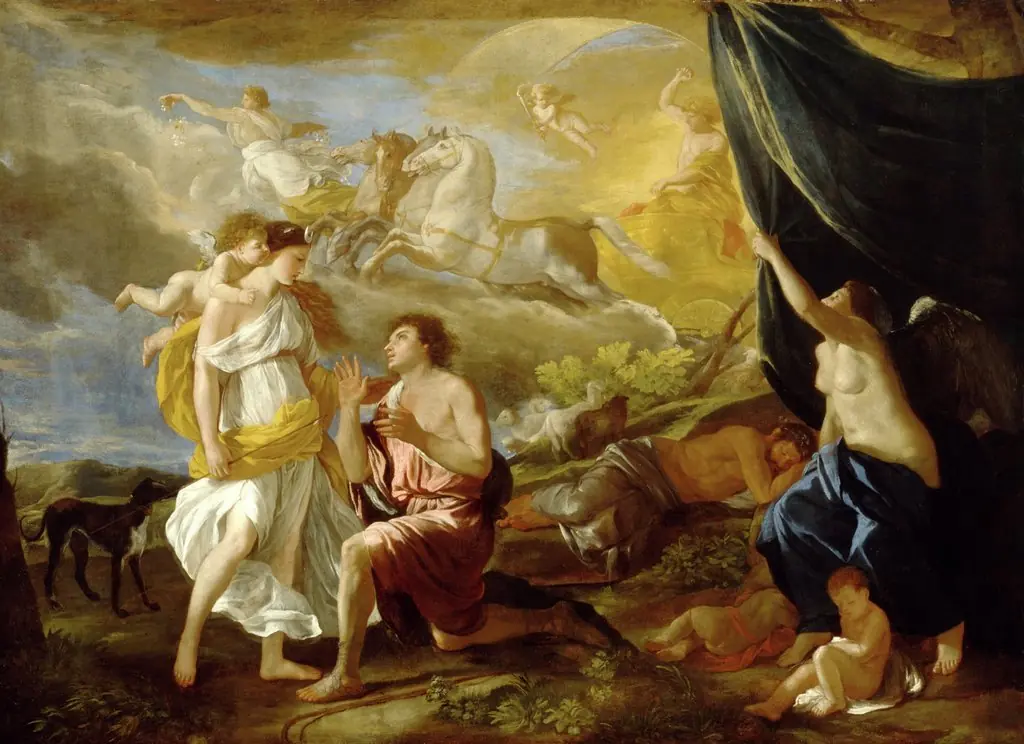
Anton Raphael Mengs’ canvas Perseus and Andromeda, executed in 1790, presents a dramatic moment from classical mythology. The composition centers on a nude male figure in a yellow drape, sword in hand, confronting a dark, storm‑filled seascape. To his left a robed woman reaches toward him, while a winged child bearing a shield and a Pegasus‑like horse occupy the right side, all set against a craggy shoreline.
Subject & Meaning
The work illustrates the myth in which the hero Perseus rescues the chained princess Andromeda from a sea monster. The woman’s outstretched hand suggests Andromeda’s plea for aid, while the winged child—identified as the infant Pegasus—foretells the triumph over the beast. The painting captures the tension between peril and salvation inherent in the legend.
Technique & Style
Mengs employs a restrained Neoclassical palette, contrasting the luminous flesh of the hero with the somber, cloud‑laden sky. The chiaroscuro modeling gives volume to the figures, while the crisp rendering of drapery and the delicate rendering of the winged creatures reflect his academic training. The canvas surface remains smooth, emphasizing line over painterly texture.
History & Provenance
Completed in the late eighteenth century, the painting entered the collection of the State Hermitage Museum in Saint Petersburg, where it remains on display. Its acquisition reflects the museum’s broader effort to assemble a representative corpus of European academic art from the Enlightenment era.
Context
Created during the height of Neoclassicism, Mengs’ work aligns with contemporary interest in antiquity and moral exempla drawn from myth. The composition echoes earlier baroque treatments of the same subject while adhering to the period’s emphasis on clarity, idealized anatomy, and didactic narrative.
Own this work as a print
Artist & collection