Artwork
Landscape during a Thunderstorm with Pyramus and Thisbe
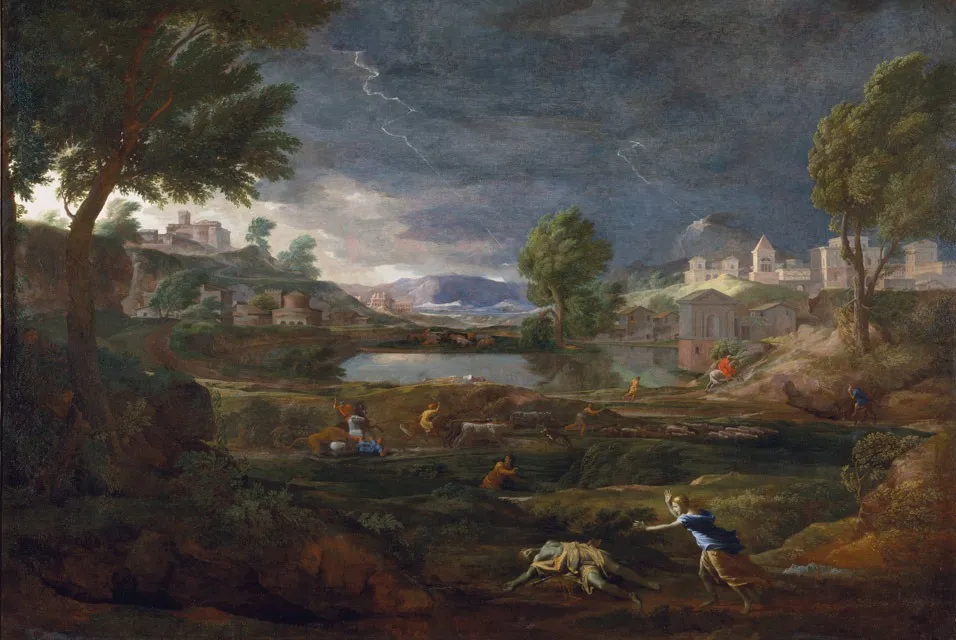
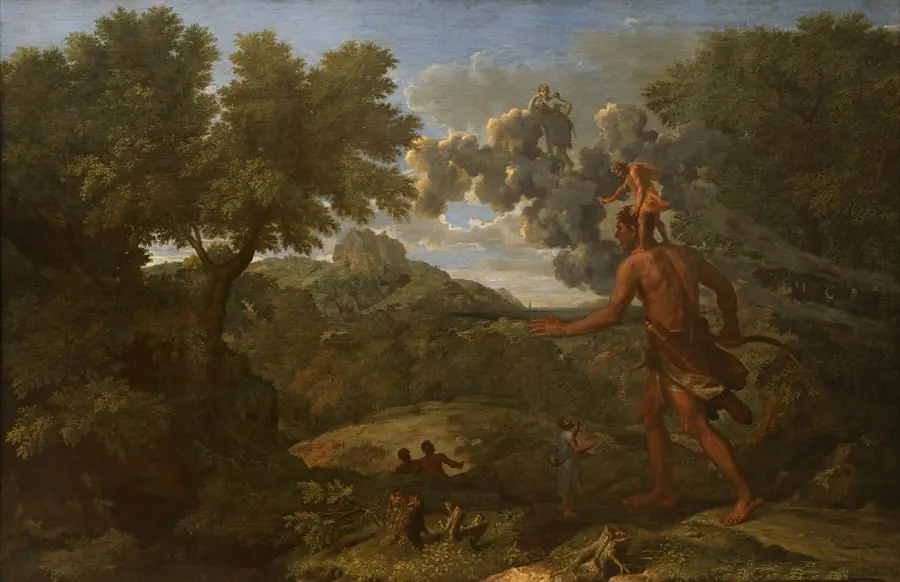
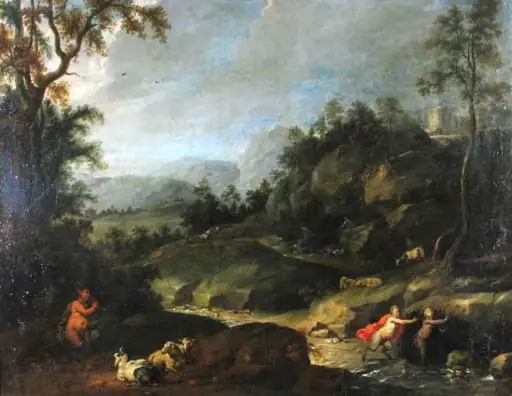
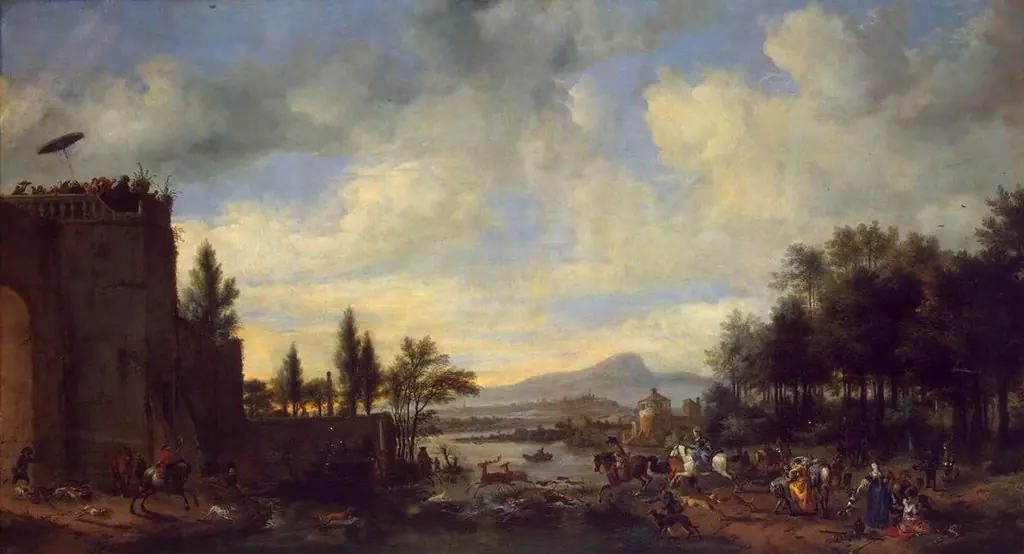
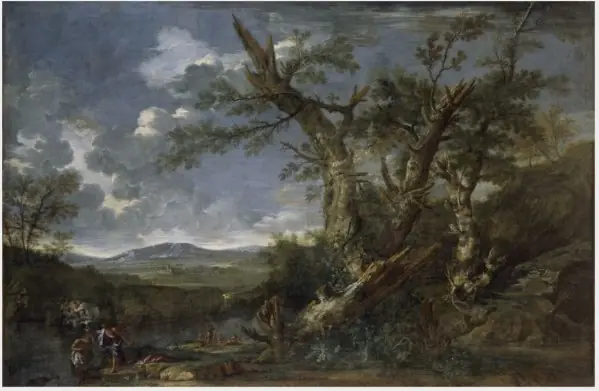
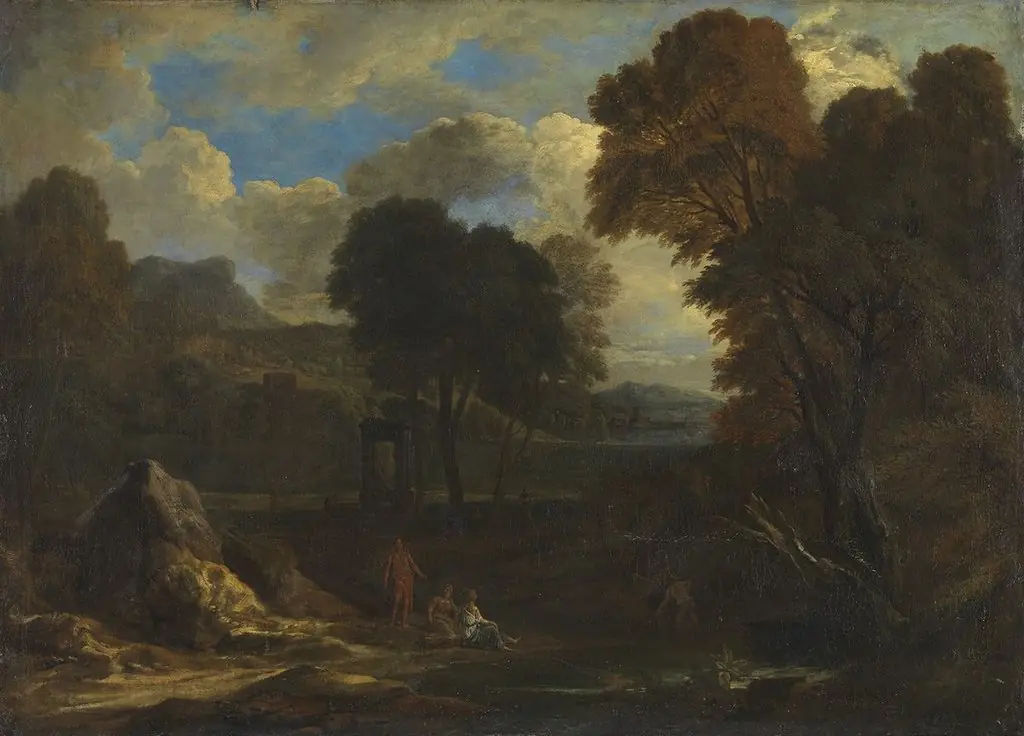
Landscape during a Thunderstorm with Pyramus and Thisbe is an oil painting by the Dutch Golden Age artist Nicolas Poussin. It dates from 1651 and is held in the collection of the Städel Museum.
About this work
Overview
The scene unfolds under a violent storm, with dark clouds, flashes of lightning, and a still body of water reflecting the chaos above.
Painted in 1651, this oil-on-canvas work by Nicolas Poussin merges a turbulent natural landscape with a mythological narrative. The scene unfolds under a violent storm, with dark clouds, flashes of lightning, and a still body of water reflecting the chaos above. A rural hamlet lies distant, dwarfed by the elemental forces dominating the composition. The painting resides in the Städel Museum, Frankfurt, as part of its permanent collection.
Subject & Meaning
The figures in the foreground reference the tragic tale of Pyramus and Thisbe from Ovid’s Metamorphoses. The woman lies lifeless, while the man flees in anguish after mistakenly believing her dead. Their small scale against the overwhelming landscape underscores human vulnerability before nature and fate. The storm intensifies the emotional weight, transforming the setting into a moral and emotional landscape as much as a physical one.
Technique & Style
Poussin employs controlled brushwork to balance dramatic tension with classical order. The storm’s diagonal lightning cuts through structured horizontals of land and water, creating rhythmic contrast. Figures are rendered with restrained gesture, avoiding theatricality. Color is muted—deep greens, ashen grays, and flashes of pale light—enhancing the somber mood. Composition follows geometric principles, anchoring chaos within a rational framework.
History & Provenance
Commissioned during Poussin’s mature period in Rome, the painting entered the collection of Johann Friedrich von der Leyen in the late 17th century. It passed through several European private collections before being acquired by the Städel Museum in the 19th century. Its attribution has remained consistent, with no significant disputes over authorship or date since its early documentation.
Context
Created during Poussin’s later years, this work reflects his deep engagement with classical literature and the philosophical underpinnings of landscape painting. While contemporaries favored emotional exuberance, Poussin sought harmony between narrative and nature, aligning with humanist ideals of the time. The painting responds to broader 17th-century interests in moral allegory and the sublime power of the natural world.
Legacy
The painting exemplifies Poussin’s influence on the development of academic landscape painting, emphasizing intellectual structure over sensory spectacle. Later artists, including 19th-century Romantics, revisited his fusion of myth and nature, though often with greater emotional intensity. Its enduring presence in the Städel Museum underscores its role as a touchstone in the history of European narrative painting.
Artist & collection
Artist
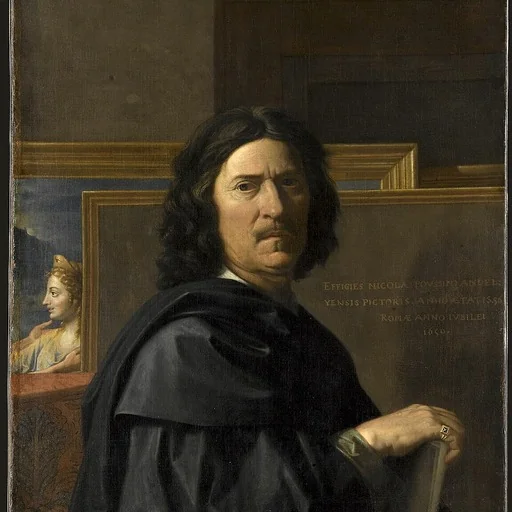
Nicolas Poussin (UK: , US: , French: ; June 1594 – 19 November 1665) was a leading painter of the classical French Baroque style, although he spent most of his working life in Rome.