Artwork
The Mystic Marriage of Saint Catherine
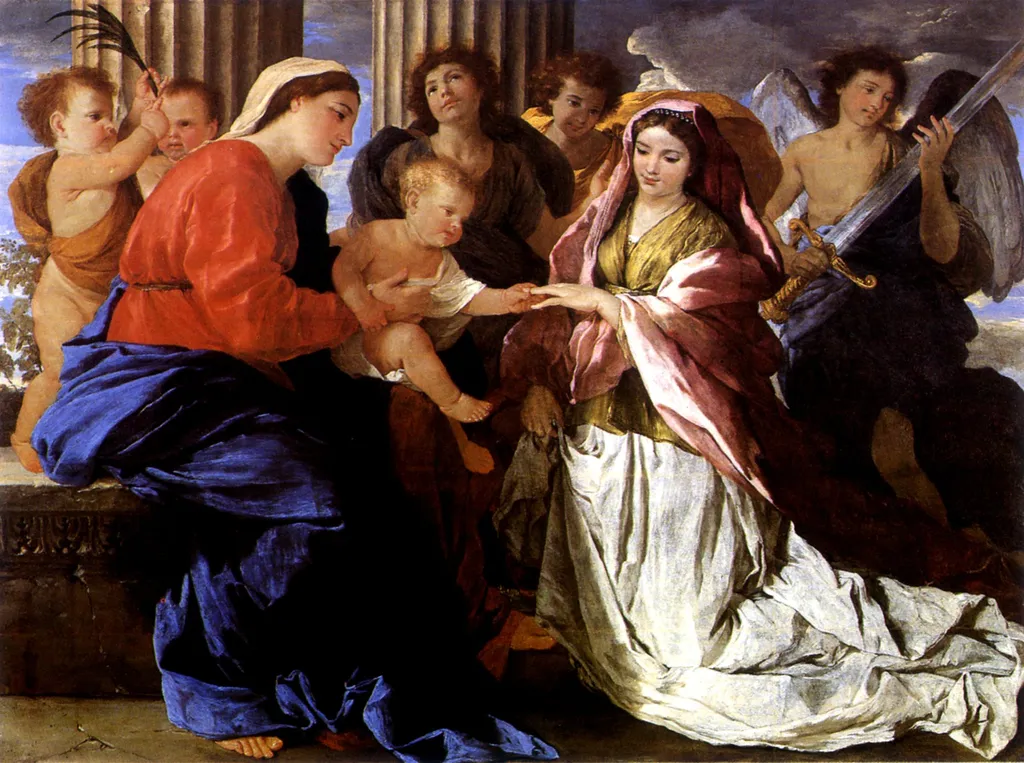
The Mystic Marriage of Saint Catherine is a paint painting by the Early Baroque Italian artist Nicolas Poussin. It dates from 1628 and is held in the collection of the National Galleries Scotland.
About this work
Overview
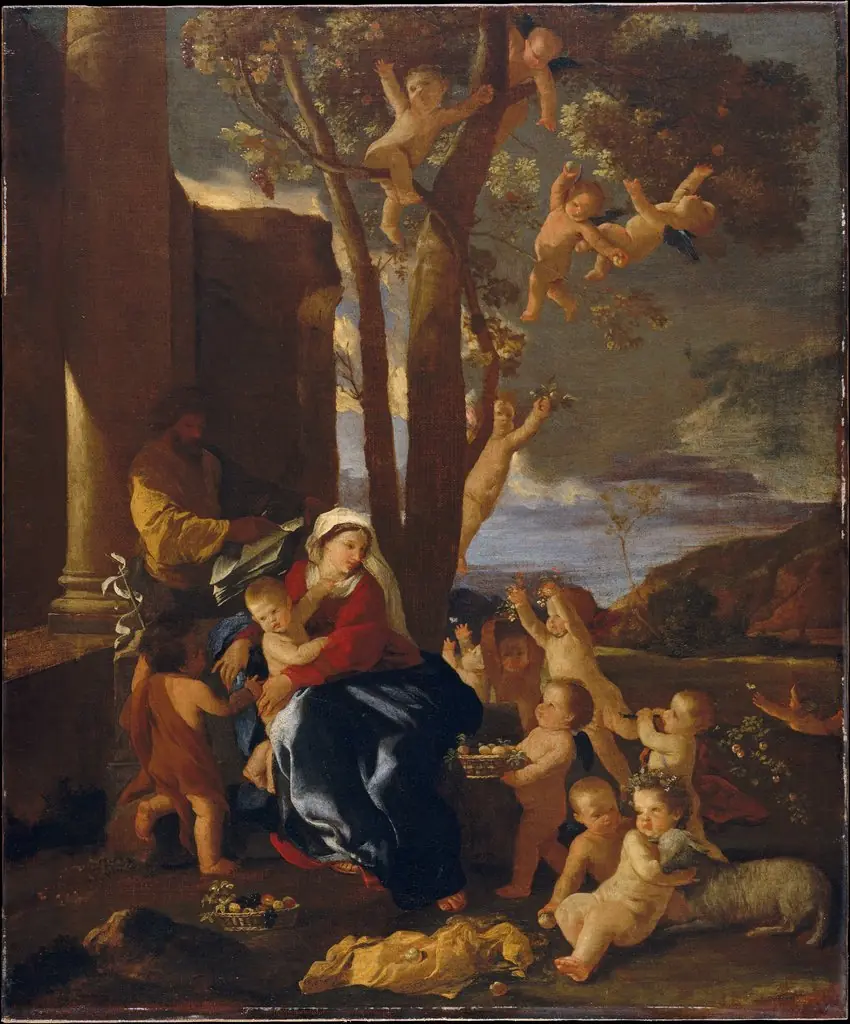
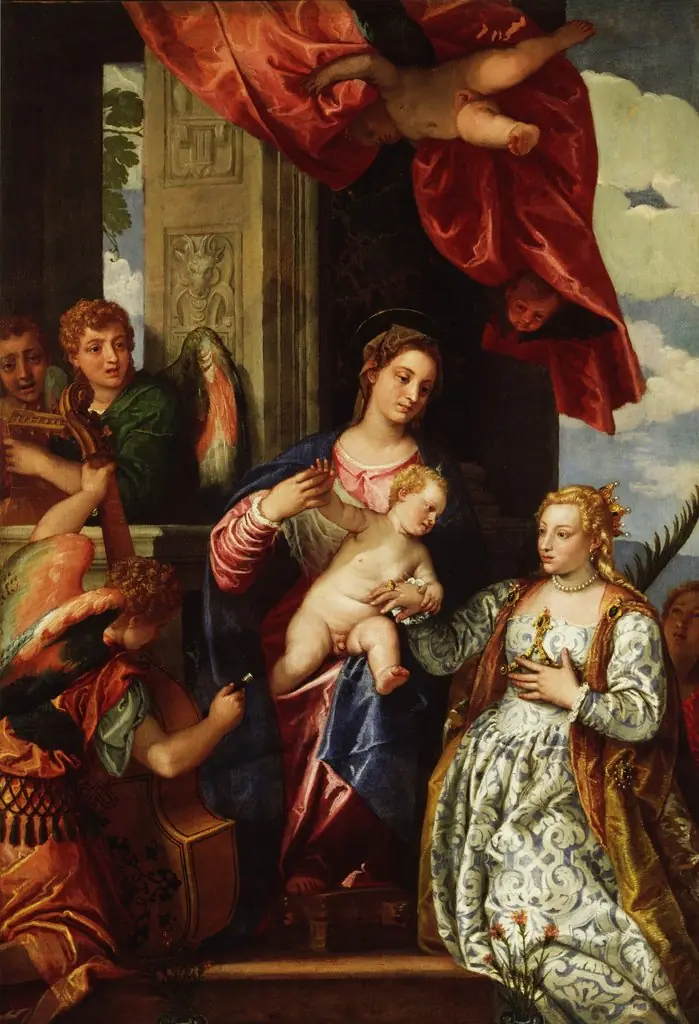
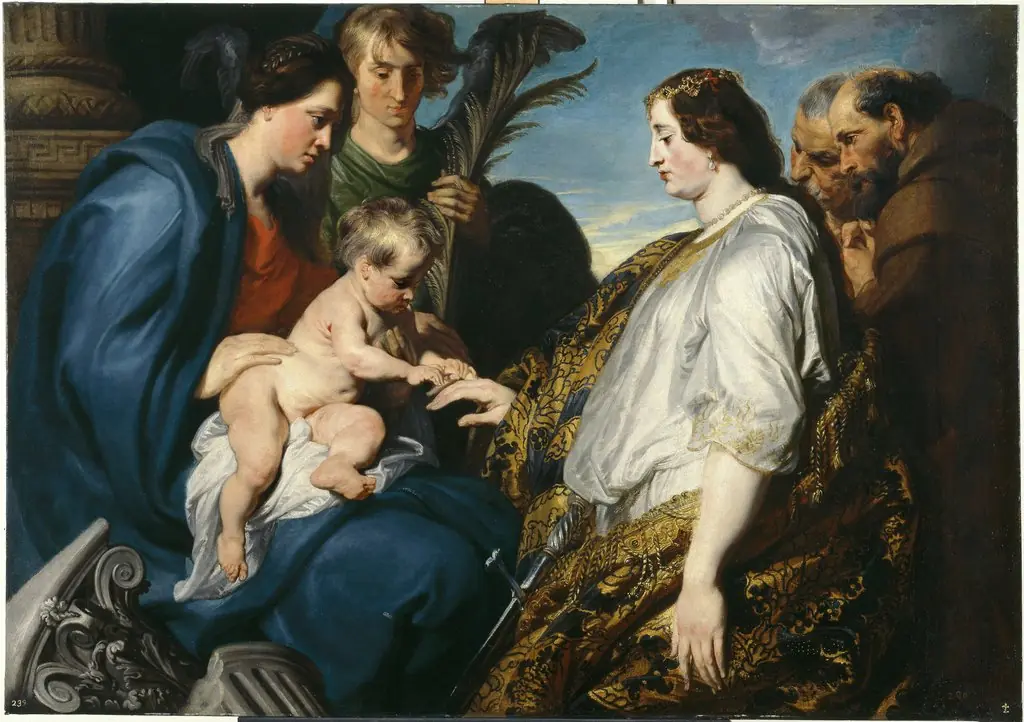
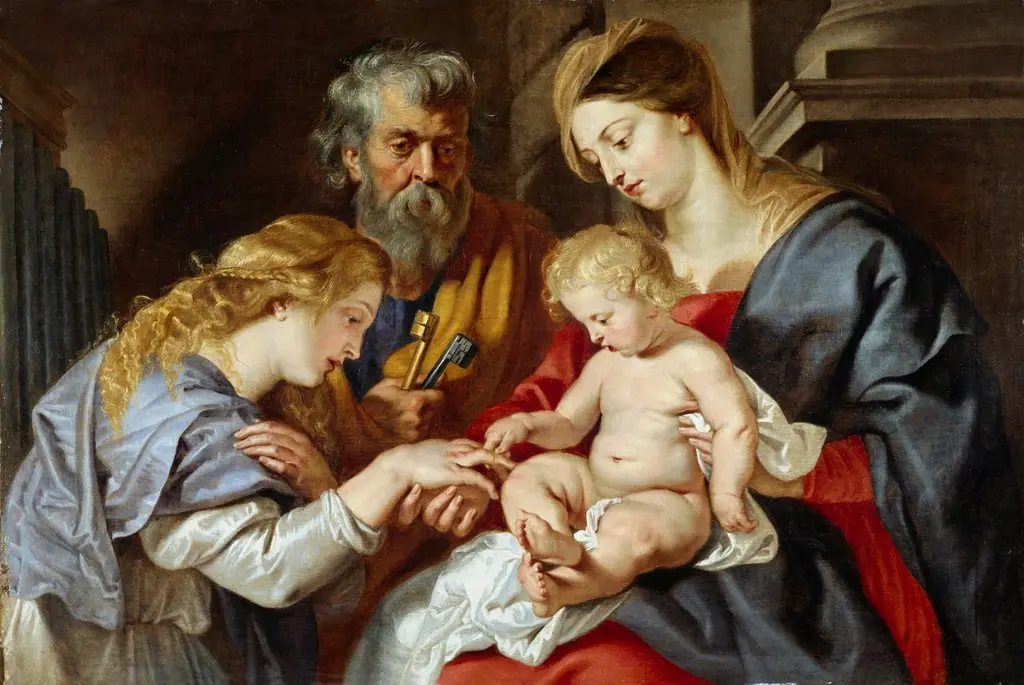
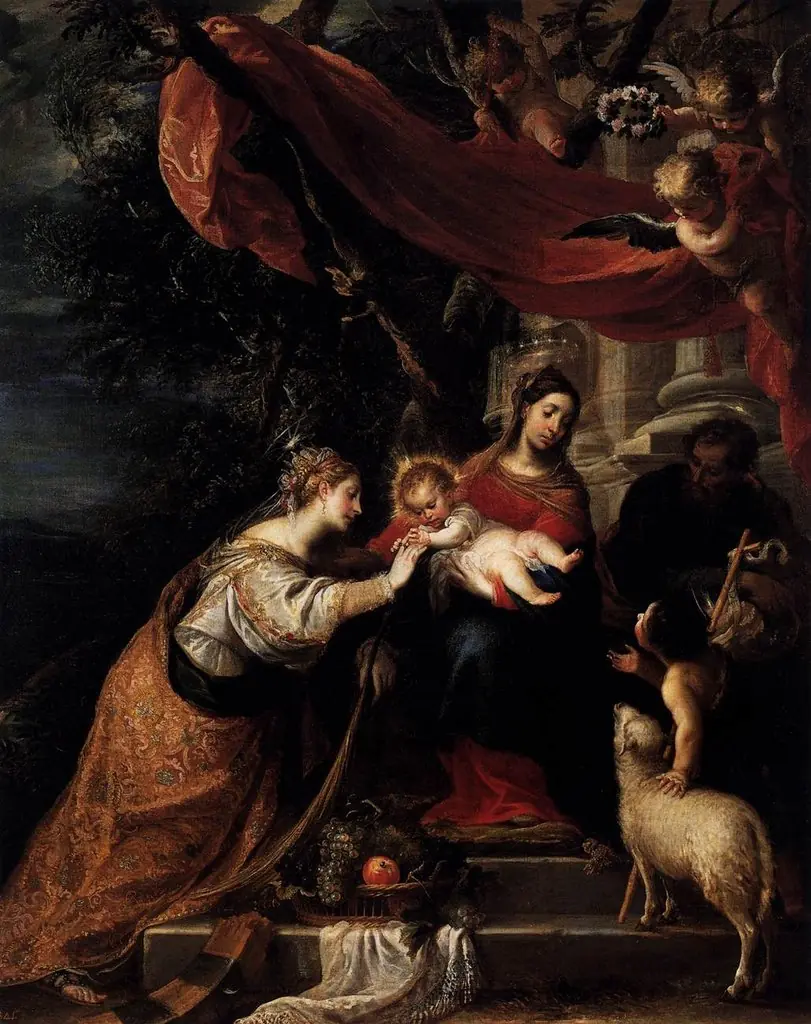
Nicolas Poussin’s oil painting, executed on a wooden panel around 1628–1629, portrays the mystical marriage of Saint Catherine. The work is part of the collection of the Scottish National Gallery in Edinburgh and presents a small, interior scene illuminated by a dramatic contrast of light and shadow.
Subject & Meaning
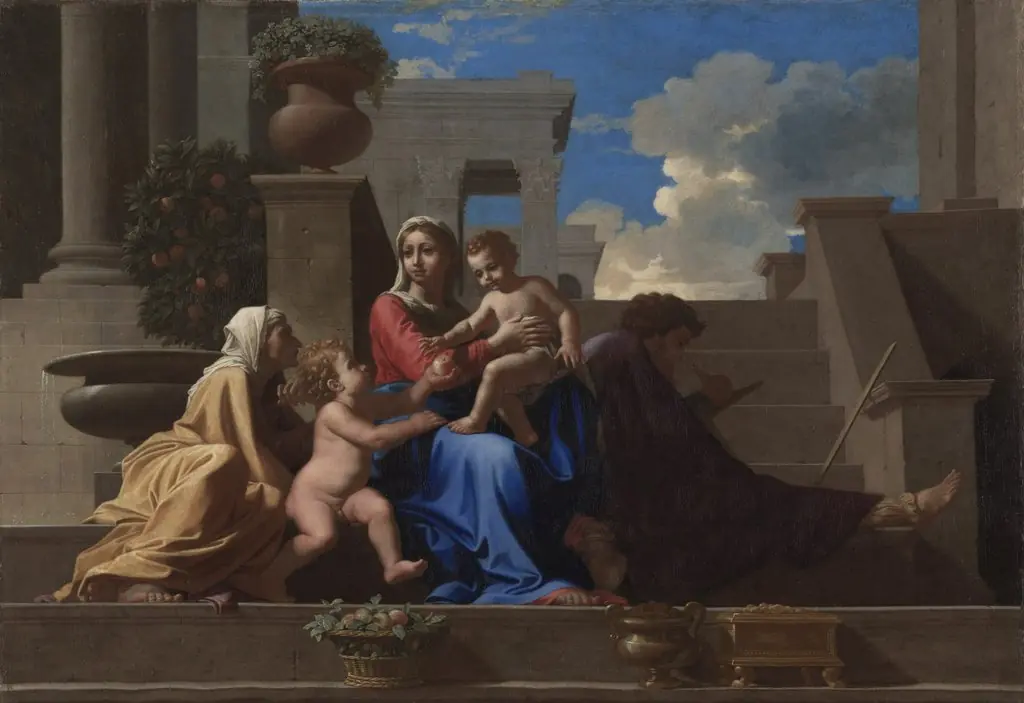
The composition centers on a seated woman in a red robe, holding an infant, while a kneeling figure in white reaches toward her, symbolising Saint Catherine’s spiritual union with the Christ Child. Angelic figures flank the group, reinforcing the sacred nature of the moment and underscoring the theme of divine marriage prevalent in Counter‑Reformation iconography.
Technique & Style
Poussin employs a restrained palette of reds, whites, and muted earth tones, rendered with precise brushwork that defines the textures of fabric and marble columns. The chiaroscuro effect deepens the spatial recession, carving the faces and drapery with stark shadows that heighten the scene’s contemplative atmosphere.
History & Provenance
Created in the late 1620s, the painting entered the Scottish National Gallery’s holdings in the 20th century, though earlier ownership records are sparse. Its attribution to Poussin has been affirmed through stylistic analysis and documented references to the artist’s late Roman period.
Context
The mystical marriage of Saint Catherine was a popular devotional subject in early modern Europe, reflecting the saint’s vow of virginity and her symbolic betrothal to Christ. Poussin’s treatment aligns with his classical approach, integrating architectural elements and a measured arrangement of figures to convey theological ideas through visual order.
Artist & collection
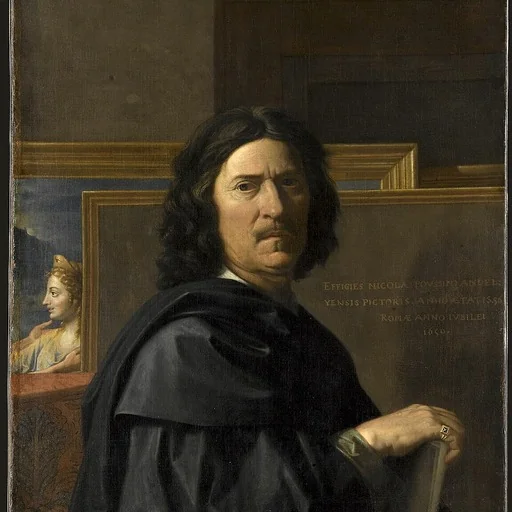
Artist
Nicolas Poussin (UK: , US: , French: ; June 1594 – 19 November 1665) was a leading painter of the classical French Baroque style, although he spent most of his working life in Rome.