Artwork
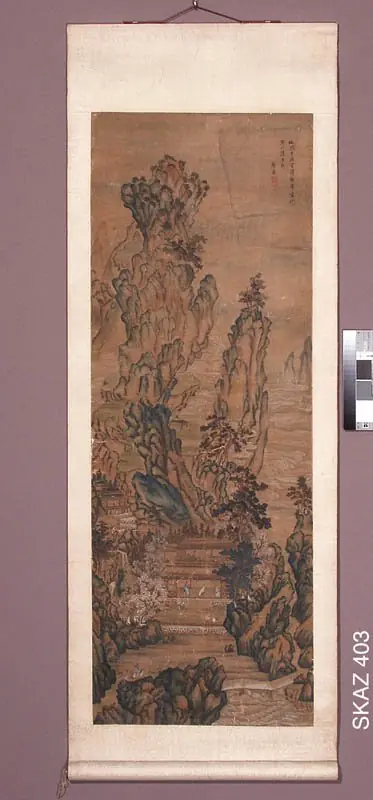
Pałac nad brzegiem jeziora - pejzaż
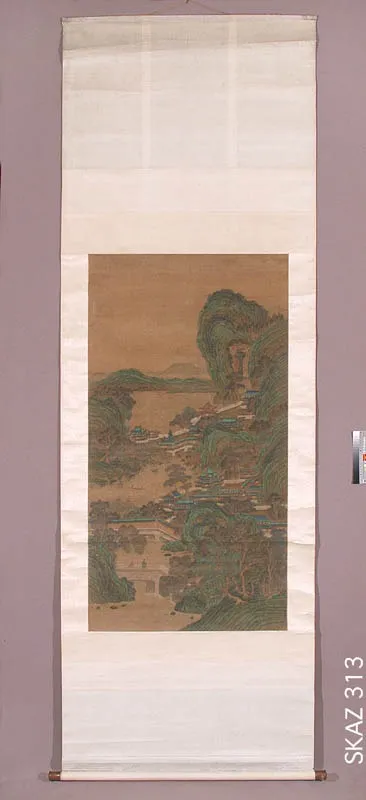
Pałac nad brzegiem jeziora - pejzaż is an unspecified painting by the Ming dynasty painting artist Qiu Ying. It dates from 1533 and is held in the collection of the National Museum in Warsaw.
About this work
Overview
This mid-16th-century ink-and-color painting on silk is attributed to Qiu Ying, a leading figure of the Ming dynasty’s Wu School. Measuring approximately 150 by 80 centimeters, it presents a lakeside estate framed by softly contoured hills and stands today in the collection of Poland’s National Museum in Warsaw.
Subject & Meaning
The composition centers on an imposing palace nestled between water and wooded slopes. A meandering footpath draws the viewer inward, while meticulously rendered architectural details—tiled roofs, lattice windows—evoke an idealized retreat. The tranquil setting suggests themes of scholarly withdrawal and the Confucian ideal of harmony between human endeavor and nature.
Technique & Style
Qiu Ying employs a restrained palette of ink washes and delicate mineral pigments, layering translucent glazes to achieve atmospheric depth. Brushwork remains precise yet fluid, from the feathery texture of distant foliage to the crisp delineation of palace eaves. The overall effect balances meticulous realism with lyrical abstraction, a hallmark of literati landscape conventions.
History & Provenance
Executed around 1533, the painting entered European collections by the late 19th century, likely through imperial or mercantile channels linking Qing China and partitioned Poland. It was acquired by the National Museum in Warsaw in 1920, where it has since undergone conservation to stabilize silk deterioration and pigment oxidation.
Context
During the Ming period, such landscapes functioned as both aesthetic objects and social currency among scholar-officials. Qiu Ying’s patrons—wealthy merchants and literati—commissioned works that merged professional precision with amateur ideals. This painting reflects the era’s fascination with private villas as sites of cultivation, leisure, and moral reflection.
Artist & collection


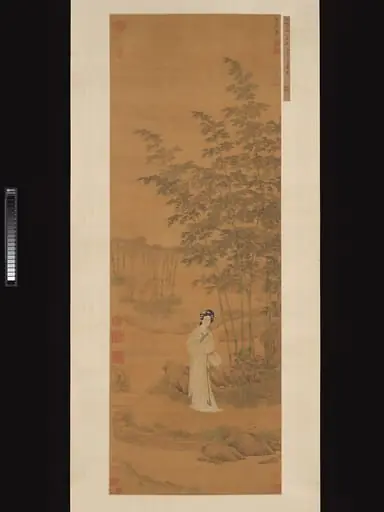 明 傳仇英 文玉圖 軸圖 軸|Lady in a Bamboo Grove
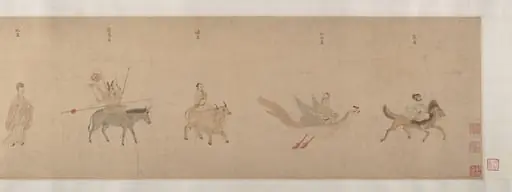 明 傳仇英 五星二十八宿神形圖 卷|Divinities of the Planets and Constellations
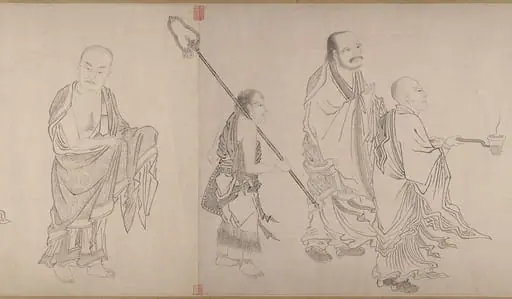 明 傳仇英 十六羅漢圖 卷|The Sixteen Luohans
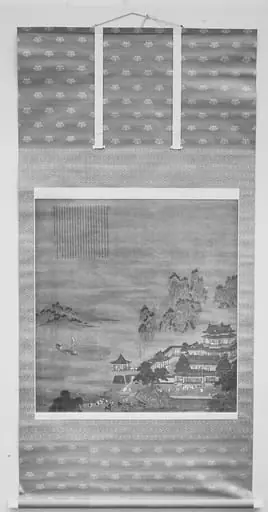 明 佚名 傳仇英 唐宫圖 軸|A Tang Palace
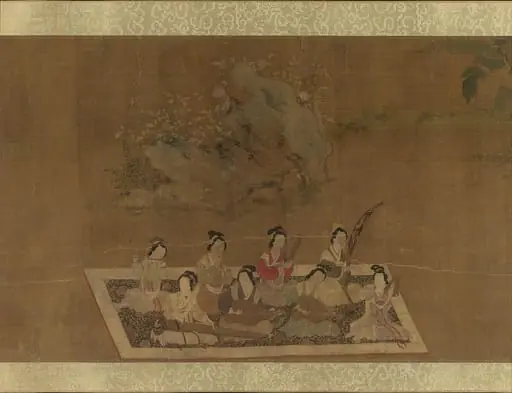 明 佚名 蘇蕙璇璣圖 卷|Lady Su Hui and Her Verse Puzzle
 Zhao Mengfu Writing the Heart (Hridaya) Sutra in Exchange for Tea
 Garden for Solitary Enjoyment
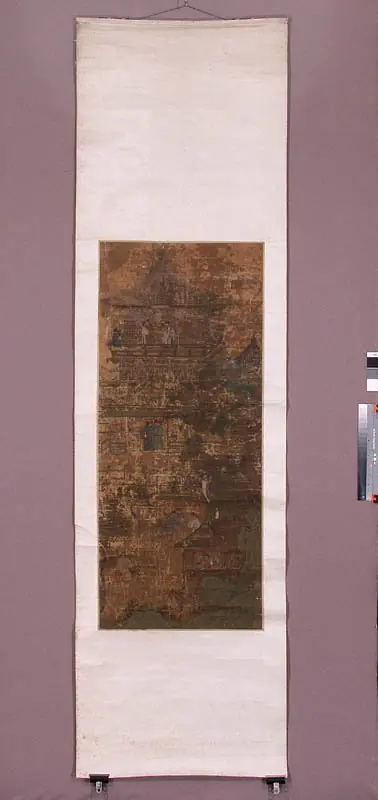 Architektura pałacowa z parkiem i postaciami uczonych
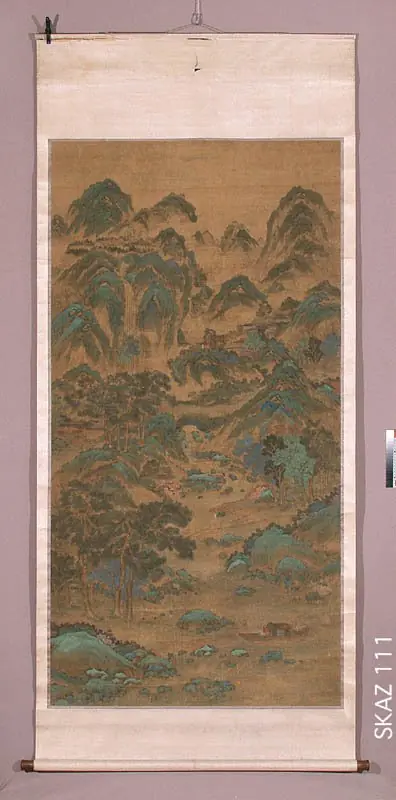 Przeprawa przez górski potok - pejzaż w stylu niebiesko-zielonym
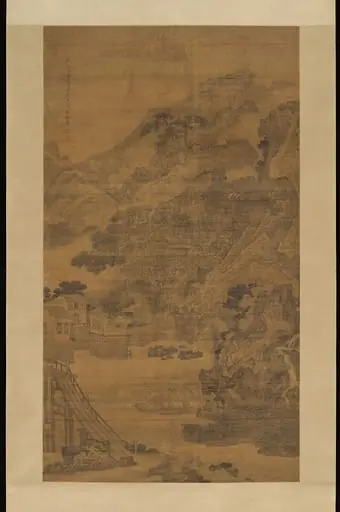 Untitled
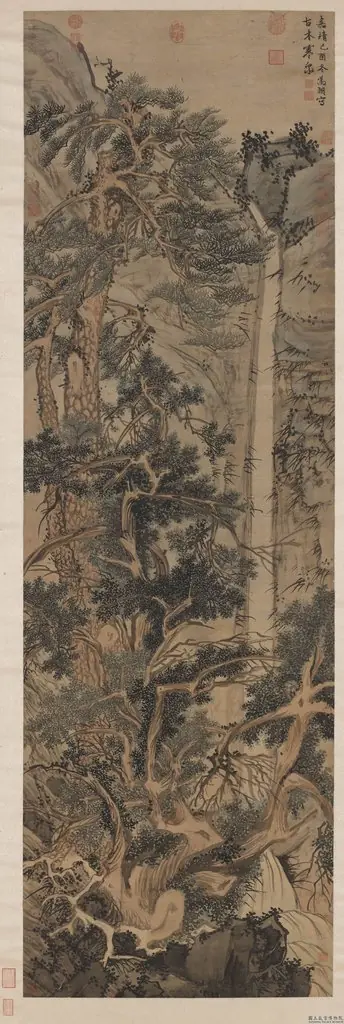 Old Trees by a Cold Waterfall
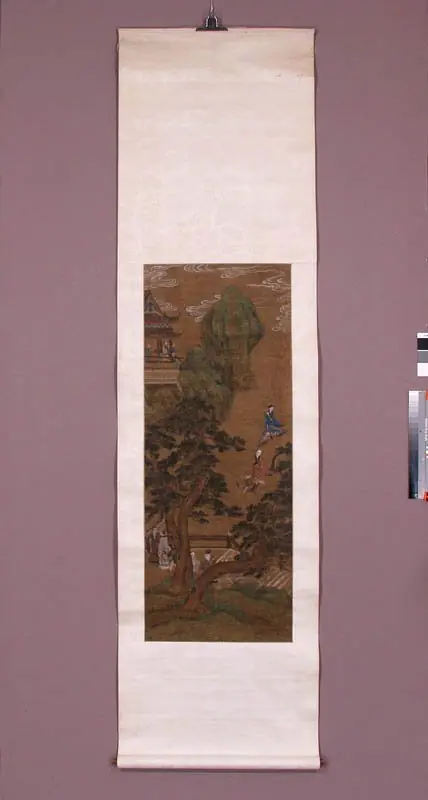 Spotkanie Ośmiu Nieśmiertelnych
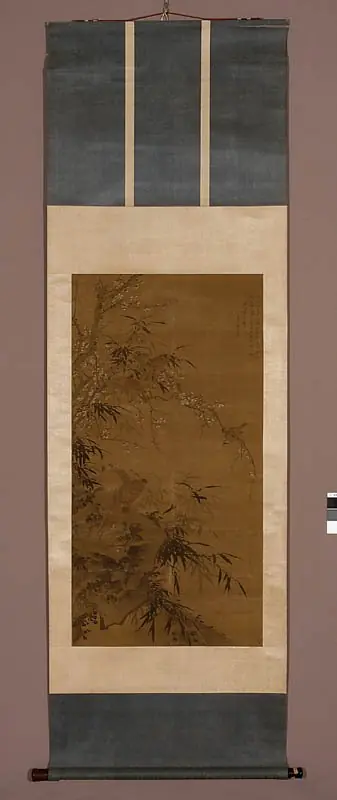 Ptaki na gałęzi śliwy
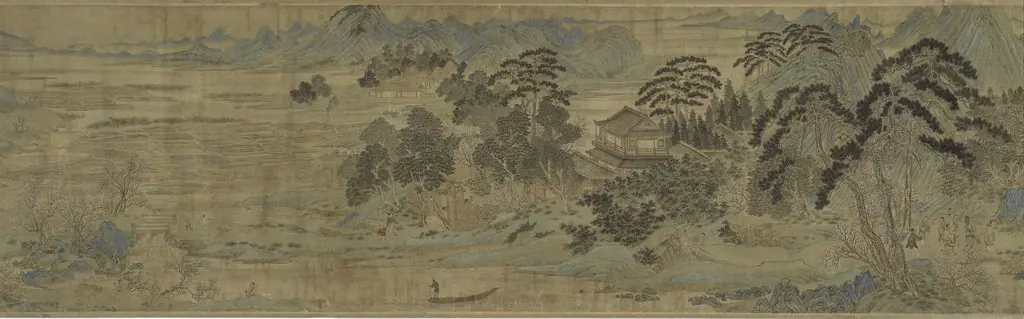 The Peach Blossom Spring
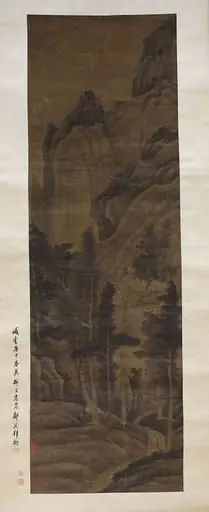 明/清 佚名 董源(僞款) 高樹叠嶂圖 軸|Mountain Landscape
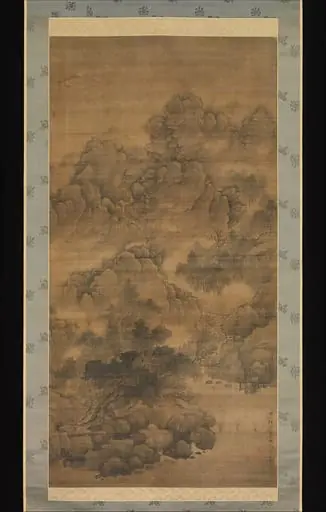 清 法若真 雲山圖軸|Cloudy Mountains
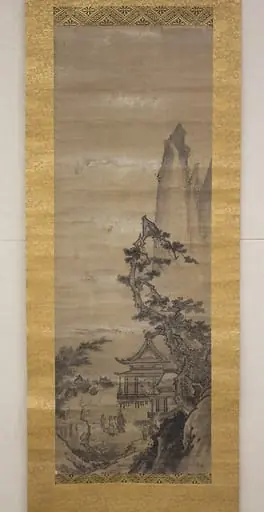 Untitled
 "Rozmawiający mężowie, tańczące żurawie" - pejzaż górski