Artwork
Untitled
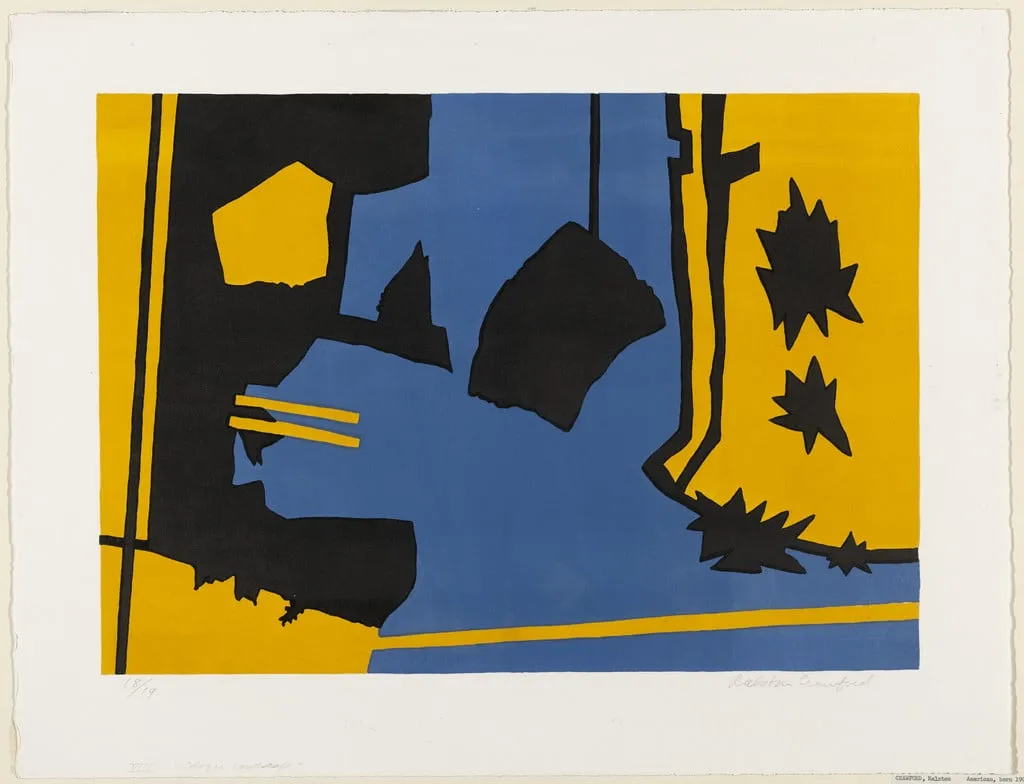
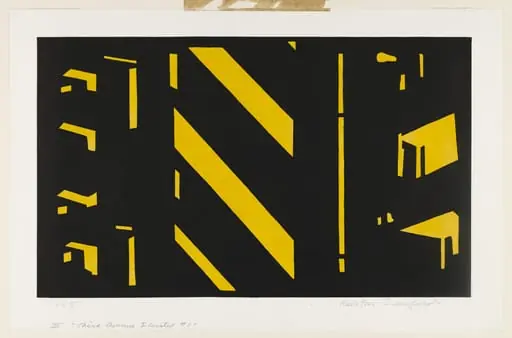
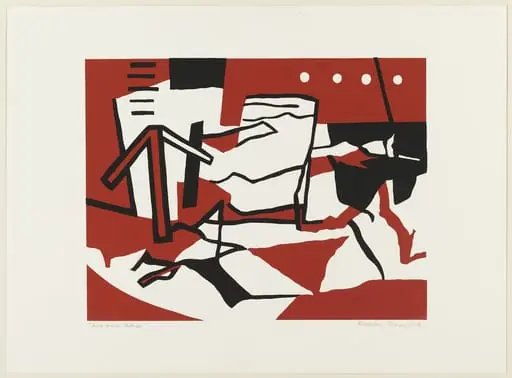
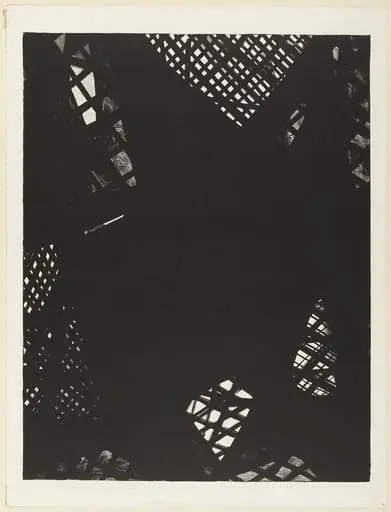
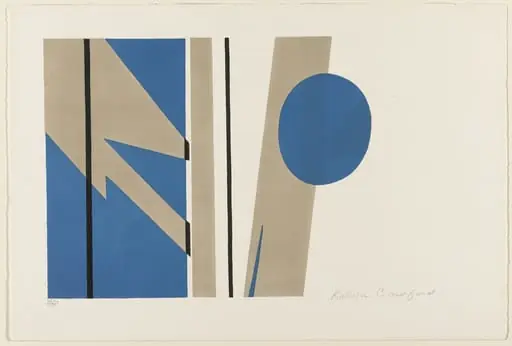
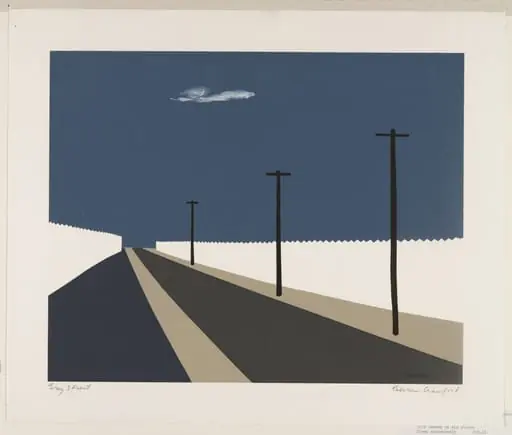
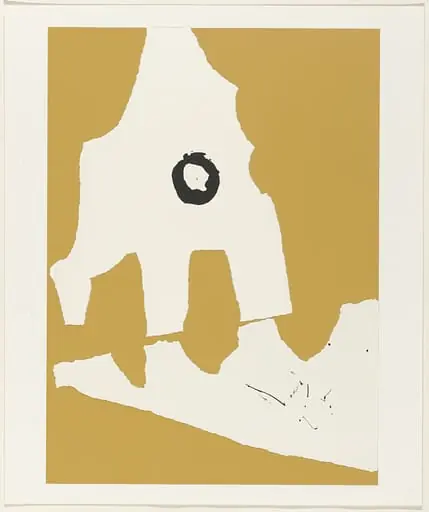
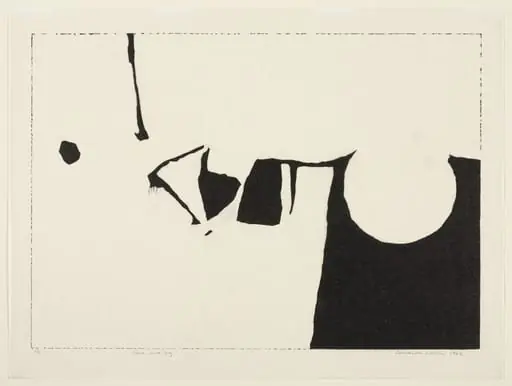
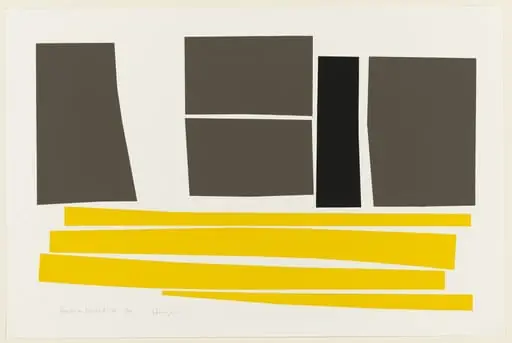
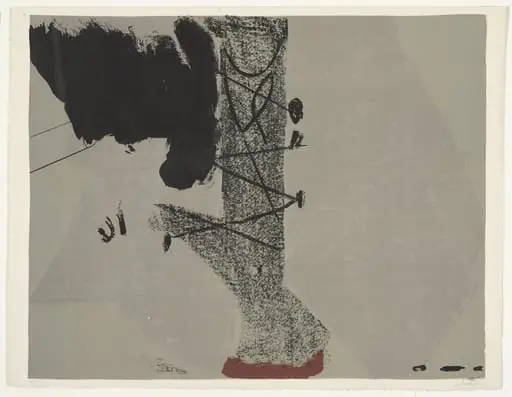
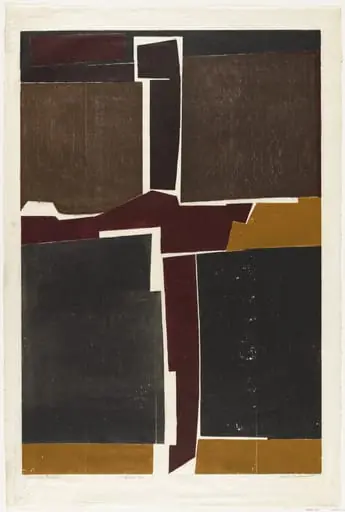
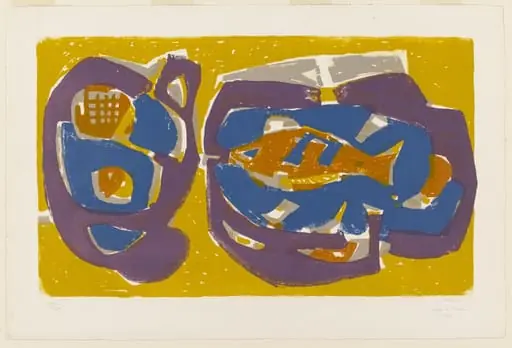
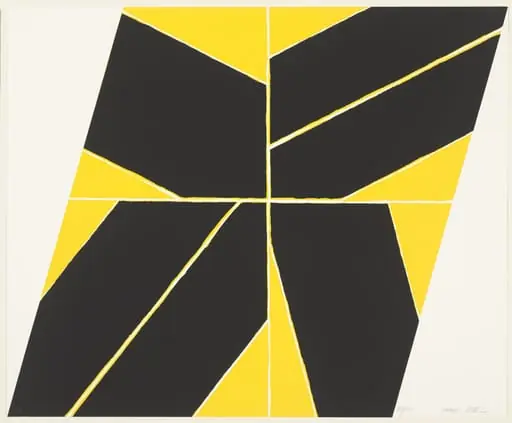
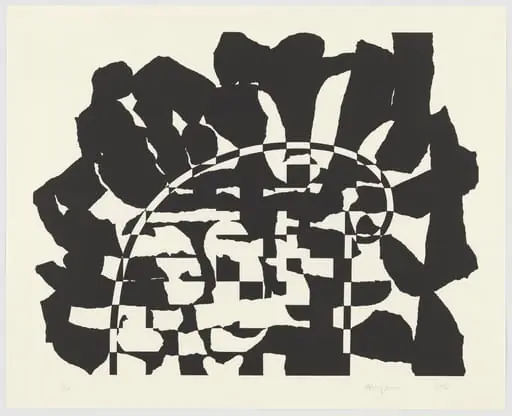
Untitled is an ink print by Ralston Crawford. It dates from 1951 and is held in the collection of the Museum of Modern Art.
About this work
Overview
The print exemplifies his interest in mechanical forms and urban structure, rendered through the precise, flat-plane capabilities of lithography.
Created in 1951, this lithograph by Ralston Crawford is part of a body of work focused on industrial aesthetics. As a Canadian-born American artist, Crawford translated the geometry of modern infrastructure into abstract compositions. The print exemplifies his interest in mechanical forms and urban structure, rendered through the precise, flat-plane capabilities of lithography. His dual role as educator and artist informed a disciplined approach to form and material.
Subject & Meaning
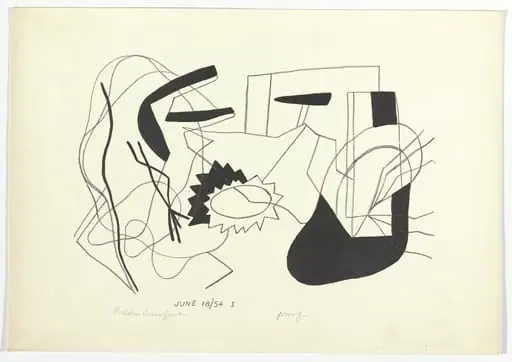
The composition avoids literal representation, instead evoking industrial elements through abstract shapes. Jagged and smooth black forms suggest machinery, structural beams, or fragmented signage. Yellow bands act as visual boundaries, possibly referencing road markings or industrial signage. The star-like bursts on the right may imply energy release or mechanical motion, reinforcing themes of industry without depicting specific objects.
Technique & Style
Lithography allowed Crawford to achieve sharp, clean edges and flat areas of color, aligning with his interest in precision. The image was drawn directly onto a stone or metal plate, then transferred to paper. The limited palette—black, blue, and yellow—enhances contrast and structural clarity. The method’s inherent flatness supports the work’s non-representational character, emphasizing form over texture or depth.
History & Provenance
This lithograph was produced during a period when Crawford was deeply engaged with industrial themes, following his earlier work in wartime documentation. It was made while he was teaching at the Cincinnati Art Academy, where he influenced generations of students. The print was likely part of a limited edition, common for lithographs of the era, and has since appeared in institutional collections focused on mid-century American printmaking.
Context
In the early 1950s, American artists were redefining abstraction beyond European models, often drawing from the nation’s industrial landscape. Crawford’s work aligned with contemporaries like Charles Sheeler and Georgia O’Keeffe, who found abstraction in machinery and infrastructure. His prints contributed to a broader movement that treated urban and industrial motifs as legitimate subjects for fine art, distinct from commercial design.
Legacy
Crawford’s lithographs, including this untitled work, helped establish printmaking as a serious medium for abstract expression in postwar America. His integration of industrial imagery into non-representational compositions influenced later artists exploring the aesthetics of technology. Though less widely known than his painterly works, these prints remain important for their clarity of vision and technical restraint.
Artist & collection
Artist
Ralston Crawford (1906–1978) was a Canadian-born American painter, lithographer, photographer, and teacher.