Artwork
Untitled
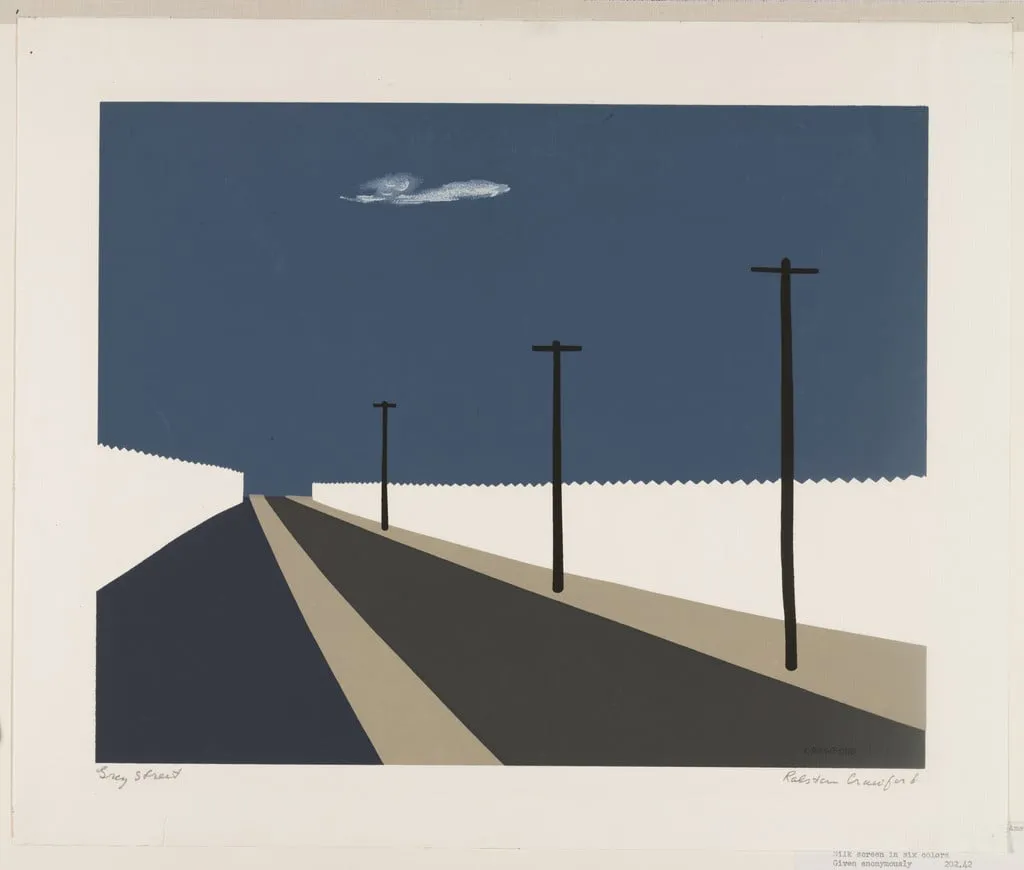
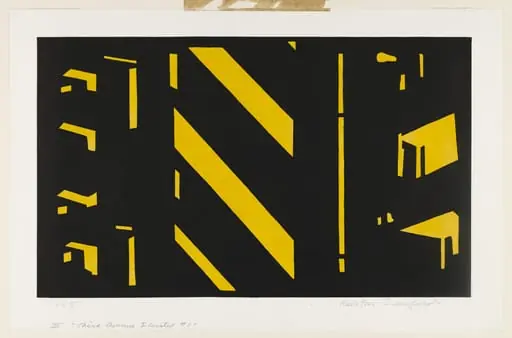
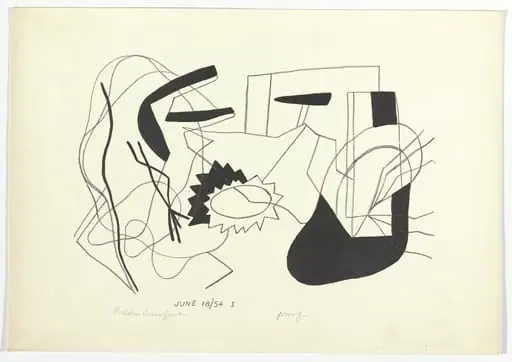
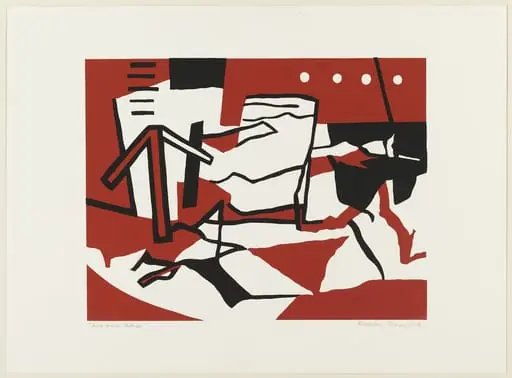
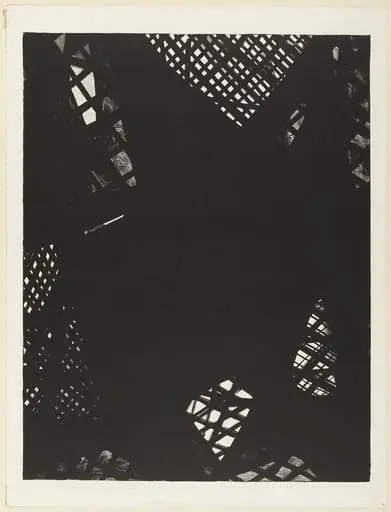
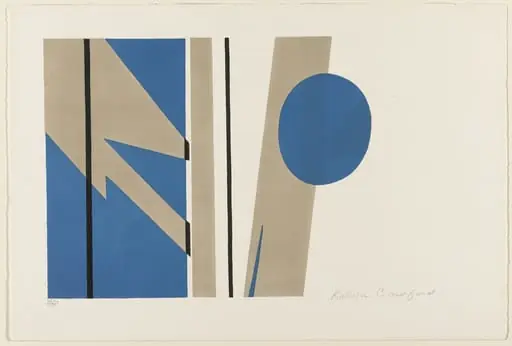
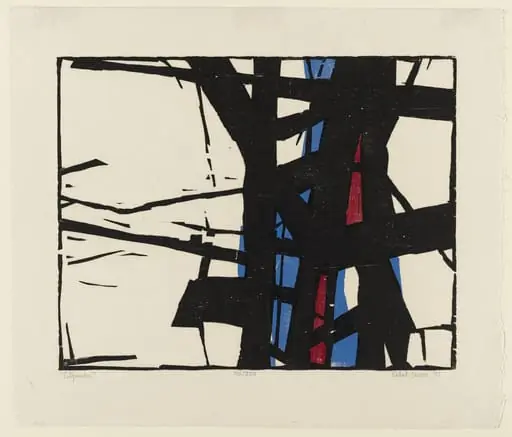
Untitled is an ink print by Ralston Crawford. It dates from 1941 and is held in the collection of the Museum of Modern Art.
About this work
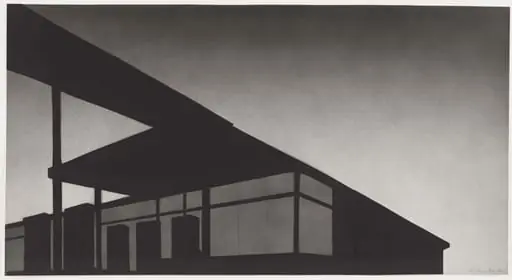
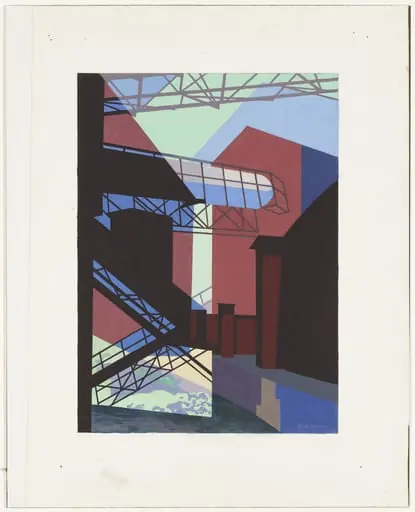
You see a black-and-white screenprint of sharp angles: a fire escape, a streetlamp, a few bare windows.
Crawford flattened the scene so the shadows look like cut paper. The print was made in 1941, when most artists were still painting. Using a screen—a tool for posters and ads—felt almost rebellious.
If you like how he turned a city block into a puzzle, look up the technique called chiaroscuro.
Overview
The work exemplifies his early commitment to abstraction through industrial forms.
Created in 1941, *Untitled* is a black-and-white screenprint by Ralston Crawford, a Canadian-born American artist known for his geometric interpretations of urban environments. Unlike the dominant painting practices of the time, Crawford employed screenprinting—a medium associated with commercial advertising—to capture the structural rhythm of city life. The work exemplifies his early commitment to abstraction through industrial forms.
Subject & Meaning
The image reduces a cityscape to essential elements: a fire escape, a streetlamp, and sparse windows. These components are arranged with precision, their sharp angles and flat planes suggesting order amid urban chaos. Crawford’s flattening of perspective transforms the scene into a visual puzzle, emphasizing structure over narrative, and inviting contemplation of modern architecture’s impersonal geometry.
Technique & Style
Crawford used screenprinting to achieve crisp, high-contrast lines and uniform tonal areas, mimicking the look of cut paper. The absence of gradation and the reliance on stark black-and-white contrasts reflect a deliberate rejection of traditional chiaroscuro. This method allowed him to isolate forms and amplify their architectural clarity, aligning his aesthetic with emerging modernist sensibilities.
History & Provenance
The print was produced in 1941, during Crawford’s formative years as an artist, before his later association with Precisionism. It entered the collection of The Museum of Modern Art, affirming its significance within the discourse of American printmaking. Its preservation reflects institutional recognition of screenprinting as a legitimate fine art medium during a period when it was largely dismissed by the fine art establishment.
Context
In the early 1940s, most American artists favored painting, particularly in expressive or realist modes. Crawford’s choice of screenprinting was unconventional, aligning him with a small group exploring industrial aesthetics through mechanical reproduction. His work responded to the rise of modern infrastructure and the visual language of advertising, recontextualizing utilitarian forms as subjects of artistic inquiry.
Legacy
Crawford’s use of screenprinting helped legitimize the medium in fine art circles. His integration of industrial subjects with minimalist composition influenced later generations of printmakers and conceptual artists. His tenure at the Cincinnati Art Academy further disseminated these ideas, embedding his approach into art education and expanding the boundaries of what printmaking could express.
Artist & collection
Artist
Ralston Crawford (1906–1978) was a Canadian-born American painter, lithographer, photographer, and teacher.