Artwork
The blind Musician
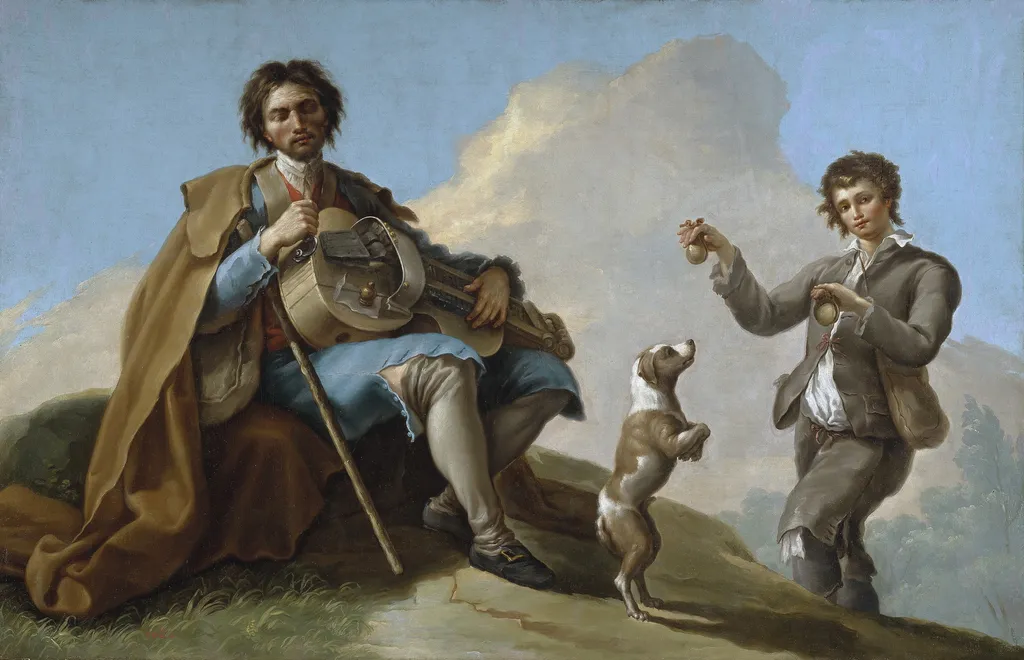
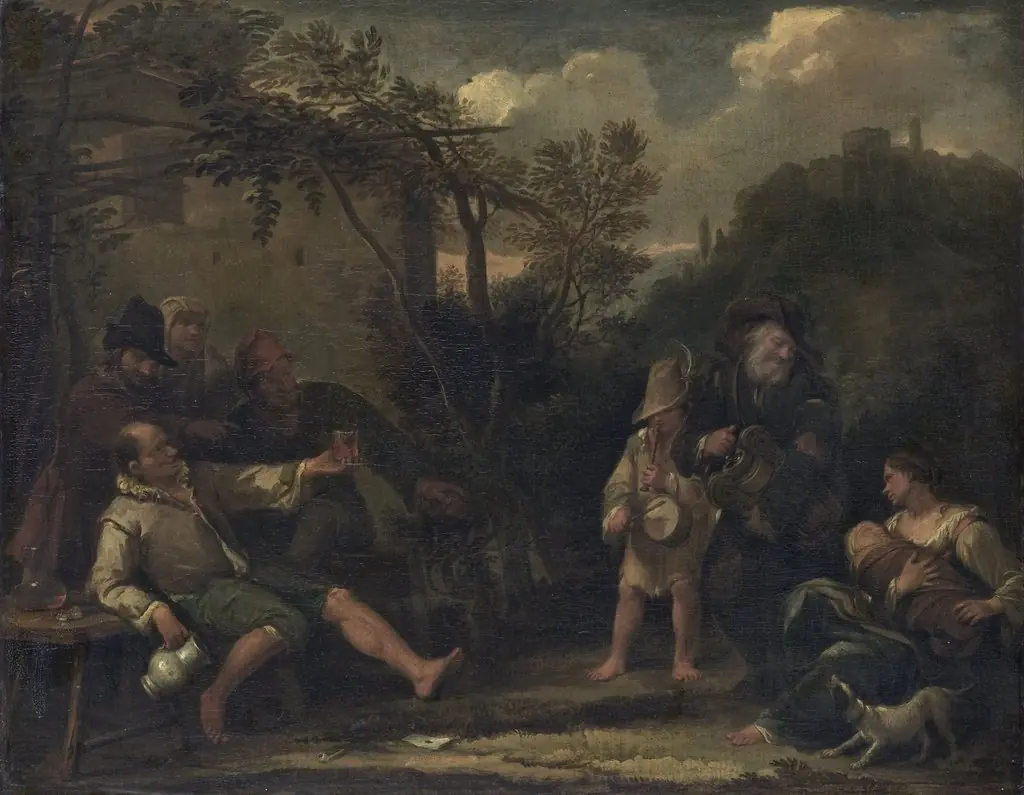
The blind Musician is an oil painting by the Rococo painting artist Ramón Bayeu. It is held in the collection of the Museo del Prado.
About this work
Overview
The Blind Musician is an oil painting created by Spanish Neoclassicist artist Ramón Bayeu in 1794. Although associated with the Rococo movement, the work's themes and style reflect Bayeu's Neoclassical inclinations.
Subject & Meaning
The painting depicts a serene hillside scene featuring a bearded man, possibly blind (implied by closed eyes), playing a harp-like instrument. Beside him, a boy in a dark coat gently holds a dog on a leash, with another dog standing nearby. The composition conveys a sense of tranquility and quiet interaction.
Technique & Style
Bayeu employed chiaroscuro, leveraging strong contrasts between light and shadow to create depth in the painting. The bright, cloud-filled sky juxtaposes the shaded figures, emphasizing the natural setting and the subjects' emotional states.
History & Provenance
The Blind Musician is part of the Museo del Prado's collection in Madrid, Spain. Created in 1794, it reflects Bayeu's versatility as an artist, known also for his designs for tapestries.
Context
While linked to the Rococo due to its pastoral theme, the painting's execution and emotional restraint align more closely with the emerging Neoclassical values of Bayeu's time, emphasizing simplicity and moral themes.
Legacy
The Blind Musician remains a notable work in Bayeu's oeuvre, illustrating his ability to craft poignant, everyday scenes. Its presence in the Prado underscores its significance within Spanish art history of the late 18th century.
Own this work as a print
Artist & collection
Artist
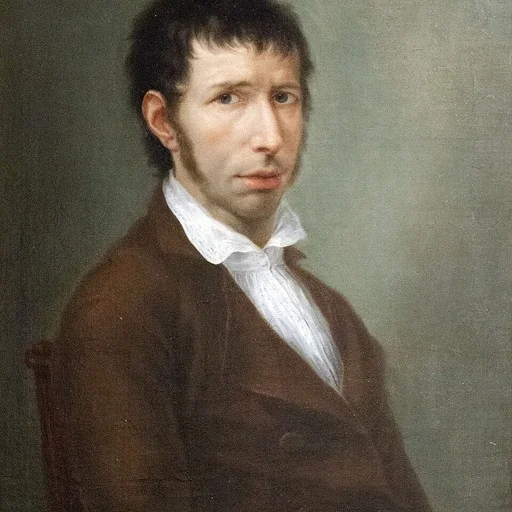
Ramón Bayeu y Subías (2 December 1744, Zaragoza – 1 March 1793, Aranjuez) was a Spanish Neoclassicist painter; known primarily for his work in tapestry design.