Artwork
The Marriage of the Virgin
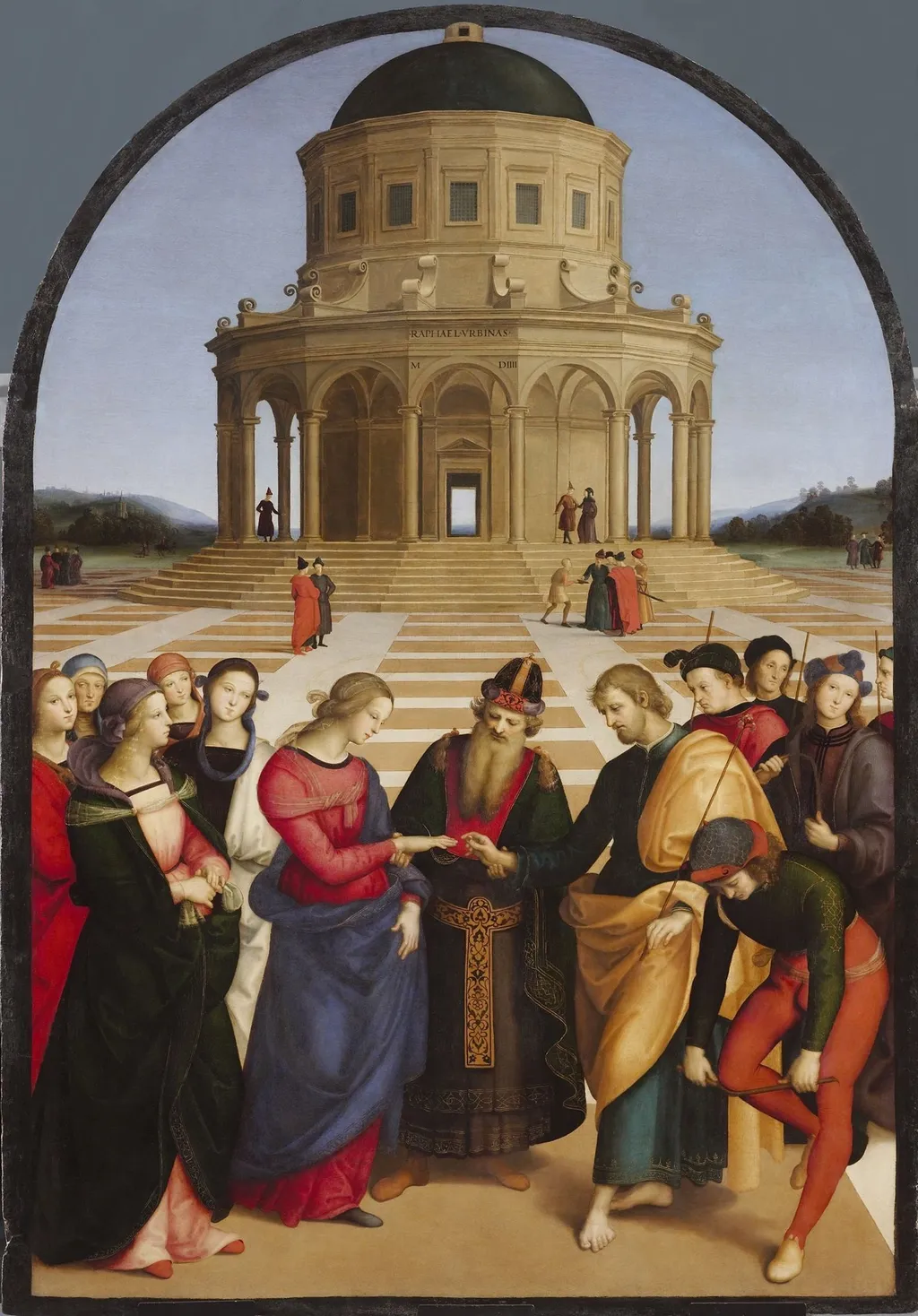
The Marriage of the Virgin is an oil painting by the High Renaissance artist Raphael. It dates from 1504 and is held in the collection of the Pinacoteca di Brera.
About this work
Overview
Raphael’s oil on panel, completed in 1504, portrays the nuptial ceremony of the Virgin Mary and Saint Joseph. Executed for the Franciscan church of San Francesco in Città di Castello, the work combines a solemn religious narrative with a balanced architectural setting, reflecting the compositional clarity characteristic of the High Renaissance.
Subject & Meaning
The central figures—Mary in a blue robe and Joseph in dark attire—stand hand‑in‑hand, surrounded by witnesses who observe the rite. Their poised stance and the orderly crowd emphasize the sanctity of the marriage, underscoring the theological view of Mary’s perpetual virginity and Joseph’s role as her protector.
Technique & Style
Raphael employs a restrained palette of blues, earth tones, and muted reds, rendering the marble columns and tiled courtyard with precise linear perspective. The smooth modeling of flesh and the delicate handling of light create a sense of spatial depth, while the figures’ calm expressions convey the compositional harmony typical of his early mature period.
History & Provenance
Originally installed in the Franciscan church, the painting changed ownership several times during the 17th and 18th centuries. In 1806 it entered the collection of Milan’s Pinacoteca di Brera, where it remains on public display, having survived the political upheavals that reshaped many Italian artworks.
Context
Created at a time when Raphael was consolidating his reputation in central Italy, the work reflects contemporary interest in integrating classical architecture into sacred scenes. The setting—a courtyard with a domed edifice and marble arches—mirrors the Renaissance fascination with antiquity and the ideal of harmonious order in religious narrative.
Artist & collection
Artist
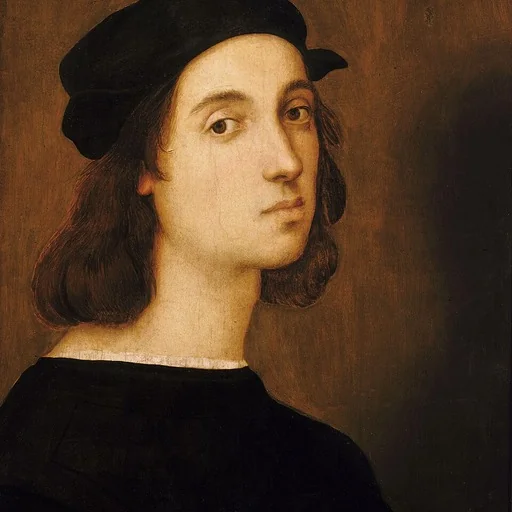
Raphael was born Raffaello Sanzio in Urbino on April 6, 1483, the son of Giovanni Santi, a painter and poet attached to the ducal court.


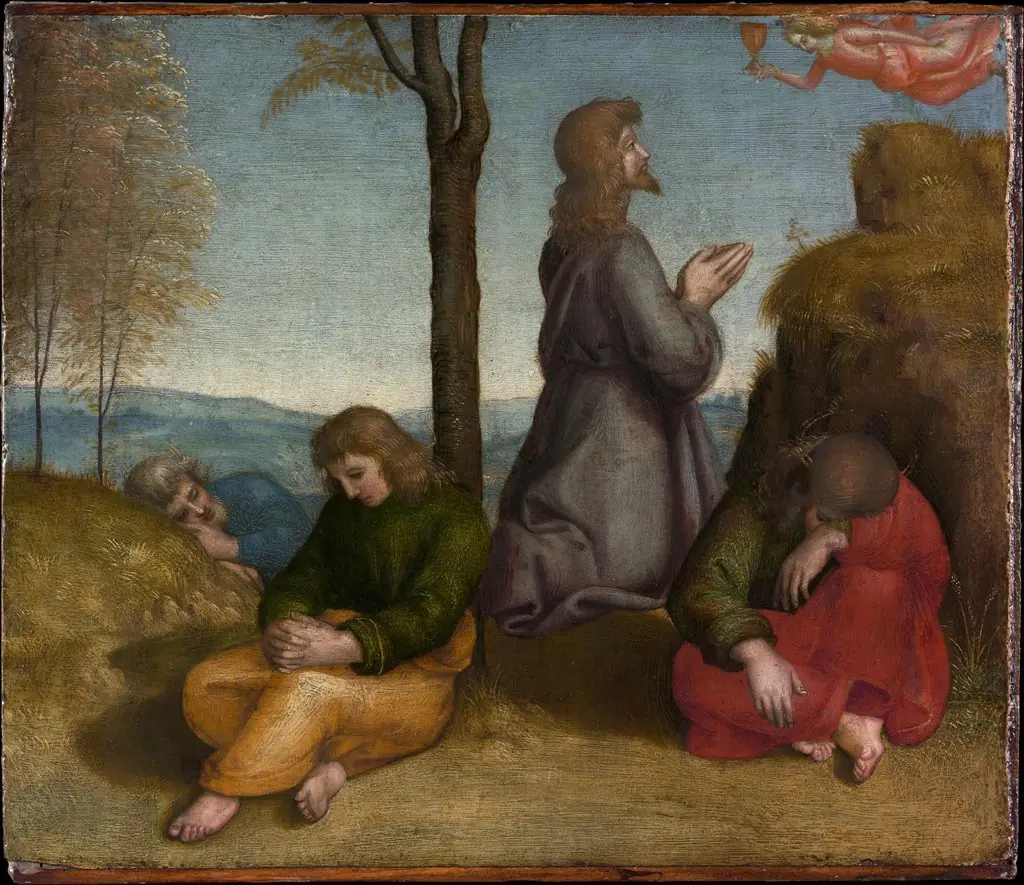
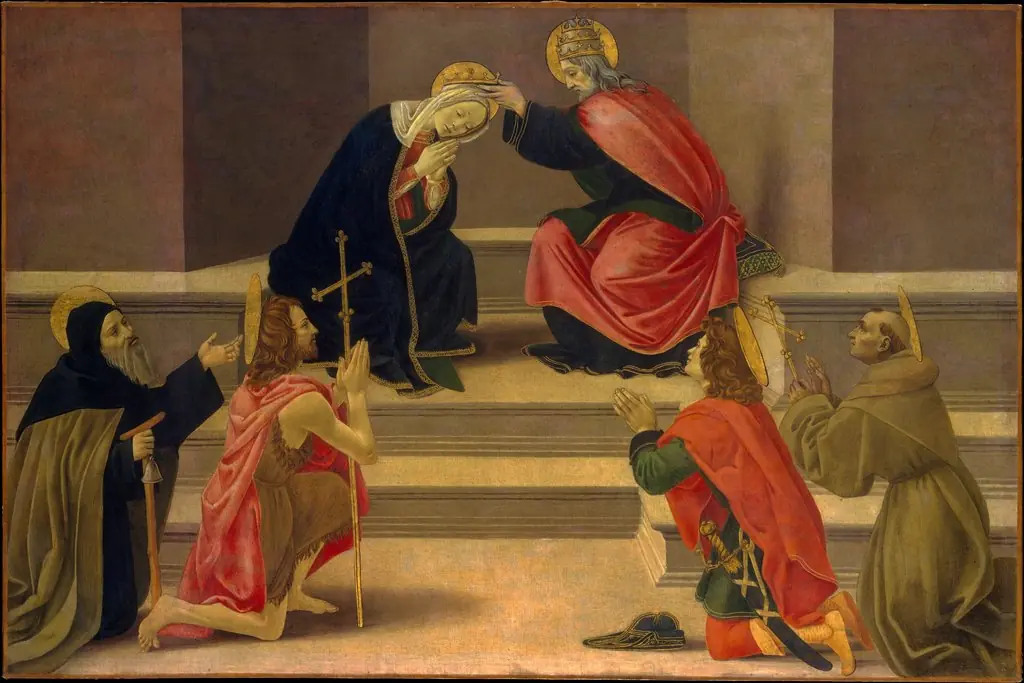 The Coronation of the Virgin
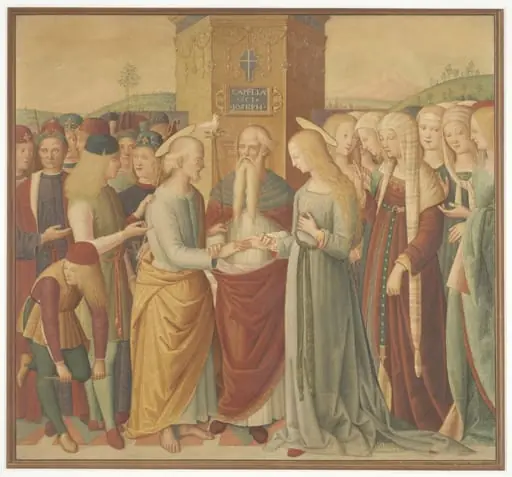 Copy after the painting Marriage of the Virgin by Perugino in S. Girolamo, Spello.
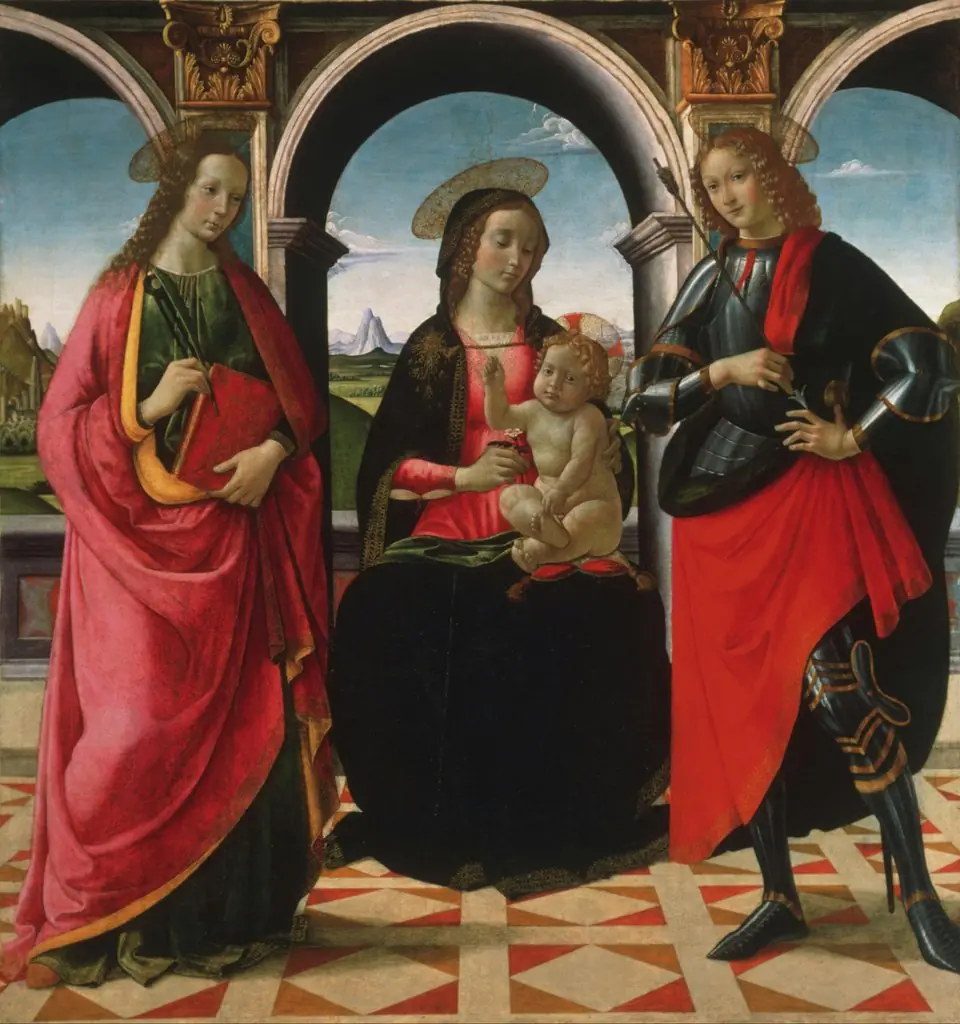 Virgin and Child, with Saints Apollonia and Sebastian
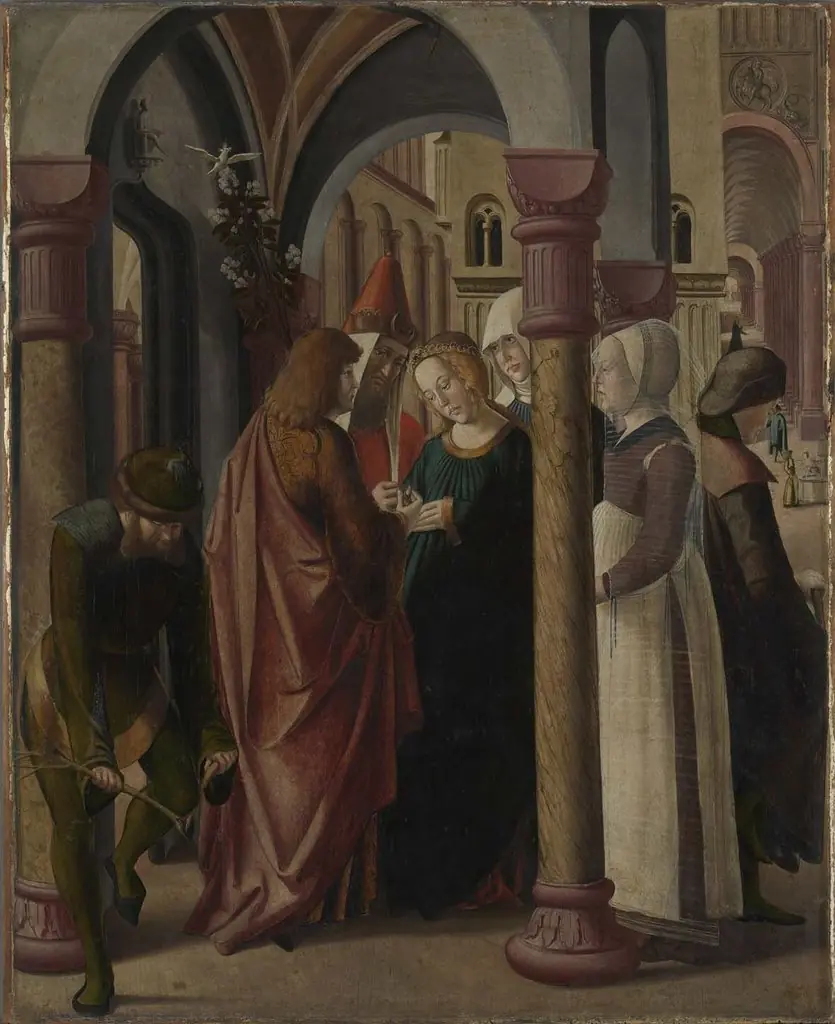 Marienaltar: Vermählung Mariae
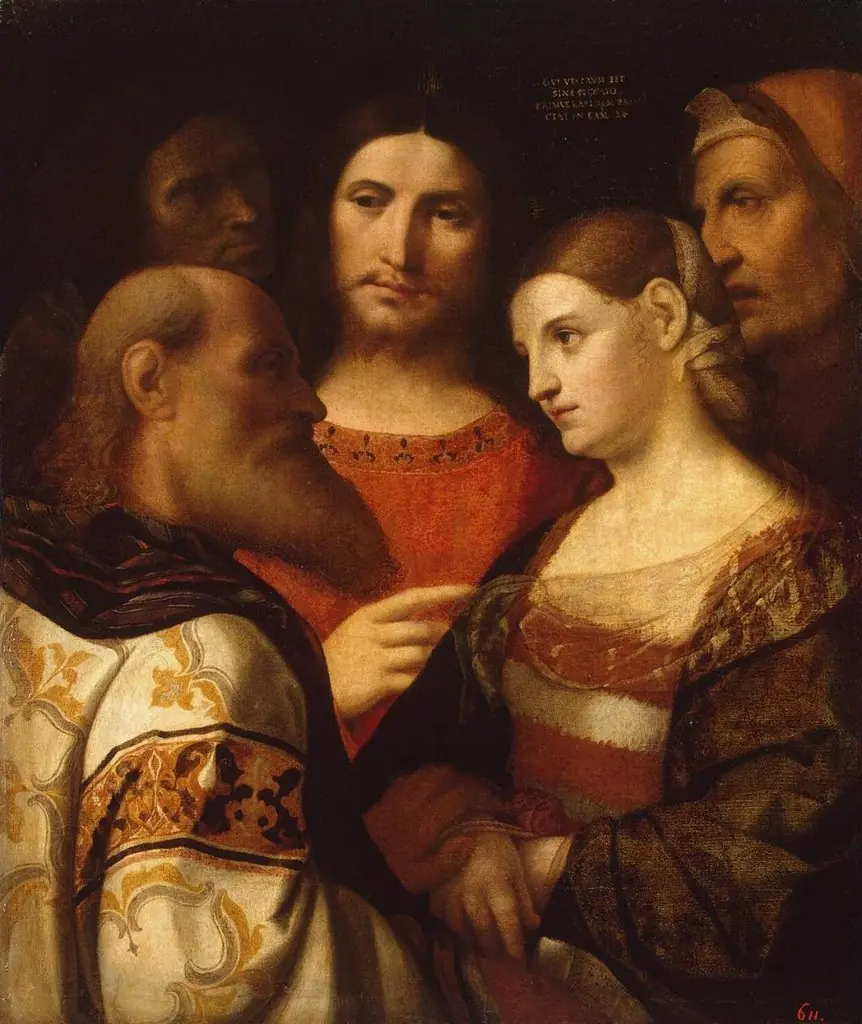 Christ and the Woman Taken in Adultery
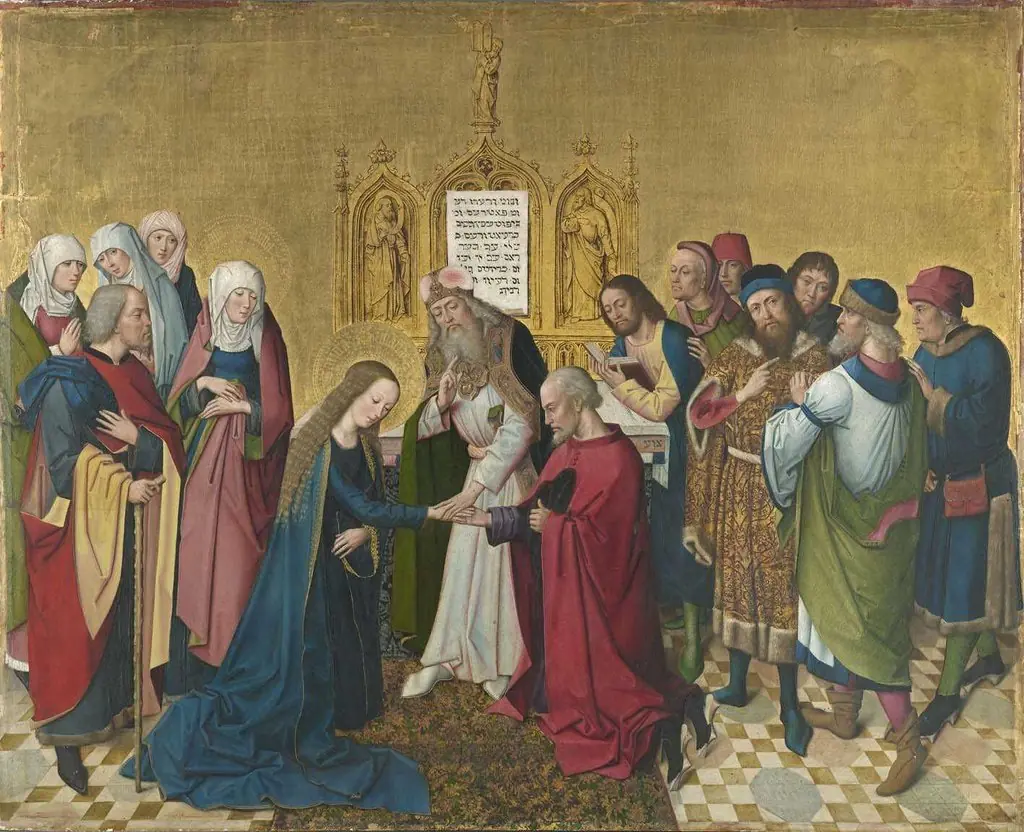 The Engagement of Mary (verso: upper half of the Coronation of Mary)
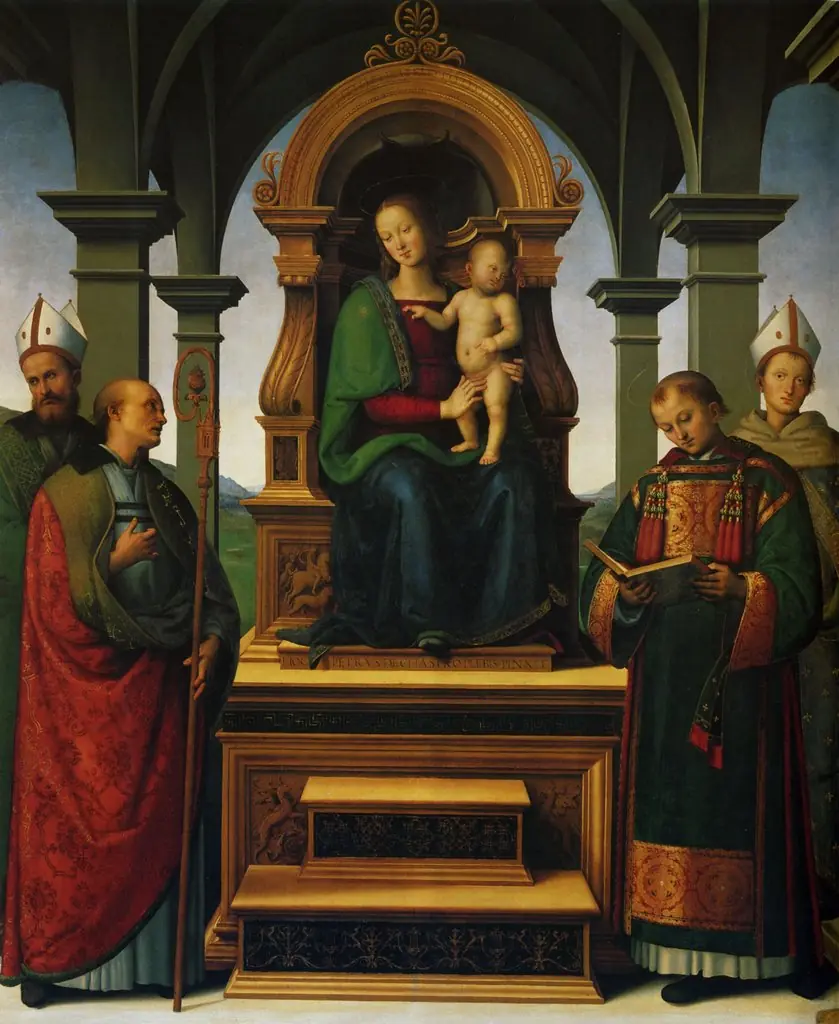 Decemviri Altarpiece
 The Visitation with Saint Nicholas and Saint Anthony Abbot