Artwork
The Virgin and Child with Saint John
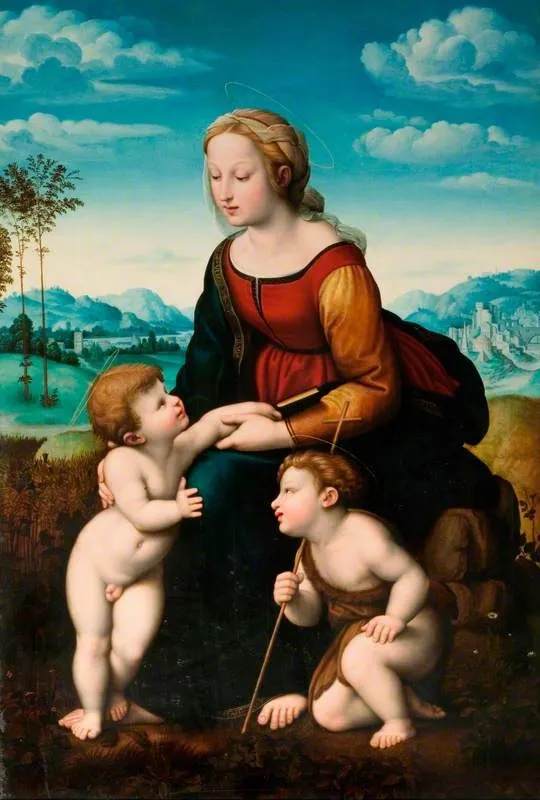
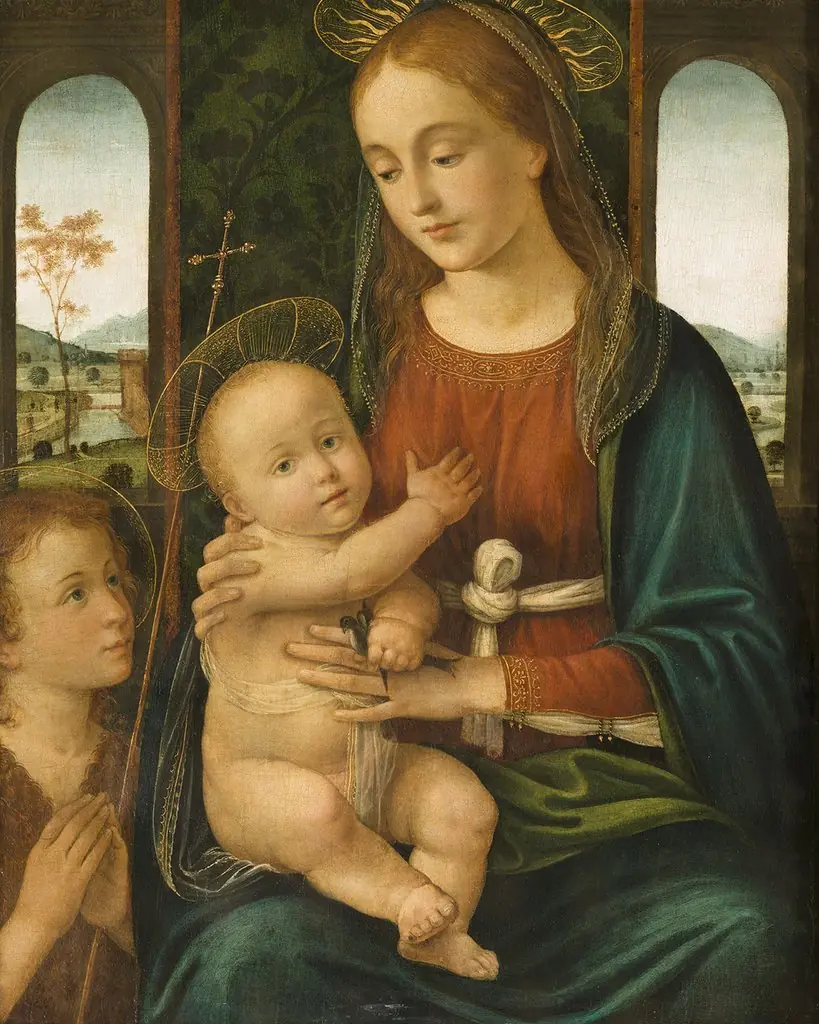
The Virgin and Child with Saint John is an oil painting by the High Renaissance artist Raphael. It dates from 1511 and is held in the collection of the Victoria and Albert Museum.
About this work
Overview
It is part of the collection at the Victoria and Albert Museum in London.
Painted around 1511, this oil on panel work by Raphael presents the Virgin Mary, the infant Christ, and the young Saint John the Baptist in a contemplative group. It is part of the collection at the Victoria and Albert Museum in London. The composition centers on a quiet, intimate moment between the figures, rendered with balanced harmony and restrained emotion, typical of Raphael’s High Renaissance style.
Subject & Meaning
The scene captures a tender, familial interaction between the Virgin and Child, with Saint John kneeling in reverence. His gaze toward Jesus suggests recognition of Christ’s divine role, a common theological motif in Renaissance devotional art. The inclusion of John, as Christ’s forerunner, reinforces the narrative of spiritual succession and divine purpose, conveyed without overt symbolism or drama.
Technique & Style
Raphael employs smooth, blended brushwork to model the figures with soft contours and naturalistic light. The Virgin’s red undergarment and dark mantle create a stable color contrast, while the nude Christ and brown loincloth of John ground the scene in physical reality. The background landscape, rendered with delicate atmospheric perspective, enhances depth without distracting from the central trio.
History & Provenance
The painting entered the Victoria and Albert Museum’s collection in the 19th century, having previously belonged to British private collectors. Its origins trace to Raphael’s early Roman period, when he was developing his mature style under the influence of Leonardo and Michelangelo. The panel’s condition and attribution have been consistently supported by scholarly examination.
Context
Created during Raphael’s time in Rome, this work reflects the period’s emphasis on idealized human forms and serene religious narratives. It aligns with contemporaneous devotional images commissioned for private worship, where emotional restraint and compositional clarity were valued over theatricality. The landscape setting echoes contemporary humanist interests in nature as a harmonious backdrop to sacred life.
Legacy
Though not among Raphael’s most widely reproduced works, this painting exemplifies his ability to convey spiritual gravity through quiet dignity. It influenced later devotional imagery by demonstrating how intimacy and theological meaning could coexist without grandeur. Its presence in a major public museum ensures continued study of his approach to sacred domesticity.
Artist & collection
Artist
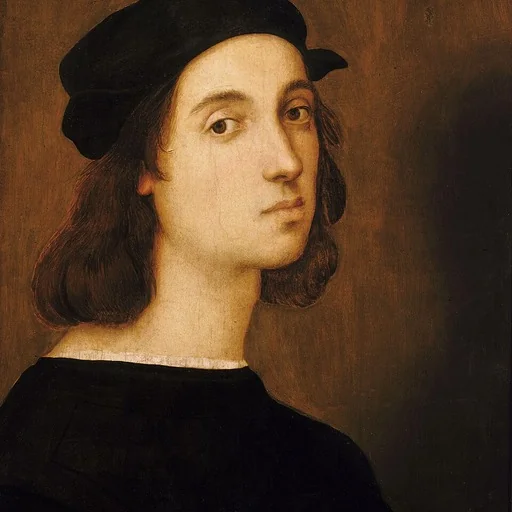
Raphael was born Raffaello Sanzio in Urbino on April 6, 1483, the son of Giovanni Santi, a painter and poet attached to the ducal court.

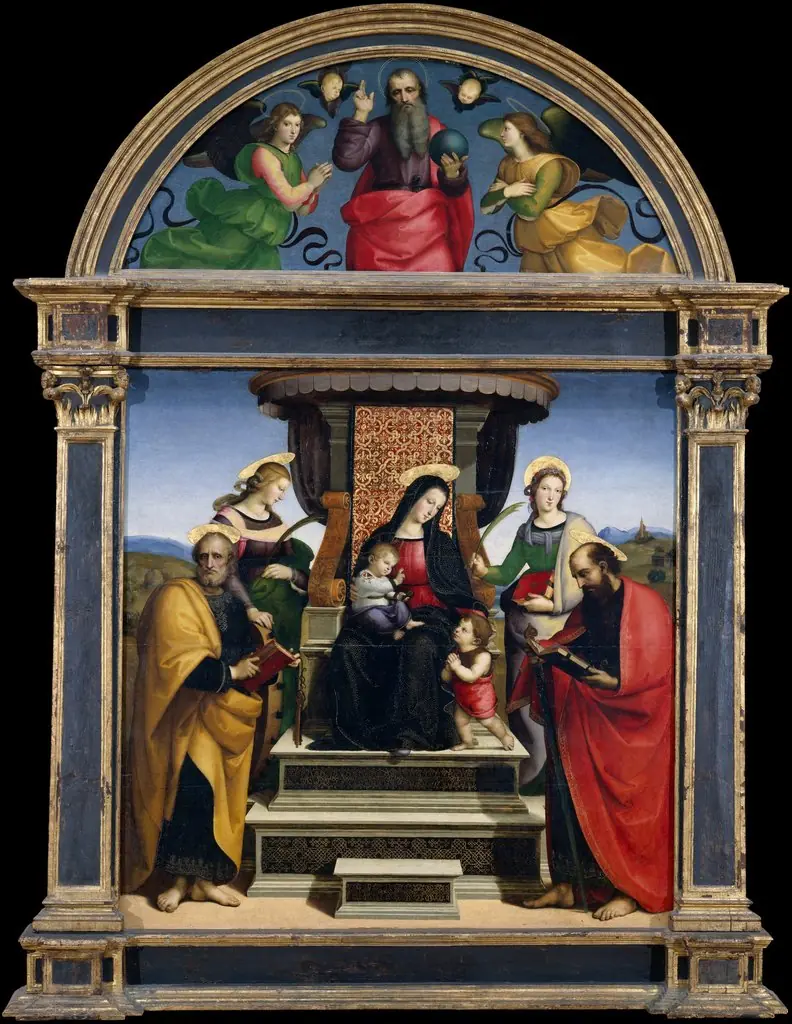
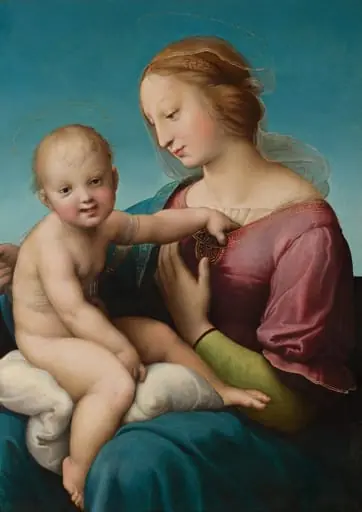
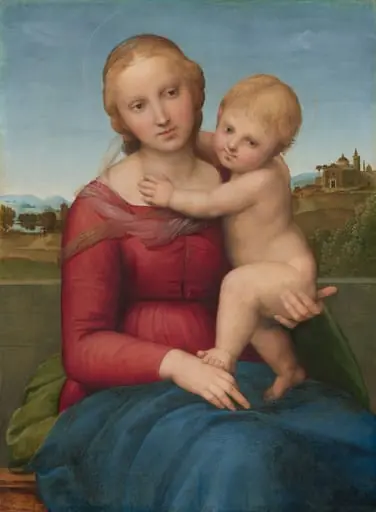
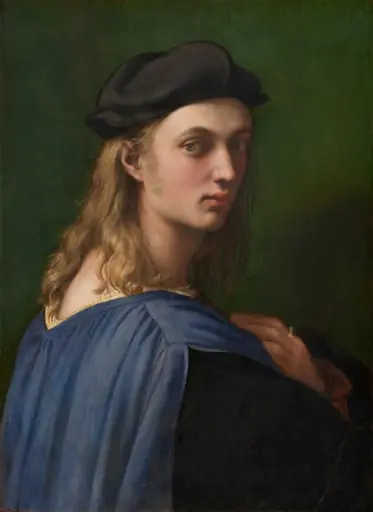
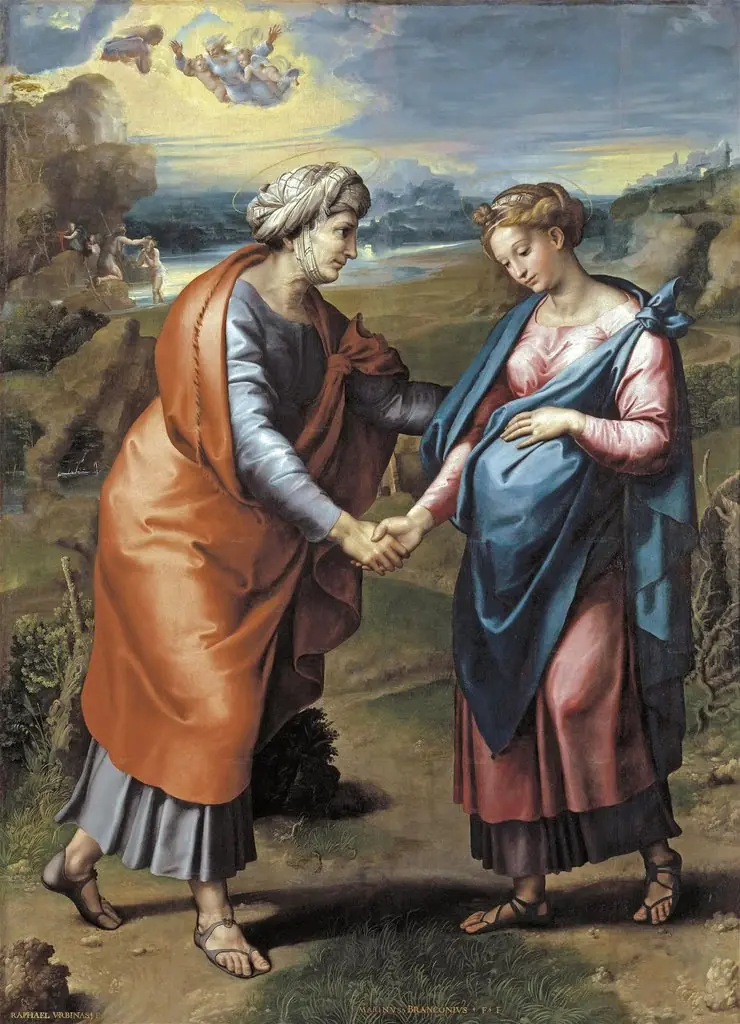
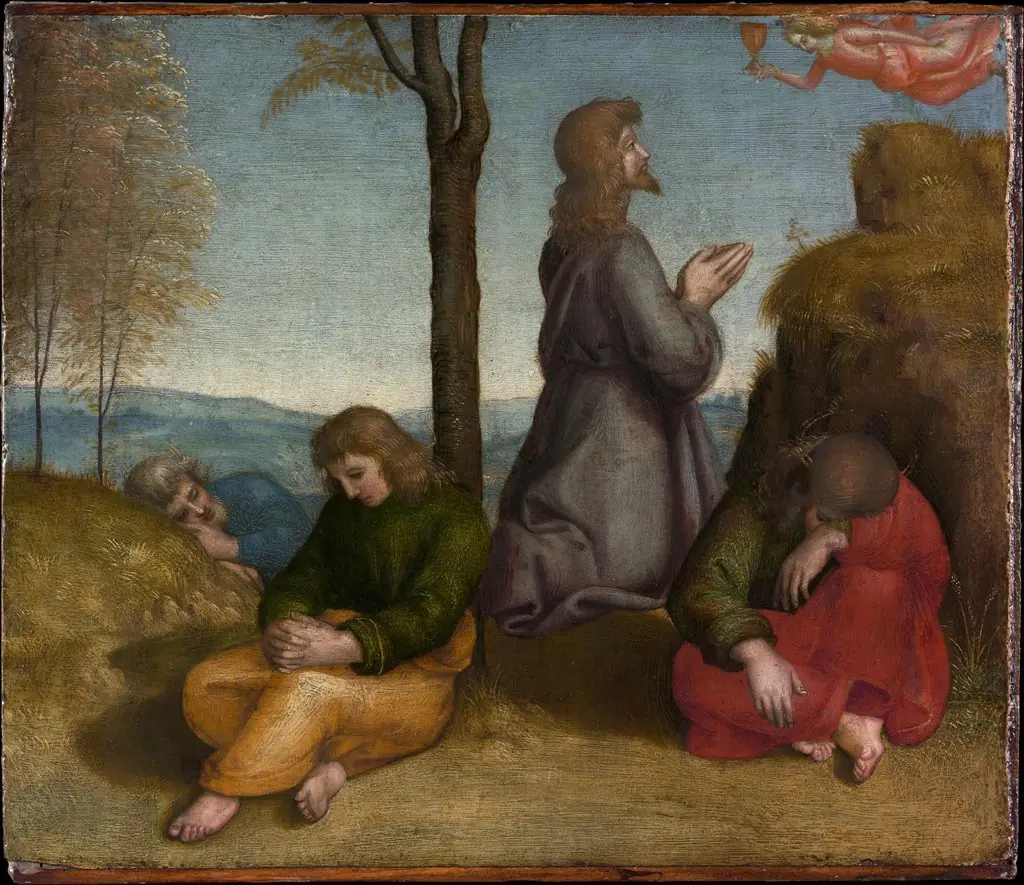
 The Virgin and Child with Saint John the Baptist
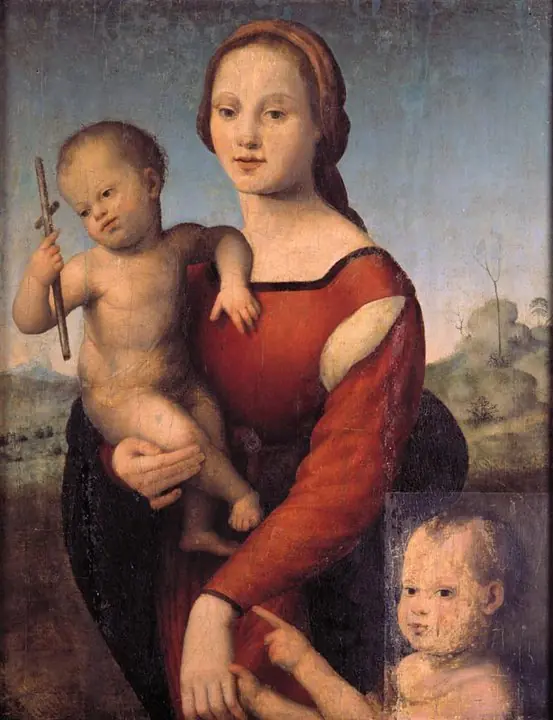 Virgin and Child with St. John
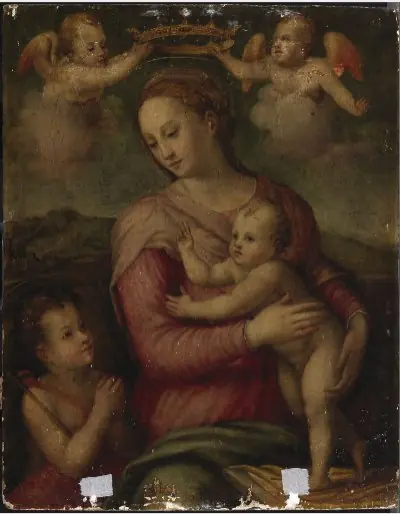 The Virgin and Child with Saint John the Baptist and Angels
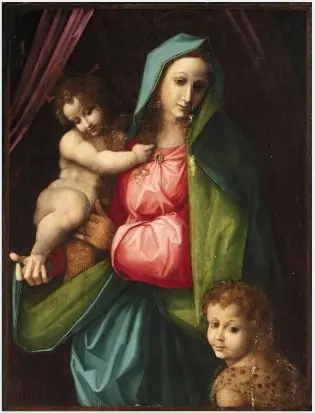 The Virgin and Child with Saint John the Baptist
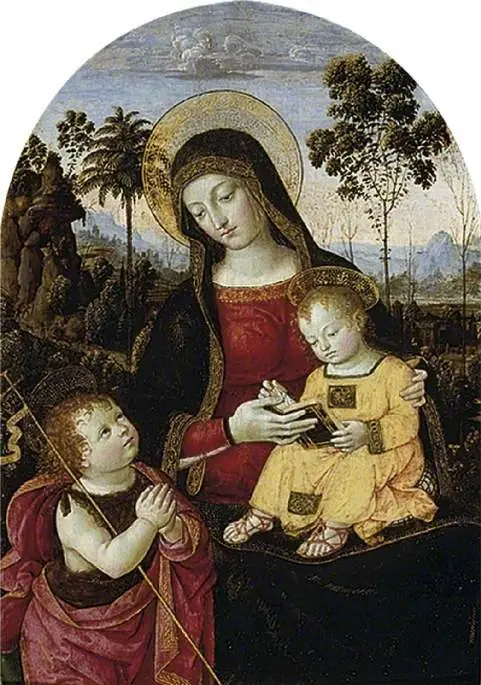 Virgin and Child with St John the Baptist
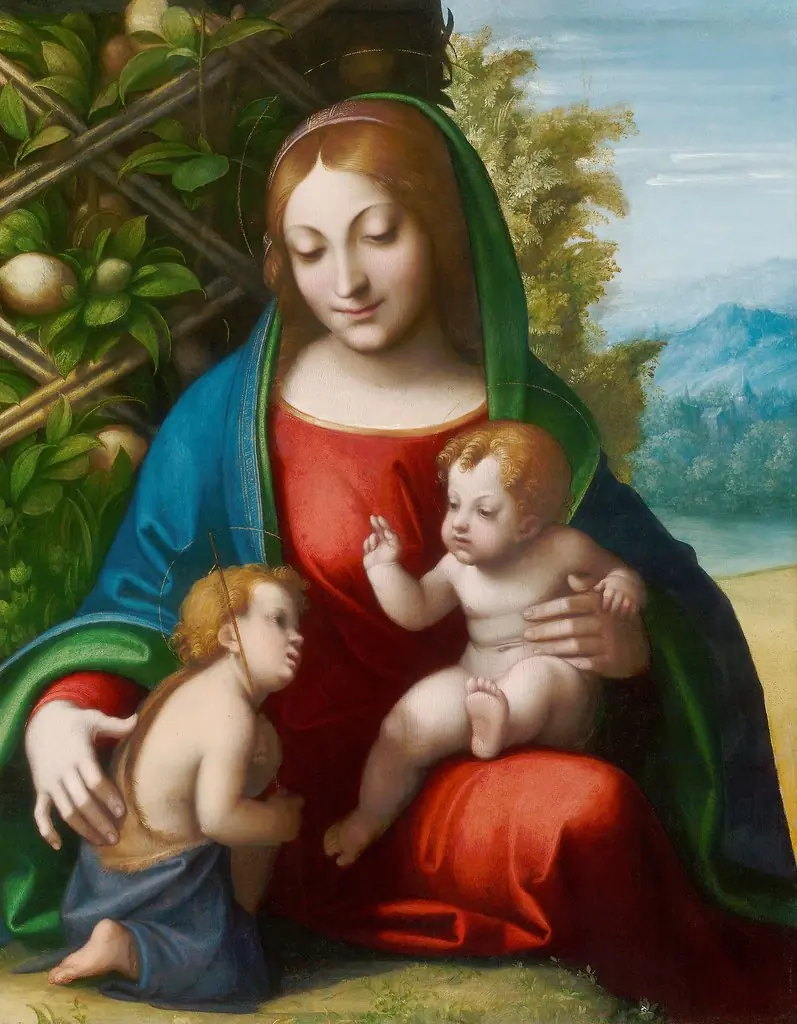 Virgin and Child with the Young Saint John the Baptist
 Virgin and Child with Saint John the Baptist