Artwork
The Salt Pond from the Salt Pond Knob, No. 1
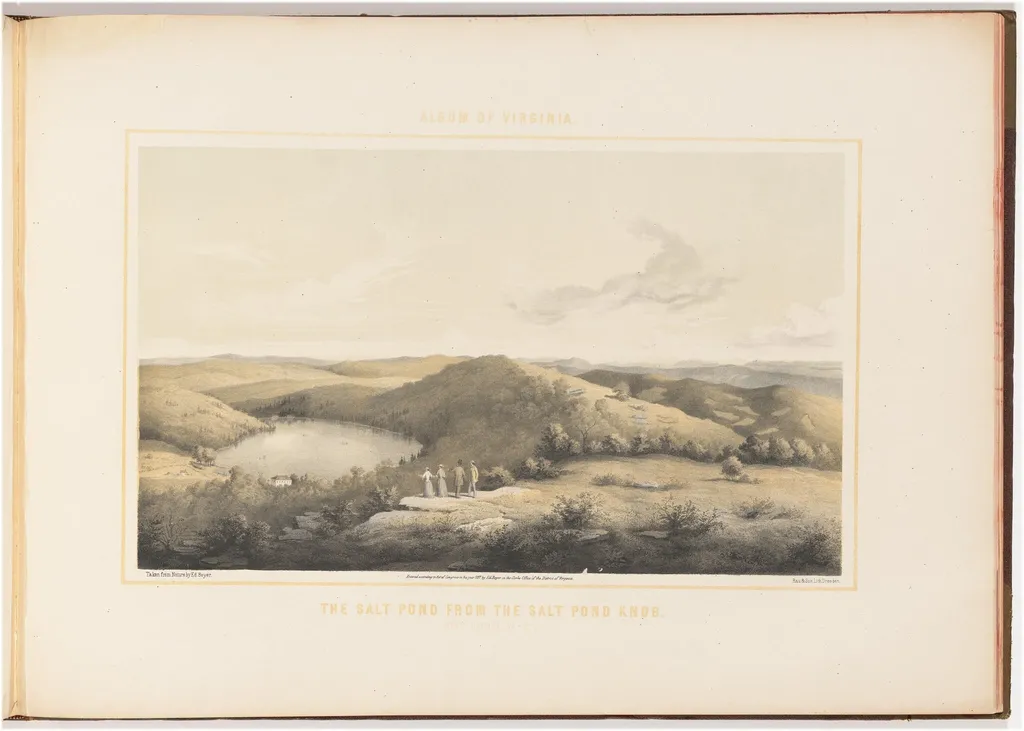
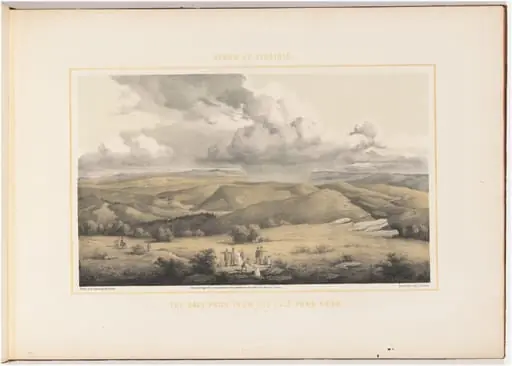
The Salt Pond from the Salt Pond Knob, No. 1 is an ink print by the Impressionist artist Woldemar Rau. It dates from 1857 and is held in the collection of the National Gallery of Art.
About this work
Overview
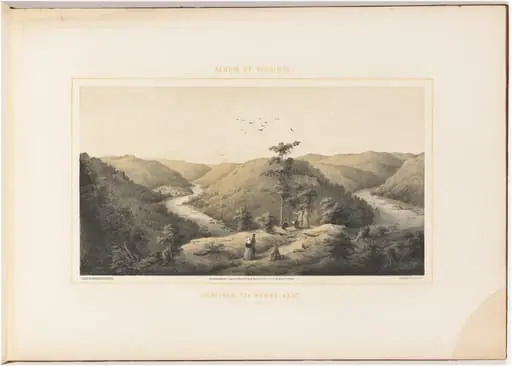
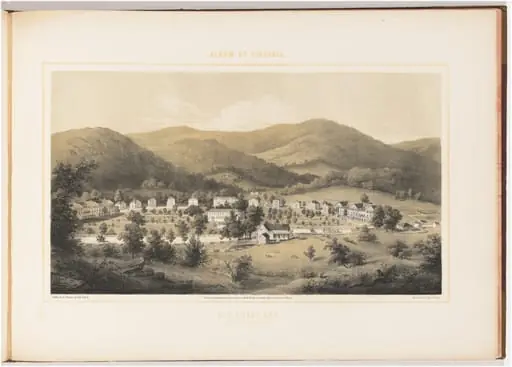
Woldemar Rau’s 1857 color lithograph, titled The Salt Pond from the Salt Pond Knob, No. 1, presents a tranquil rural scene. Rendered on wove paper, the print depicts gently rolling hills, a modest pond, and scattered trees beneath a lightly clouded sky. In the foreground, three figures stand on a rocky ledge, surveying the landscape, which conveys a sense of openness and calm.
Subject & Meaning
The composition centers on a natural setting identified as the Salt Pond viewed from its adjacent knob, indicating a specific geographic location. The presence of the three observers suggests a contemplative engagement with the environment, inviting viewers to share in the quiet appreciation of the countryside’s modest beauty and the interplay between human presence and landscape.
Technique & Style
Executed as a color lithograph, Rau employed the lithographic process on smooth wove paper, allowing for delicate tonal variations and a soft palette reminiscent of a sketch. The method enabled fine detail in the foliage and subtle gradations in the sky, while the color application remains restrained, emphasizing atmosphere over vivid chromatic contrast.
History & Provenance
Created in 1857, the print belongs to a period when lithography was gaining popularity for reproducing landscape scenes. Though specific ownership records are limited, the work reflects Rau’s broader output of topographical prints that documented German scenery during the mid‑ninteenth century, contributing to the visual archive of the region.
Context
During the mid‑1800s, German artists increasingly turned to lithography to capture and disseminate images of local terrain, aligning with a growing public interest in travel and natural observation. Rau’s depiction of the Salt Pond aligns with this trend, offering a realistic yet poetic view that resonated with contemporary audiences seeking both information and aesthetic pleasure.
Artist & collection

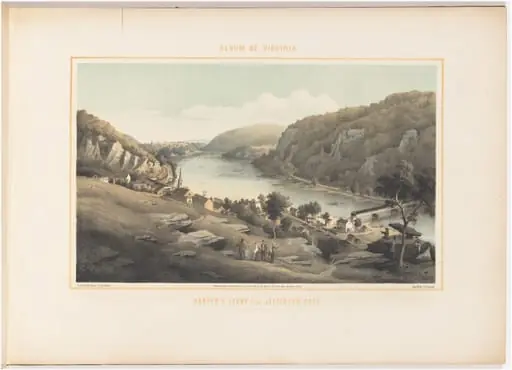 Harpers Ferry from Jefferson Rock
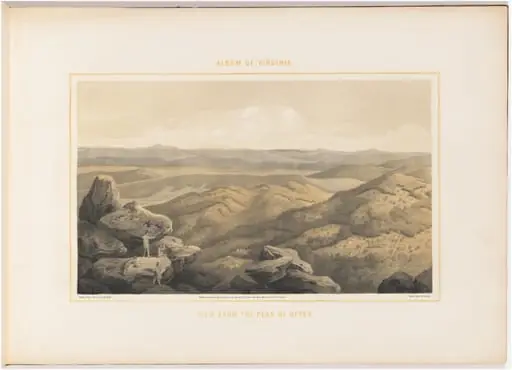
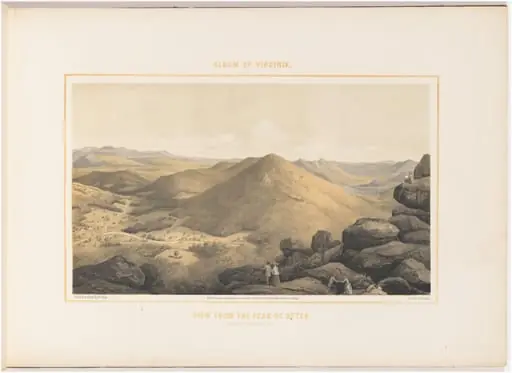 View from the Peak of Otter, No. 2
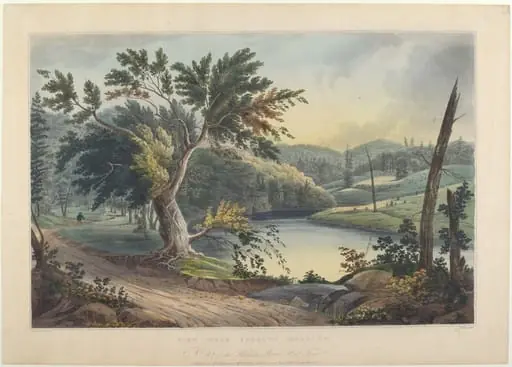 View near Jessup's Landing
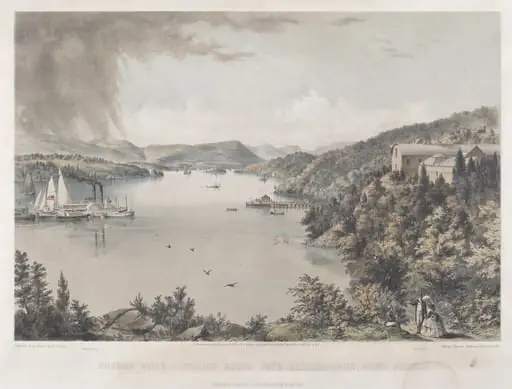 Hudson River Portfolio: Looking South from Battery Knox, West Point
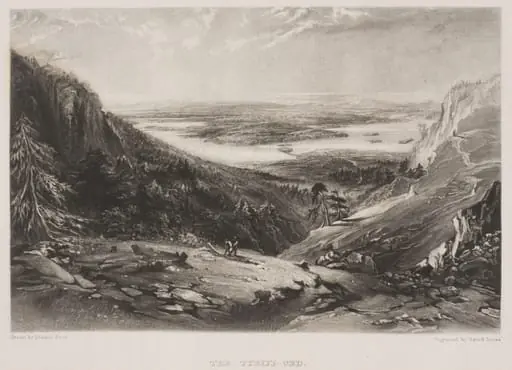 The Tyrifi-ord
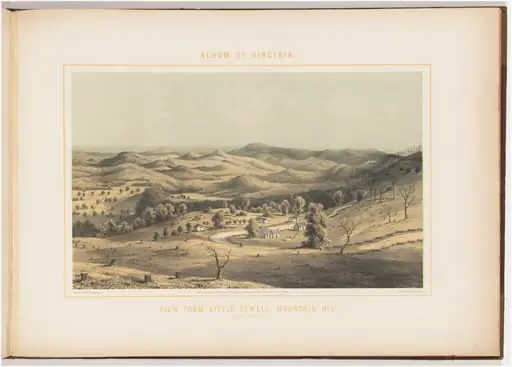 View from Little Sewell Mountain, No. 2
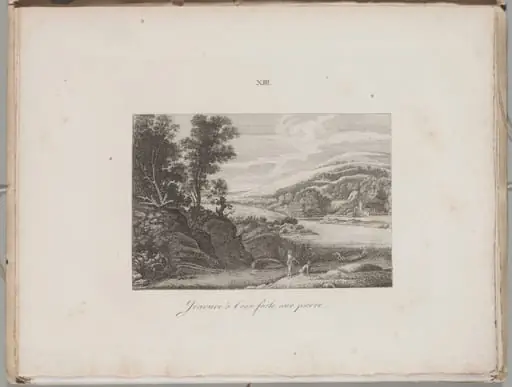 Art of the Lithograph: River Landscape, Plate XIII
 The Salt Pond from the Salt Pond Knob, No. 2