Artwork
Harpers Ferry from Jefferson Rock
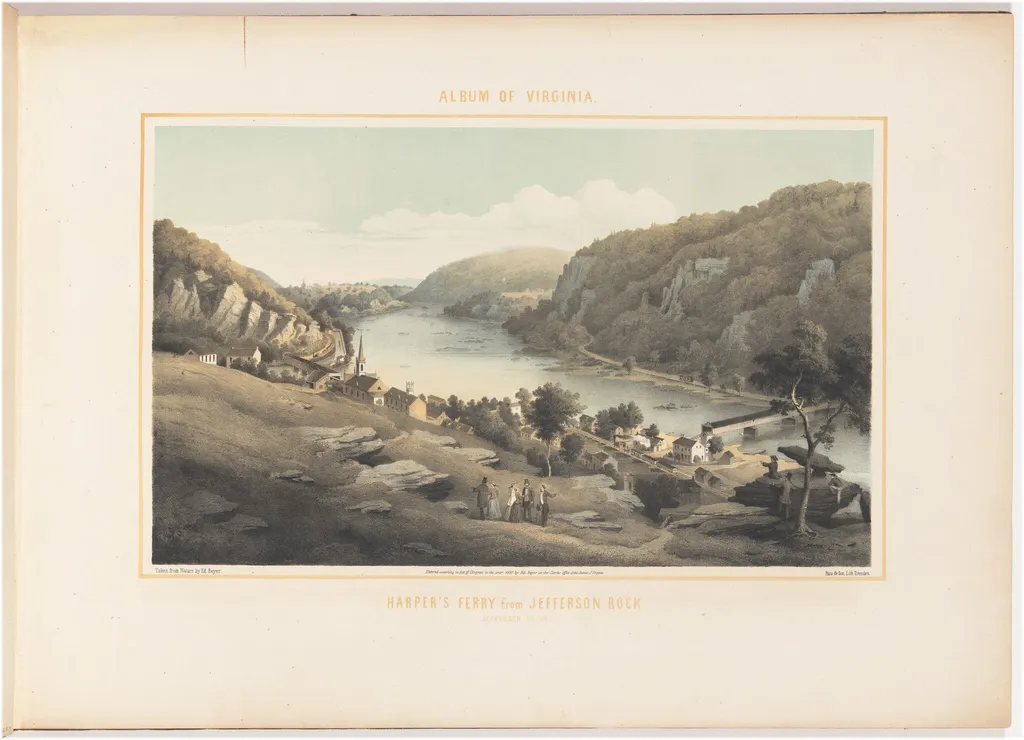
Harpers Ferry from Jefferson Rock is an ink print by the Impressionist artist Edward Beyer. It dates from 1857 and is held in the collection of the National Gallery of Art.
About this work
Overview
Rendered on wove paper, the print exemplifies mid-19th-century American topographical art, blending observational precision with atmospheric tone.
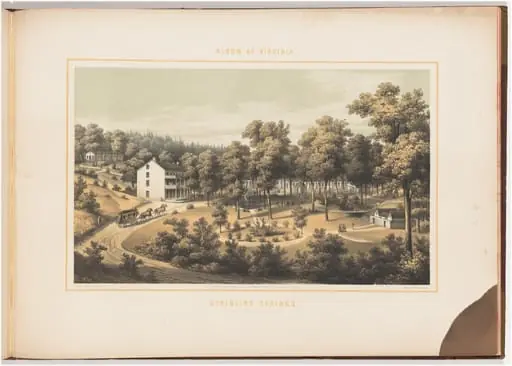
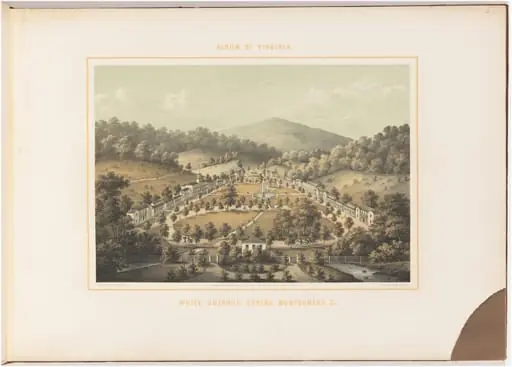
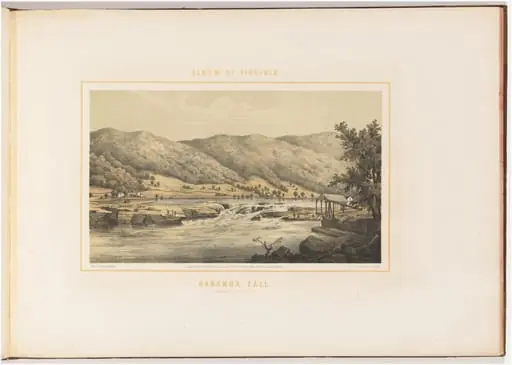
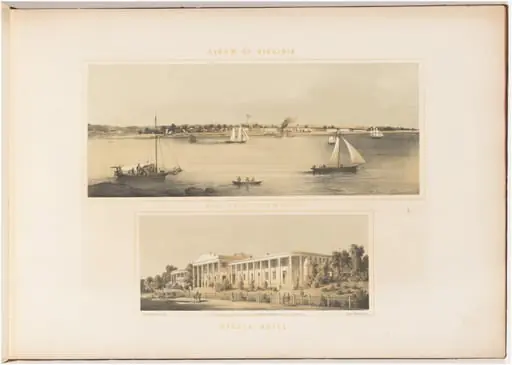
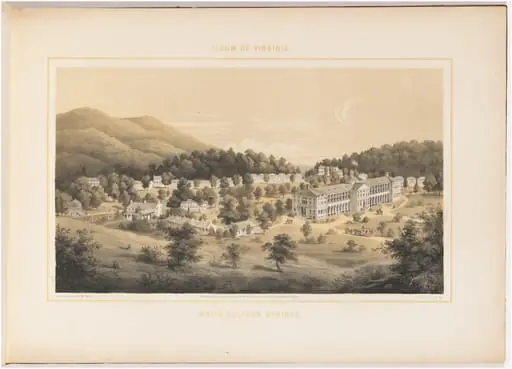
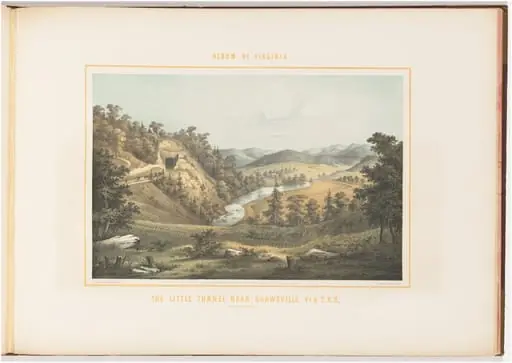
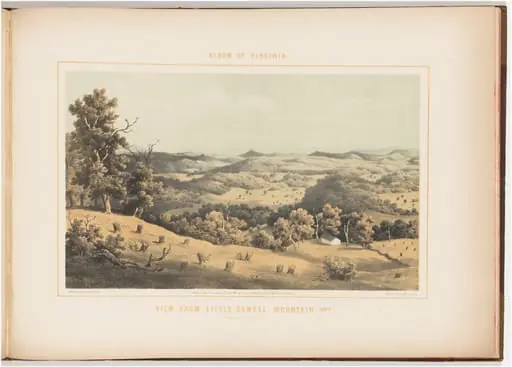
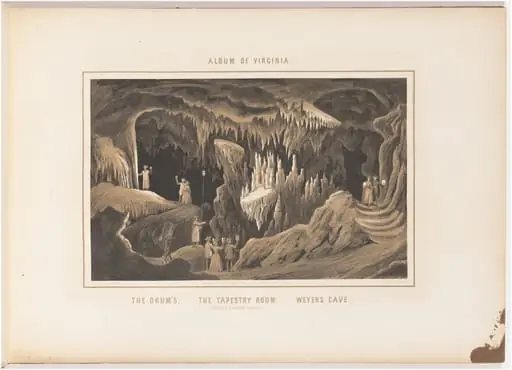
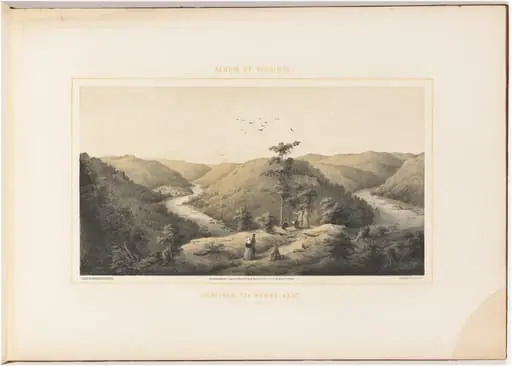
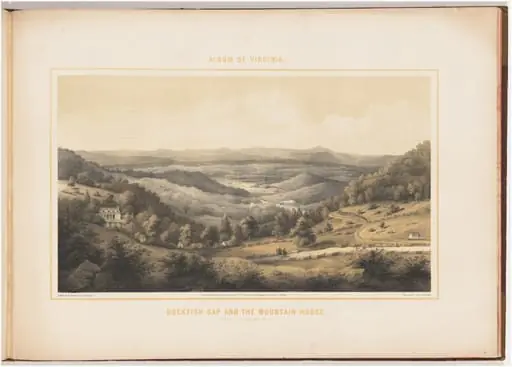
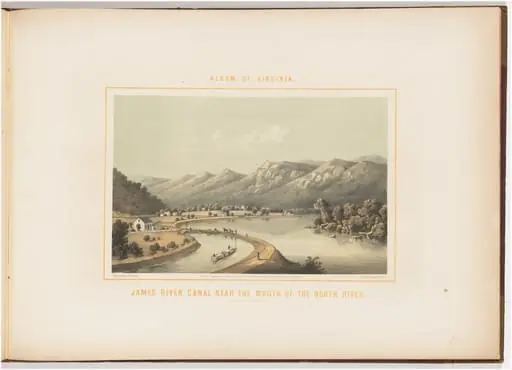
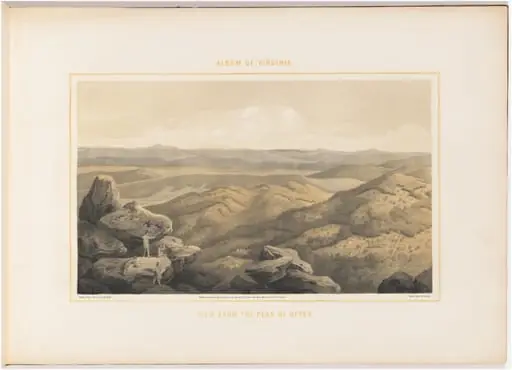
Created in 1857 by German-born artist Edward Beyer, this color lithograph depicts Harpers Ferry, Virginia, as seen from Jefferson Rock. Rendered on wove paper, the print exemplifies mid-19th-century American topographical art, blending observational precision with atmospheric tone. Beyer’s work captures the town’s geographic position at the confluence of the Shenandoah and Potomac rivers, reflecting contemporary interest in documenting the nation’s landscapes through accessible printed media.
Subject & Meaning
The scene portrays Harpers Ferry as a tranquil riverside settlement nestled between towering cliffs. Small structures cluster near the water, while a group of figures on the rocky shore suggests quiet human presence amid nature. The composition emphasizes harmony between settlement and landscape, offering a serene view of a town that would soon become a site of national upheaval. The image conveys order and stillness, characteristic of prewar ideals of American progress and pastoral life.
Technique & Style
Beyer employed color lithography on smooth wove paper to achieve a delicate, even tonality. The brushwork is restrained, with soft gradations of hue defining hills, sky, and water. Details like buildings and figures are rendered minimally, prioritizing overall composition over individual precision. The technique allowed for multiple impressions, aligning with the era’s demand for affordable, widely distributed landscape imagery that balanced accuracy with aesthetic appeal.
History & Provenance
Edward Beyer, active in the American South from the 1840s until his death in 1865, produced this print during a period of heightened interest in regional scenery. Harpers Ferry, then part of Virginia, was a known destination for travelers and artists. The lithograph likely circulated among middle-class audiences seeking visual records of the nation’s natural and built environments, though its specific early ownership remains undocumented.
Context
In the 1850s, American artists and publishers increasingly turned to landscape as a subject, fueled by nationalism and the expansion of print culture. Lithography made such images accessible beyond elite collectors. Harpers Ferry’s strategic location and scenic beauty made it a frequent subject, though its later association with John Brown’s raid in 1859 would transform its symbolic meaning—this print, however, preserves its earlier, quieter identity.
Legacy
Beyer’s lithograph endures as a visual record of Harpers Ferry before the Civil War’s disruptions. It reflects the aesthetic priorities of its time: calm observation, geographic clarity, and a subdued palette. While not widely celebrated in its day, it now serves as a quiet testament to the landscape as it appeared during a pivotal moment in American history, before conflict reshaped both the land and its meaning.
Artist & collection
Artist
Edward Beyer (1820–1865) was a German landscape painter who was active in the United States and became known for his depiction of the Antebellum South.